Shape Recognition Extra Challenge Geometry Worksheets for Ages 4-6
10 filtered results
-
From - To
Introducing our "Shape Recognition Extra Challenge Geometry Worksheets" for ages 4-6! These engaging resources are designed to enhance young learners' abilities to identify and differentiate various shapes. Our worksheets incorporate fun activities such as sorting, matching, and tracing that promote critical thinking and pattern recognition skills. Perfect for home or classroom use, these challenges will keep your child entertained while reinforcing essential geometry concepts. As they dive into these interactive exercises, children will build confidence in their shape recognition abilities, setting a strong foundation for future math learning. Explore our collection today and watch your child's geometric skills soar!
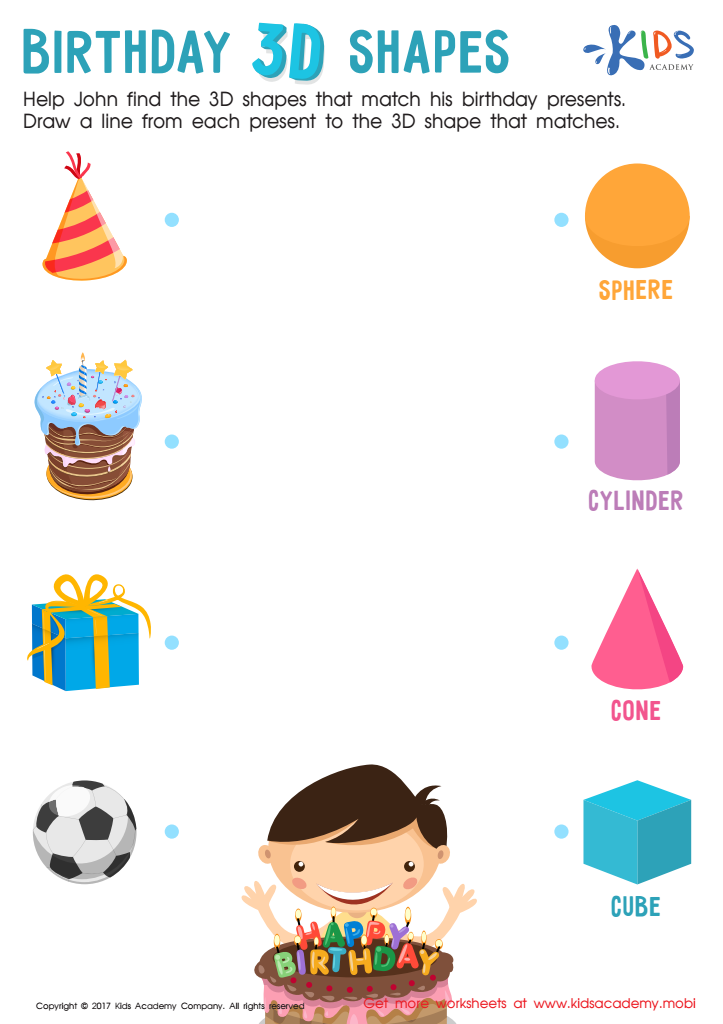
Birthday 3D Shapes Worksheet
 Assign to My Students











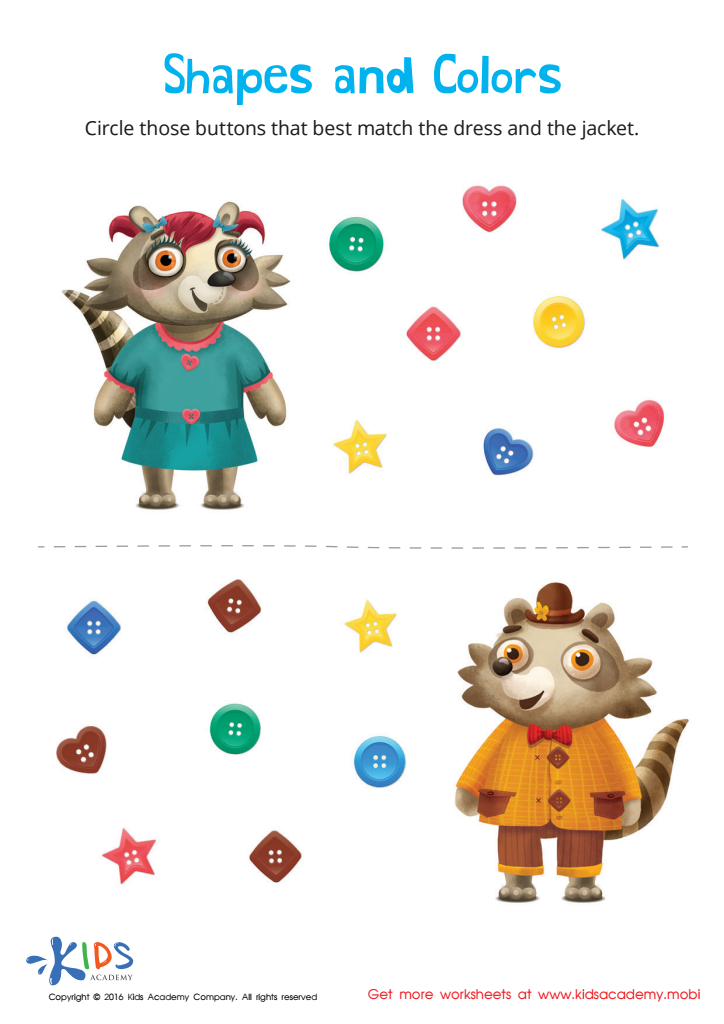
Matching: Shapes and Colors Worksheet
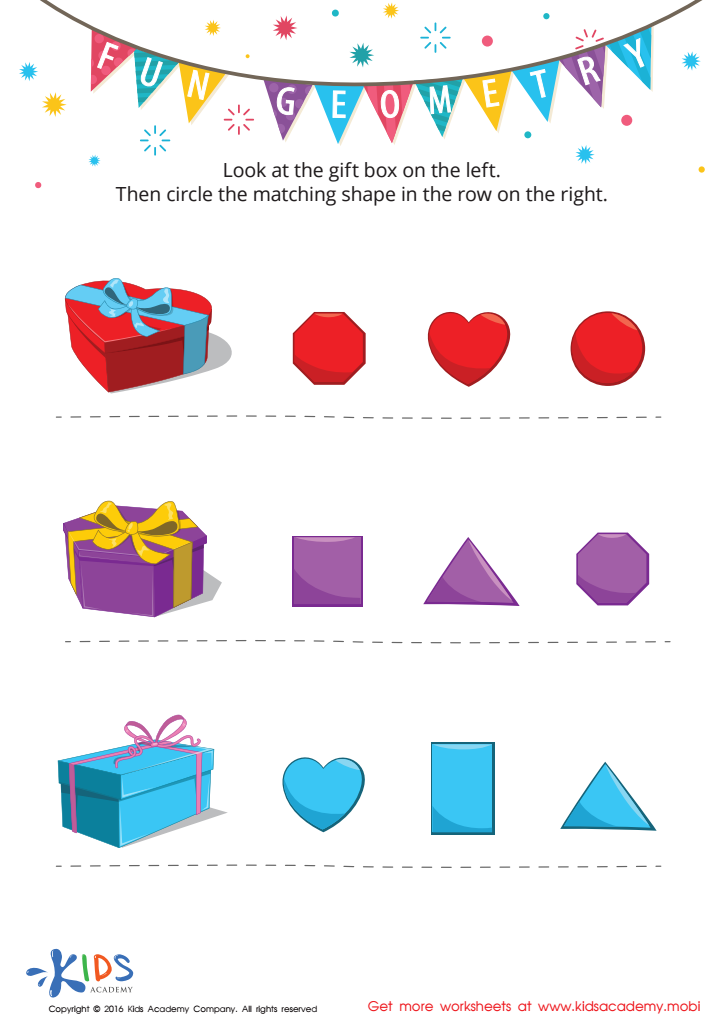
Fun Geometry Worksheet
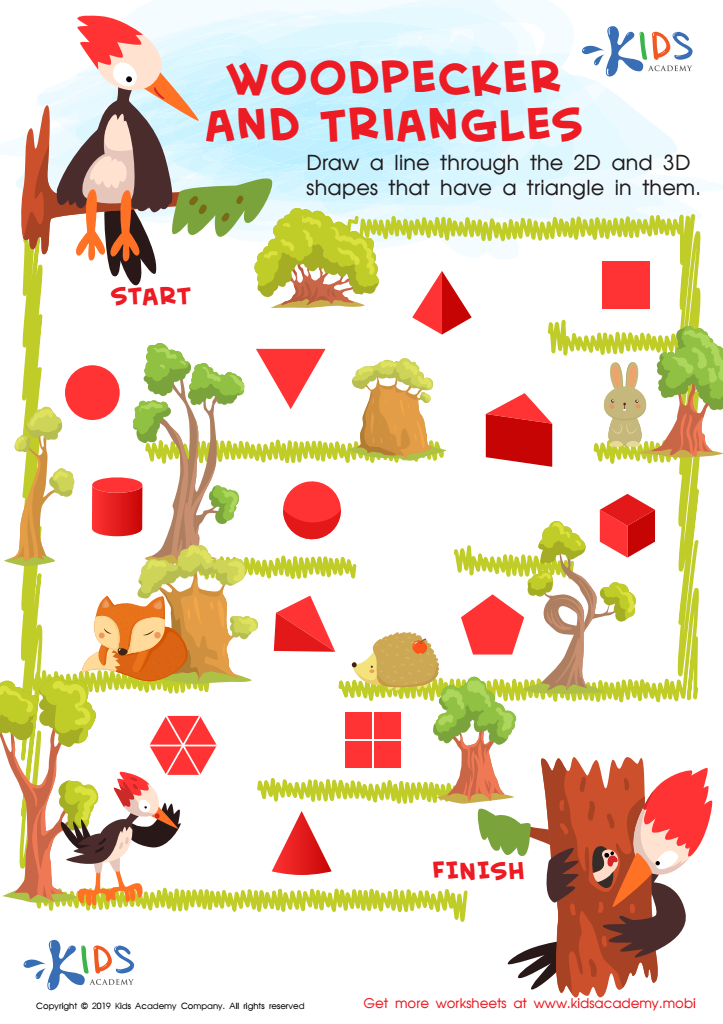
Woodpecker and Triangles Worksheet
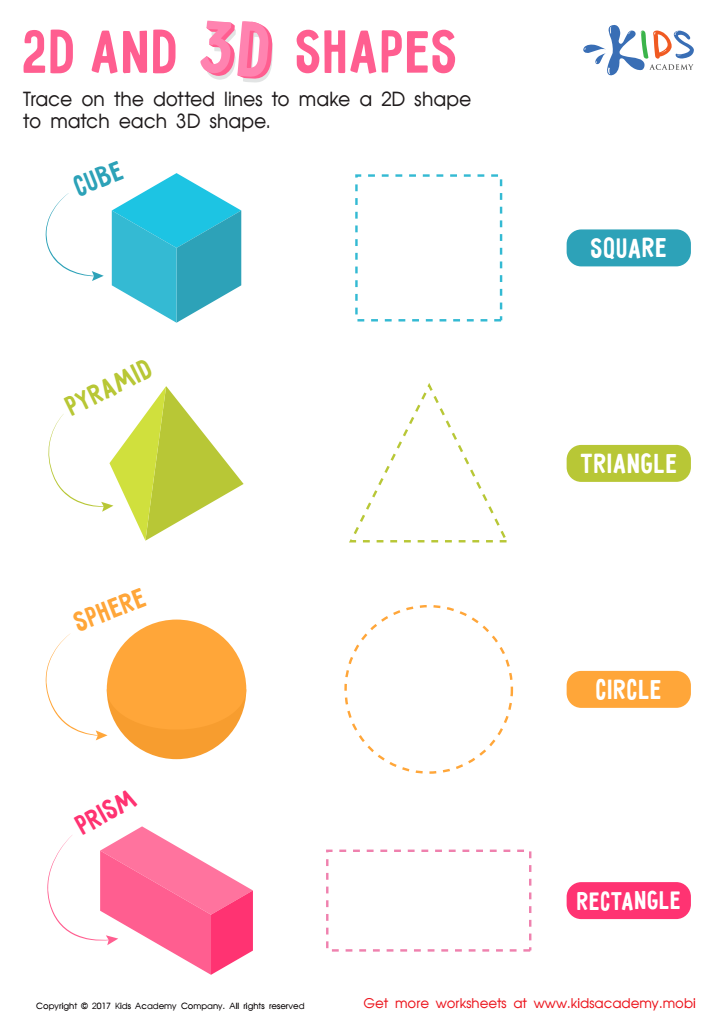
2D and 3D Shapes Worksheet
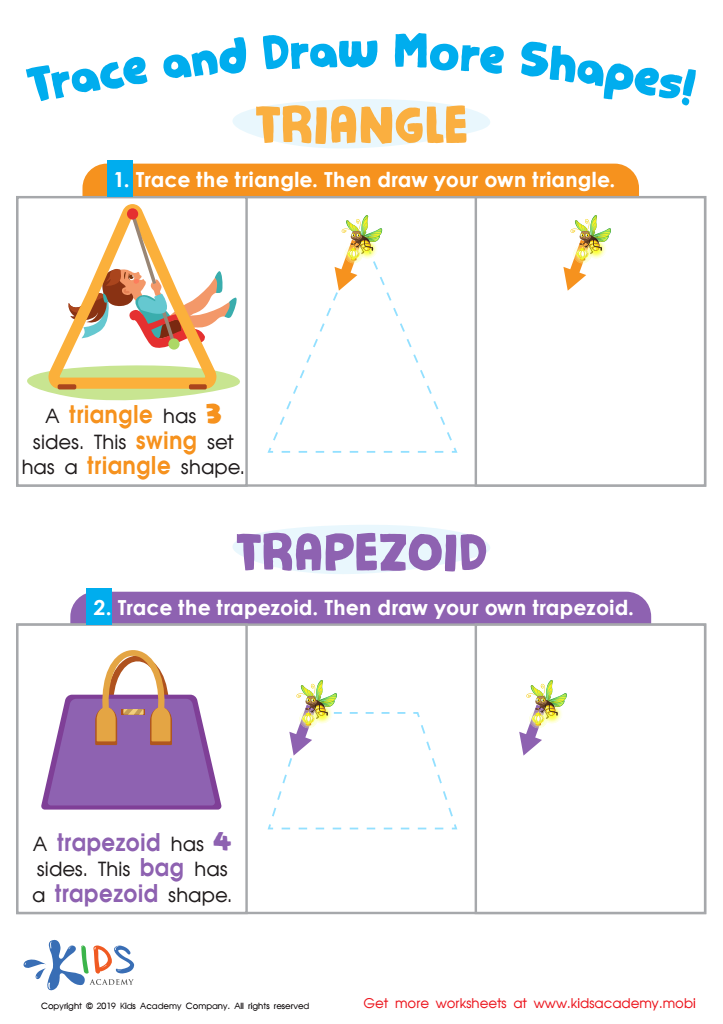
Trace and Draw More Shapes Worksheet
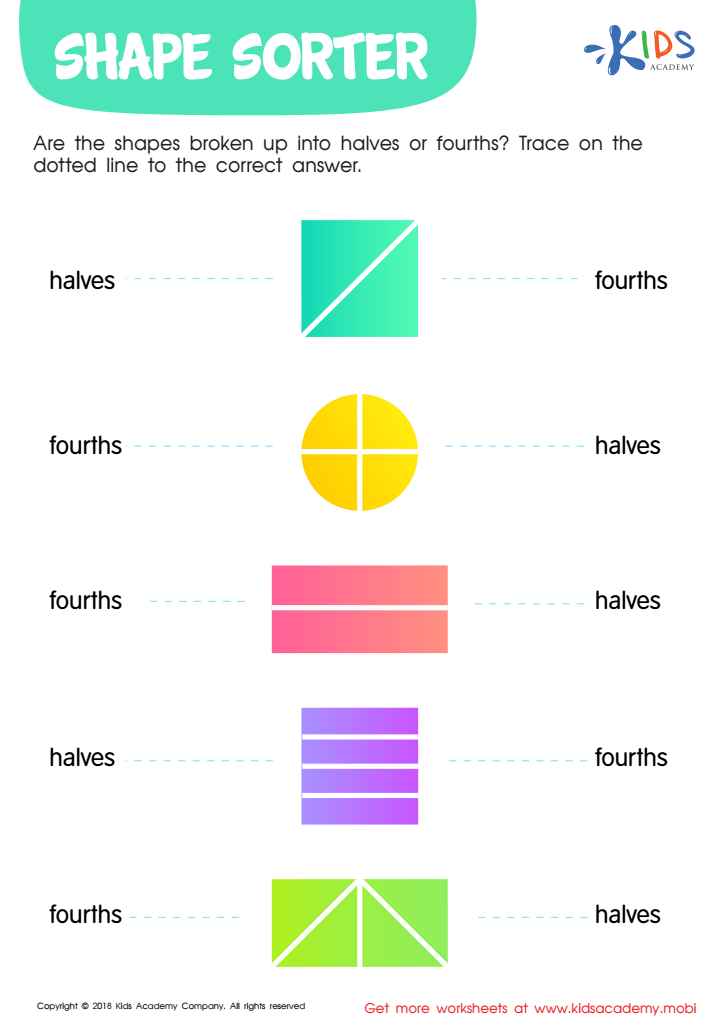
Shape Sorter Worksheet
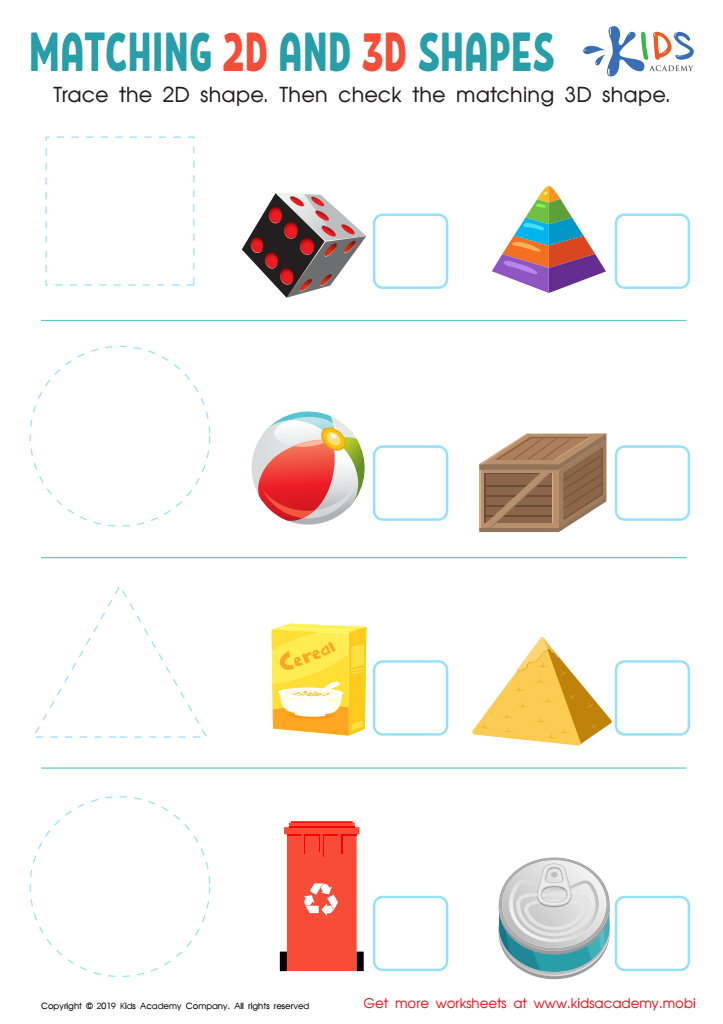
Matching 2D and 3D Shapes Worksheet
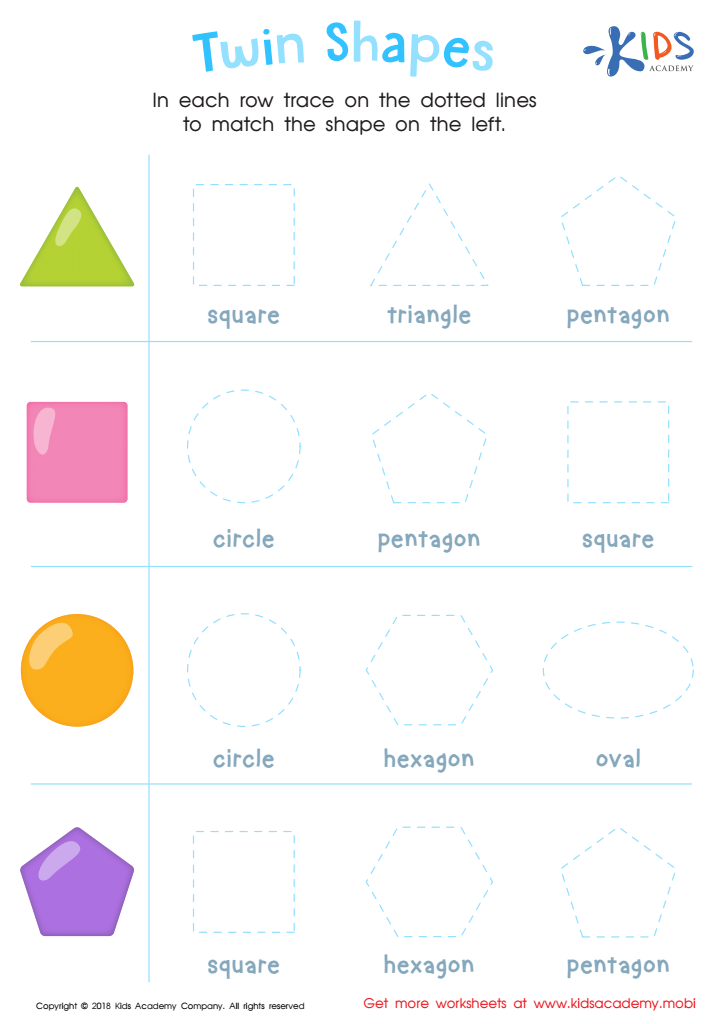
Twin Shapes Dot-to-Dot Worksheet
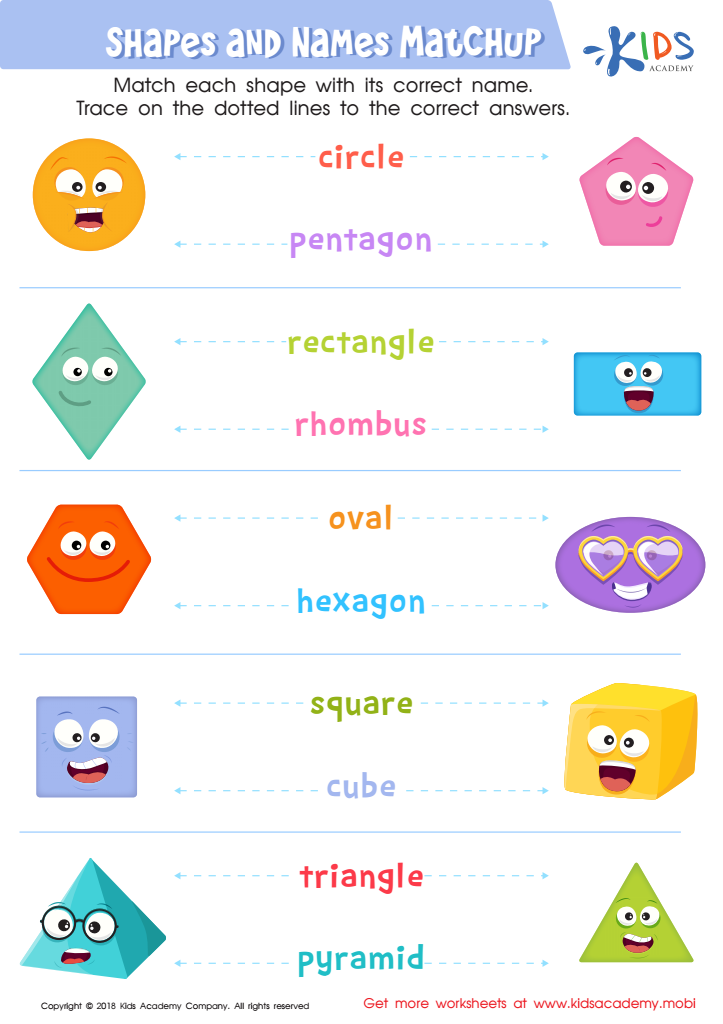
Shapes and Names Matchup Worksheet








Shape Recognition Extra Challenge Geometry for Ages 4-6 is a vital educational tool for parents and teachers focusing on early childhood development. At this young age, children are naturally curious and eager to explore their environment. Shape recognition enhances their cognitive skills, aiding in pattern recognition, critical thinking, and problem-solving abilities. These foundational skills underpin more complex mathematical concepts they will encounter later in their education.
Engaging children with shapes through fun and interactive challenges fosters a love for learning while developing fine motor skills important for writing and other activities. Moreover, integrating geometry into play encourages creativity and imagination, as children can visualize and manipulate shapes, boosting spatial awareness.
Additionally, early shape recognition links to real-world applications, helping children understand and describe the world around them. This longstanding knowledge promotes effective communication skills and boosts confidence when discussing and expressing ideas.
Furthermore, involving parents in these challenges promotes family bonding, encourages consistent learning at home, and creates a supportive environment for exploration. By prioritizing shape recognition, parents and teachers can cultivate essential life skills in young children, setting the foundation for future success in both academics and daily life experiences.








