Number Sequencing Extra Challenge Math Worksheets for Ages 4-6
9 filtered results
Difficulty Level
Grade
Age
-
From - To
Subject
Activity
Standards
Explore our engaging “Number Sequencing Extra Challenge Math Worksheets” designed for children aged 4-6! These worksheets provide an exciting opportunity for young learners to strengthen their understanding of number sequences through fun activities and colorful visuals. Perfect for reinforcing basic counting skills, our extra challenges motivate kids to think critically while solving unique sequencing tasks. With a variety of exercises tailored to different learning levels, these worksheets encourage kids to practice number patterns, skip counting, and more. Promote a love for math while building essential skills—these extra challenges are a perfect addition to your teaching resources! Download now and watch them thrive!
Favorites
With answer key
Interactive
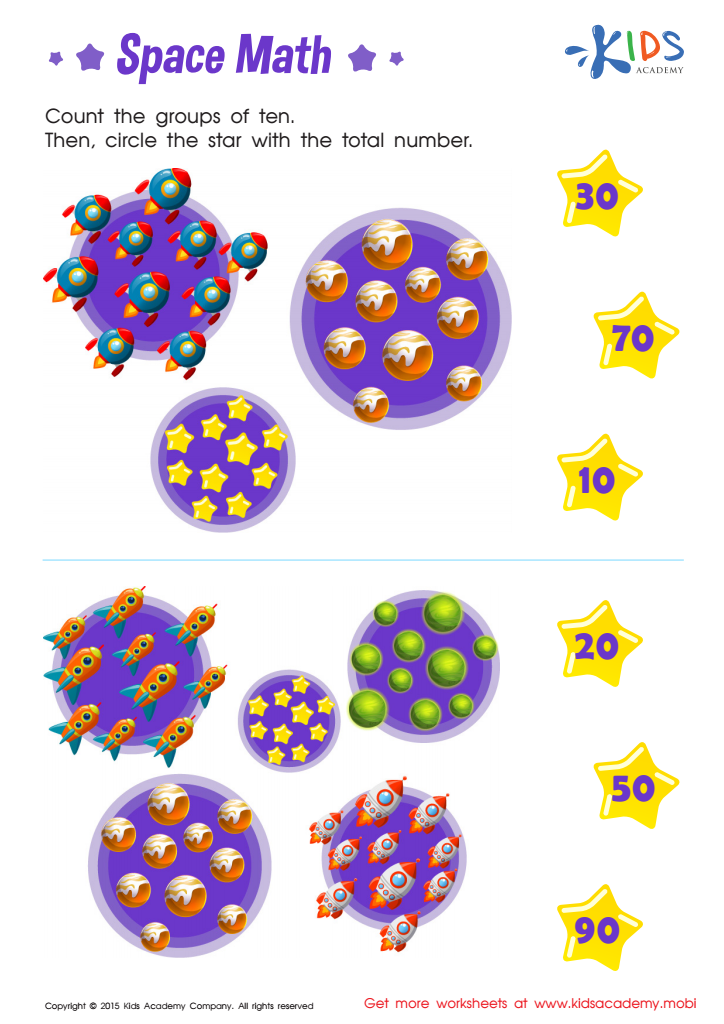
Learn dozens: Space math Worksheet
This worksheet uses Singapore Math's approach to help your child visually understand basic counting and math problems.
 Assign to My Students
Learn dozens: Space math Worksheet
Worksheet
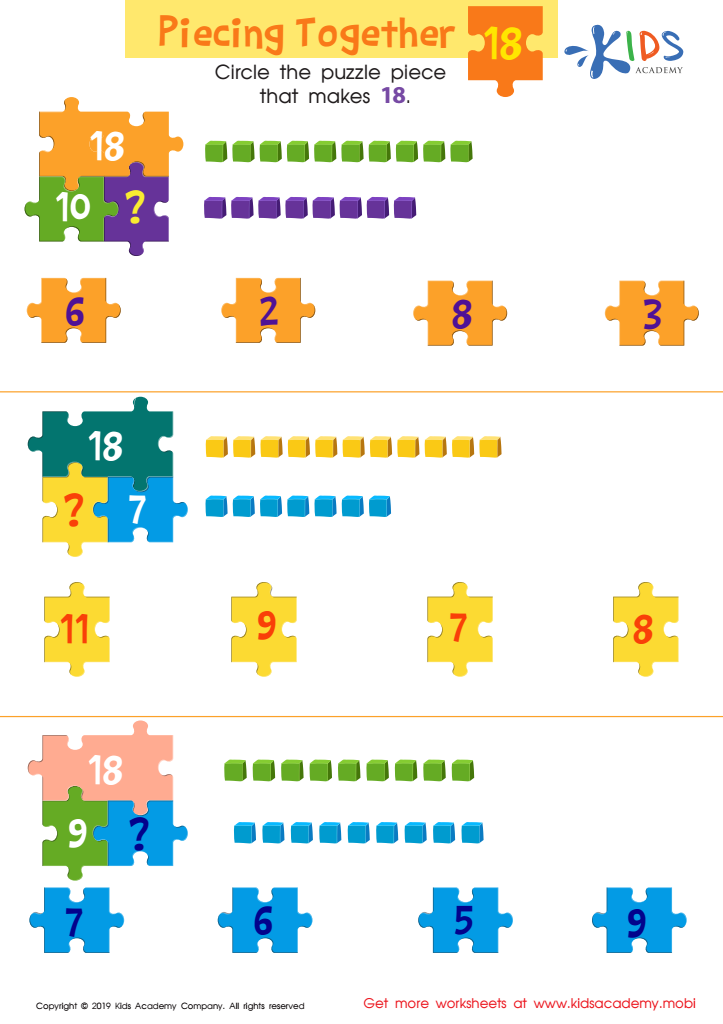
Piecing Together 18 Worksheet
Let your preschoolers learn and have fun with this colorful worksheet. Look at the picture with them and ask what they see. Help them solve the equations missing on each puzzle piece and then circle the one that will make the bottom puzzle piece numbers equal 16. Puzzles and bright colors make learning easy and enjoyable!
Piecing Together 18 Worksheet
Worksheet
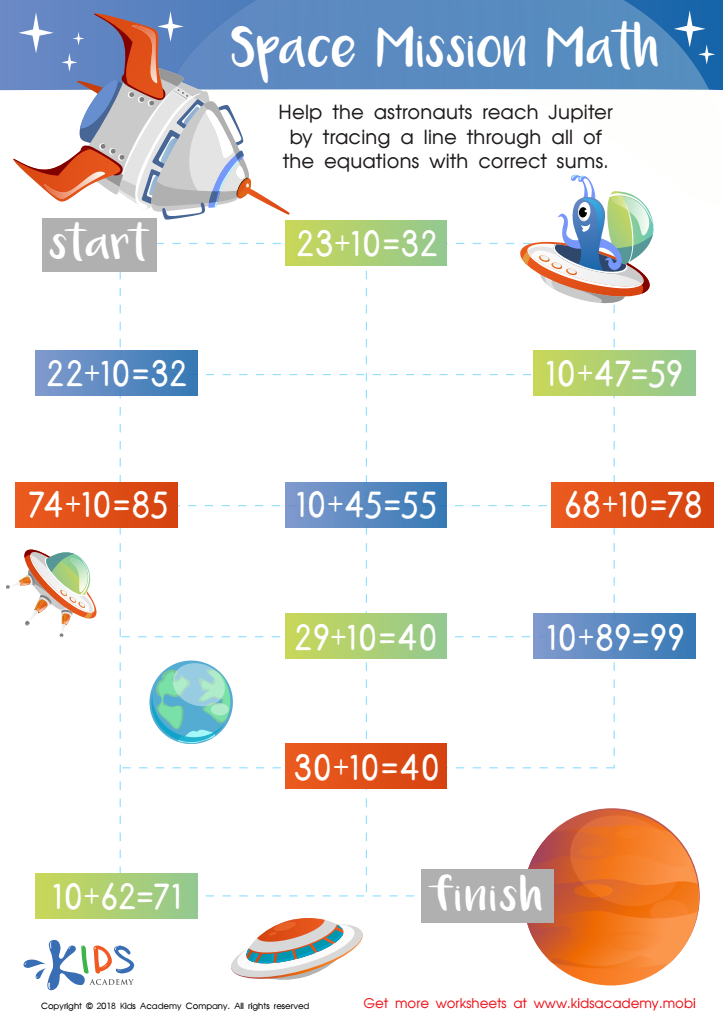
Space Mission Math Worksheet
Your kids will love this worksheet! They can help astronauts reach Jupiter by tracing a line through all the equations and adding them up correctly. Spark their curiosity about space by exploring asteroids, planets, and aliens. Astronauts are professionals who study the complexities of space - let them help your child join in the journey!
Space Mission Math Worksheet
Worksheet
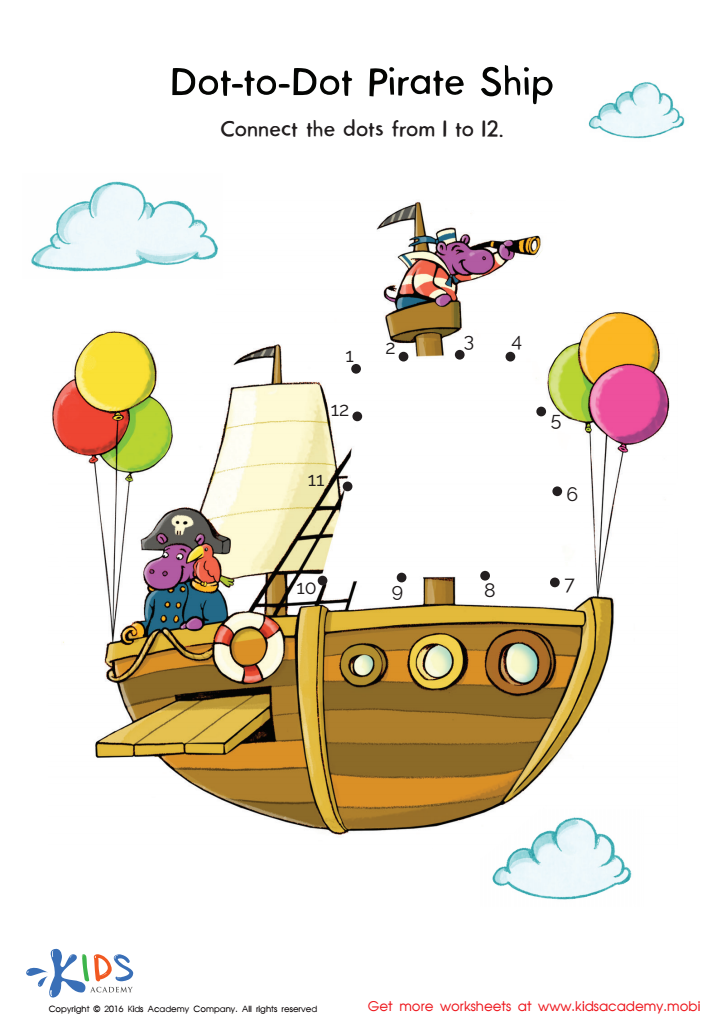
Pirate Ship Connect Dots Worksheet
Encourage your child's creativity with this pirate dot to dot! They'll connect the dots to craft a ship and then decorate the sail. This worksheet will help them practice numeracy, counting, and other reasoning skills. Once they understand how the dots come together to make a picture, they'll be motivated to move on to tougher challenges.
Pirate Ship Connect Dots Worksheet
Worksheet
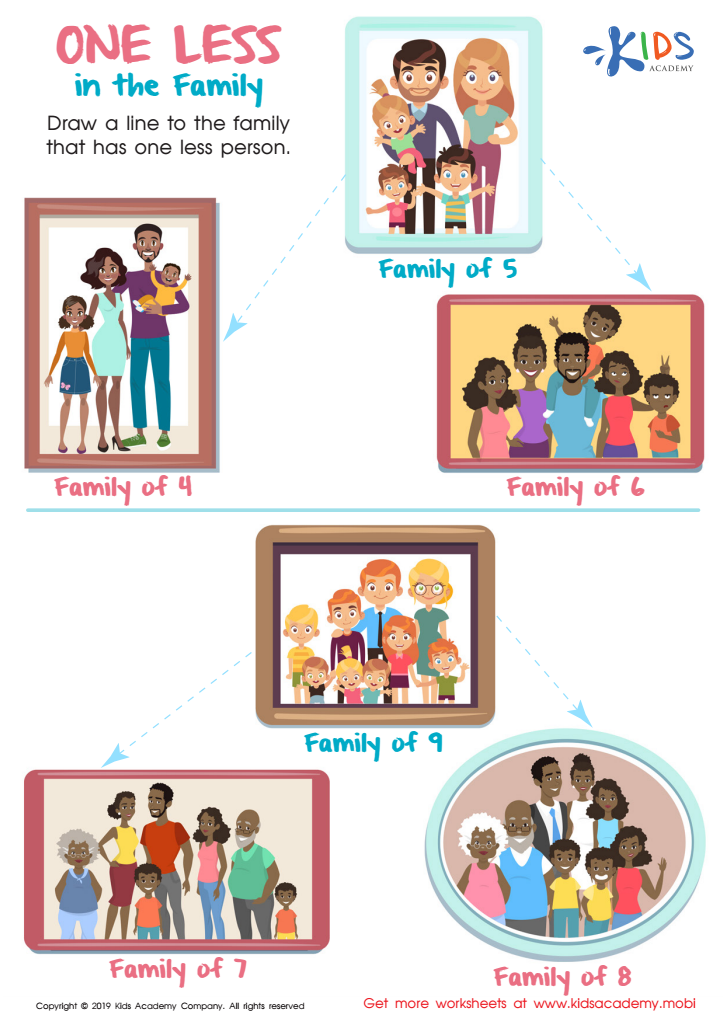
One Less in the Family Worksheet
How many people are in your family? Can your little ones count and tell you? A family usually consists of a mum, dad and kids, but may also include grandparents, uncles, aunties and cousins. This worksheet has pictures of different families; help your kids count the members and draw a line to the one with one less person.
One Less in the Family Worksheet
Worksheet
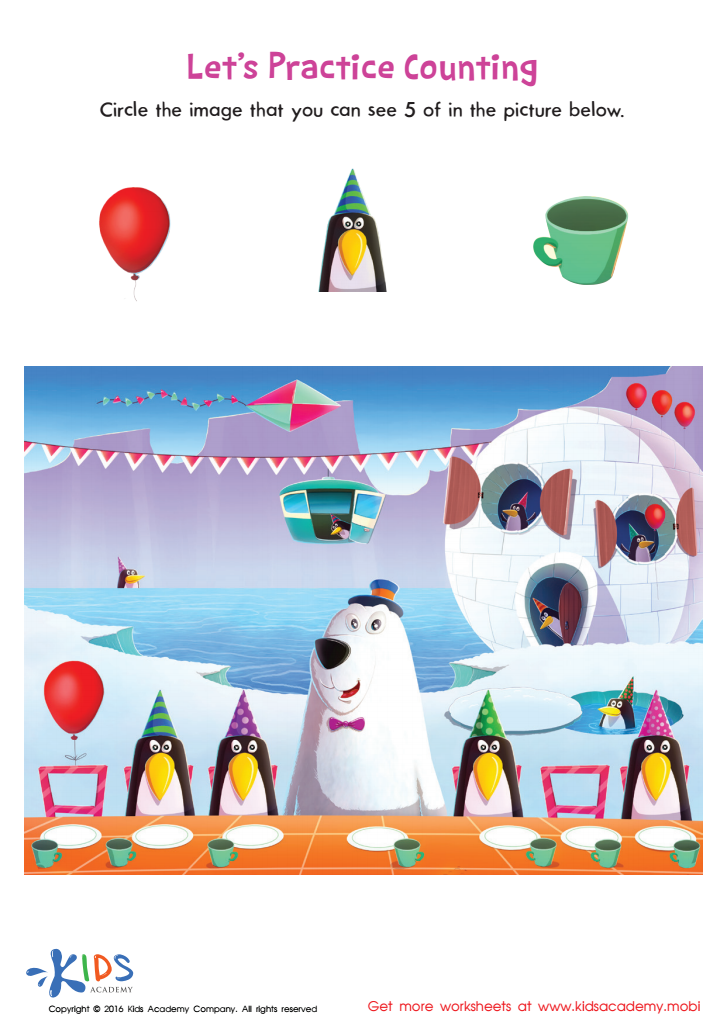
Counting Worksheet: Let's Practice Counting
Celebrate with the Arctic animals! This fun counting worksheet will help your child hone counting, problem-solving and attention skills. Let them explore important concepts through a process of elimination as they help the animals count guests and supplies. A great way to learn and have fun!
Counting Worksheet: Let's Practice Counting
Worksheet
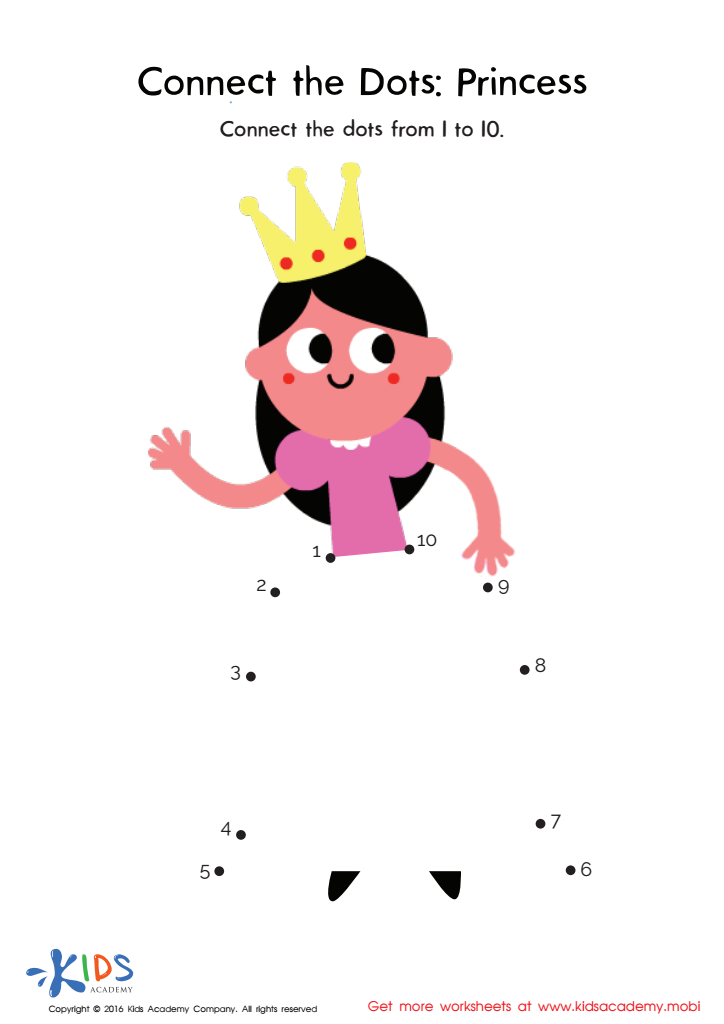
Princess Connect Dots Worksheet
Kids love fairy tales and their enchanting characters. With this princess connect the dots worksheet, your child will practice recognizing numbers, boost creativity, and find out that following the numbers leads to a beautiful picture. After connecting the dots, let your child decorate the princess’ dress for even more fun. It's a great way for kids to practice skills with plenty of fun and joy!
Princess Connect Dots Worksheet
Worksheet
Join Kids Academy for Free
Who is primarily going to use this learning content?


.jpg)



Number sequencing is a foundational math skill that plays a crucial role in early childhood education, particularly for children ages 4-6. Parents and teachers should prioritize Number Sequencing Extra Challenge Math for several reasons.
Firstly, it helps young learners develop essential cognitive skills. By engaging in sequencing activities, children practice logical reasoning, pattern recognition, and memory, which are vital skills for their overall academic journey.
Secondly, mastering number sequencing enhances children’s understanding of basic numerical concepts. It lays the groundwork for arithmetic skills, such as addition and subtraction, by reinforcing the concepts of ‘before’ and ‘after’, which are fundamental for more complex mathematics later on.
Additionally, number sequencing supports language development. As children verbalize numbers and sequences, they build vocabulary and improve their communication skills.
Finally, providing extra challenge in math engages and motivates children, fostering a love for learning. Tailoring activities to meet each child's needs can help instill confidence and persistence in problem-solving.
In conclusion, emphasizing number sequencing challenges during the early years fosters cognitive development, builds essential math skills, enhances language abilities, and encourages a positive attitude toward learning, benefiting children both academically and socially.