Basic Counting Extra Challenge Worksheets for Ages 4-7
3 filtered results
-
From - To
Boost your child's numeracy skills with our "Basic Counting Extra Challenge Worksheets." Tailored for ages 4-7, these engaging worksheets make learning numbers fun and rewarding. Each worksheet is designed to challenge budding mathematicians with exciting counting tasks, encouraging critical thinking and development. Whether counting objects, matching numbers, or identifying missing numerals, your child will enhance their foundational math skills effortlessly. Perfect for both classroom use and home practice, these printable PDFs are your go-to resource for inspiring a love for numbers in every curious young mind. Let’s make math an adventure!
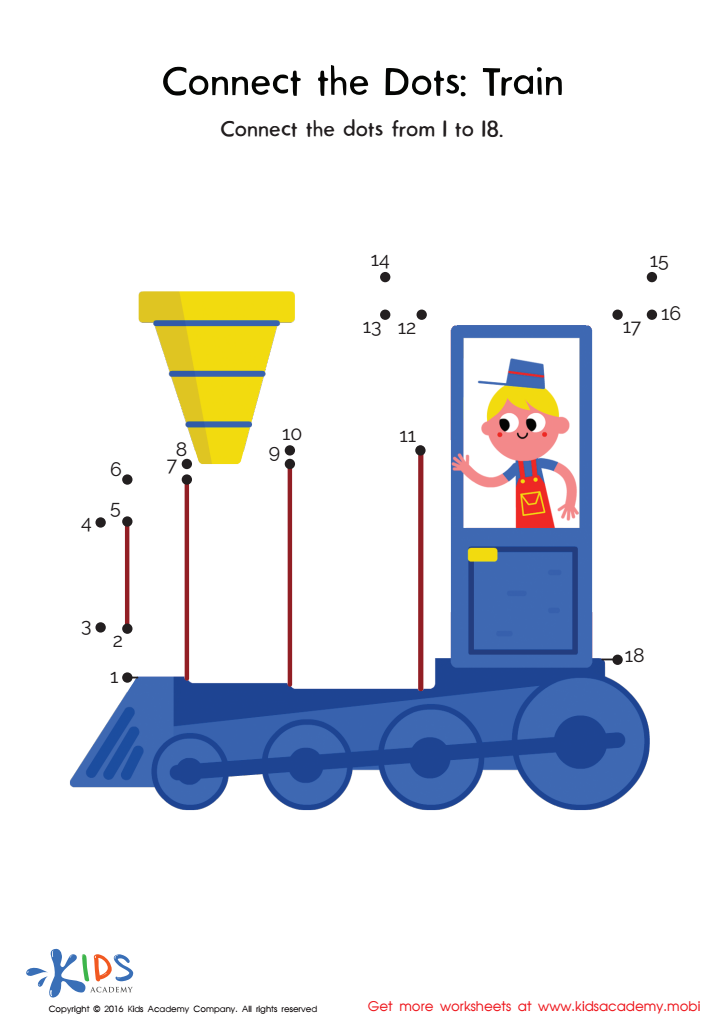
 Assign to My Students
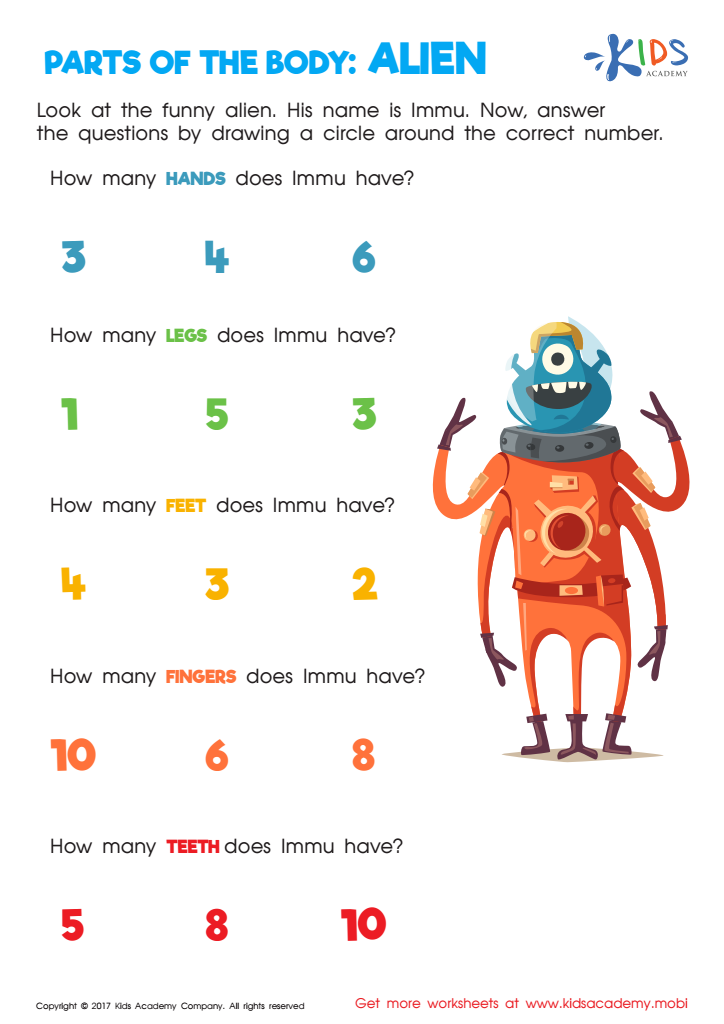
Alien Worksheet
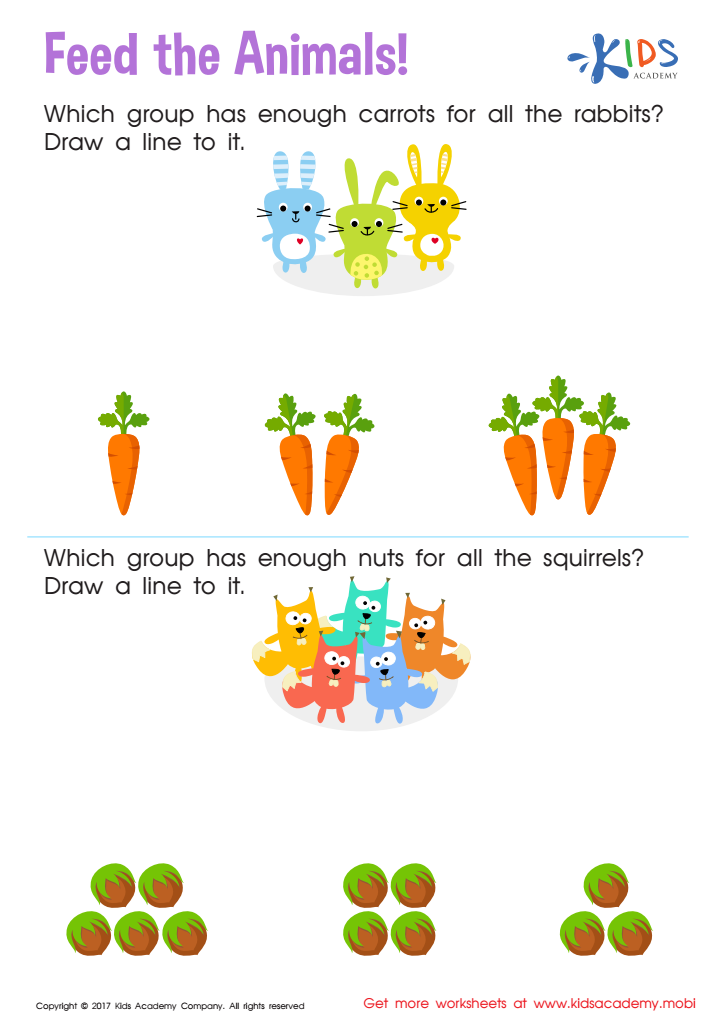
Count and Match: Feed the Animals Worksheet







Parents and teachers should prioritize the Basic Counting Extra Challenge for ages 4-7 because early numeracy skills lay the foundation for broader mathematical understanding and future academic success. Engaging young learners in counting activities can significantly enhance their number sense, which is critical for more complex math concepts like addition, subtraction, multiplication, and division.
One immediate benefit is the development of cognitive skills such as memory and attention. Activities that require children to keep track of numbers, sequences, and patterns promote brain development, boosting both computational fluency and general problem-solving abilities. Moreover, these exercises reinforce children's understanding of one-to-one correspondence, enabling them to grasp that numbers represent specific quantities.
Additionally, introducing counting challenges at an early age nurtures a positive attitude towards learning. Kids who find joy and achievement in early counting are more likely to develop curiosity and confidence in math. This enthusiasm can lead to higher academic performance and persistence through challenging tasks.
Socially, basic counting exercises often involve collaborative games or interactive tasks that build children's communication and cooperative skills. Whether at home or in the classroom, these counting challenges create shared learning experiences that strengthen relationships between children and adults, enhancing emotional bonds and fostering a supportive educational environment.








