
Matching skills Extra Challenge Worksheets for Ages 4-7
6 filtered results
Difficulty Level
Grade
Age
-
From - To
Subject
Activity
Standards
Enhance your child's cognitive development with our Matching Skills Extra Challenge Worksheets for ages 4-7! Designed to engage young learners, these worksheets focus on boosting memory, attention, and logical thinking through fun, age-appropriate activities. Featuring colorful images, diverse themes, and increasing difficulty levels, these worksheets provide an exciting way for children to practice and improve their ability to recognize patterns, relate objects, and make connections. Perfect for both classroom and home use, these extra challenges ensure kids stay motivated and achieve their learning milestones while having fun. Unlock your child’s full potential with our expertly crafted matching skills worksheets!
Favorites
With answer key
Interactive
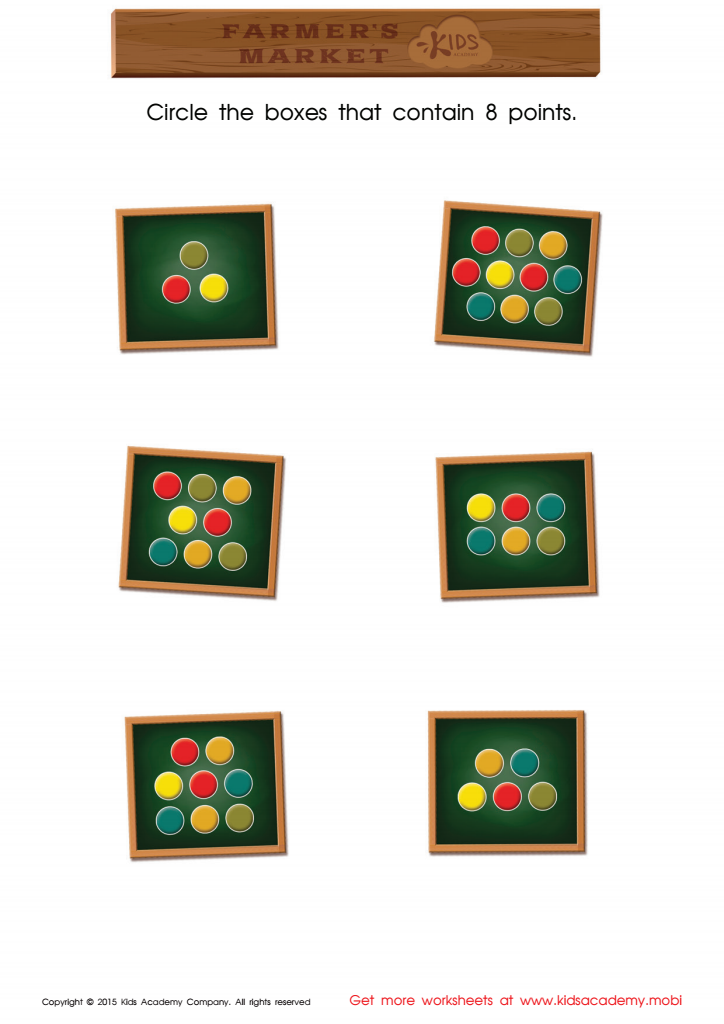
Count and Match Points 8 Math Worksheet
This free PDF helps children develop their number skills by counting the points in the boxes. Each box contains a total of 9 points, making it a fun and colorful activity. Parents can encourage their young ones by guiding them if they need help counting. By the end of the worksheet, children should have a better understanding of numbers.
 Assign to My Students
Count and Match Points 8 Math Worksheet
Worksheet
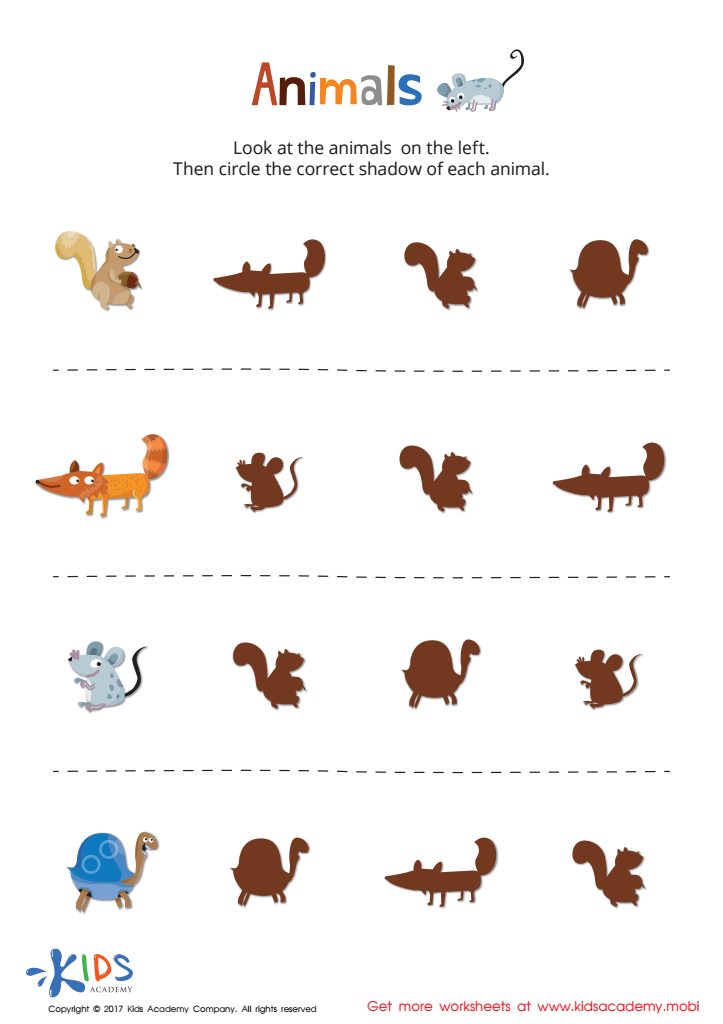
Animal Shadows Sorting Worksheet
This fun worksheet helps your child sharpen many skills. It features animals to match shapes and practice relative directions. Your child will sort animal features, practice spatial recognition, and recognize right/left. Plus, you can use it to start conversations about the animals. And try it also with fruits and veggies to boost sorting skills.
Animal Shadows Sorting Worksheet
Worksheet
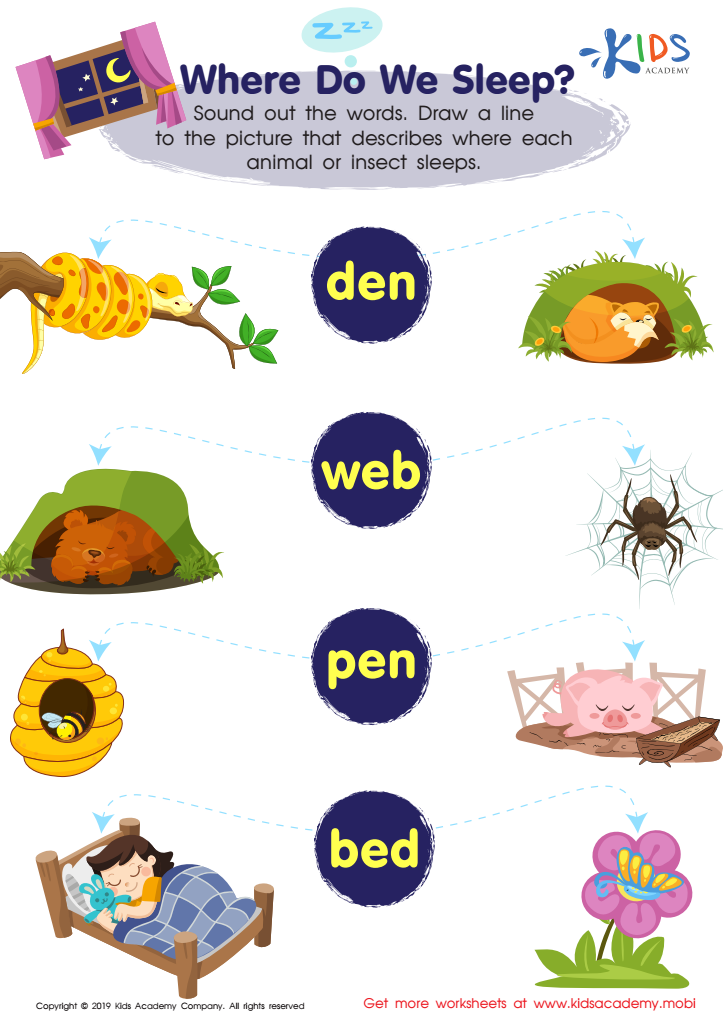
Where Do We Sleep Worksheet
Help your kids understand the importance of a safe space with this activity: Ask them to draw a line connecting the different animals and insects to the words that describe where they sleep. Remind them that everyone needs a sanctuary to rest – like the animals and insects in this printout.
Where Do We Sleep Worksheet
Worksheet
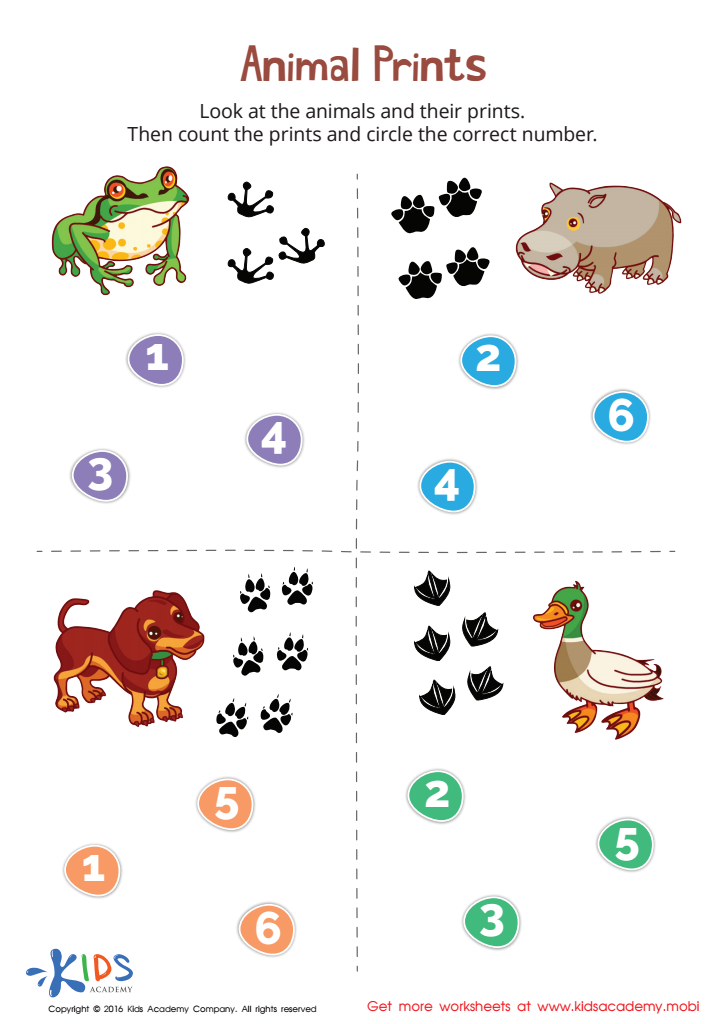
Animal Prints Match-Up Worksheet
Help your little learner build early math skills with this fun animal paw prints worksheet. With it, they'll count, recognize numbers, and learn about the animals that make the paw prints. Talk to them about the prints and ask them to count. They'll love exploring and learning about the different animals, all while sharpening essential math skills!
Animal Prints Match-Up Worksheet
Worksheet
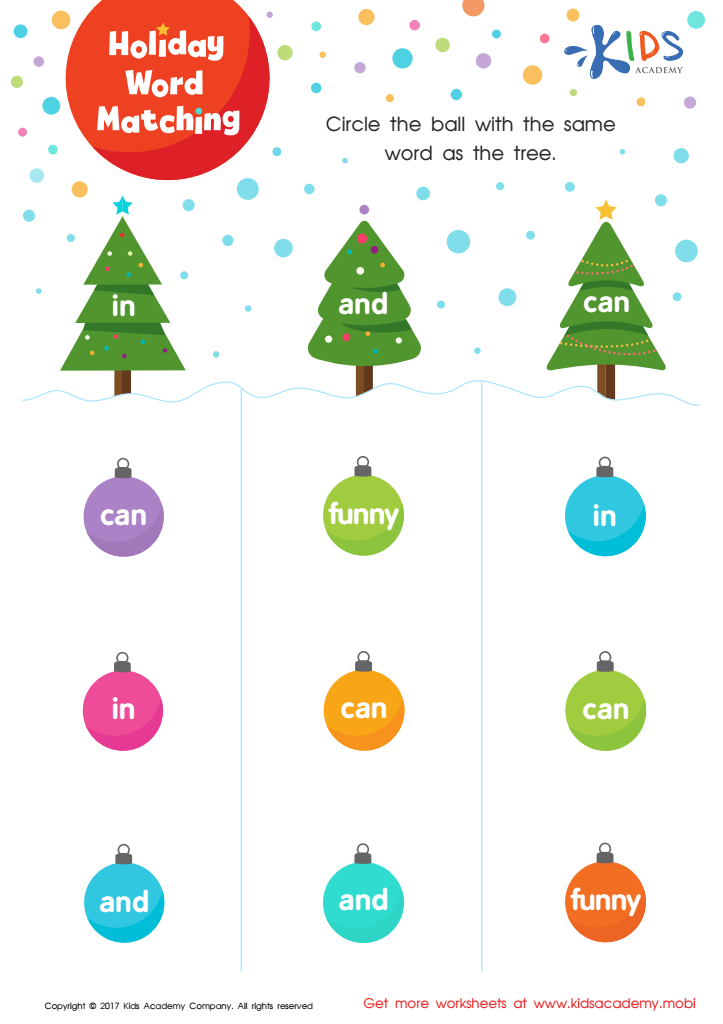
Holiday Word Matching Worksheet
Decorate with Kids Academy this year! Keep kids learning this holiday season with this festive worksheet. Let them look for sight words on Christmas trees then circle the matching ornament to decorate. It's a fun and educational way to enjoy the holidays!
Holiday Word Matching Worksheet
Worksheet
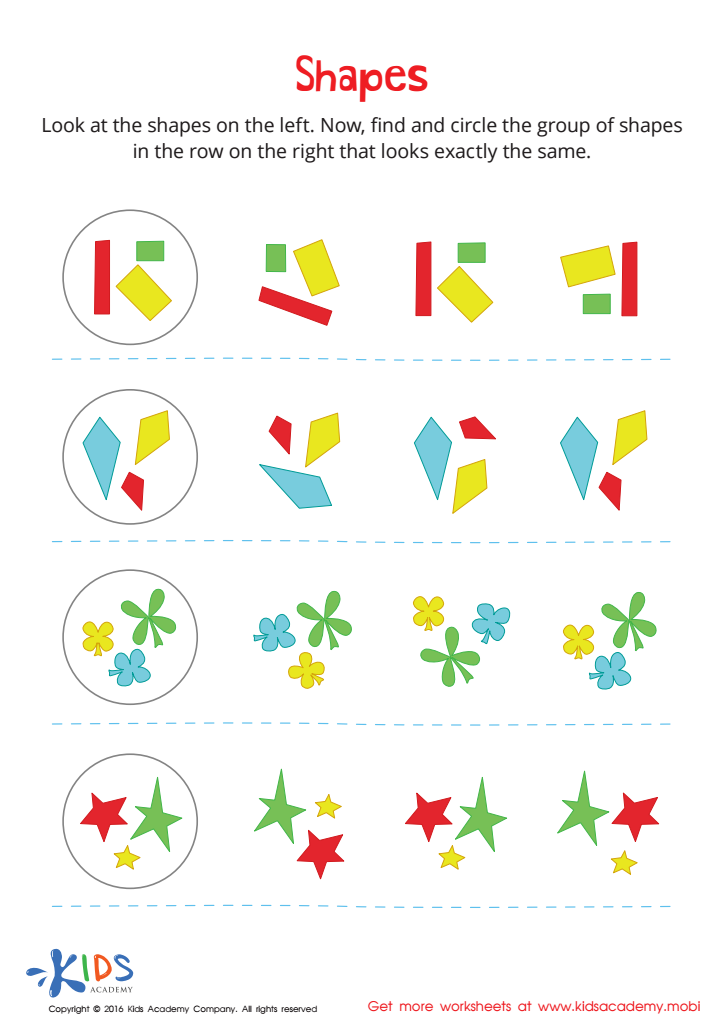
Shapes Worksheet
This fun worksheet will challenge your child to recognize tricky patterns, sort through similar ones, and create strategies to get the right answer. It'll also help them to strengthen problem-solving skills and build confidence. With more challenging tasks, your child will be ready to tackle higher level math and sequencing skills.
Shapes Worksheet
Worksheet
Join Kids Academy for Free
Who is primarily going to use this learning content?








Matching skills are essential for young children (ages 4-7) as they provide a foundational block for cognitive development and future learning. When parents or teachers emphasize matching skills through extra challenges, they substantially support a child's mental growth and academic readiness.
First, matching activities enhance visual discrimination, which helps children differentiate between shapes, colors, sizes, and patterns--crucial skills for reading, writing, and mathematics later on. Recognizing these differences can make it easier for a child to distinguish between similar-looking letters or numbers, contributing to better literacy and numeracy skills.
Second, matching exercises bolster memory and concentration as kids must remember specific attributes and retain that information to find matches. This consistent practice in recalling details directly supports brain development, enabling children to improve their working memory and attention span.
Third, these challenges foster problem-solving abilities and logical thinking. Kids learn to identify relationships between objects, practice categorization, and apply critical thinking to complete the tasks. The skills they acquire—or sharpen—during these activities form the basis for more complex problem-solving situations in everyday life and school.
Moreover, matching skills add an element of fun and confidence-building. Successfully completed challenges can boost a child’s self-esteem, making learning a positive and encouraging experience. Hence, parents and teachers should prioritize matching skill activities to lay a robust educational foundation for young learners, facilitating their overall cognitive and emotional development.








