Story sequencing Extra Challenge Worksheets for Ages 4-7
5 filtered results
-
From - To
Enhance your child's understanding of narrative structure with our "Story Sequencing Extra Challenge Worksheets for Ages 4-7." These engaging worksheets are designed to boost critical thinking and comprehension skills as young learners arrange events in the correct order. Perfect for at-home learning or classroom activities, our extra challenge worksheets encourage creativity and enhance vocabulary through fun illustrations and relatable stories. Aligned with early educational standards, they provide an excellent supplement to literacy development. Make storytime an interactive experience and help your child develop essential sequencing skills that form the foundation of effective reading and storytelling. Try them today for an enriching learning experience!
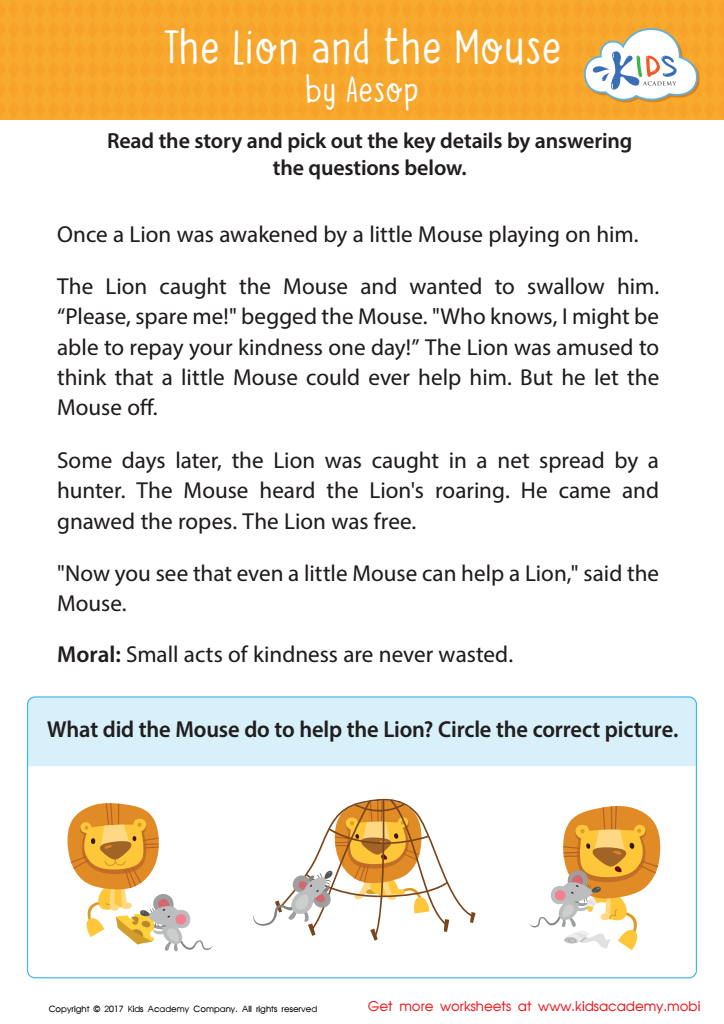
The Lion and The Mouse Sequencing Worksheet
 Assign to My Students
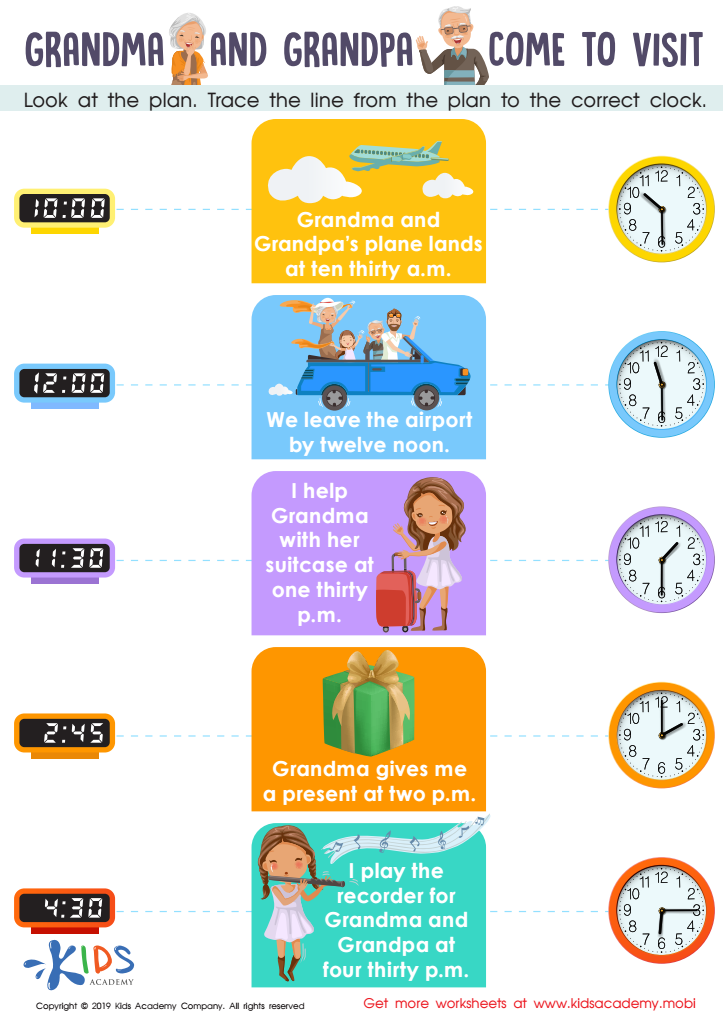
Grandpa and Grandma Come to Visit Worksheet
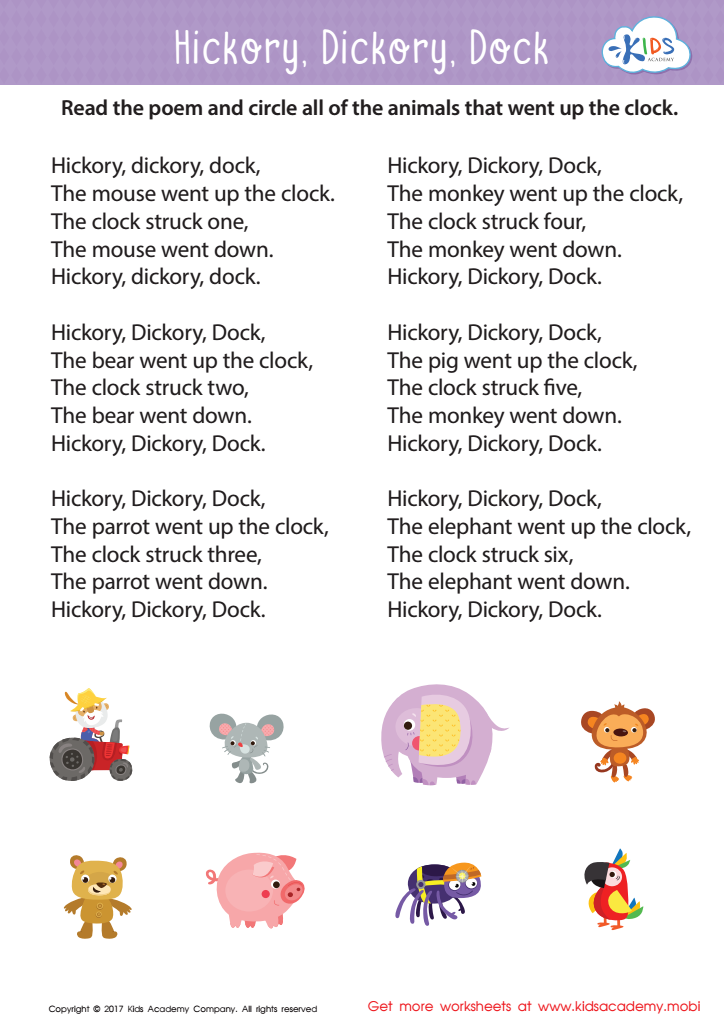
Hickory Dickory Dock Sequencing Worksheet
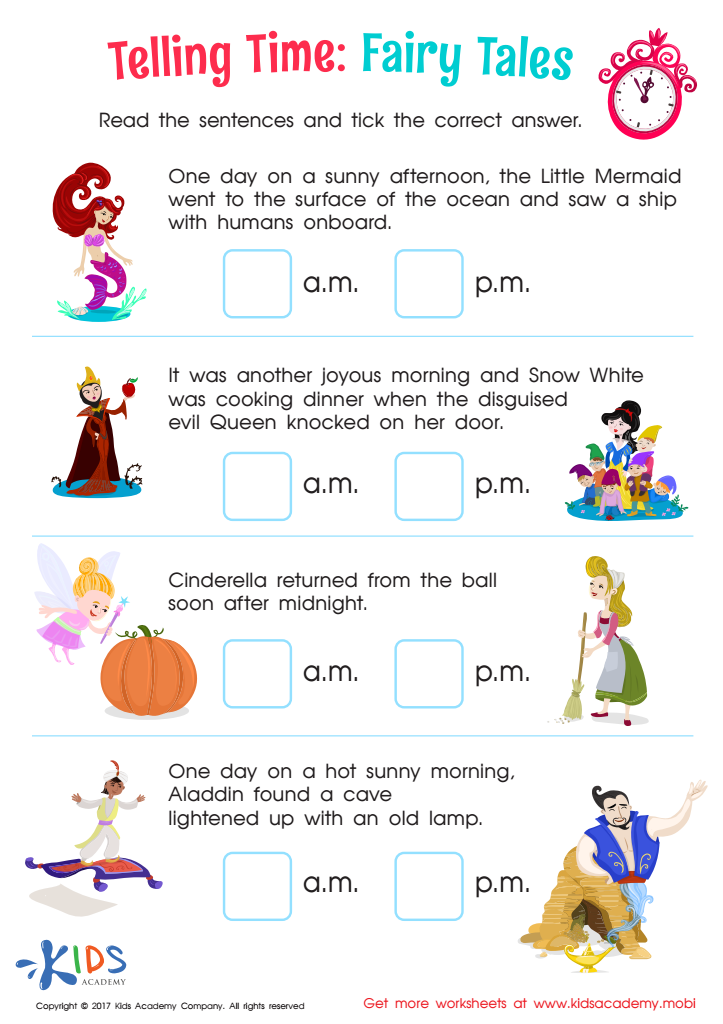
Telling Time: Fairy Tales Worksheet
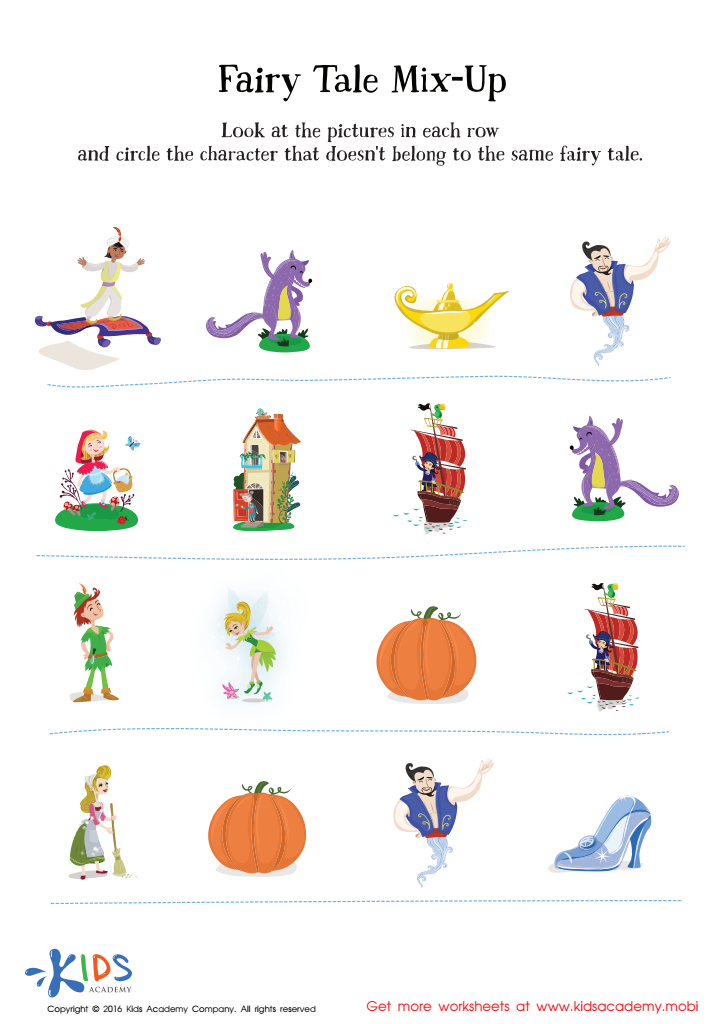
Fairy Tale Worksheet: Story Mix Up





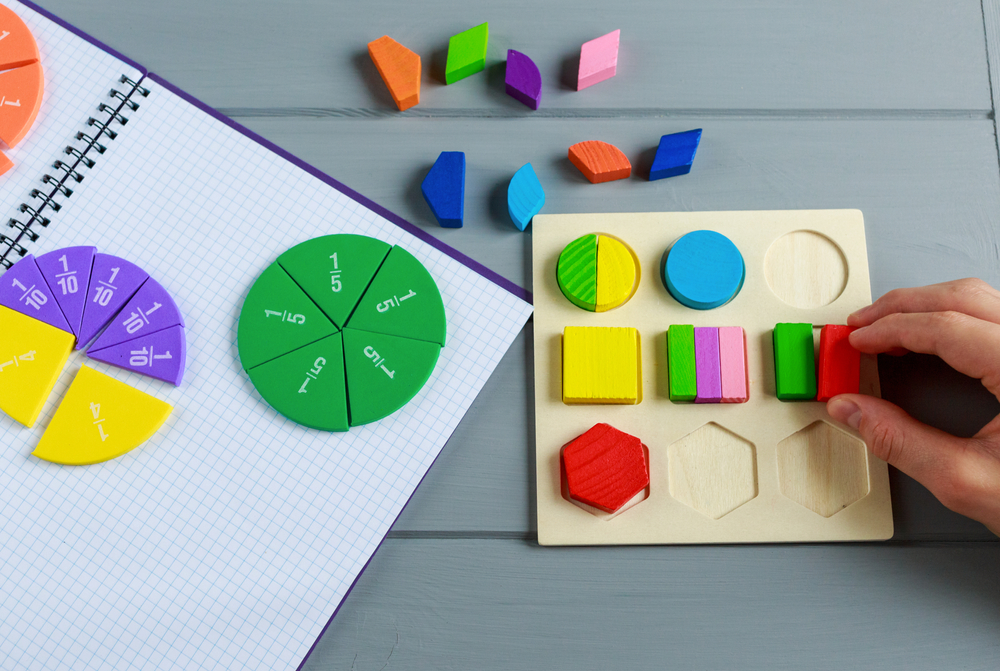

Story sequencing is a crucial skill for young children, as it helps them develop a foundational understanding of narrative structure and enhances their cognitive abilities. Parents and teachers working with children ages 4-7 should care about story sequencing because it fosters critical thinking, comprehension, and communication skills.
Understanding the flow of a story—recognized through the beginning, middle, and end—encourages kids to organize their thoughts and articulate their ideas clearly. This process also sparks creativity, allowing children to envision alternative plot lines or endings, fostering imaginative play.
Moreover, story sequencing activities improve memory retention. When children engage in sequencing exercises, they practice recalling events and details, strengthening their overall cognitive functions. These activities often involve visual aids, like picture cards, promoting visual literacy that is crucial for later learning stages.
Engaging with story sequencing also enhances social skills, as children typically work in groups or pairs, leading to collaborative problem-solving and communication. Through shared stories, kids learn empathy and perspective-taking, essential for emotional development.
By emphasizing story sequencing, parents and teachers not only boost literacy skills but also promote a holistic learning environment where creativity, critical thinking, and emotional intelligence thrive.








