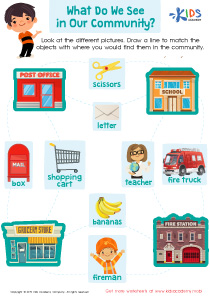
Money counting skills Extra Challenge Math Worksheets for Ages 4-7
3 filtered results
-
From - To
Enhance your child's money counting abilities with our Extra Challenge Math Worksheets tailored for ages 4-7! Designed to build strong foundational skills, these engaging worksheets help young learners identify, count, and manage different denominations of money. Perfect for reinforcing math concepts through fun exercises and colorful illustrations. Each worksheet is crafted to challenge young minds while keeping learning enjoyable. Encourage your child's confidence and proficiency in handling money, an essential life skill. Ideal for both classroom use and home practice, these worksheets are a perfect addition to any early math education curriculum. Get started today!
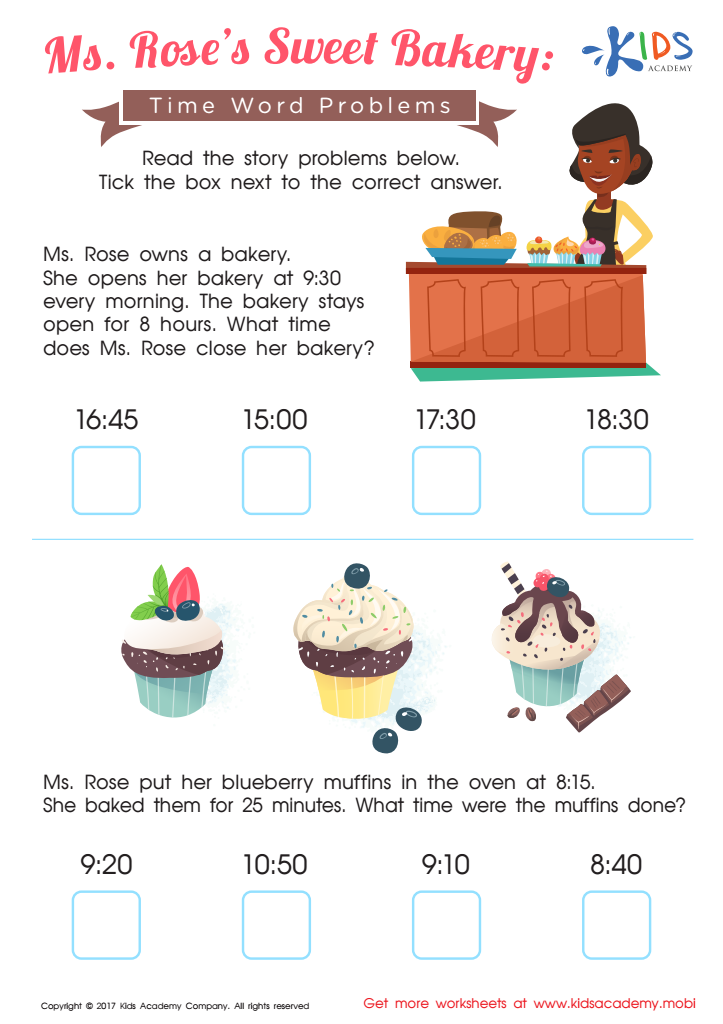
Ms. Roseв's Sweet Bakery Time Worksheet
 Assign to My Students
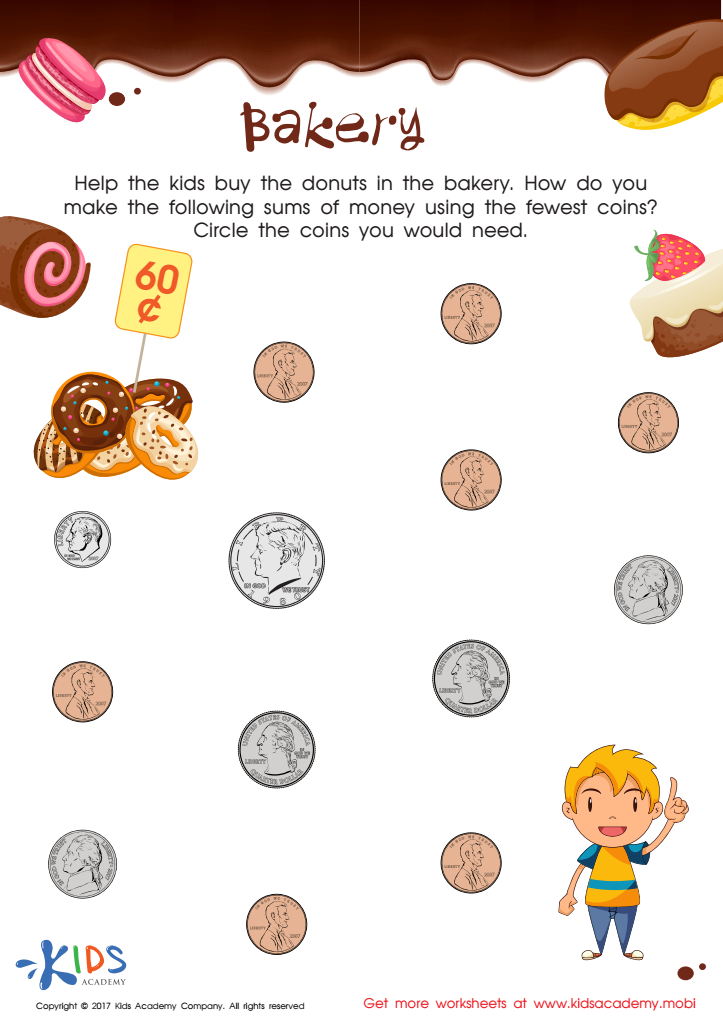
Counting Coins Worksheet
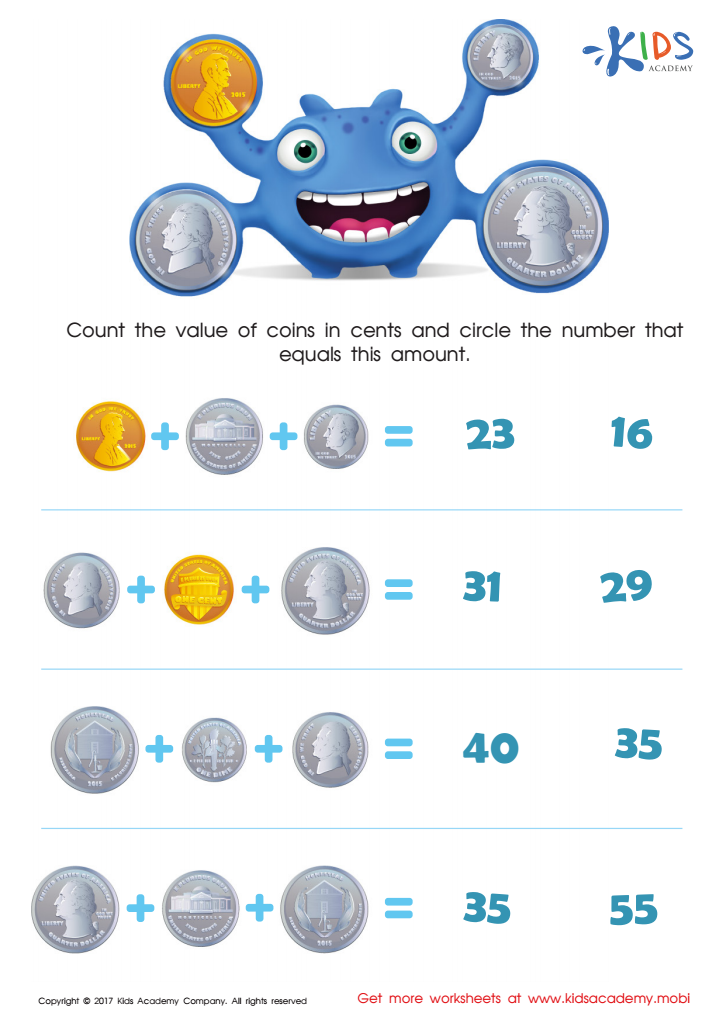
Counting the Coins Money Worksheet








Developing money counting skills through extra challenge math activities for children aged 4-7 is crucial for several reasons. First, it lays a solid foundation for essential mathematical concepts. By engaging with money counting at an early age, children enhance their understanding of numbers, addition, subtraction, and the value of different denominations. This strong mathematical foundation is vital for future academic success.
Secondly, these activities foster essential life skills. Understanding money equips children with practical knowledge they'll use in everyday situations, such as making purchases and understanding cost. These skills also promote financial literacy, arming children with the tools they need to manage money responsibly later in life.
Furthermore, money counting exercises encourage problem-solving and critical-thinking abilities. As children figure out how to count, combine different coins, and make change, they are actively engaging their brains to solve practical problems. This fosters cognitive development and boosts confidence in handling challenging tasks.
Lastly, early exposure to money concepts can lead to positive attitudes towards math. Incorporating money counting into fun and engaging activities ensures that learning is enjoyable and relevant, preventing math anxiety later in life. Therefore, parents and teachers should prioritize money counting skills to nurture well-rounded, mathematically proficient, and financially savvy individuals.