Letter recognition Extra Challenge Alphabet Worksheets for Ages 4-8
8 filtered results
Difficulty Level
Grade
Age
-
From - To
Subject
Activity
Standards
Unlock your child’s potential with our “Letter Recognition Extra Challenge Alphabet Worksheets,” designed for ages 4-8. These engaging worksheets offer a fun and interactive way for young learners to master letter recognition through various activities, from tracing and identifying letters to matching and sorting. Each worksheet is thoughtfully crafted to enhance fine motor skills while promoting cognitive development. Perfect for early learners looking for a little extra challenge, these resources ensure children build a strong foundation in literacy. Dive into a world of learning and help your child become confident in their letter recognition skills today!
Favorites
With answer key
Interactive
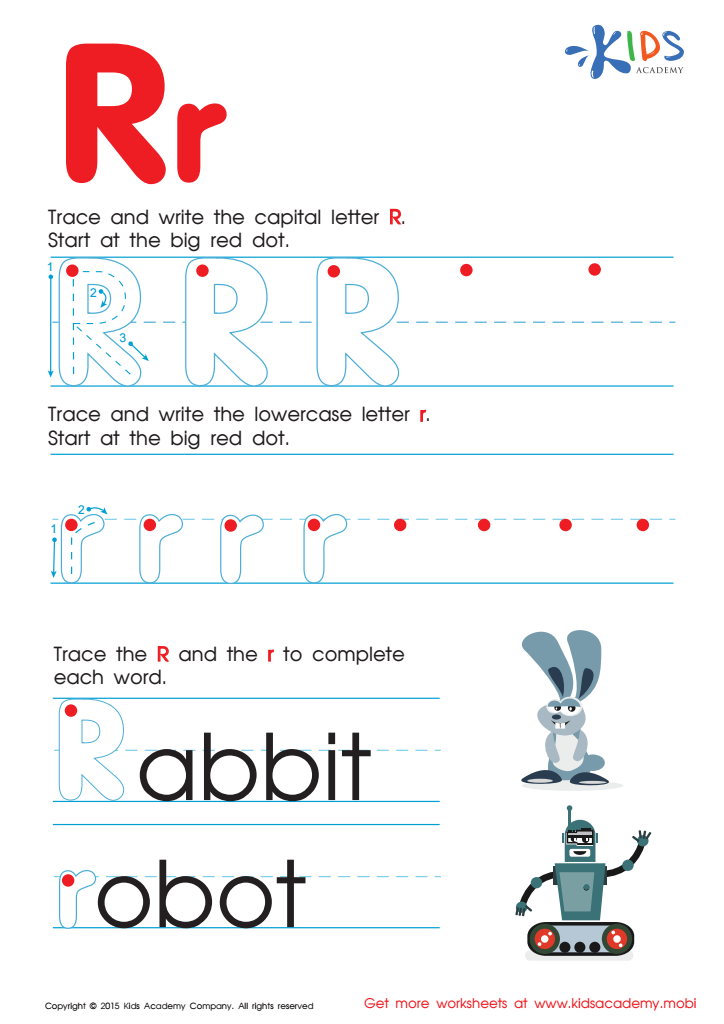
Letter R Tracing Page
Trace and write the letter "R" with this worksheet for kindergarten. Start with the uppercase, then move on to the lowercase. Write the letters several times for practice. Then help complete the words for the rabbit and robot, spelling carefully. More ABC worksheets can be found at Kids Academy.
 Assign to My Students
Letter R Tracing Page
Worksheet
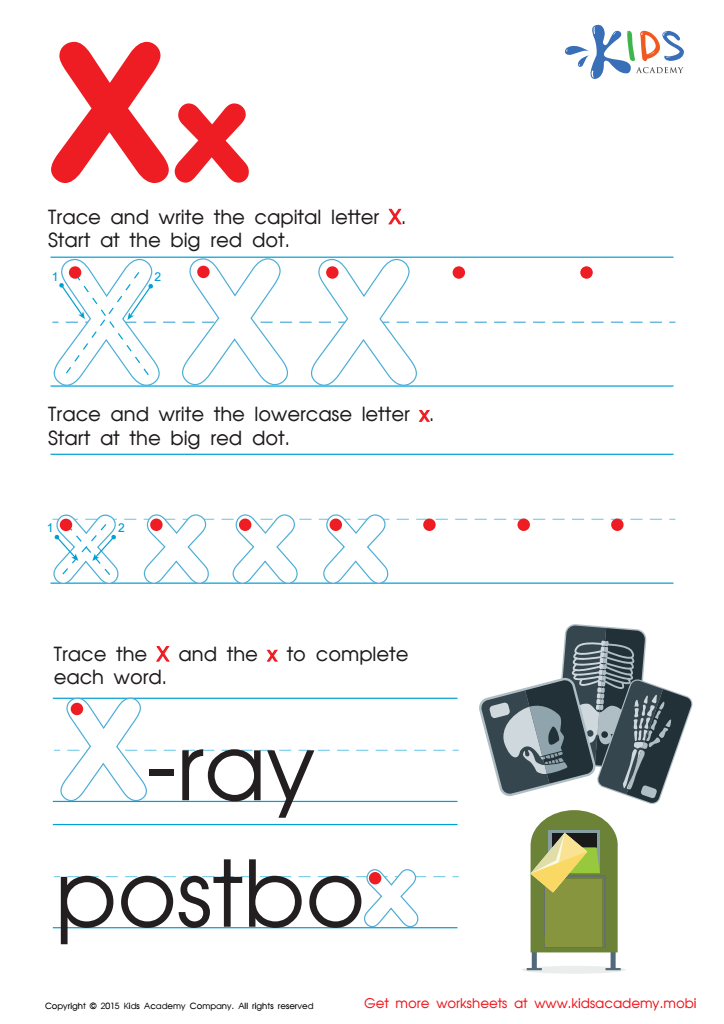
Letter X Tracing Page
Trace the uppercase letter "X" to learn, then write it yourself and practice. Then do the same with the lowercase "x" before completing the words "X-ray" and "postbox". Enjoy our alphabet printables!
Letter X Tracing Page
Worksheet
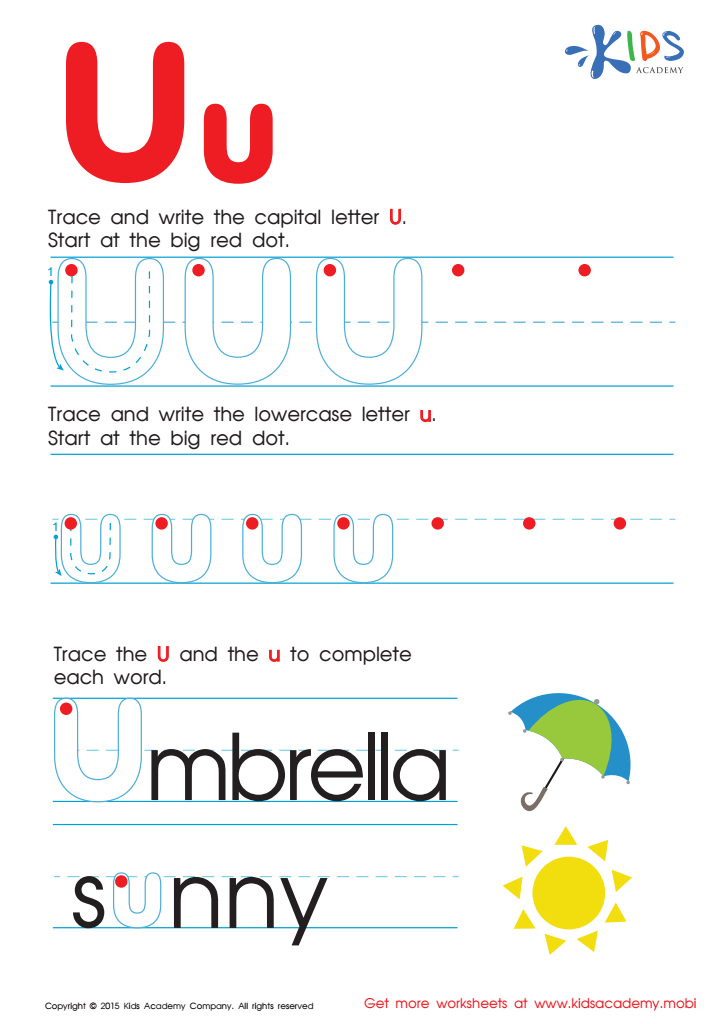
Letter U Tracing Page
Ready to trace and write the letter "U"? Use our worksheet and practice tracing both uppercase and lowercase letters. Complete the words "umbrella" and "sunny" with a capital "U". Check our full collection of alphabet printables for more activities.
Letter U Tracing Page
Worksheet
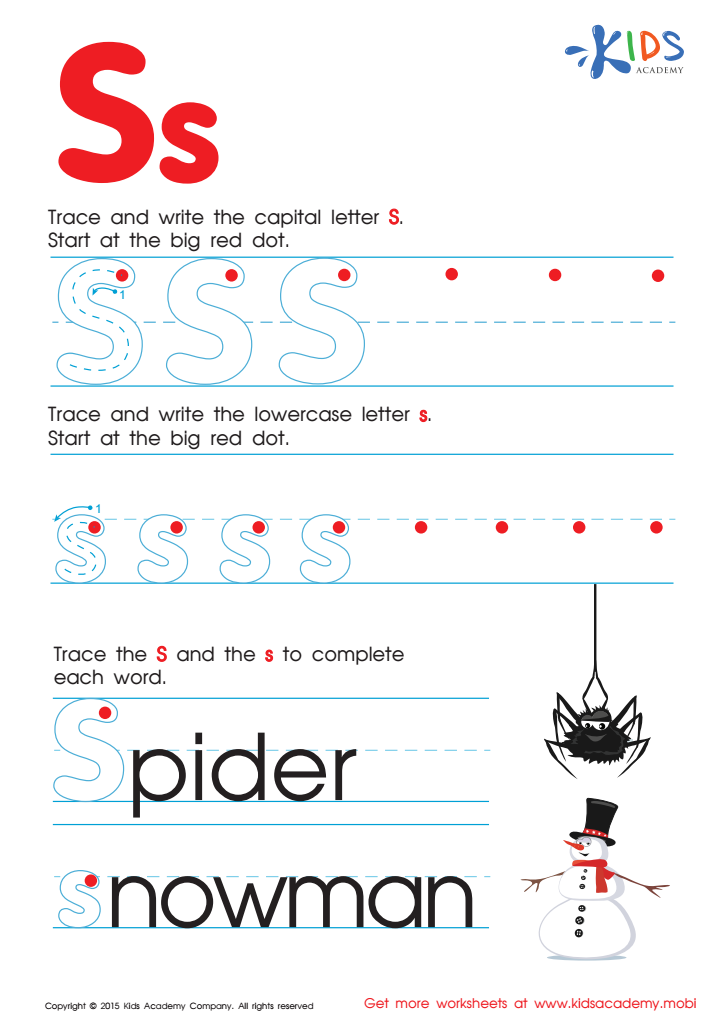
Letter S Tracing Page
Trace and write the capital and lowercase "S" on this ABC worksheet for kindergarten. Start with the big red dot and be careful. When you finish, help the spider and snowman in the pictures restore their words with the capital and lowercase letters. Continue learning the alphabet with Kids Academy.
Letter S Tracing Page
Worksheet
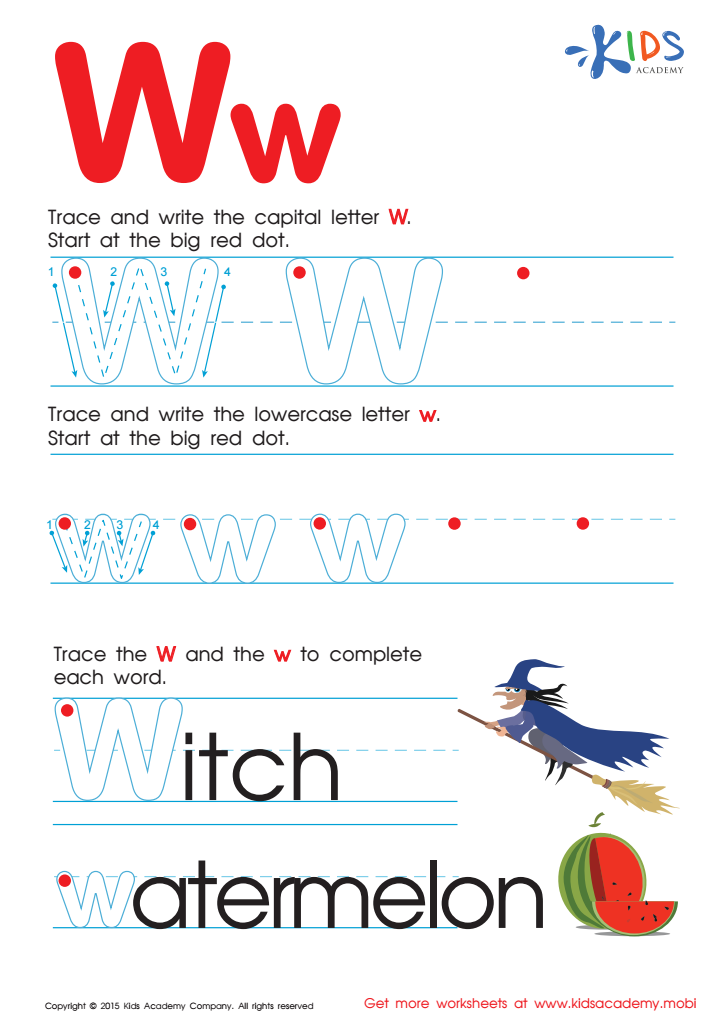
Letter W Tracing Page
Trace and write the capital and lowercase letter W with this free letter tracing worksheet by Kids Academy. Complete the words "Witch" (capital) and "watermelon" (lowercase). Check out our other kindergarten alphabet worksheets!
Letter W Tracing Page
Worksheet
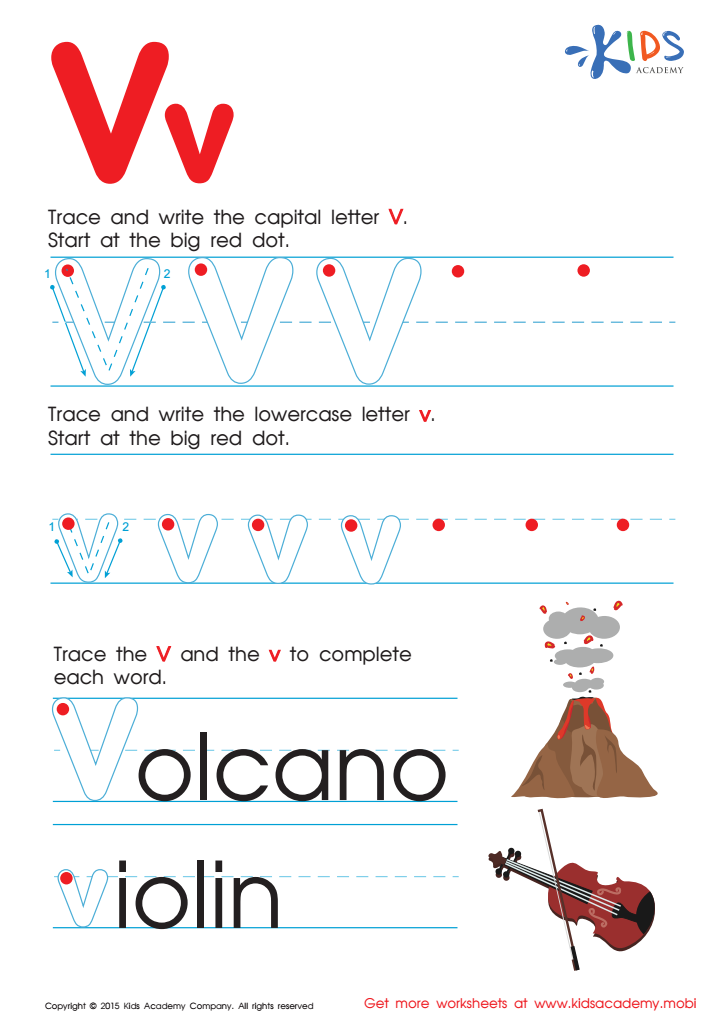
Letter V Tracing Page
Trace the uppercase and lowercase letter "V" with our kindergarten tracing worksheet. Begin at the red dot and follow the lines. Write it several times. Complete the words "Volcano" and "violin". Get more alphabet activities at Kids Academy.
Letter V Tracing Page
Worksheet
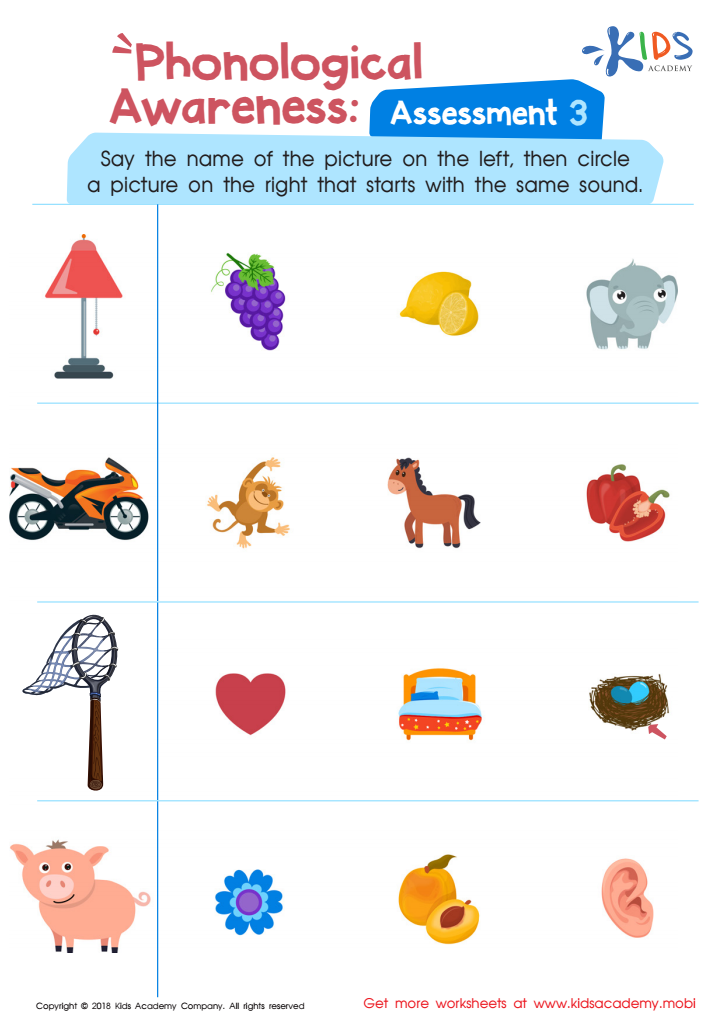
Phonological Awareness: Assessment 3 Worksheet
Test kids' reading readiness with a phonological awareness worksheet! With this PDF exercise, encourage children to name each picture aloud and match left to right. Help them learn to recognize word sounds at the start, middle and end of words. They'll be sure to remember that lamp doesn't sound like elephant!
Phonological Awareness: Assessment 3 Worksheet
Worksheet
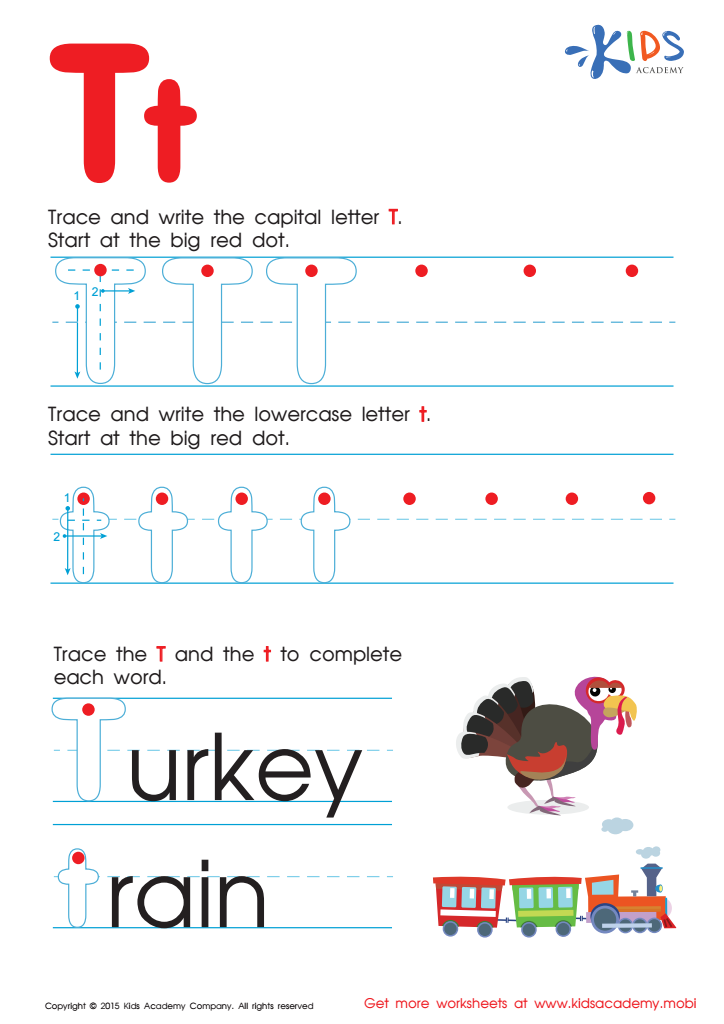
Letter T Tracing Page
Trace letters, complete words, draw pictures and see your kids having fun!
Kids Academy offers alphabet tracing worksheets to learn to write letters. Start with the big red dot, trace the letter, then write it. Practice uppercase and lowercase. Have fun completing words with a Turkey or a rain-train and draw pictures. Get more printable worksheets to make learning enjoyable.
Letter T Tracing Page
Worksheet
Join Kids Academy for Free
Who is primarily going to use this learning content?







Letter recognition is a foundational skill critical for young learners aged 4-8, as it sets the stage for reading and writing. The "Extra Challenge Alphabet" program places a particular emphasis on enhancing this crucial skill in an engaging manner, making it beneficial for both parents and teachers.
First, children's ability to identify letters influences their literacy development. Early recognition fosters phonemic awareness, leading to better decoding skills when children learn to read. By providing extra challenges, such as games and activities tailored to their interests, kids are motivated to engage with letters in a fun, meaningful way.
Second, strong letter recognition can bolster a child's confidence in language arts. Mastery at an early stage encourages ongoing enthusiasm for learning, as students see tangible progress. For educators, implementing innovative strategies like the "Extra Challenge Alphabet" can energize the classroom environment and support differentiated learning, catering to children who may need extra support or those seeking advanced challenges.
Lastly, by participating in these activities, parents can actively reinforce their children’s skills at home, strengthening their educational bond. Investing in letter recognition not only paves the way for stronger literacy skills but also nurtures a lifelong love for reading and exploration in young learners.