Basic counting skills Extra Challenge Worksheets for Ages 4-8
4 filtered results
-
From - To
Enhance your child's learning experience with our "Basic Counting Skills Extra Challenge Worksheets" designed for ages 4-8. Perfect for reinforcing early math concepts, these worksheets provide engaging activities that make counting fun and interactive. Each worksheet features unique problems to challenge young minds, helping them develop essential numerical skills. From counting objects to recognizing patterns, your child will build confidence and proficiency in math. Ideal for home learning or supplementary classroom activities, our worksheets are easy to download and print. Elevate your child's counting abilities with these creative challenges today! Explore our collection now for a well-rounded math education.
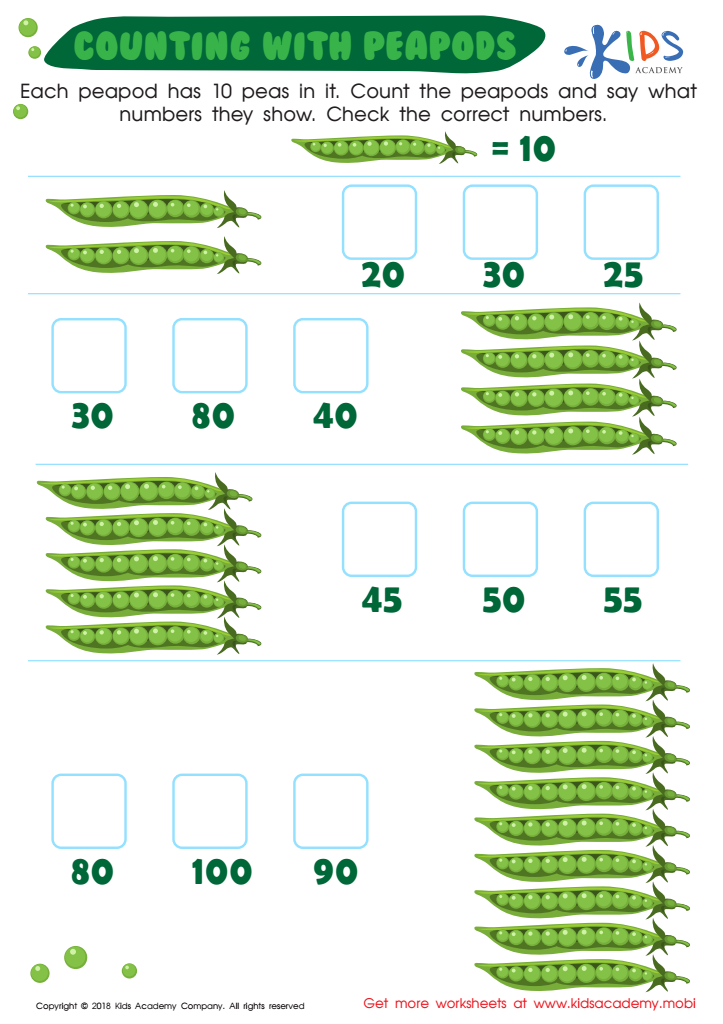
Number Worksheet: Counting With Peapods
 Assign to My Students
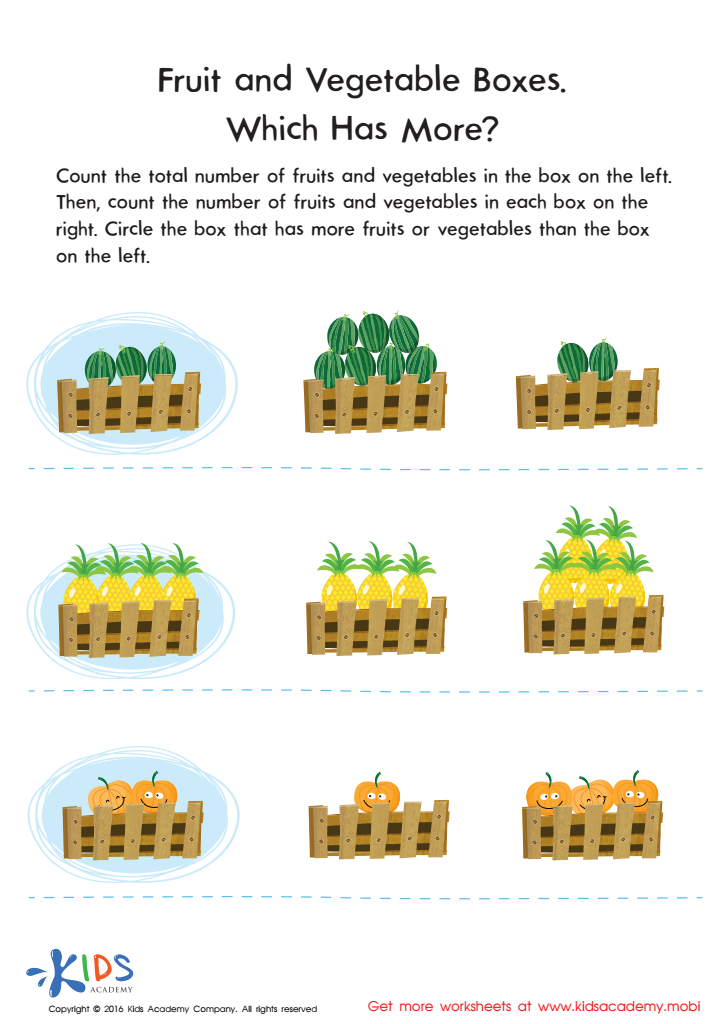
Which Has More? Size Worksheet
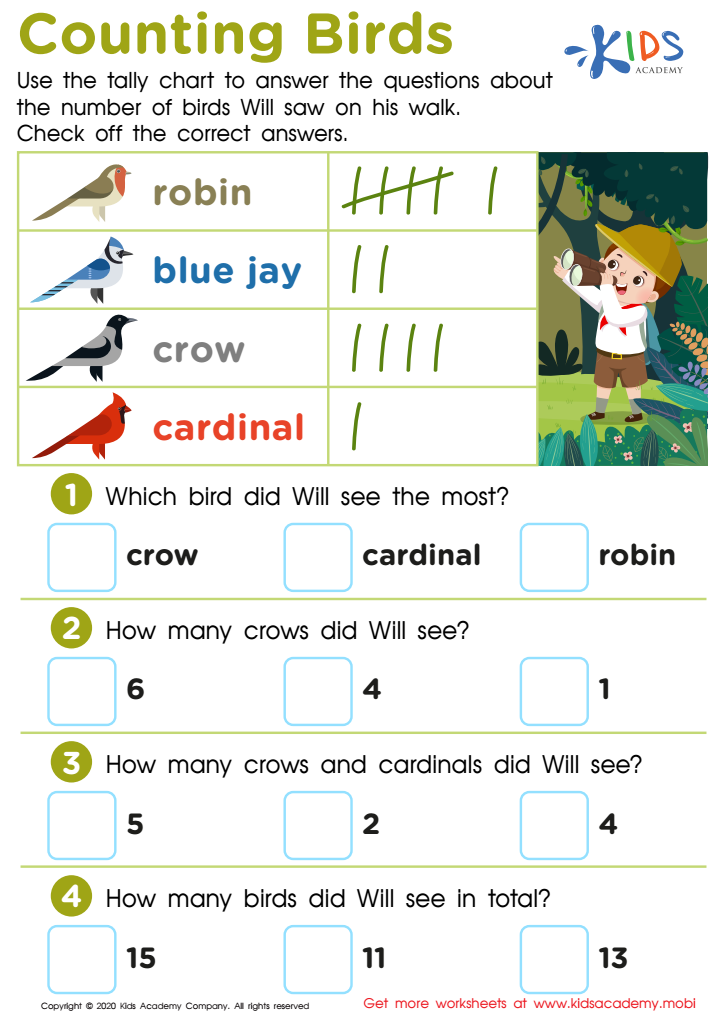
Counting Birds Worksheet
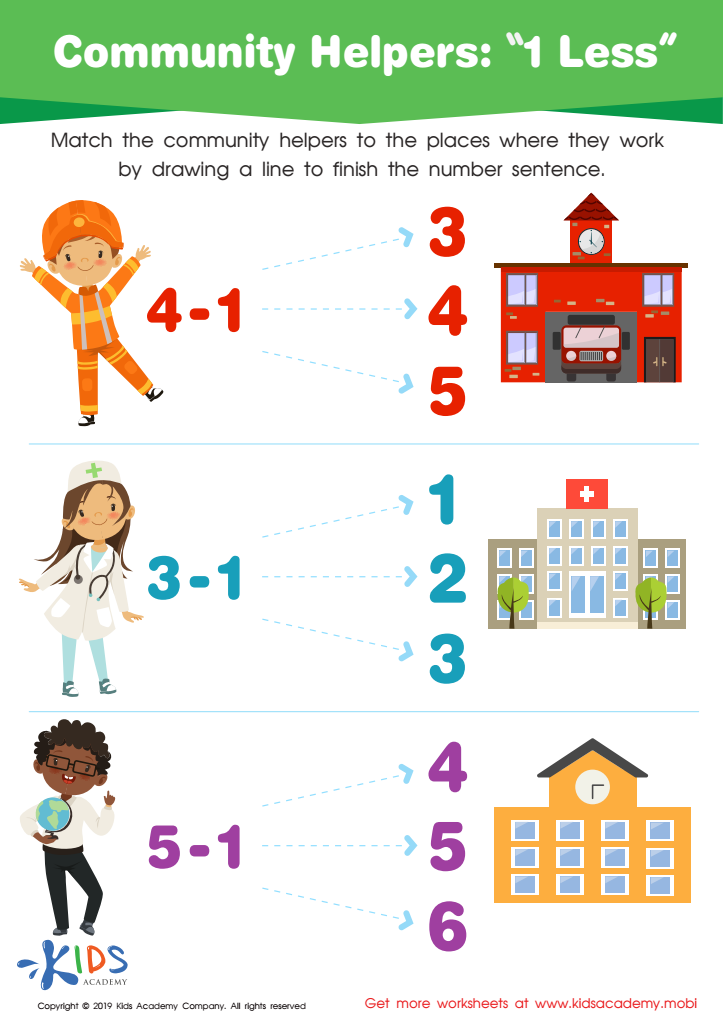
Community Helpers: 1 less Worksheet







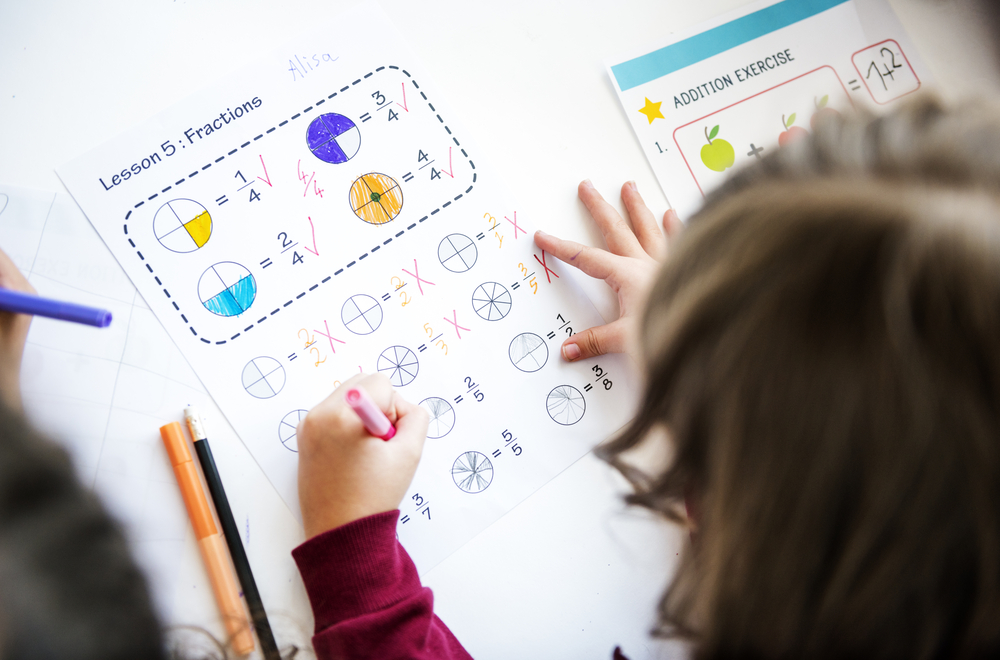
Basic counting skills are foundational for children's cognitive development and future academic success. For children ages 4-8, mastering these skills provides critical benefits and lays the groundwork for advanced mathematical concepts. Parents and teachers should prioritize these skills because understanding number concepts opens doors to problem-solving abilities, logical reasoning, and even early literacy.
Young children naturally experience the world through numbers, making the integration of counting skills into daily activities essential. For instance, counting objects during play, measuring ingredients while cooking, or tracking cars on a road can enhance their counting abilities while making learning enjoyable. Developing confidence in these skills fosters a positive attitude towards math.
Moreover, strong counting skills empower children in school settings, enabling them to engage actively in lessons and group activities. It encourages perseverance and boosts self-esteem when they experience success.
Parents and teachers play a vital role in nurturing these skills by providing engaging and age-appropriate challenges that captivate children’s natural curiosity. Incorporating games, real-life situations, and interactive learning significantly enriches this learning process. Ultimately, fostering basic counting skills is an investment in a child's lifelong learning journey and prepares them for more complex mathematical challenges ahead.








