
Fine motor skills (drawing) Extra Challenge Worksheets for Ages 4-8
4 filtered results
Difficulty Level
Grade
Age
-
From - To
Subject
Activity
Standards
Discover our "Fine Motor Skills (Drawing) Extra Challenge Worksheets" designed specifically for children aged 4-8. These interactive and engaging worksheets provide a fun way to enhance fine motor skills through drawing activities. Each worksheet is thoughtfully crafted to spark creativity while helping kids practice essential skills such as hand-eye coordination, grip strength, and precision. Activities include tracing, connecting dots, and creative drawing tasks that keep young learners motivated. Perfect for parents and teachers, these worksheets make learning enjoyable and rewarding, ensuring that children develop their fine motor abilities in a playful and stimulating environment. Start your child's fine motor journey today!
Favorites
With answer key
Interactive
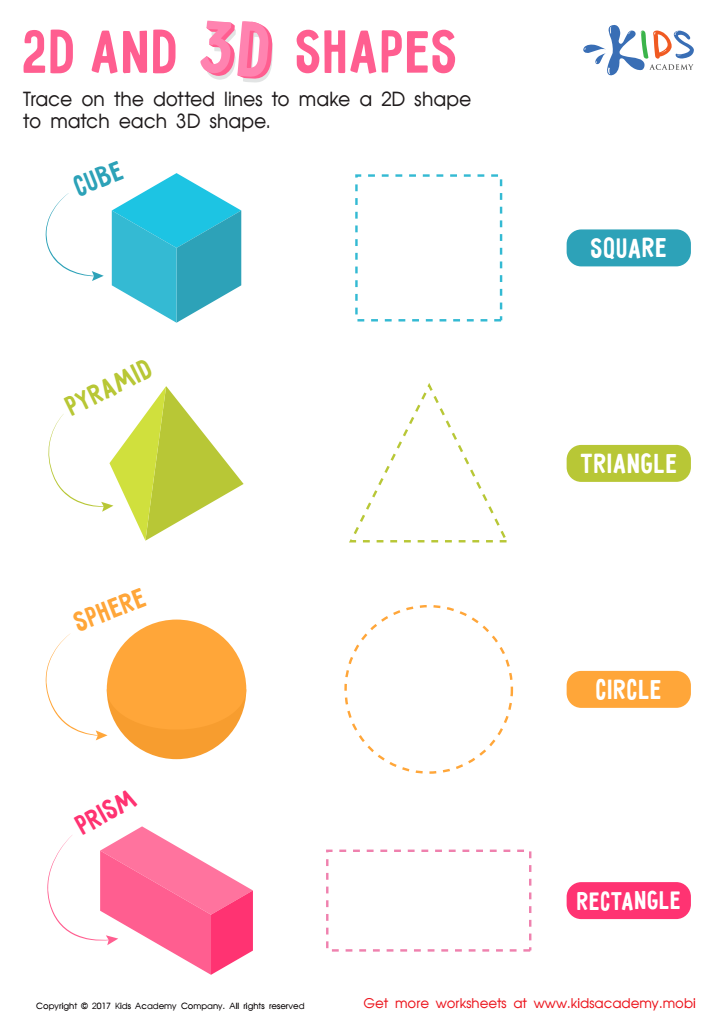
2D and 3D Shapes Worksheet
Introduce your child to 3D and 2D with this traceable worksheet. With dotted lines, help them trace and make a 2D shape for each 3D shape: square, triangle, rectangle, and circle. Show them there's more than one way to draw! You may have taken them to a 3D movie, or they've seen some fantastic 3D art. Now they can wonder no more.
 Assign to My Students
2D and 3D Shapes Worksheet
Worksheet
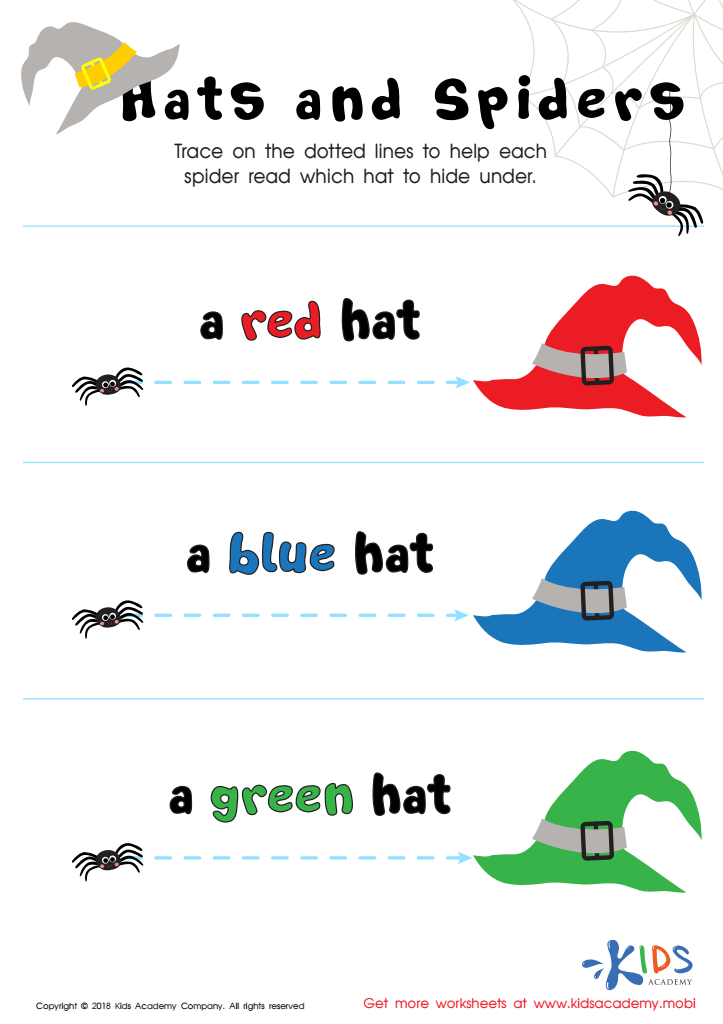
Read from Left to Right: Hats and Spiders Worksheet
Do your kids love or fear spiders? Either way, they'll enjoy helping the little critters with this traceable worksheet. Ask them to read out the words in the picture, explaining it's the description of the hats. Then help them trace on the dotted lines, so the spiders know which hat to hide under.
Read from Left to Right: Hats and Spiders Worksheet
Worksheet
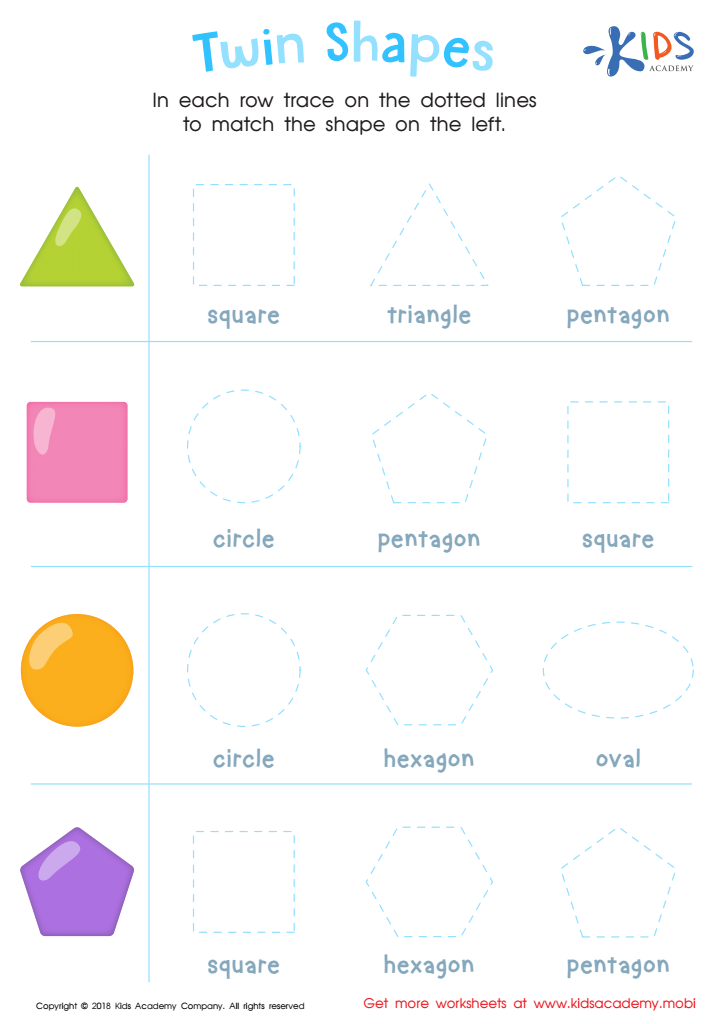
Twin Shapes Dot-to-Dot Worksheet
Test your child's ability to copy with this worksheet. Ask them to find and name the four shapes on the left. Then, they must match each with the dotted lines on the right. Help your child with all four shapes in this fun exercise.
Twin Shapes Dot-to-Dot Worksheet
Worksheet
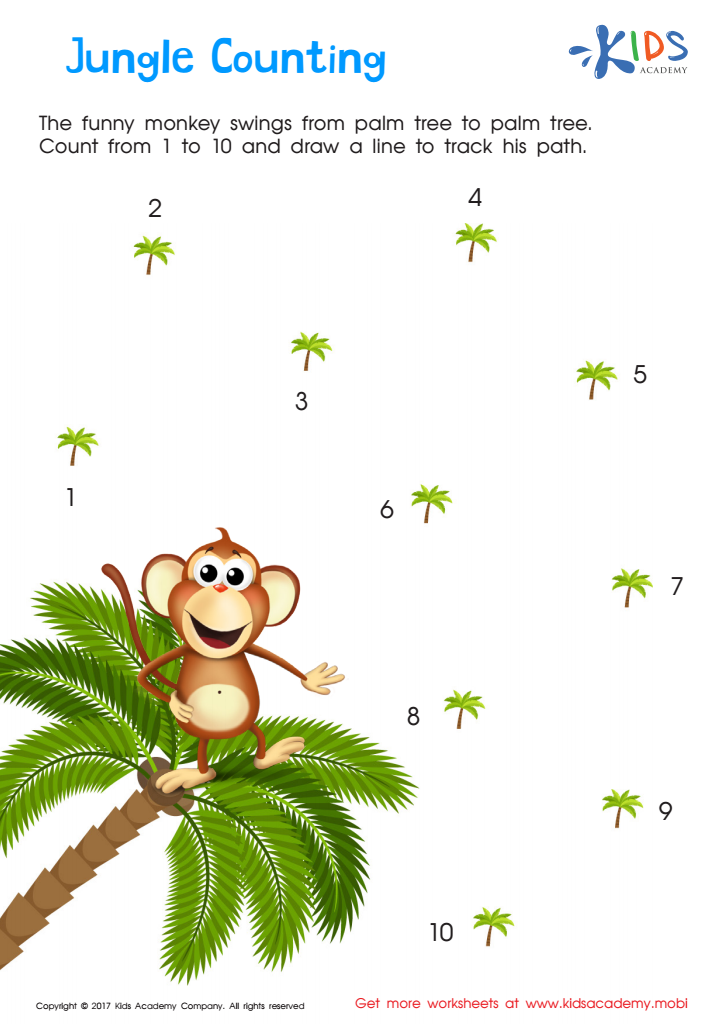
Jungle Counting Connect Dots Worksheet
Help your child count from 1-10 and practice problem solving skills with this dot to dot worksheet. Your child will enjoy helping the cute monkey swing from tree to tree while honing their math skills. Let them have a jungle-themed counting adventure!
Jungle Counting Connect Dots Worksheet
Worksheet
Join Kids Academy for Free
Who is primarily going to use this learning content?





.jpg)

Fine motor skills are essential developmental milestones for children aged 4-8, significantly impacting their academic success and daily tasks. These skills involve the precise movements of small muscles, particularly in the hands and fingers, which are crucial for activities like drawing, writing, and manipulating objects. When children engage in drawing, they enhance their hand-eye coordination, dexterity, and grip strength, all of which are foundational for later skills such as handwriting.
Parents and teachers should prioritize fostering fine motor skills because they contribute to a child’s overall cognitive development. As children experiment with drawing, they express creativity and improve critical thinking abilities. Additionally, fine motor proficiency supports autonomy in self-care tasks, such as buttoning shirts or tying shoes, boosting children's confidence and independence.
Limited fine motor skills can lead to frustration and academic challenges in more structured learning environments. Therefore, recognizing the importance of these skills early on allows parents and teachers to implement beneficial activities—like coloring, cutting, and tracing—that engage children while developing necessary capabilities. Focusing on fine motor skills ensures children are not only ready for academic challenges but are also equipped for everyday tasks, significantly enhancing their overall well-being and pleasure in learning.








