Matching skills Extra Challenge Worksheets for Ages 4-8
6 filtered results
-
From - To
Unlock your child's potential with our “Matching Skills Extra Challenge Worksheets” designed specifically for ages 4-8. These engaging worksheets provide a fun and educational way for youngsters to develop essential matching and problem-solving skills. Kids will enjoy whimsical illustrations and captivating themes as they practice pairing objects, enhancing visual recognition, and sharpening critical thinking. Perfect for both independent learning and classroom settings, our worksheets are tailored to complement various learning styles. Challenge your child today and watch their confidence soar as they master these fundamental skills. Ideal for parents and teachers seeking effective, interactive resources for young learners!
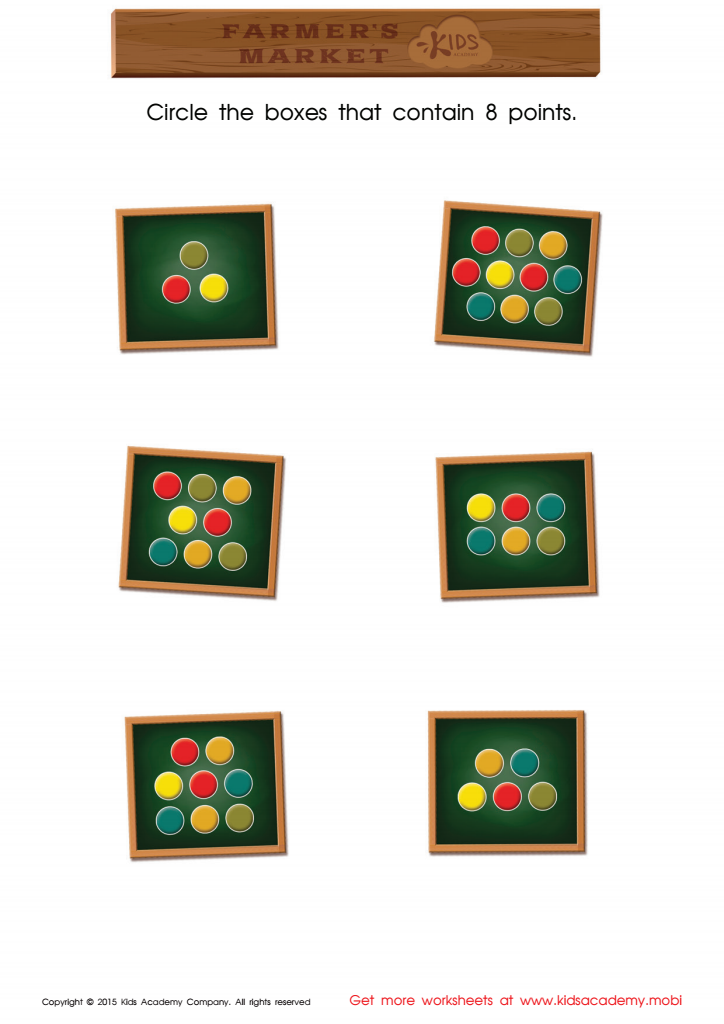
Count and Match Points 8 Math Worksheet
 Assign to My Students
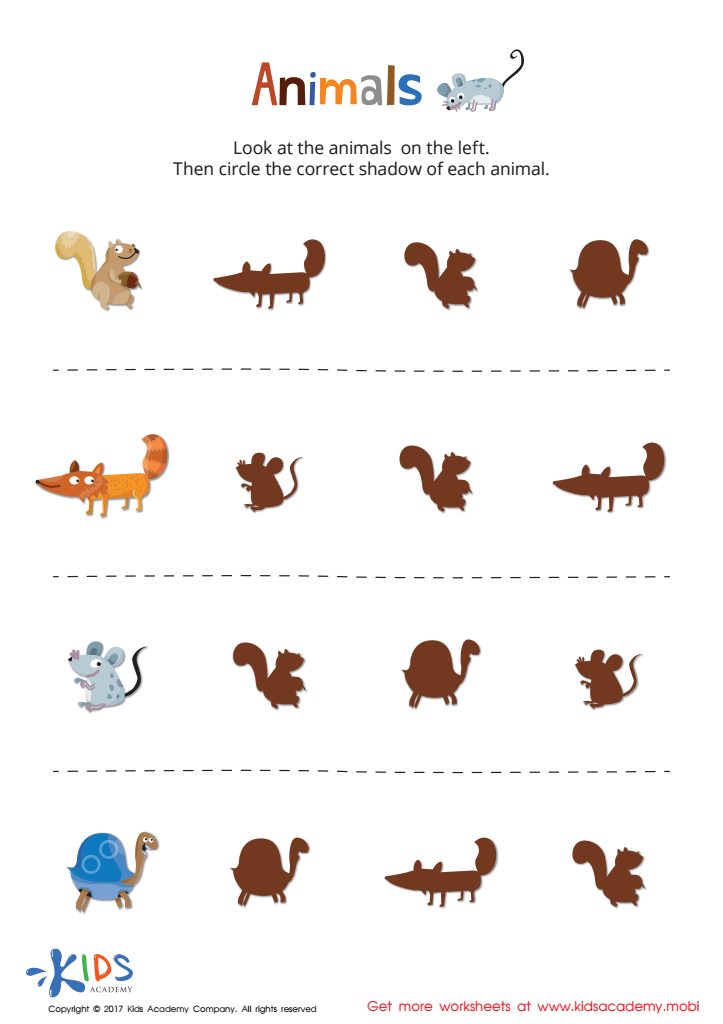
Animal Shadows Sorting Worksheet
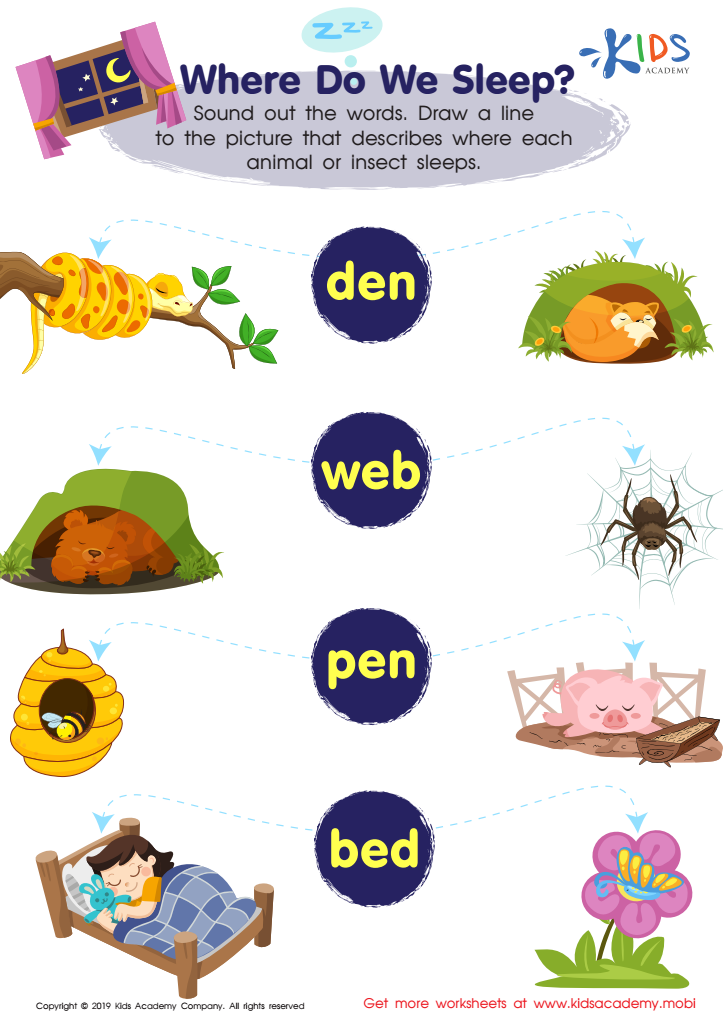
Where Do We Sleep Worksheet
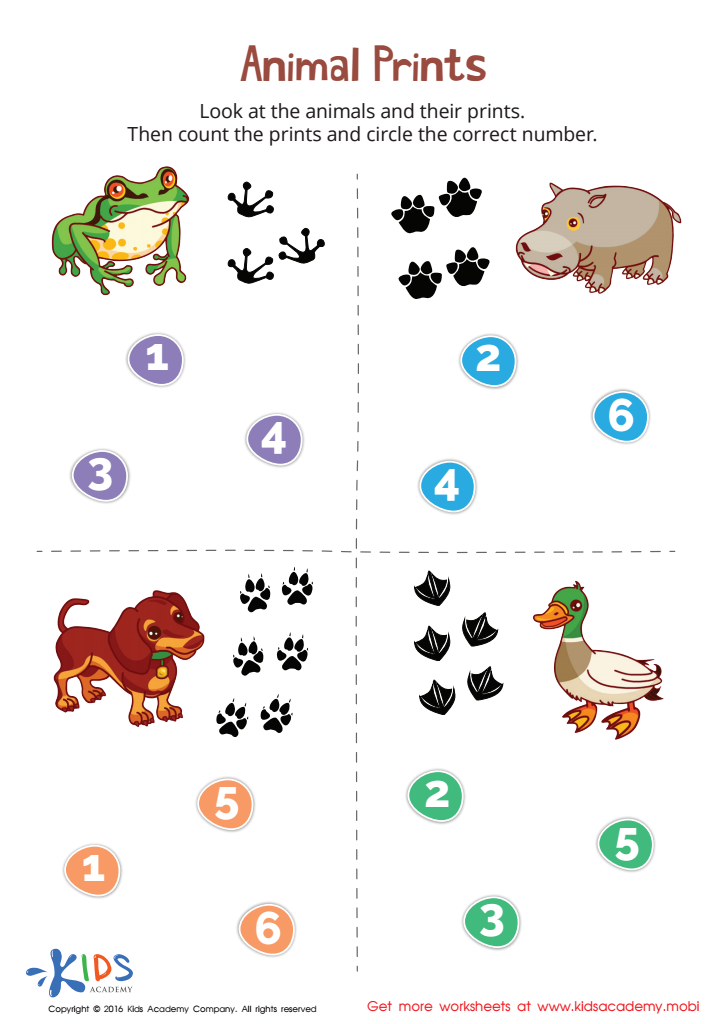
Animal Prints Match-Up Worksheet
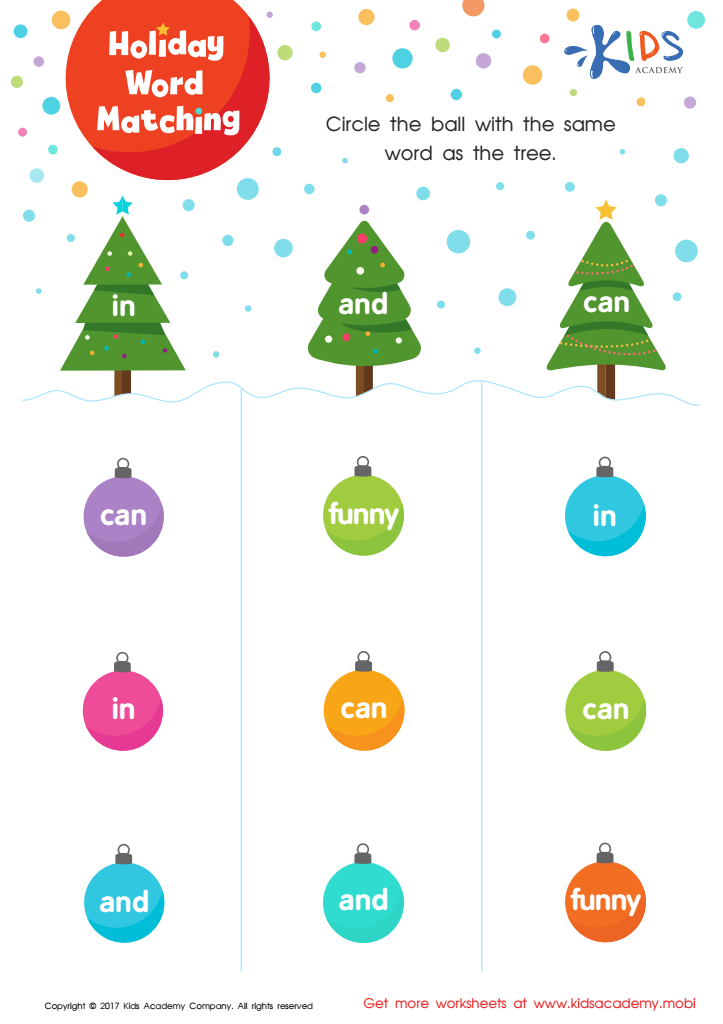
Holiday Word Matching Worksheet
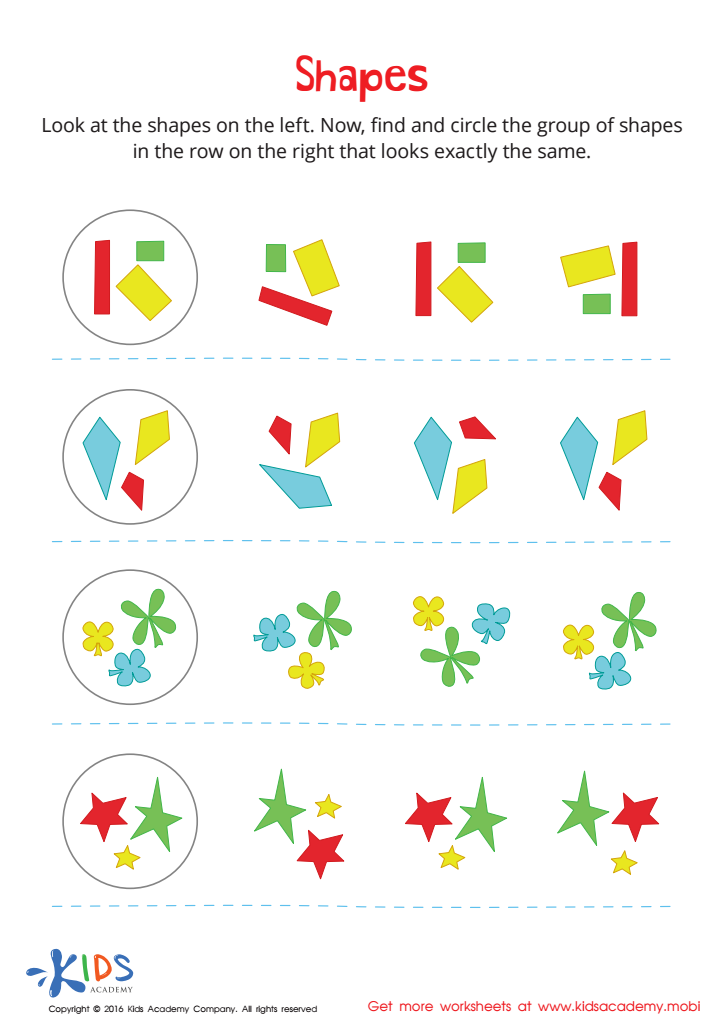
Shapes Worksheet







Matching skills are fundamental for children aged 4-8, as they serve as the building blocks for various cognitive and social abilities. Engaging in extra challenges focused on matching skills fosters critical thinking, memory retention, and attention to detail. These skills play a vital role in early literacy and numeracy development; for instance, understanding that different representations of the same object are equivalent supports mathematical concepts.
Additionally, enhancing matching skills through games and activities encourages active learning and engagement, making learning fun and dynamic. It helps children develop their problem-solving abilities as they learn to identify similarities and differences in objects, shapes, or letters. Furthermore, matching challenges can enhance fine motor skills, as younger children manipulate cards or objects to make connections.
For parents and teachers, incorporating these extra challenges not only promotes individual growth but also encourages collaboration and communication when done in group settings. Children learn how to work together, communicate their thought processes, and engage in positive social interactions.
In essence, focusing on matching skills provides children with essential tools for academic success and personal development, making it crucial for parents and teachers to prioritize these activities in early education.








