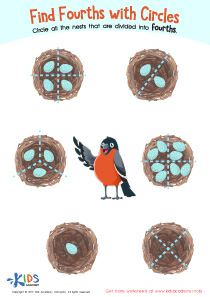
Explore our "Shape Recognition Extra Challenge 2D Shapes Worksheets" designed specifically for children ages 4-8! These engaging worksheets help young learners enhance their understanding of 2D shapes through fun and interactive activities. Each worksheet is crafted to challenge students while reinforcing key skills like shape identification, comparison, and categorization. Perfect for classroom use or at-home learning, our worksheets support developmental milestones while making shape recognition an enjoyable adventure. Load up on creativity and critical thinking as your child embarks on this exciting journey through the world of shapes, all while gaining confidence in their math skills! Unlock the joy of learning today!

Check out this FREE Trial Lesson on 2D Shapes for age 4-8!

Lesson 3- Classify and Sort Shapes

Favorites
With answer key
Interactive
  • 4-8
  • Shape Recognition
  • 2D Shapes
  • Extra Challenge
Make Quadrilaterals Worksheet

Make Quadrilaterals Worksheet

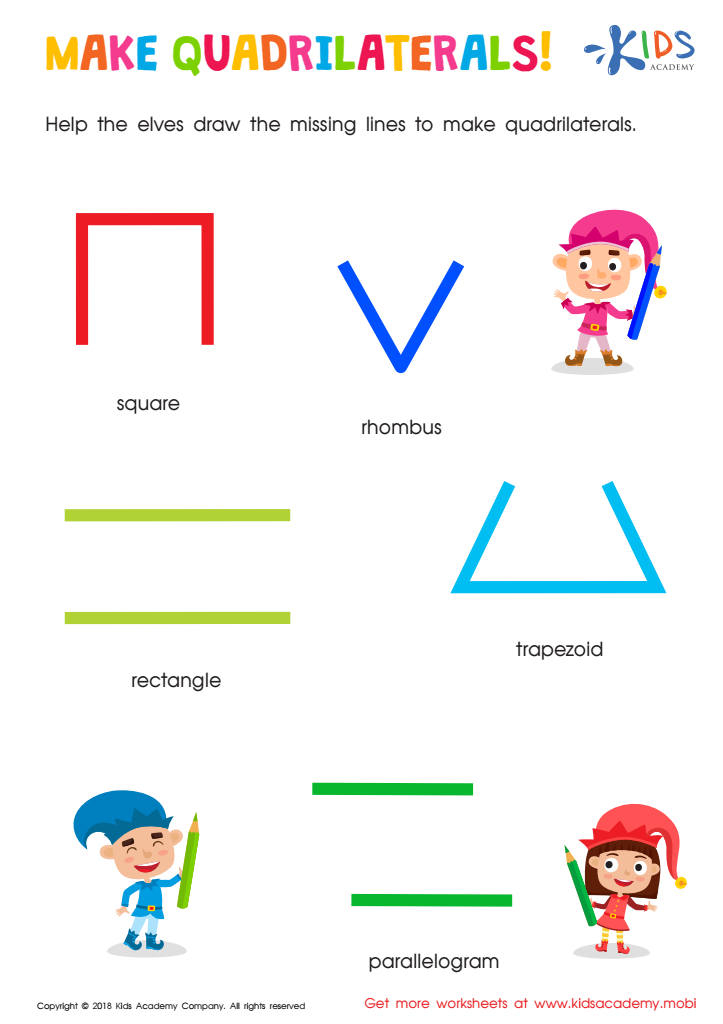
This fun and colorful worksheet will help your child understand and identify quadrilaterals. It's simple and encourages them to draw lines to create a square, rectangle, rhombus, trapezoid, and parallelogram. Stimulate their minds and watch them learn while they have fun!
Make Quadrilaterals Worksheet
Worksheet
Matching Colors Worksheet

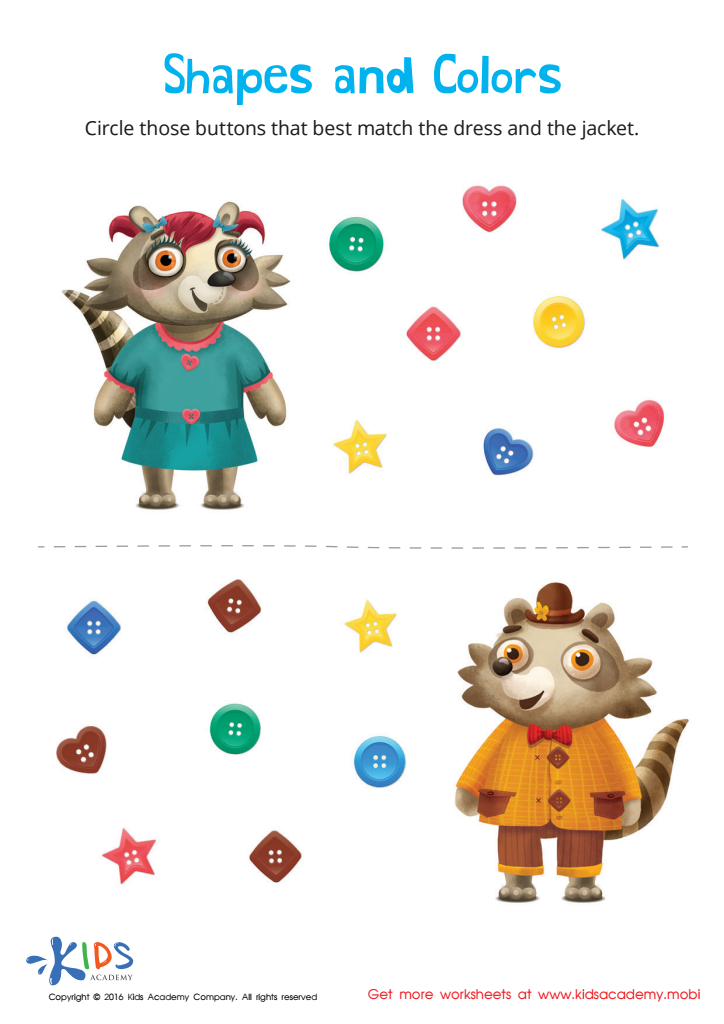
Matching: Shapes and Colors Worksheet
Help Mr. and Mrs. Raccoon find the right buttons to match their shirts! Kids will identify shapes and colors and learn to match them correctly.
Matching: Shapes and Colors Worksheet
Worksheet
Woodpecker and Triangles Worksheet

Woodpecker and Triangles Worksheet

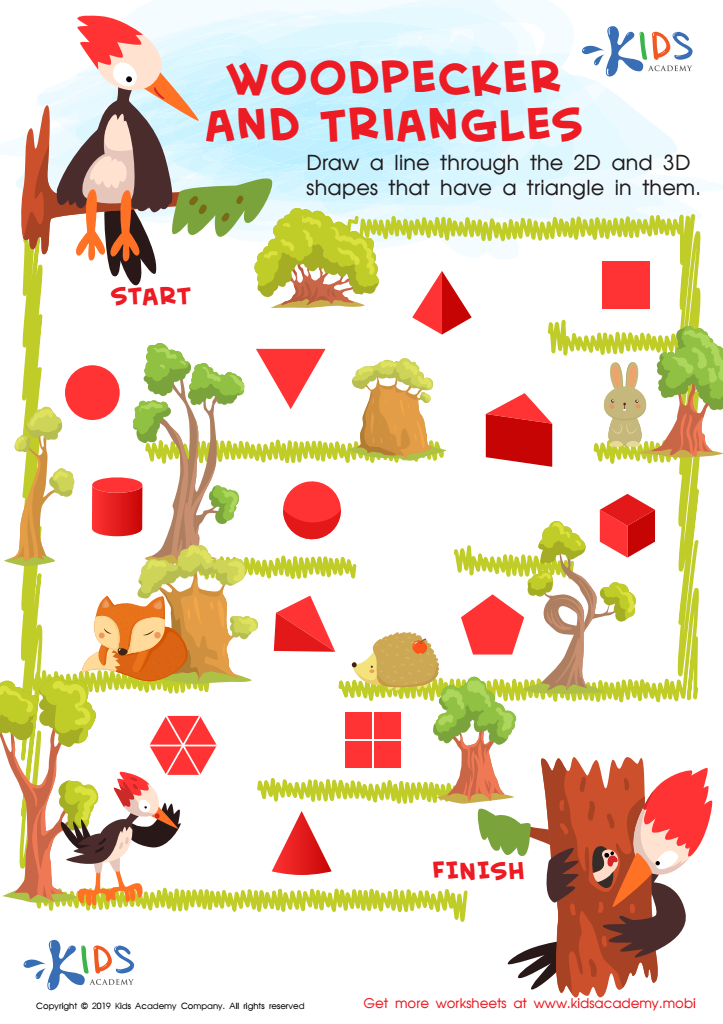
Woodpeckers peck wood, and this printout helps kids learn about triangles. Ask your kindergartners to draw a triangle, then draw a line through the shapes that have a triangle in them to help the woodpecker get out of the maze.
Woodpecker and Triangles Worksheet
Worksheet
2D and 3D Shapes Worksheet
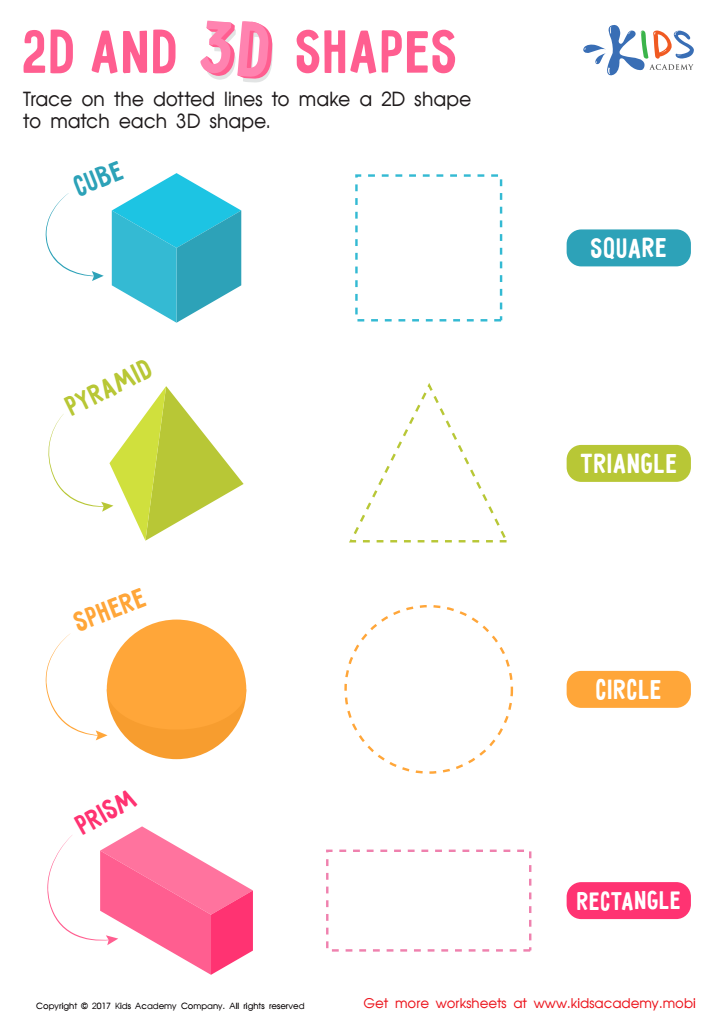
2D and 3D Shapes Worksheet

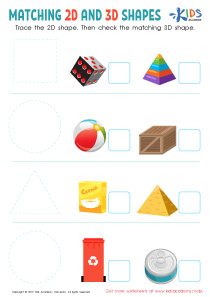
Introduce your child to 3D and 2D with this traceable worksheet. With dotted lines, help them trace and make a 2D shape for each 3D shape: square, triangle, rectangle, and circle. Show them there's more than one way to draw! You may have taken them to a 3D movie, or they've seen some fantastic 3D art. Now they can wonder no more.
2D and 3D Shapes Worksheet
Worksheet
Trace and Draw More Shapes Worksheet

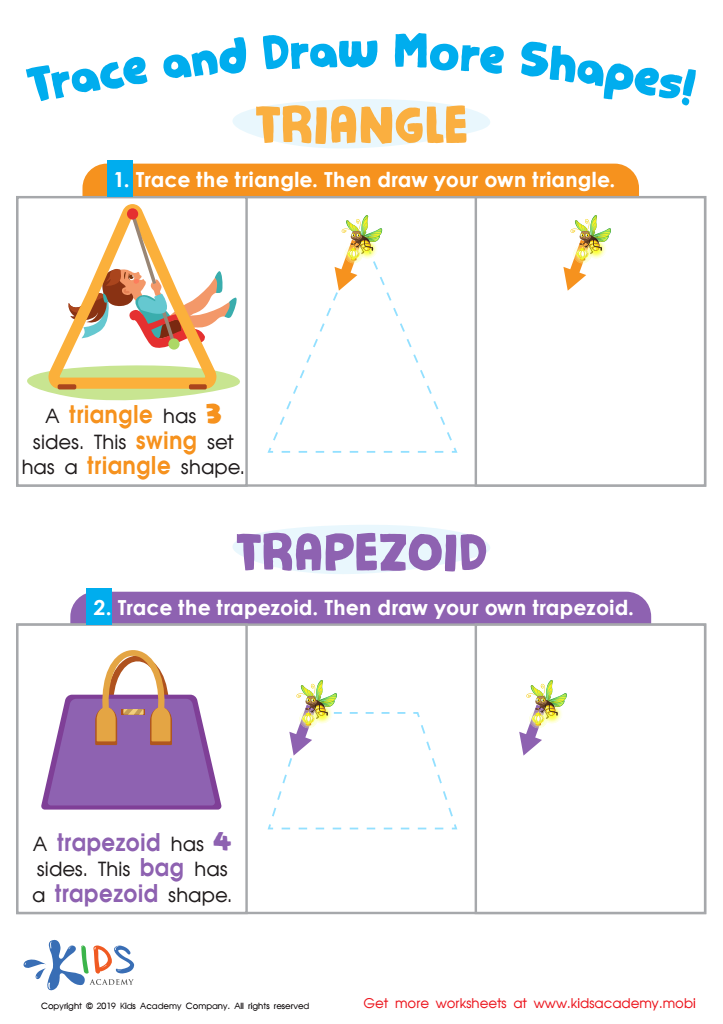
Trace and Draw More Shapes Worksheet

Help your kids with more learning! Look at images in the worksheet, read facts about the shapes, then help your kids trace and draw. This reinforces that learning is never done; use this simple worksheet to help your kids with school homework and more!
Trace and Draw More Shapes Worksheet
Worksheet
Twin Shapes Dot-to-Dot Worksheet

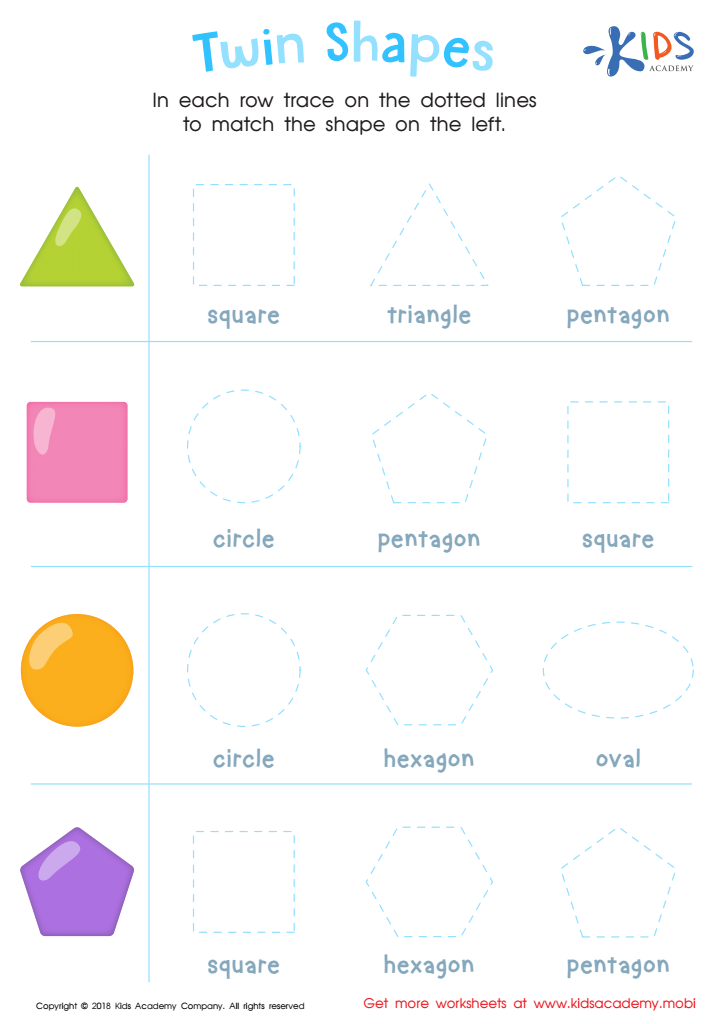
Twin Shapes Dot-to-Dot Worksheet

Test your child's ability to copy with this worksheet. Ask them to find and name the four shapes on the left. Then, they must match each with the dotted lines on the right. Help your child with all four shapes in this fun exercise.
Twin Shapes Dot-to-Dot Worksheet
Worksheet
Shapes and Names Matchup Worksheet


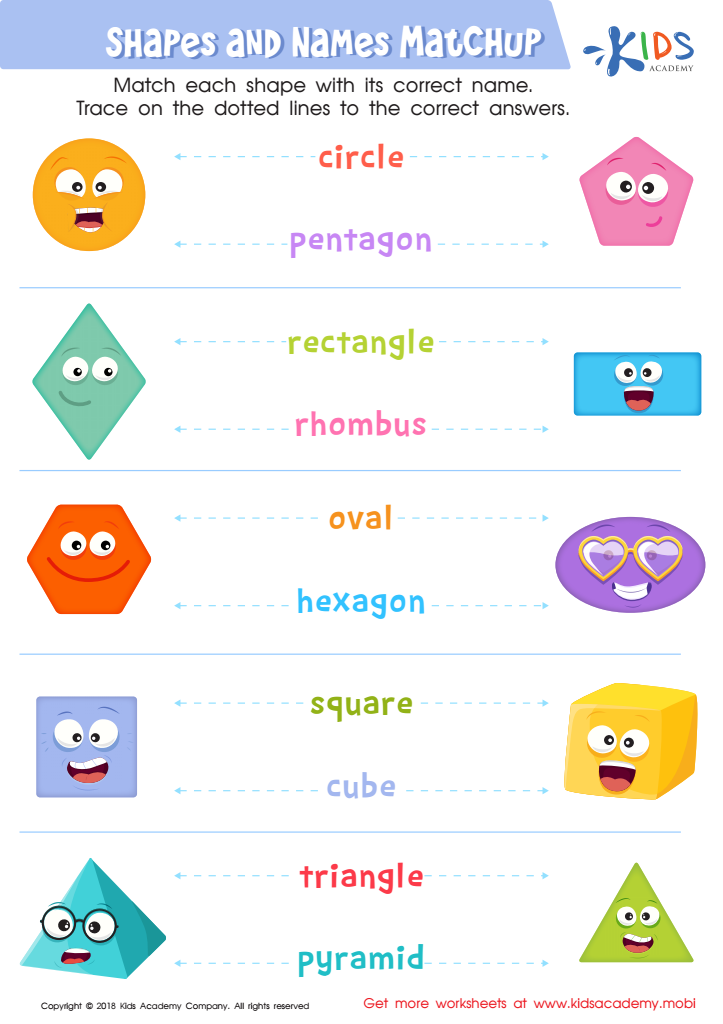
Shapes and Names Matchup Worksheet

Introduce your students to shapes if they aren't familiar. Look at the sheet with them and ask them to identify shapes. Help them match each shape to its name, then trace the dotted lines to the answers. Even if they haven't seen shapes before, this exercise will be easy - with your help!
Shapes and Names Matchup Worksheet

Worksheet


Shape recognition is a fundamental skill for young learners, serving as a crucial building block for various cognitive and academic skills. The Shape Recognition Extra Challenge for 2D shapes engages children aged 4-8 in identifying and classifying shapes, helping to enhance their visual discrimination and spatial awareness. By recognizing shapes, children can better understand their environment and make connections between abstract concepts and real-world objects, such as recognizing a square in a window or a circle in a pizza.

For parents and teachers, emphasizing shape recognition fosters critical thinking and problem-solving skills. These activities also promote language development as young learners describe shapes, enhancing their vocabulary. Moreover, early mastery of shapes lays the groundwork for future math concepts, including geometry and measurements.

Incorporating a fun and challenging approach to shape recognition encourages curiosity and maintains children's interest in learning. The collaboration during these activities nurtures social skills and can enhance parent-child or teacher-student bonding.

Overall, the Shape Recognition Extra Challenge not only sharpens cognitive skills but also supports holistic development, making it a valuable focus for parents and educators committed to nurturing well-rounded, capable learners.