Fraction visualization Extra Challenge Math Worksheets for Ages 4-8
3 filtered results
-
From - To
Unlock your child's mathematical potential with our Fraction Visualization Extra Challenge Math Worksheets, designed specifically for ages 4-8. These engaging worksheets help young learners grasp the concept of fractions through fun and interactive activities. By visualizing fractions with colorful images and practical examples, children will enhance their understanding and retention of key math skills. Each worksheet is crafted to promote critical thinking and problem-solving while building a solid foundation in fractions. Perfect for home or classroom use, these resources foster a love for learning and prepare children for more advanced math concepts. Encourage your child's journey into fractions today!
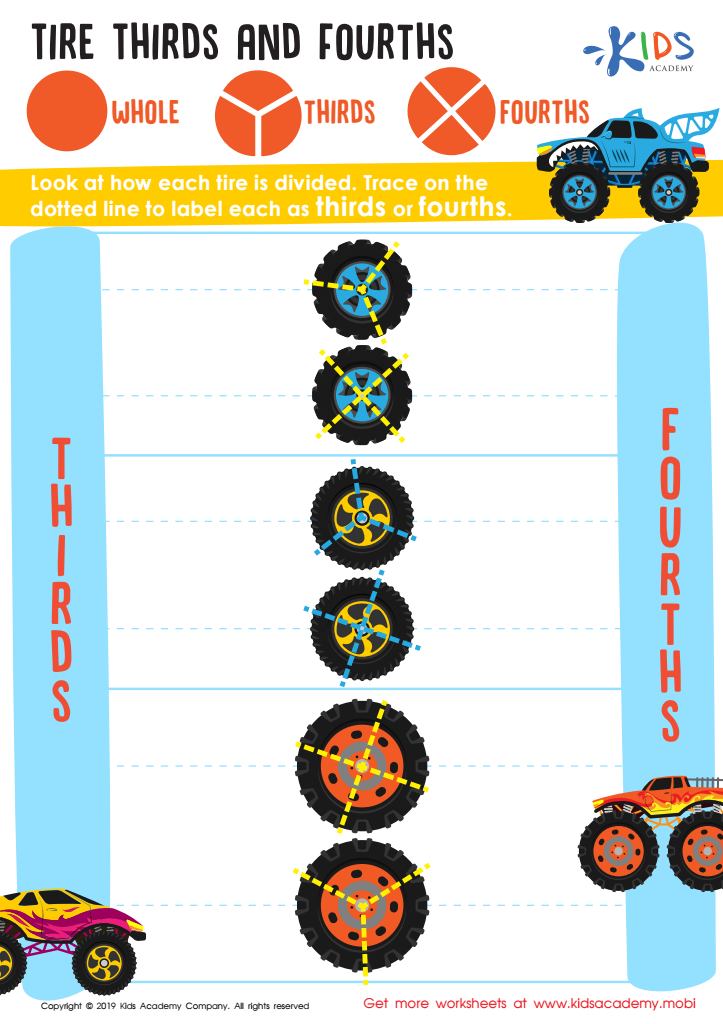
Tire Thirds and Fourths Worksheet
 Assign to My Students
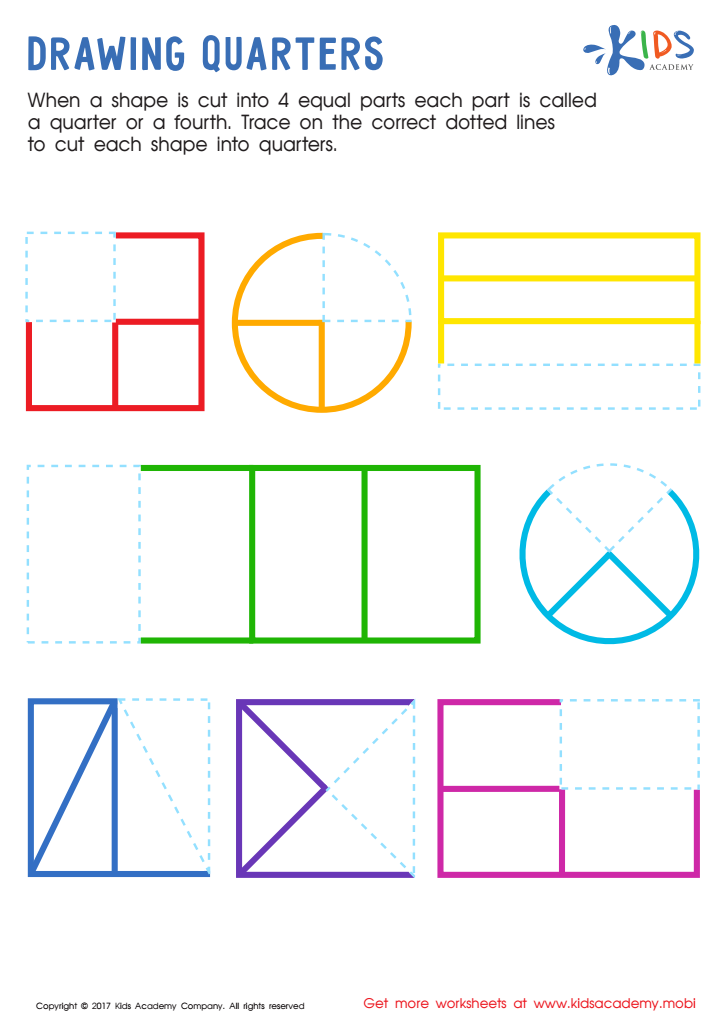
Drawing Quarters Worksheet
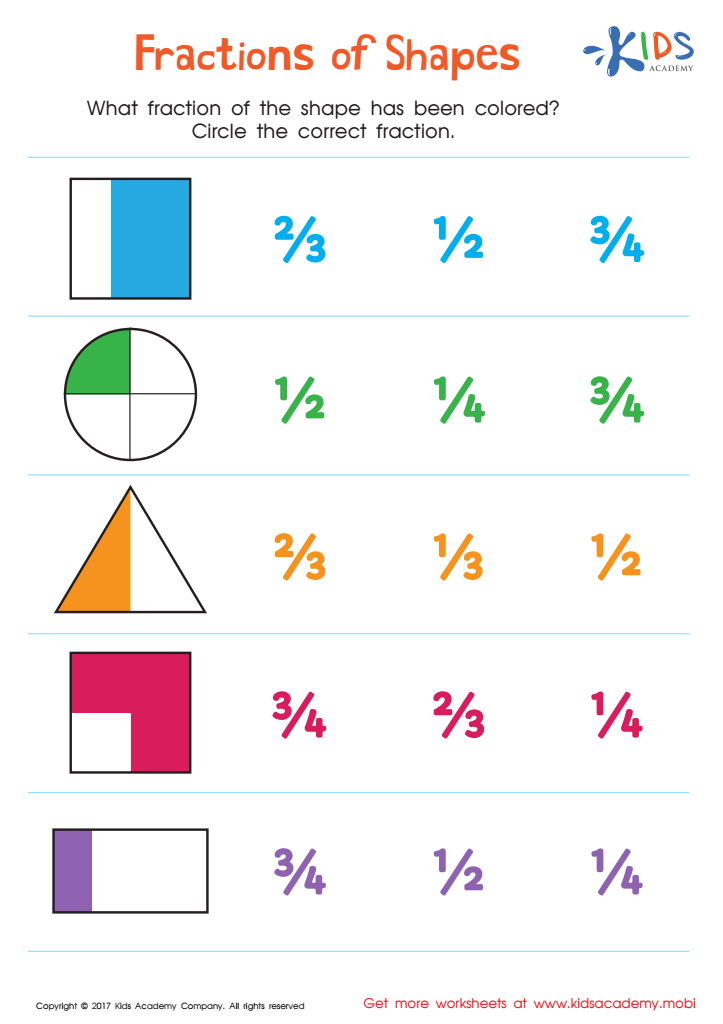
Fractions of Shapes: Math Concept Worksheet





%20(1).jpg)


Parents and teachers should care about Fraction Visualization Extra Challenge Math for Ages 4-8 because it lays a foundational understanding of an essential mathematical concept in a visually engaging manner. At this age, children are developing critical thinking skills and are more receptive to visual learning strategies. Fraction concepts can often be abstract for young learners, but using visual aids, such as pie charts, number lines, or manipulatives, helps make these concepts tangible.
Engaging kids with fraction visualization enhances numerical literacy, supports problem-solving skills, and encourages a deep understanding of relationships between parts and wholes. It allows children to manipulate and visualize fractions, ultimately leading to greater confidence in their math abilities.
Additionally, practicing these skills early sets the stage for more complex mathematics in later grades, fostering a positive attitude toward Math. By incorporating extra challenge activities, children are motivated to explore advanced concepts at their own pace, promoting independent learning and resilience. In a time when educational standards are increasingly focused on proficiency, tools like Fraction Visualization ensure that children develop not only competence in math but also a genuine appreciation and curiosity for the subject. Parents and teachers have a pivotal role in nurturing this vital phase of learning.