
Pattern recognition Extra Challenge Math Worksheets for Ages 4-8
5 filtered results
Difficulty Level
Grade
Age
-
From - To
Subject
Activity
Standards
Boost your child's critical thinking with our "Pattern Recognition Extra Challenge Math Worksheets" designed for ages 4-8! These engaging and challenging worksheets offer a fun way for young learners to explore and identify patterns in numbers, shapes, and colors. Crafted to enhance cognitive development, every worksheet is tailored to promote problem-solving skills while keeping learning enjoyable. Ideal for homeschooling, supplemental practice, or classroom activities, these worksheets cater to various learning styles. Unlock your child's potential as they develop foundational math skills through exciting challenges. Download now to inspire a passion for learning and make math a delightful adventure!
Favorites
With answer key
Interactive
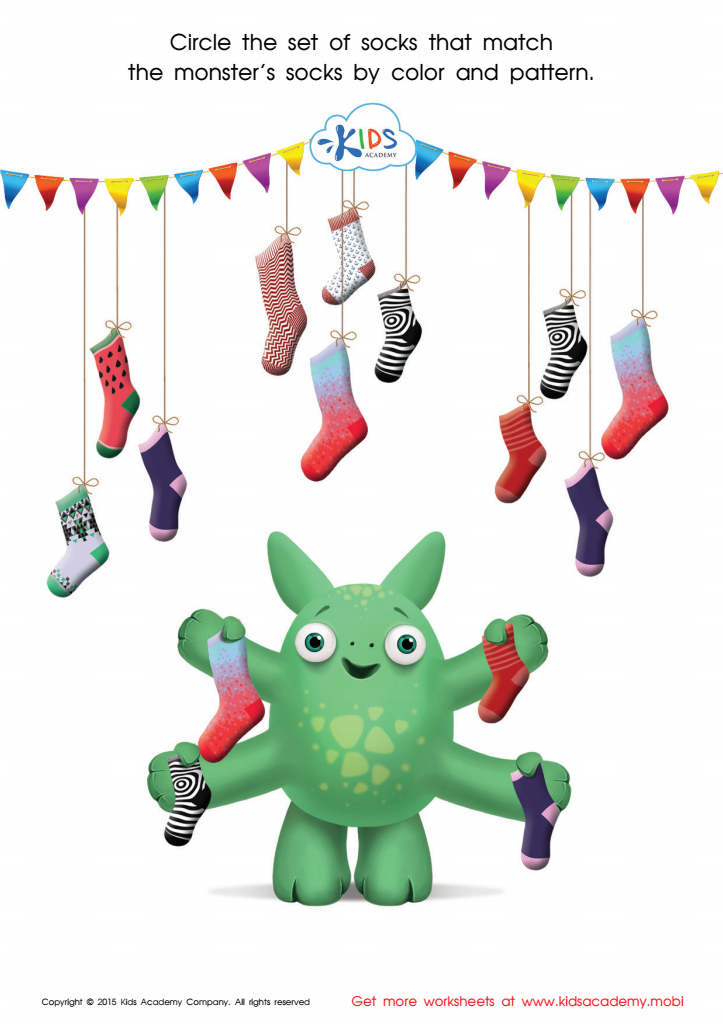
Sort the Monster's Socks Worksheet
Let your little one challenge herself and practice with matching Monster socks. She must be very attentive to match the same socks and draw a line connecting them!
 Assign to My Students
Sort the Monster's Socks Worksheet
Worksheet
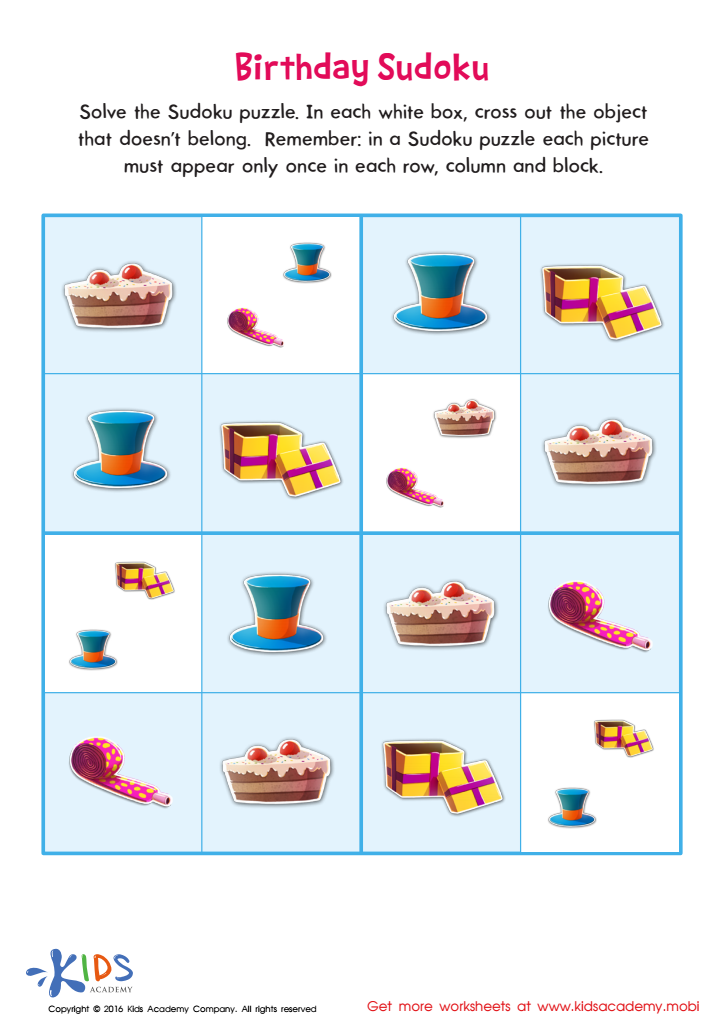
Birthday Sudoku Sorting Worksheet
With this Sudoku printable, your child will have fun and strengthen their problem-solving skills.
Birthday Sudoku Sorting Worksheet
Worksheet
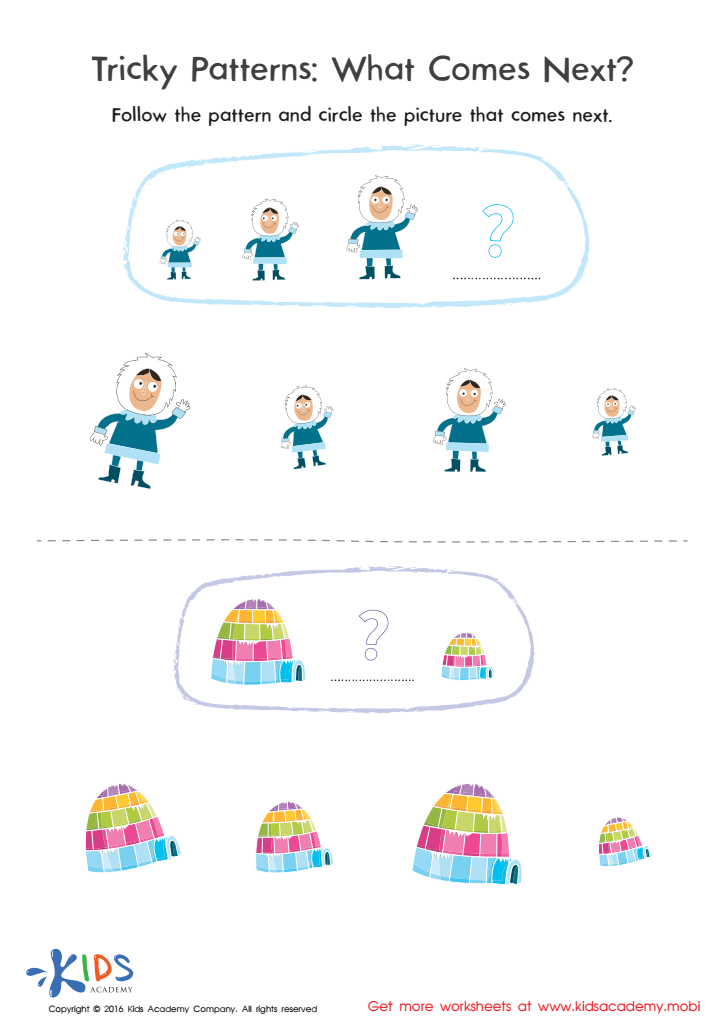
Tricky Patterns Size Worksheet
Give your child a head start on critical thinking with this picture pattern worksheet! It's an intriguingly fun way to help them master important skills like spatial reasoning, critical thinking, and logical reasoning. They'll differentiate between shapes, complete the pattern with a logical answer, and look for and understand patterns. It's the perfect foundation for future math skills, setting them up for future success!
Tricky Patterns Size Worksheet
Worksheet
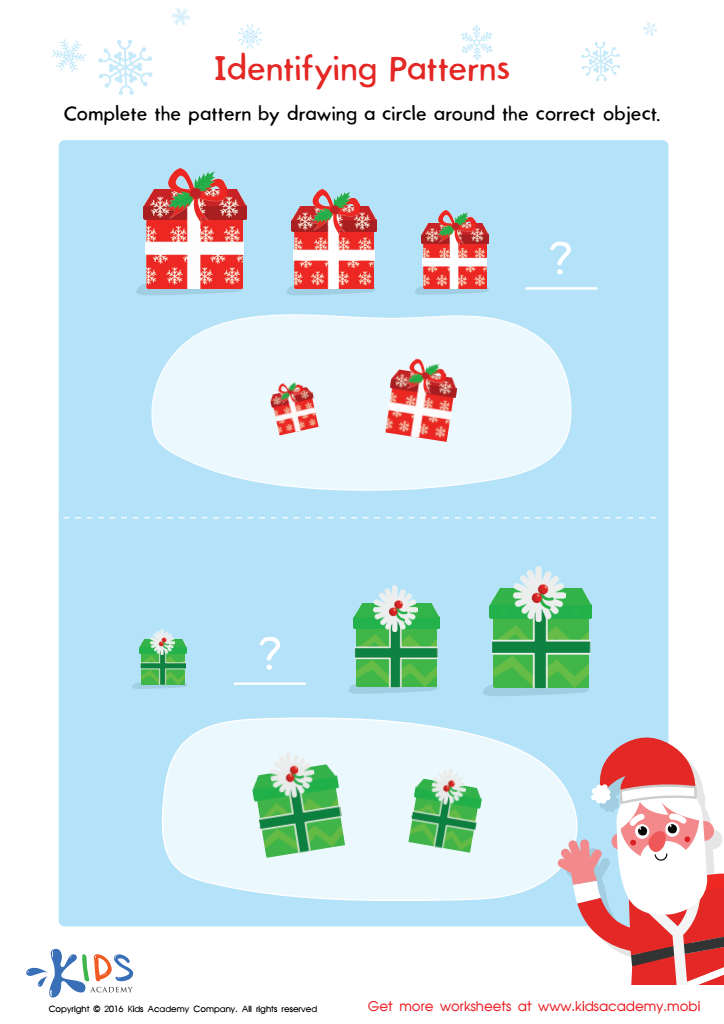
Identifying Patterns Worksheet
Kids can have fun as they learn with this festive worksheet! They'll practice early math skills while identifying patterns with colorful Christmas presents. Have your child get ready for the holidays by finding out which box comes next in the pattern!
Identifying Patterns Worksheet
Worksheet
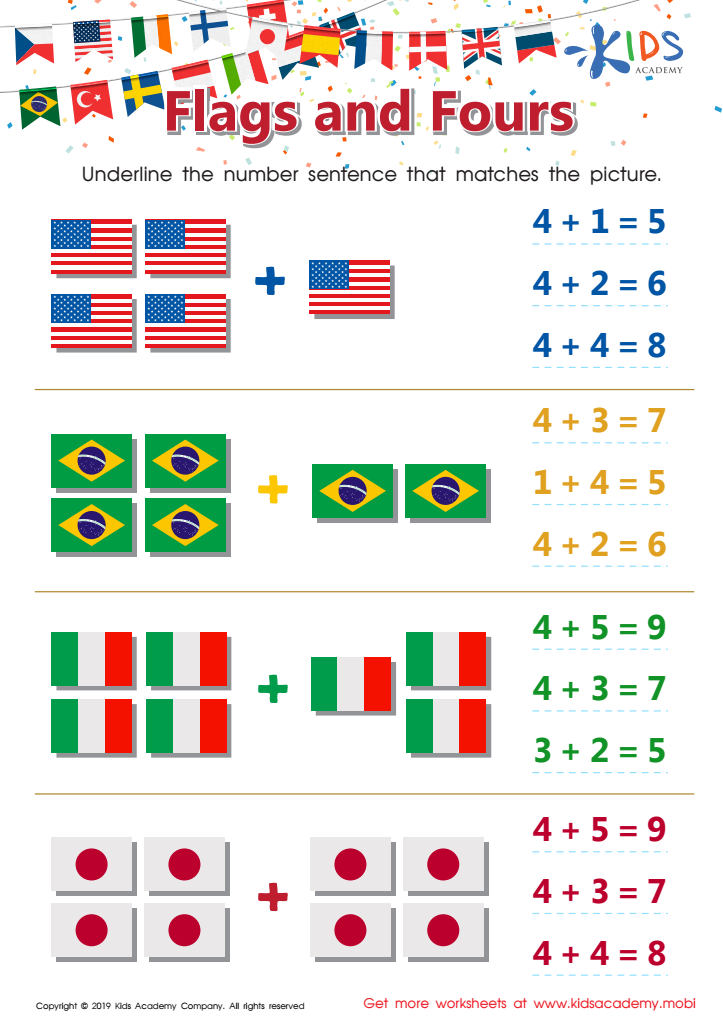
Flags and Fours Worksheet
Have your kids identify country flags from this colorful printout. Then, ask them to underline the number sentence that goes with each flag. Combining math with national flag recognition strengthens kids' knowledge of both, promoting an understanding of identity and numbers.
Flags and Fours Worksheet
Worksheet
Join Kids Academy for Free
Who is primarily going to use this learning content?







.jpg)
Pattern recognition is a fundamental cognitive skill essential for young learners, and the Extra Challenge Math program specifically targets this age group through engaging activities. Parents and teachers should prioritize this program because it lays the groundwork for more advanced mathematical reasoning. By identifying patterns, children develop critical thinking and problem-solving skills that enhance their analytical abilities.
Moreover, recognizing patterns facilitates understanding of core math concepts such as addition, subtraction, sequences, and ratios, which will be crucial as they progress in their education. The fun, challenge-oriented approach keeps children motivated and fosters a love for learning. Engaging in pattern recognition activities also supports developmental areas like memory, attention, and spatial awareness.
Socially, collaborative pattern-based games can encourage teamwork and communication, helping to foster social skills among peers. Additionally, early exposure to pattern recognition can boost confidence in math, dispelling the anxiety often associated with the subject later in life.
In summary, caring about the Extra Challenge Math program means investing in a child's future academic success, equipping them with valuable skills, and fostering a positive, engaging learning environment. By promoting these activities, parents and teachers can actively support and inspire young learners to reach their full potential.








