Visual discrimination Extra Challenge Math Worksheets for Ages 4-8
3 filtered results
-
From - To
Unlock the potential of young minds with our Visual Discrimination Extra Challenge Math Worksheets designed for children aged 4-8. These engaging worksheets from Kids Academy focus on sharpening visual discrimination skills through enjoyable and interactive math exercises. Perfectly balanced to challenge and entertain, each worksheet helps enhance attention to detail, pattern recognition, and logical thinking. Whether at home or in the classroom, our math worksheets encourage active learning and reinforce essential early learning skills. Empower your child’s math journey with resources that make learning fun and effective. Explore our collection today and watch them excel!
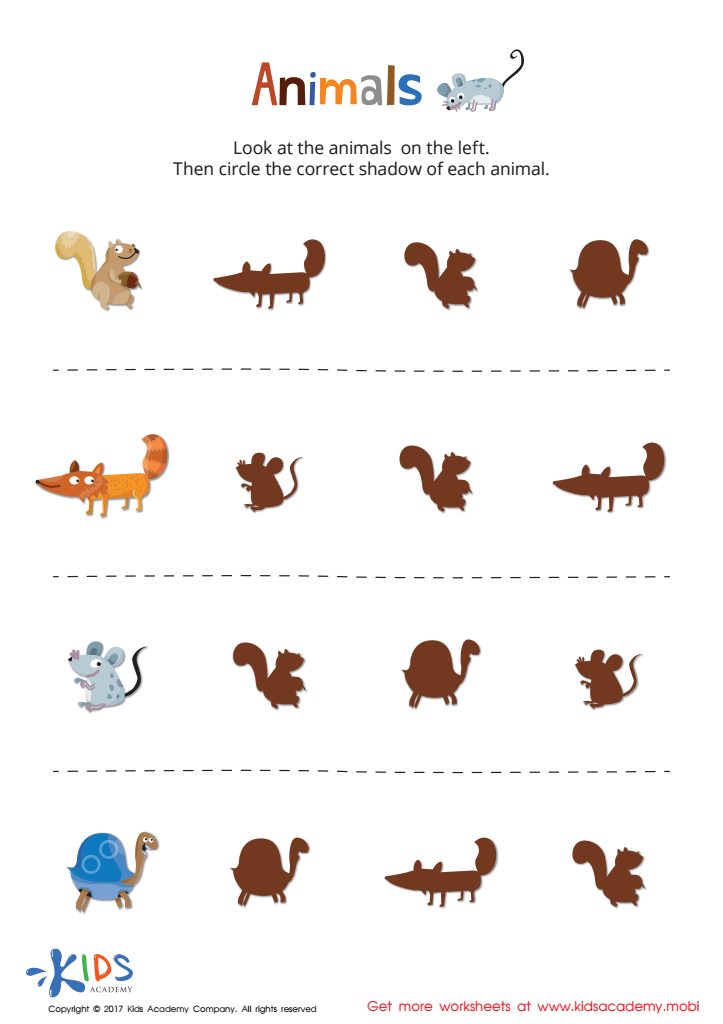
Animal Shadows Sorting Worksheet
 Assign to My Students
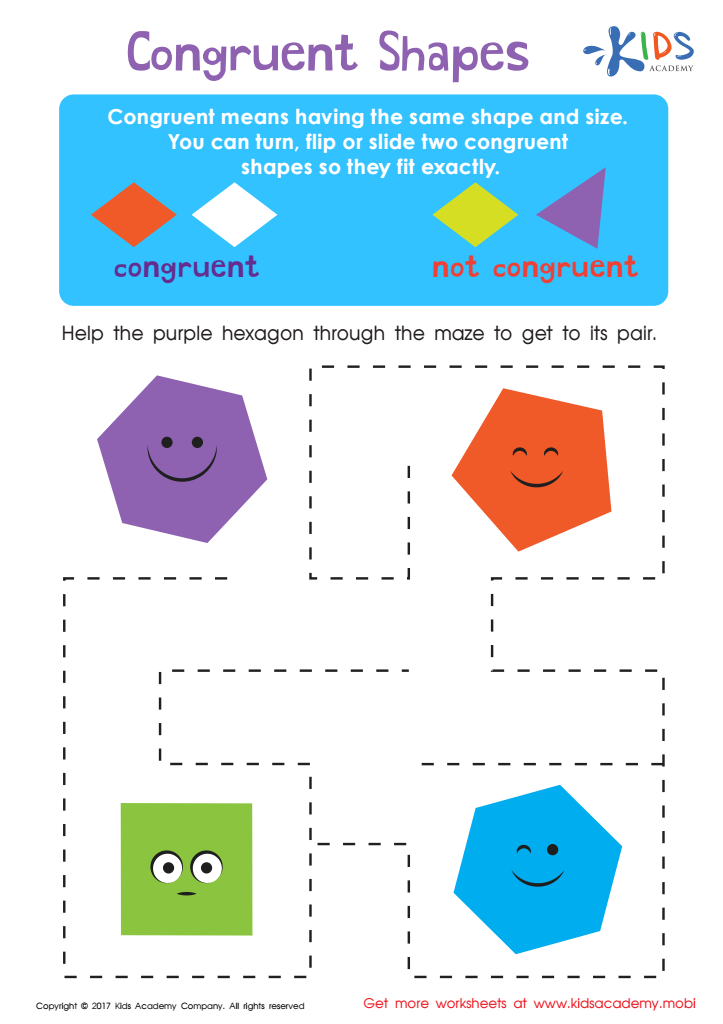
Congruent Shapes Worksheet
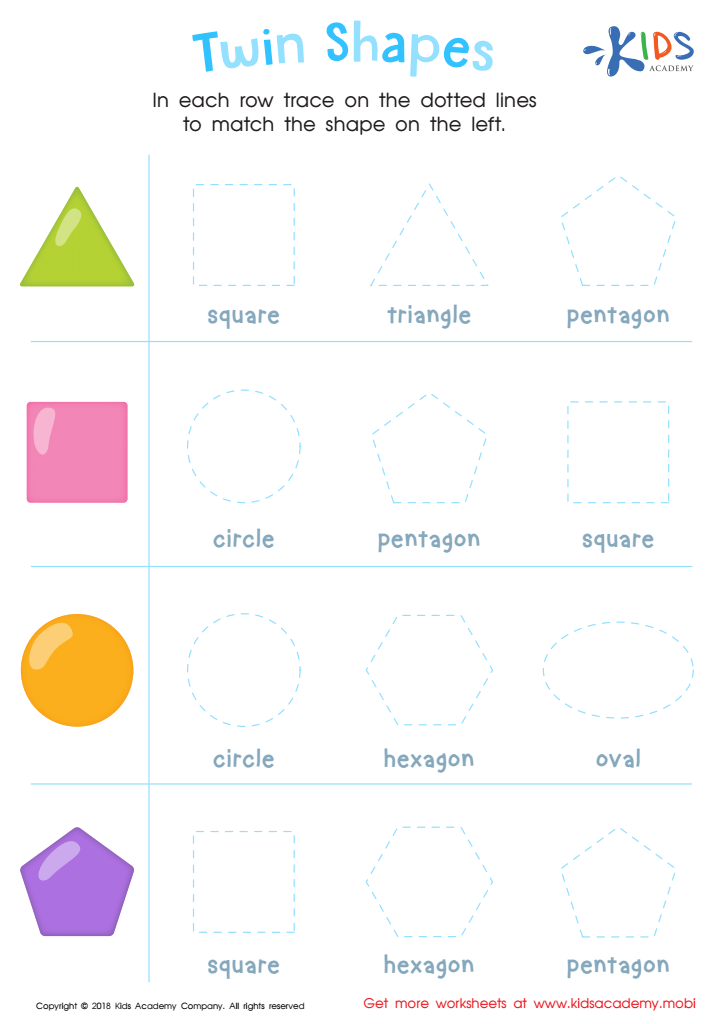
Twin Shapes Dot-to-Dot Worksheet







.jpg)
Visual discrimination Extra Challenge Math activities are crucial for ages 4-8 because they foster foundational cognitive skills that extend beyond mathematics. Visual discrimination involves the ability to see differences and similarities in shapes, patterns, and numbers—a skill that is critical for early academic development. For young children, strengthening visual discrimination aids in reading and writing abilities by helping them differentiate between letters and numbers. This skill is fundamental for recognizing words and accurately printing letters, thus enhancing literacy.
In mathematics, visual discrimination enables students to better understand geometric shapes, identify numerical patterns, and grasp spatial relationships, laying a strong foundation for more complex problem-solving. Engaging children in visual discrimination through extra challenge math activities can build their confidence and motivation, making learning more enjoyable and less intimidating.
Moreover, the ability to spot differences improves attention to detail, a skill that is beneficial across all academic subjects and daily life activities. Encouraging visual discrimination challenges helps foster a growth mindset from a young age, teaching children to enjoy tackling difficult tasks and developing resilience.
Parents and teachers should invest time in these activities to support holistic developmental growth. By enhancing visual discrimination skills, we nurture well-rounded, attentive, and capable learners who are better prepared for future academic challenges.








