Basic geometry understanding Extra Challenge Worksheets for Ages 4-9
4 filtered results
-
From - To
Boost your child’s geometric skills with our Basic Geometry Understanding Extra Challenge Worksheets tailored for ages 4-9. These engaging worksheets are designed to develop foundational geometry knowledge through fun and interactive activities. Catering to children at different learning stages, our challenges help solidify concepts like shapes, symmetry, and spatial awareness, fostering critical thinking and problem-solving skills. Perfect for classroom use or at-home practice, these resources aim to make learning both effective and enjoyable. Equip your child with the tools they need to succeed and ignite their passion for mathematics today! Explore our collection and watch their love for learning grow.
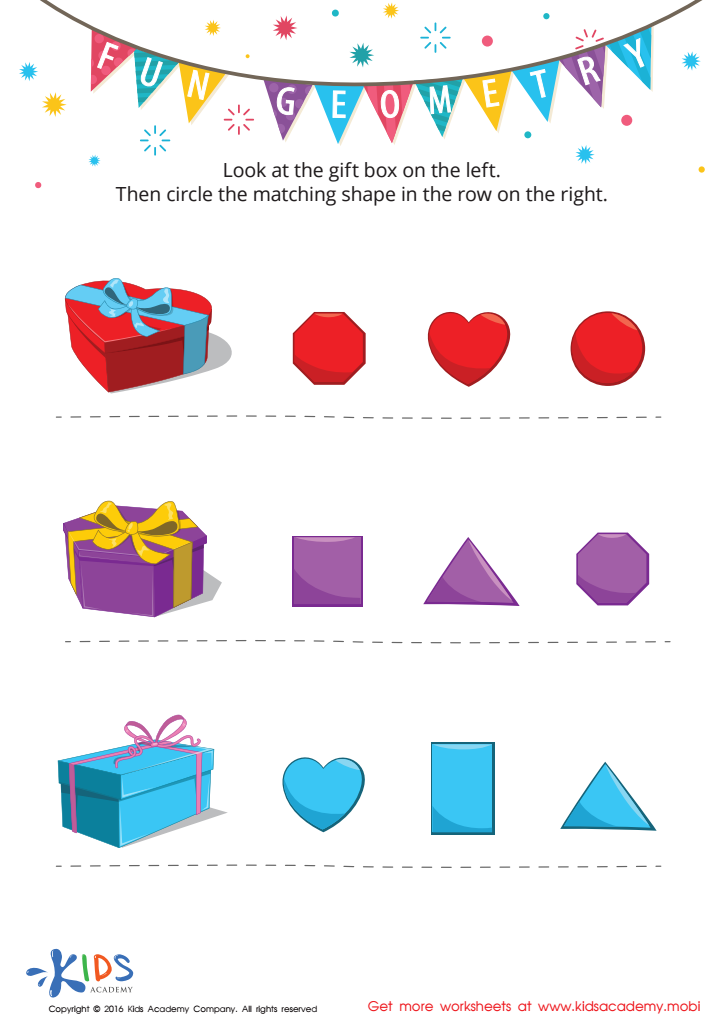
Fun Geometry Worksheet
 Assign to My Students
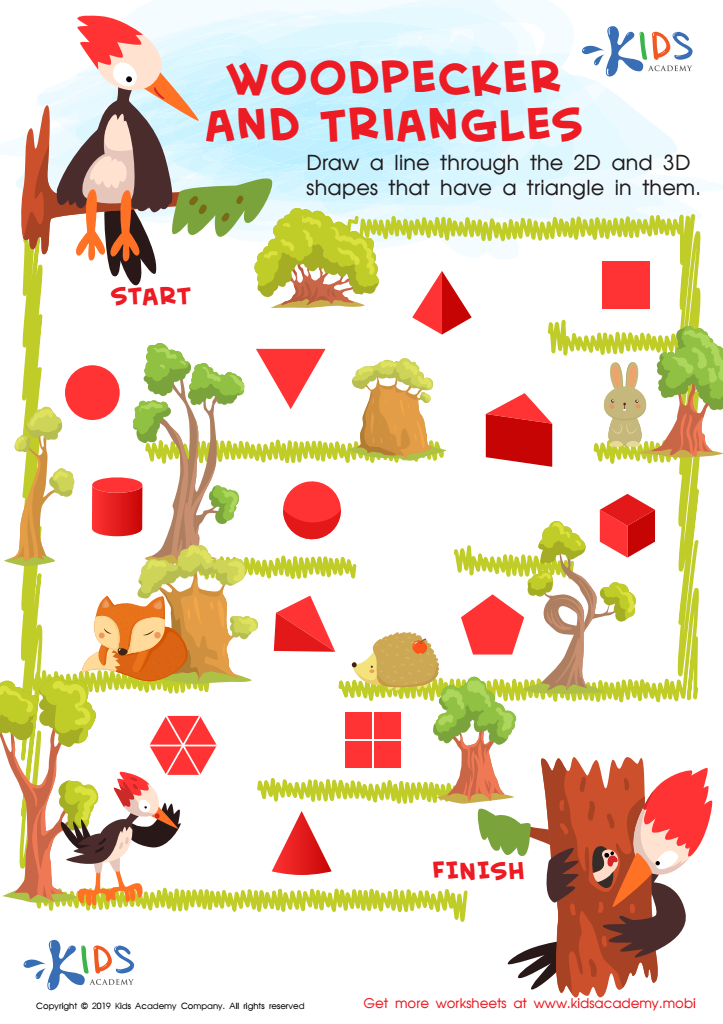
Woodpecker and Triangles Worksheet
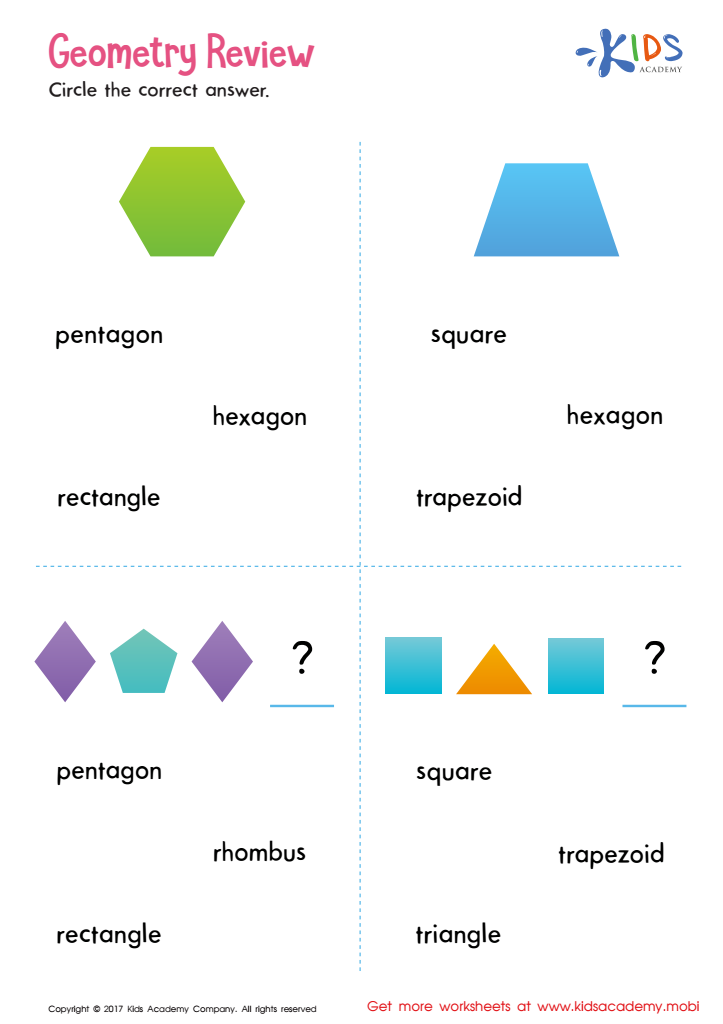
Geometry Review Printable
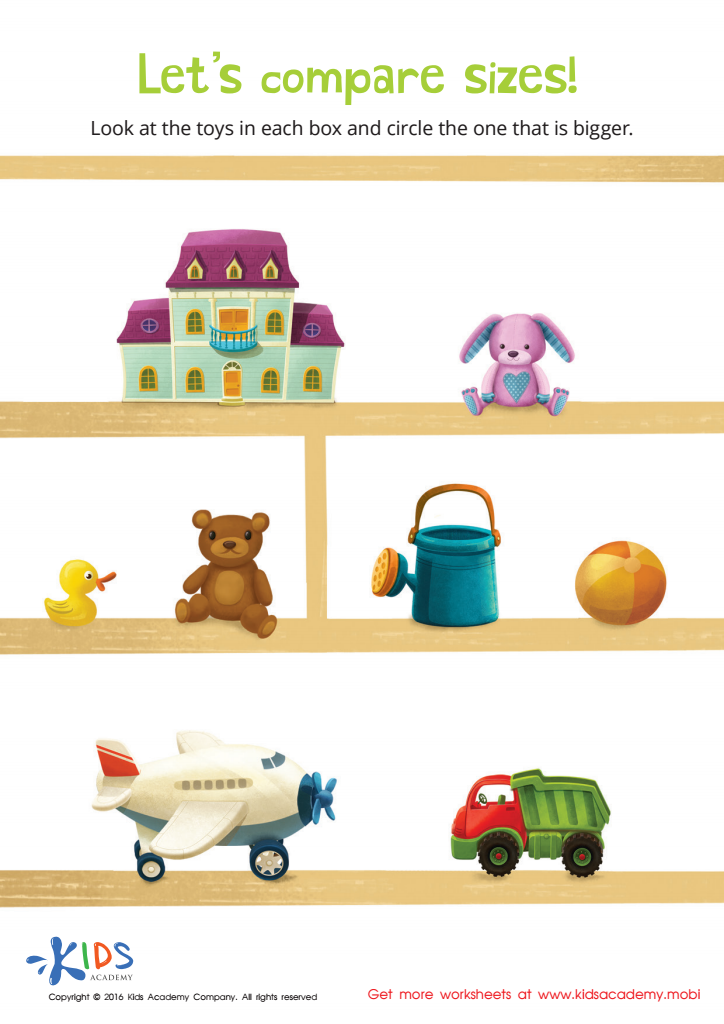
Classifying by Size Sorting Worksheet


.jpg)




Basic geometry understanding offers crucial cognitive and developmental benefits for children aged 4-9, making it a fundamental component of early education. Parents and teachers should recognize that introducing geometry at this young age doesn't just teach children about shapes and sizes; it also fosters their spatial reasoning, a skill essential for understanding the relations between objects in their environment.
At an early age, children are naturally curious and capable of absorbing complex concepts through playful and engaging activities. Basic geometry can help them develop problem-solving skills and logical thinking since identifying geometric shapes involves recognizing patterns and relationships.
Geometry also intersects with other areas of learning, improving overall academic performance. For instance, it nurtures mathematical thinking essential for future topics in algebra and calculus, and it can enhance reading and writing skills by helping children understand structured formats and visual information.
Furthermore, this age group benefits greatly from hands-on, visually stimulating activities. Engaging with shapes and spatial concepts through puzzles, blocks, and interactive games helps reinforce these skills consistently and effectively. With an "extra challenge" approach, educators and parents can stretch a child’s abilities and encourage a growth mindset, driving them to tackle progressively complex tasks with confidence.
In summary, early exposure to geometry equips children with a robust cognitive toolkit, encouraging both academic excellence and daily problem-solving capabilities.








