Understanding plurals Extra Challenge Worksheets for Ages 4-9
5 filtered results
-
From - To
Explore our "Understanding Plurals Extra Challenge Worksheets" tailored for children aged 4-9. These engaging worksheets are designed to enhance your child's grasp of plural form, helping them differentiate between singular and plural nouns. Each activity fosters critical thinking, encouraging kids to apply their knowledge in fun ways. Perfect for classroom settings or at-home learning, our worksheets feature a variety of exercises, including matching, fill-in-the-blanks, and creative prompts. Help your child master plurals with these exciting challenges that promote literacy skills while keeping learning enjoyable. Start your journey to plural proficiency today and watch your child thrive!
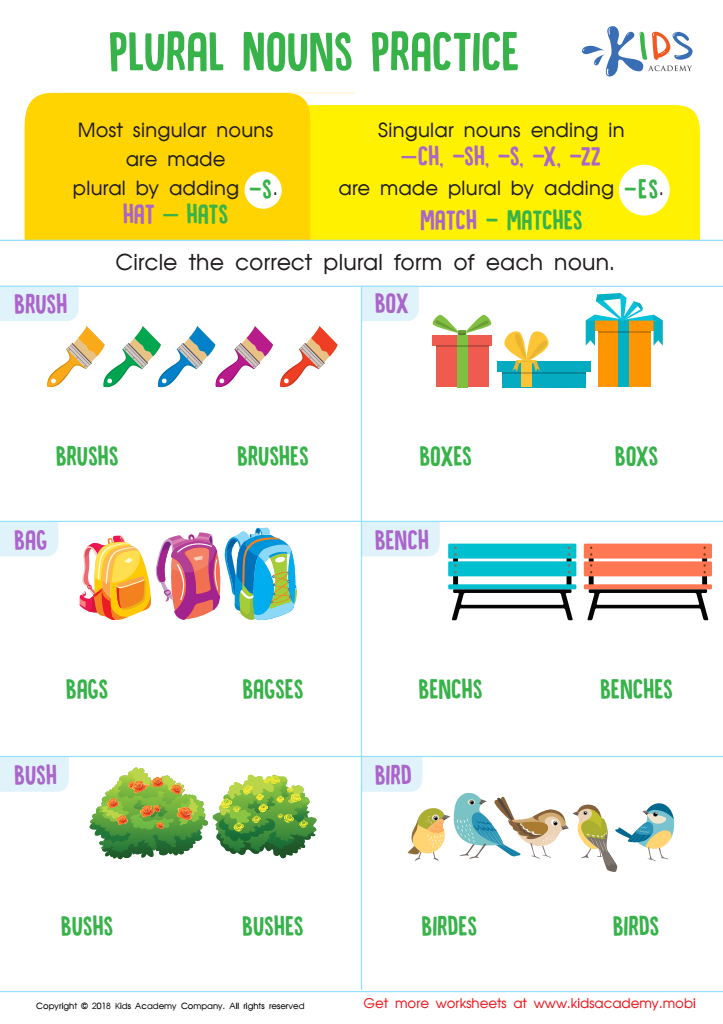
Plural Nouns Practice Worksheet
 Assign to My Students
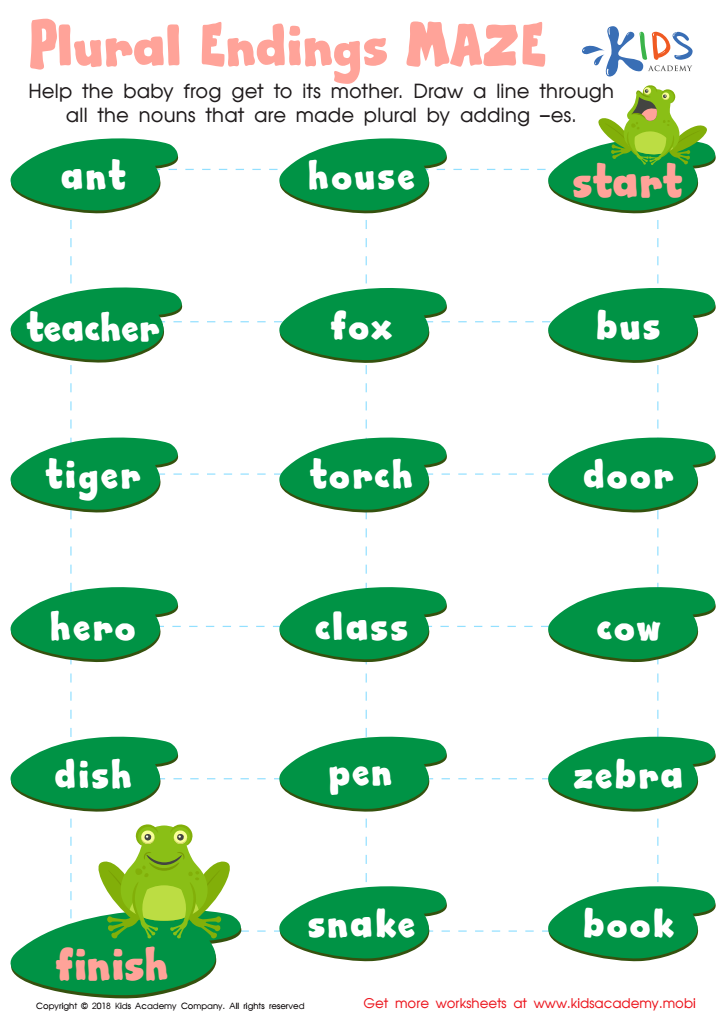
Plural Endings Maze Worksheet
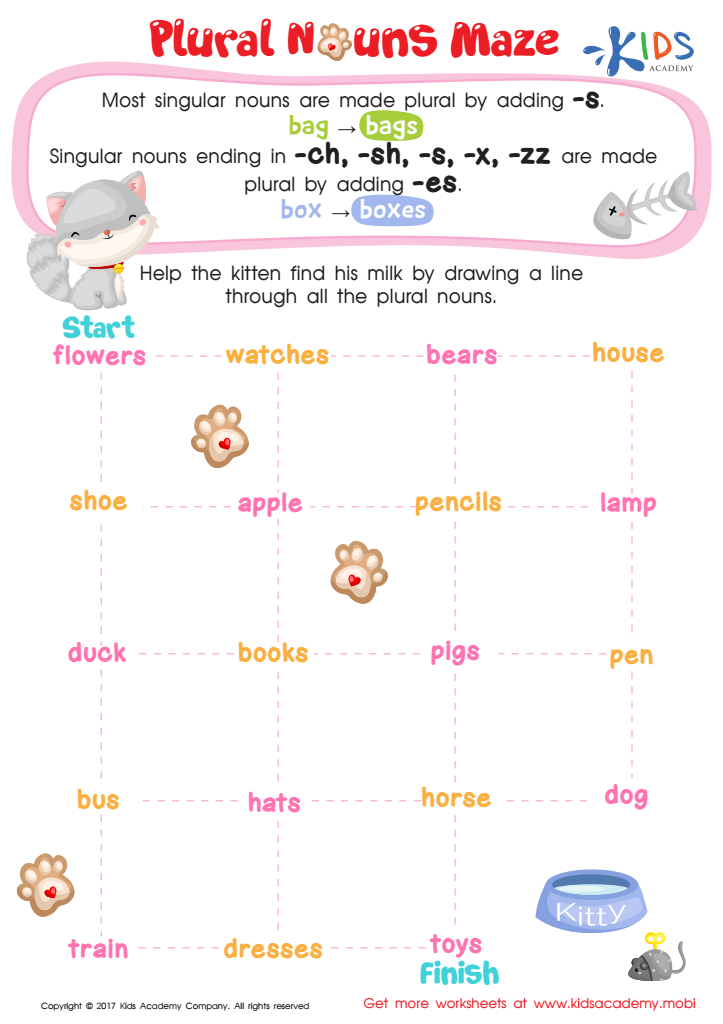
Plural Nouns Maze Worksheet
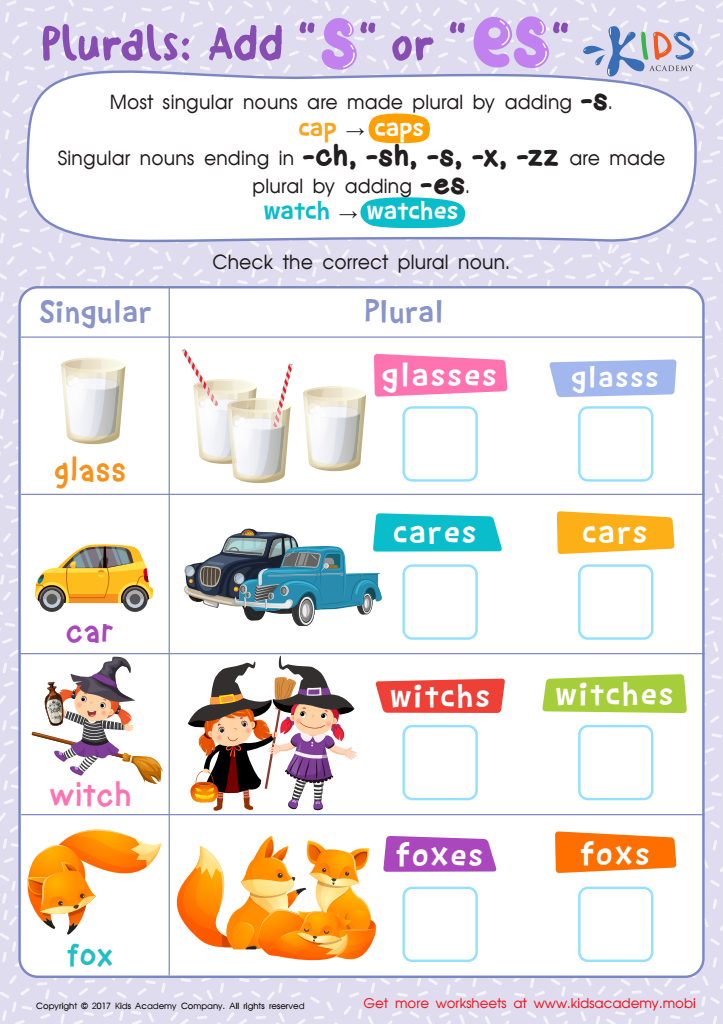
Plurals: "–es" or "–es"? Worksheet
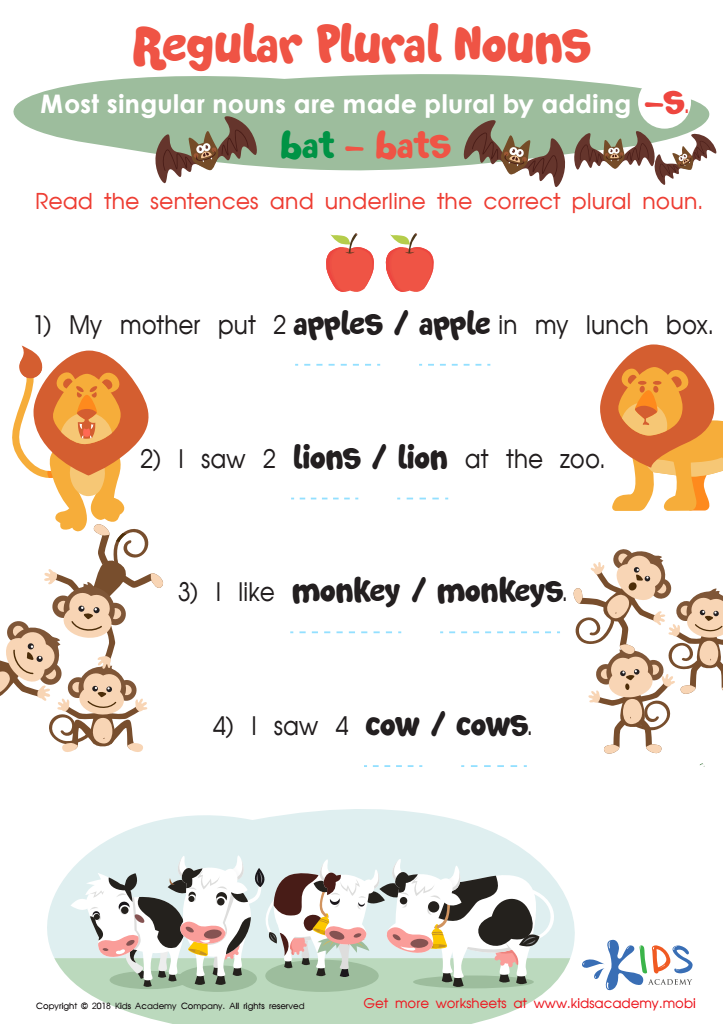
Regular Plural Nouns Worksheet







Understanding plurals is an essential aspect of language development that holds significant importance for parents and teachers of children aged 4-9. Firstly, grasping the concept of plurals helps children expand their vocabulary. Recognizing that one apple becomes two apples, for example, enriches their understanding of nouns and enhances their ability to describe the world around them accurately.
Additionally, literacy skills are built on a solid foundation of grammar, and pluralization is a crucial element of this. As children begin to read and write, using plurals correctly allows for clearer communication and improved comprehension. It aids in their progression from simple sentences to more complex structures, which is vital for their academic success.
Moreover, a focus on plurals helps foster critical thinking and categorization skills. Children learn to classify objects and understand relationships within language, stimulating cognitive development.
Lastly, embracing the challenge of learning plurals in a fun and engaging way can nurture a love for language, making it enjoyable rather than daunting. As educators and caregivers, encouraging this aspect of language development contributes significantly to children’s overall learning journey, creating confident communicators ready to express themselves effectively.








