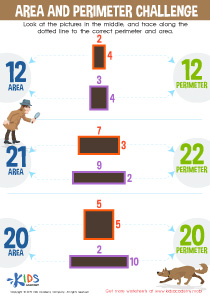
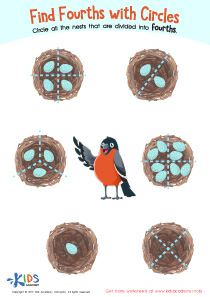
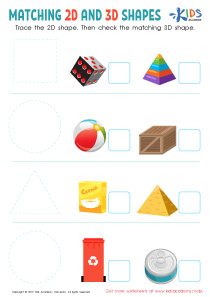
Shape identification Extra Challenge 2D Shapes Worksheets for Ages 4-9
3 filtered results
-
From - To
Unlock the fun of learning with our "Shape Identification Extra Challenge 2D Shapes Worksheets" designed for ages 4-9! These engaging worksheets enhance children's ability to recognize, categorize, and describe various 2D shapes while developing essential math and critical thinking skills. Perfect for early learners, our challenges include a range of activities from tracing to matching and identifying shapes in different contexts. Each worksheet is designed to spark creativity and encourage independent thinking, making learning enjoyable and effective. Give your students the tools they need to master shape recognition and boost their confidence in math with these vibrant and interactive resources!
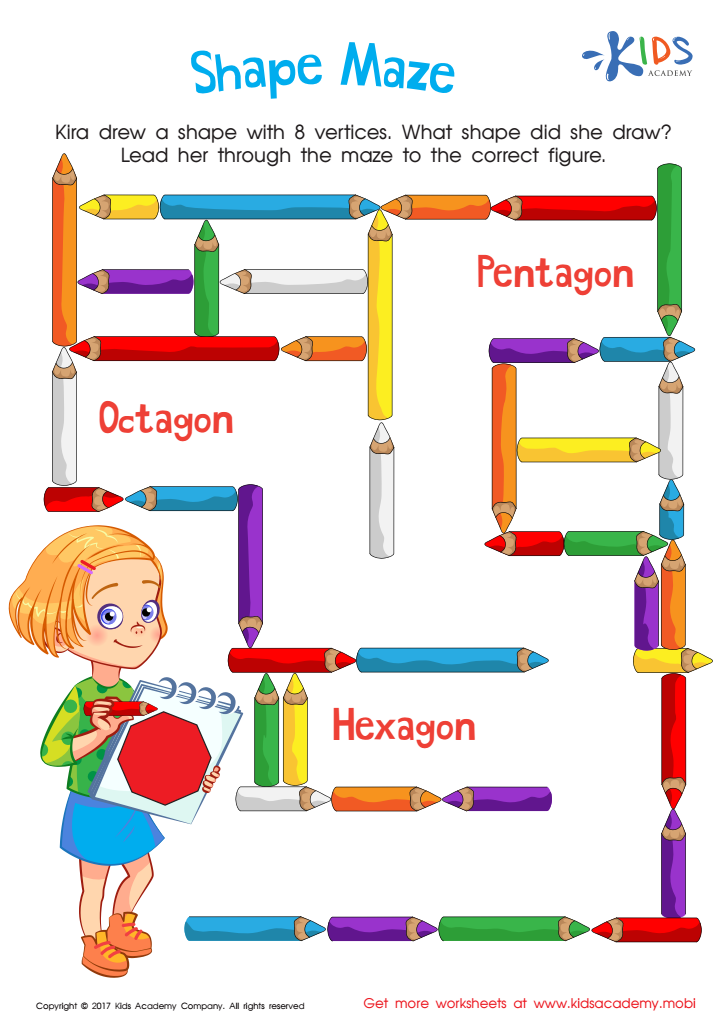
Shape Maze Worksheet
 Assign to My Students


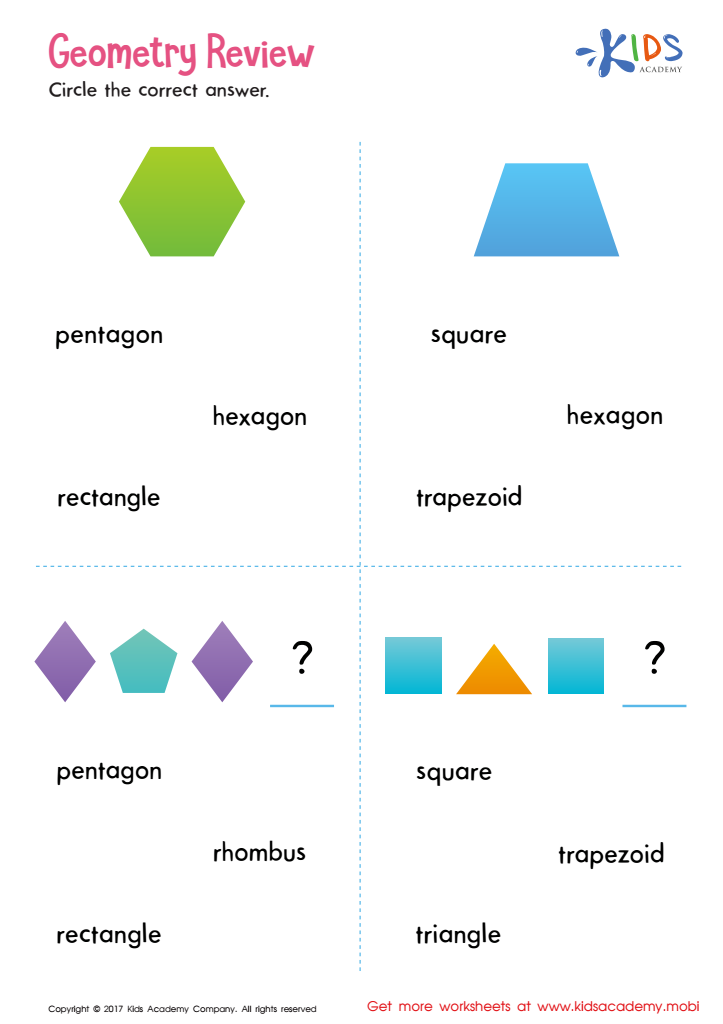
Geometry Review Printable
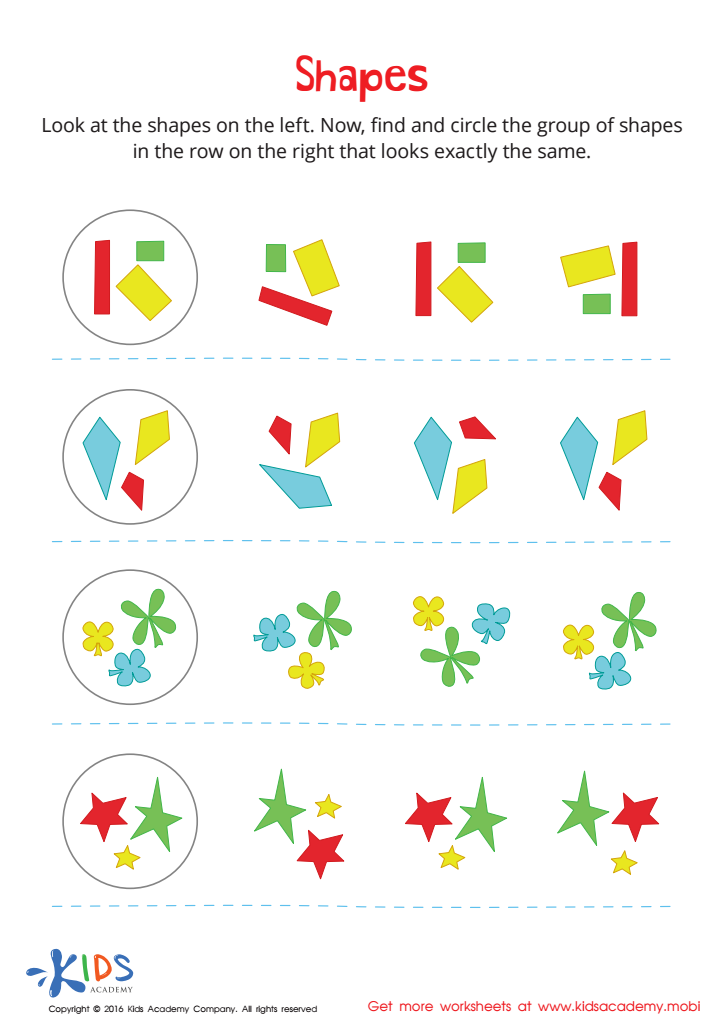
Shapes Worksheet








Shape identification is a foundational skill that greatly influences a child’s cognitive and academic development. For parents and teachers, engaging children in activities focused on 2D shape identification, especially through extra challenges, fosters critical thinking and enhances problem-solving skills. These activities encourage children to recognize, categorize, and manipulate shapes, thereby laying the groundwork for geometry and spatial reasoning later in their education.
Furthermore, understanding shapes aids in the development of fine motor skills as children draw, copy, and construct various shapes using hands-on materials. By providing enrichment through challenges, teachers and parents can stimulate greater interest in mathematics and bolster a child's confidence in their abilities.
Additionally, 2D shape identification builds vocabulary and promotes language development as children describe shapes, discuss their attributes, and connect them to real-world objects. Early engagement with shape concepts can foster a lifelong appreciation for mathematics, encouraging more advanced learning in science and engineering.
Investing time in shape identification challenges for ages 4-9 ensures that children have a solid foundation, which not only supports their current learning but also equips them with essential skills for future academic success.