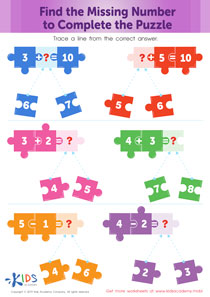
Number Recognition Extra Challenge Addition Worksheets for Ages 4-9
8 filtered results
-
From - To
Unlock your child’s potential with our Number Recognition Extra Challenge Addition Worksheets, designed for kids ages 4-9. Tailored to enhance numeracy skills, these engaging worksheets not only reinforce number recognition but also introduce fun addition practices. Each activity challenges young learners to identify numbers while solving engaging problems, fostering both confidence and competence in math. Creative illustrations and intuitive exercises keep children motivated, making learning a joyful experience. Perfect for classrooms or home schooling, these worksheets ensure solid foundational skills are developed through captivating challenges. Empower your child’s math journey today and watch them thrive with comprehensive, enjoyable learning tools!
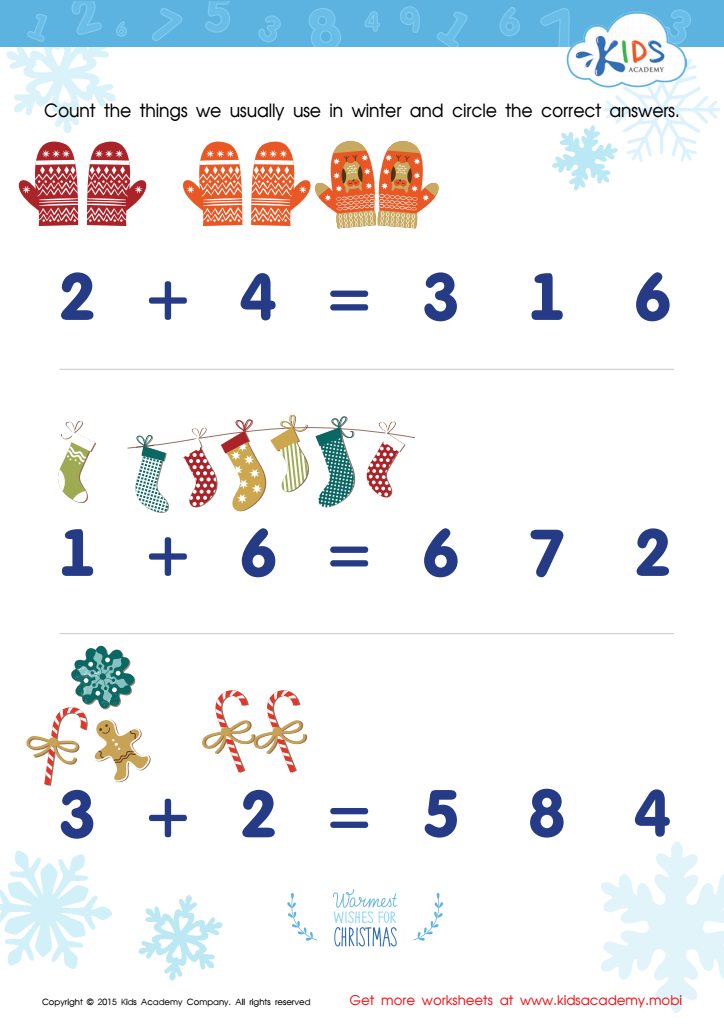
Count Winter Things Worksheet
 Assign to My Students
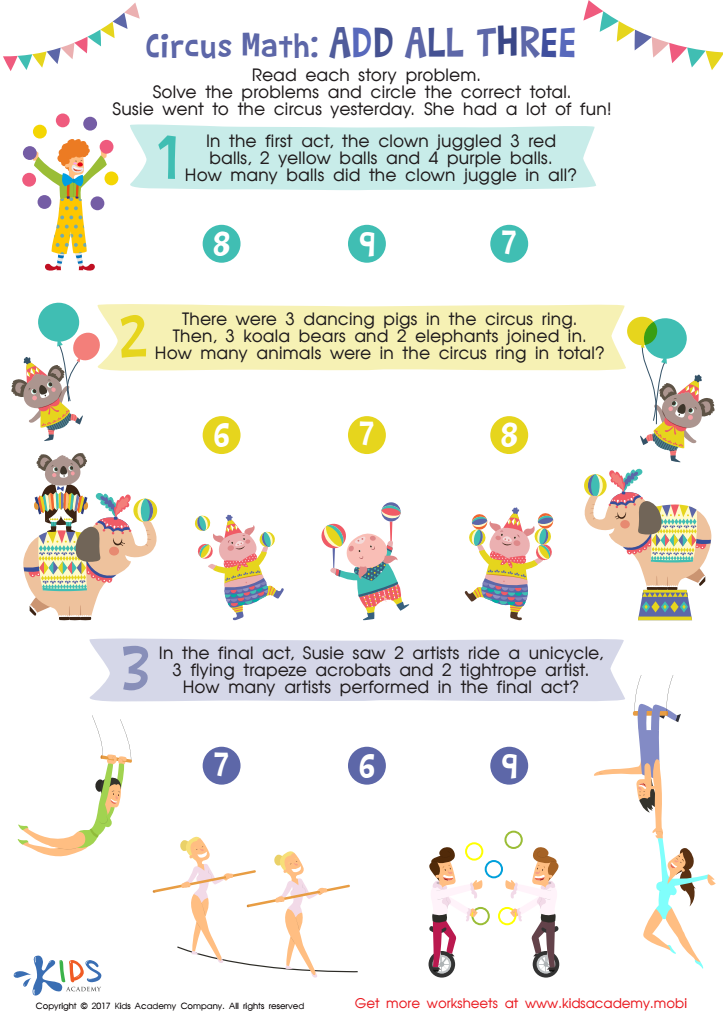
Circus Math Printable
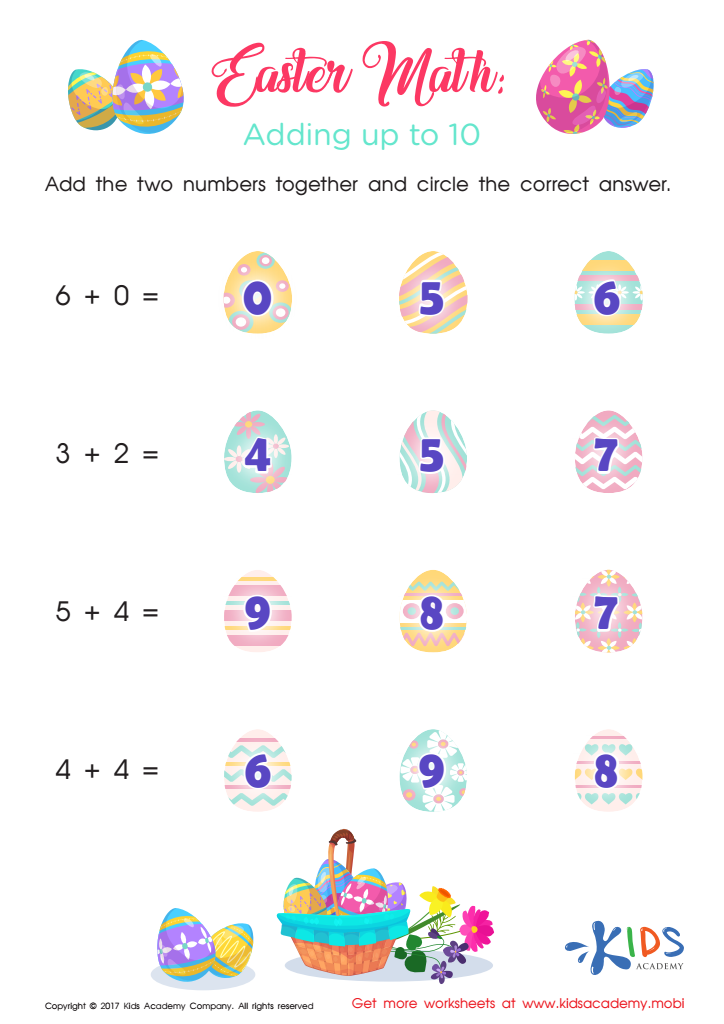
Addition Up To 10 Worksheet
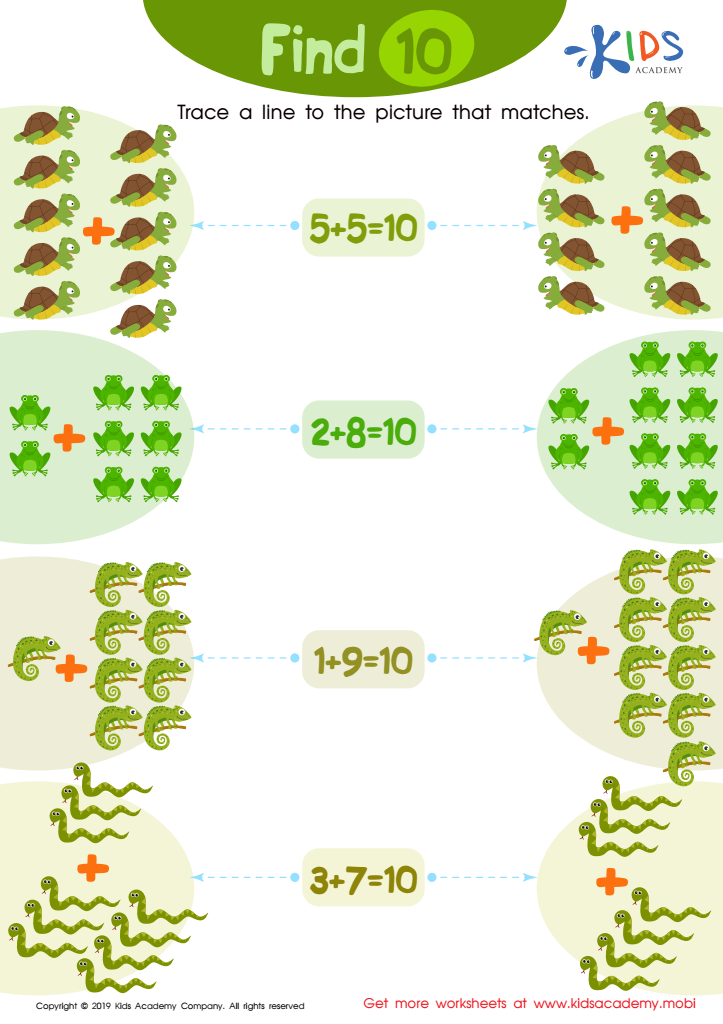
Find 10 Worksheet
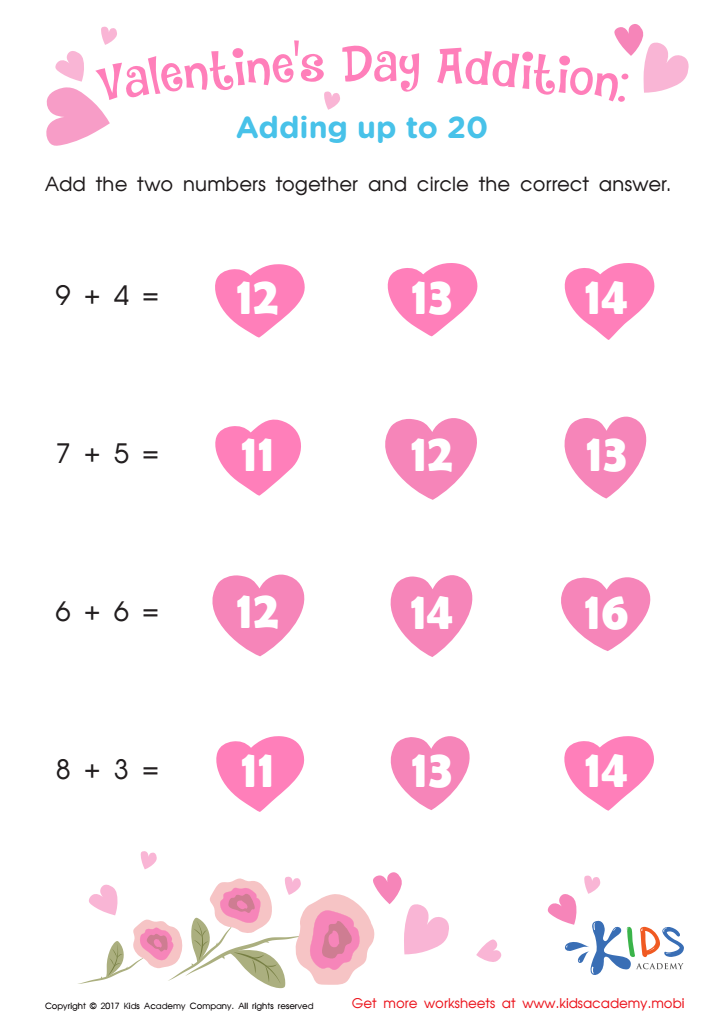
Valentine's Day Addition Worksheet
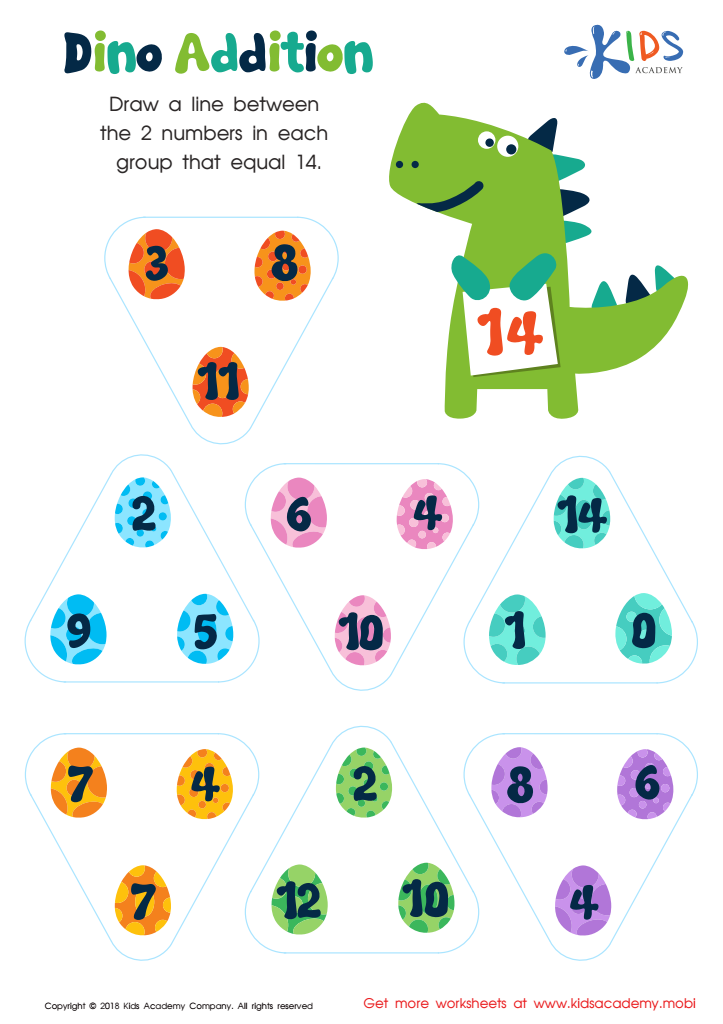
Dino Addition Worksheet
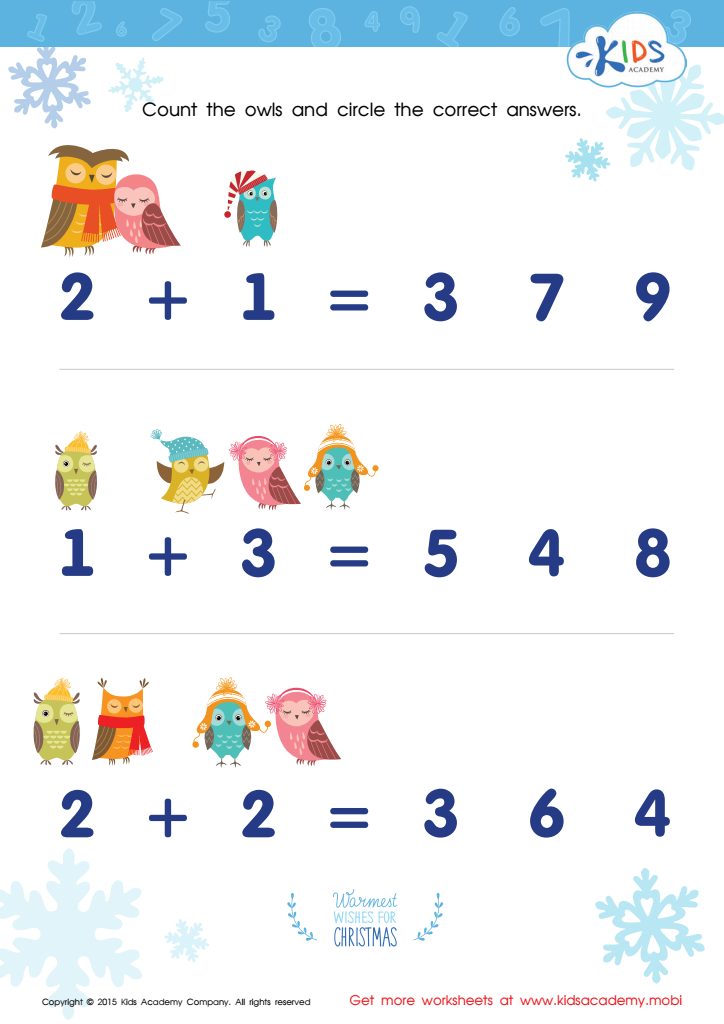
Count Little Owls Worksheet
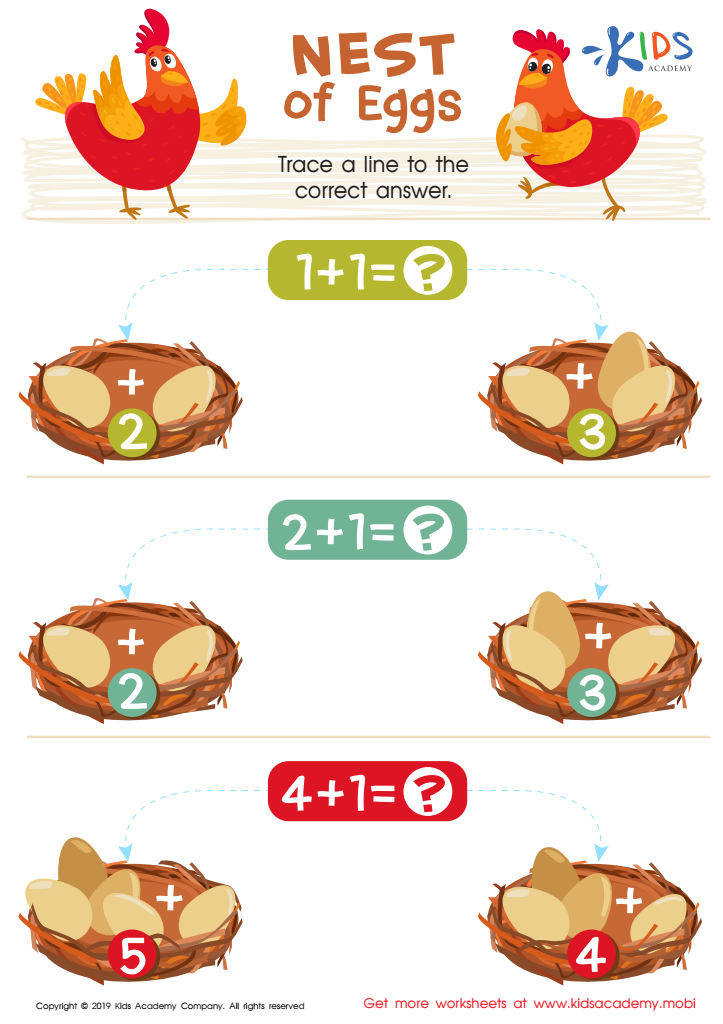
Nest of Eggs Worksheet








Number Recognition Extra Challenge Addition is crucial for children's cognitive development, particularly for ages 4-9, as it lays a foundational understanding of mathematics that extends beyond basic counting. Here's why parents and teachers should be invested in this aspect of learning.
Firstly, number recognition is essential for developing numeracy skills. By mastering numbers and their sequences, children build confidence in handling mathematical concepts. The Extra Challenge ensures that children are engaged with numbers at various complexity levels, catering to different learning paces. It promotes critical thinking, enhances problem-solving abilities, and stimulates mental agility.
Additionally, early mastery of addition helps bridge the gap between elementary number puzzles and more complex mathematical operations in later grades. This continuous reinforcement solidifies mathematical foundations, setting children up for future academic success.
Finally, integrating fun and interactive approaches makes learning enjoyable, fostering a love for mathematics. When parents and teachers actively promote Number Recognition Extra Challenge Addition, they not only enhance children’s education but also support their overall development—cognitively, socially, and emotionally, preparing them for a lifetime of learning. This investment in their early years cultivates skills that extend beyond the classroom, making it an essential focus for caregivers.