Shape Recognition Extra Challenge Math Worksheets for 4-Year-Olds
7 filtered results
-
From - To
Engage your 4-year-old with our "Shape Recognition Extra Challenge Math Worksheets." These expert-designed, fun-filled activities promote foundational geometry skills by identifying, comparing, and matching various shapes. Ideal for preschoolers taking their first steps in math, these worksheets use playful and imaginative exercises to keep young minds keen and intrigued. Enhance critical thinking, problem-solving, and fine motor skills as kids explore intricate patterns and shapes. Visit our website to inspire early learning and make shape recognition an exciting adventure! Perfect for home or classroom use, help your child build a strong mathematical foundation one shape at a time.
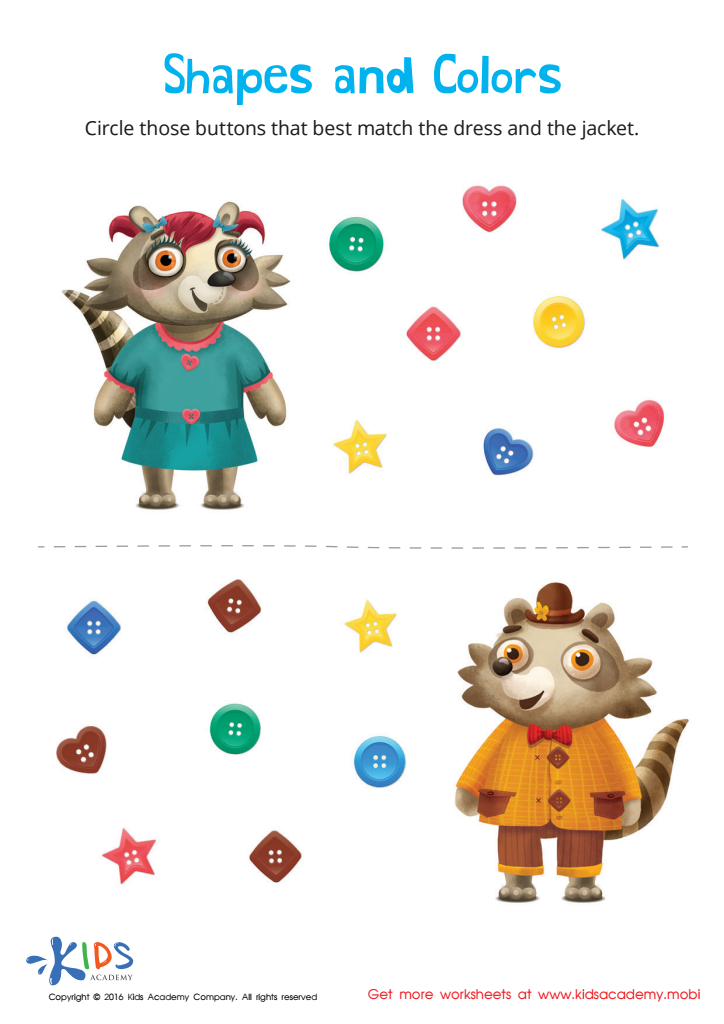
Matching: Shapes and Colors Worksheet
 Assign to My Students
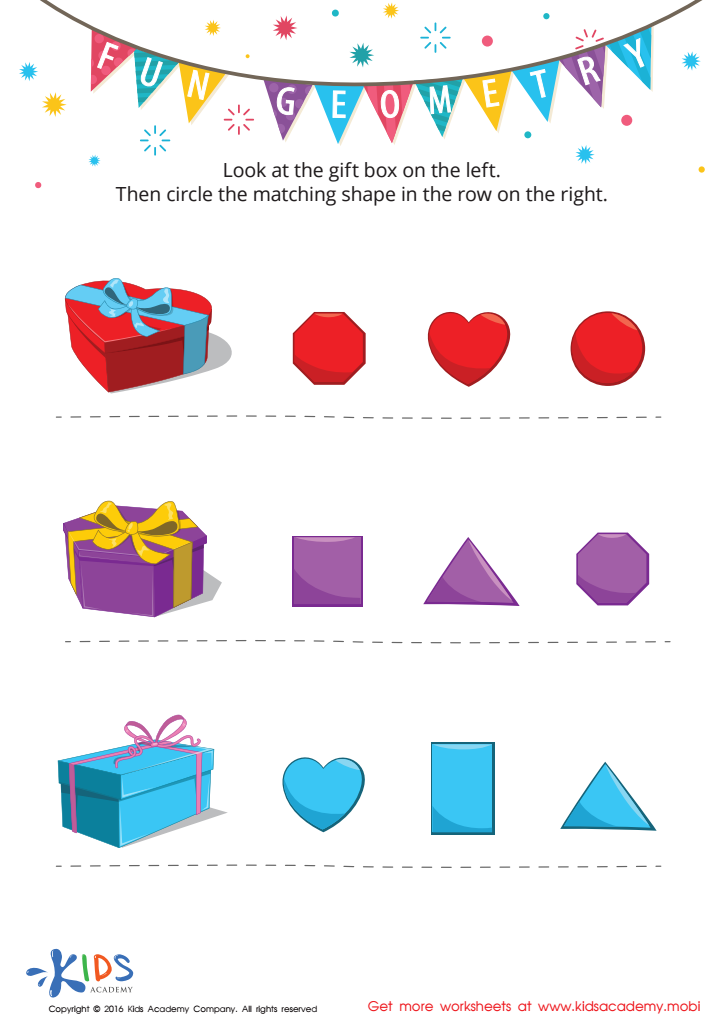
Fun Geometry Worksheet
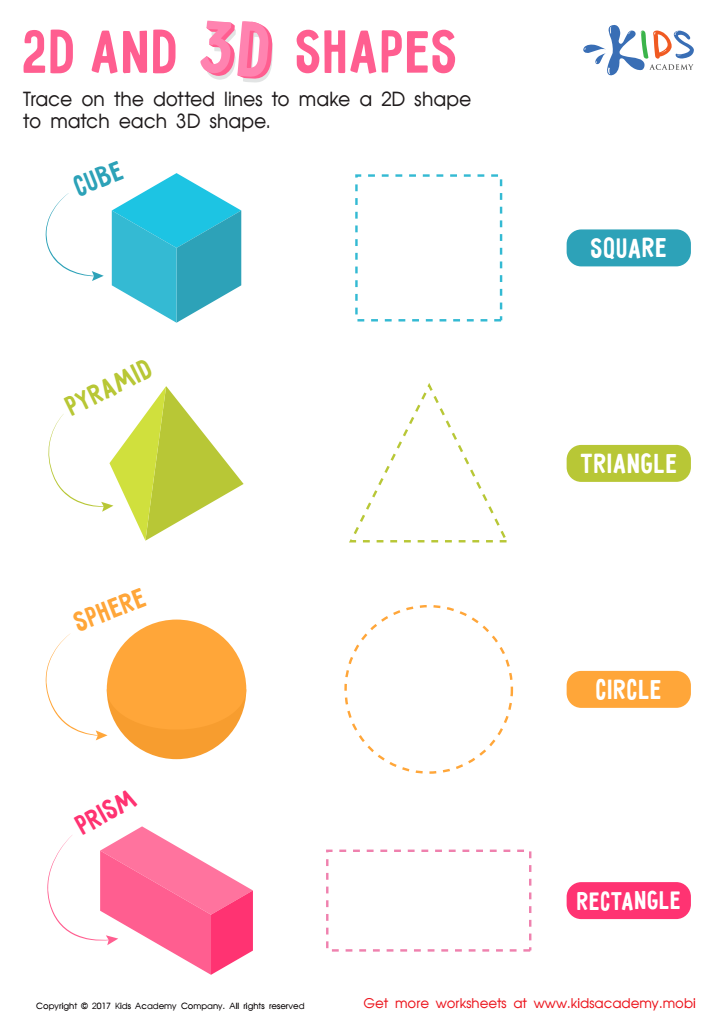
2D and 3D Shapes Worksheet
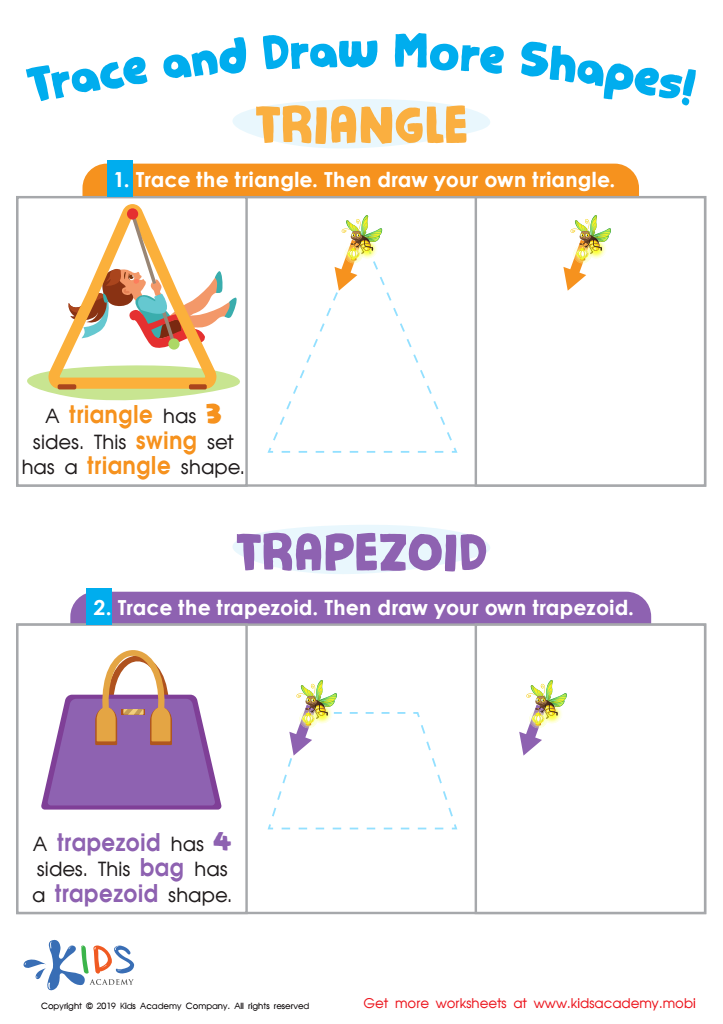
Trace and Draw More Shapes Worksheet
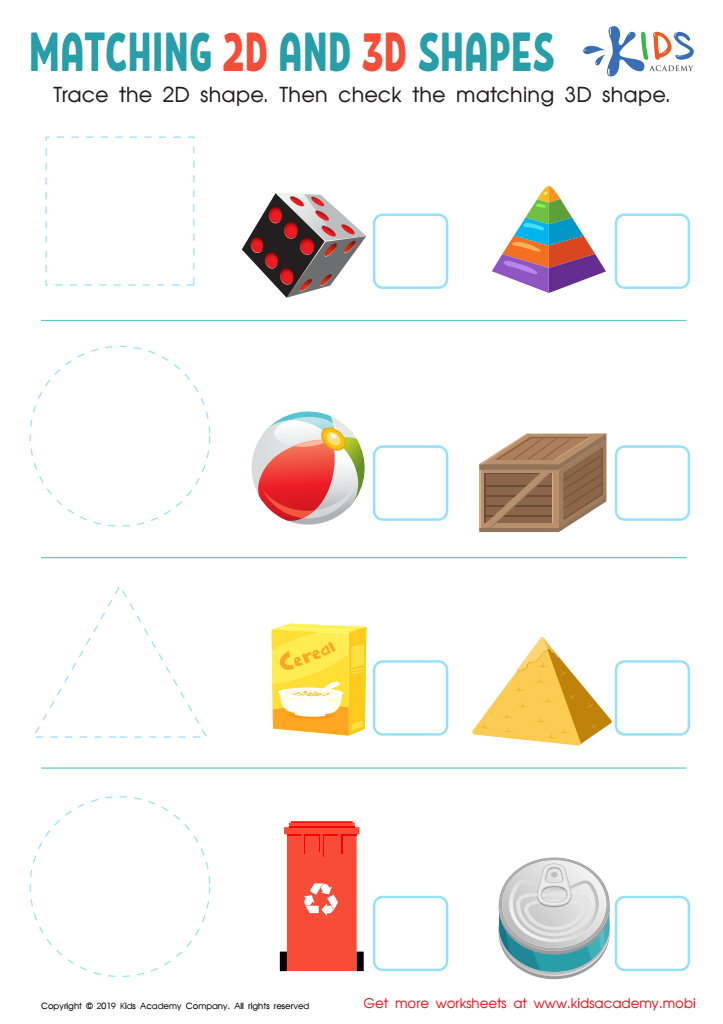
Matching 2D and 3D Shapes Worksheet
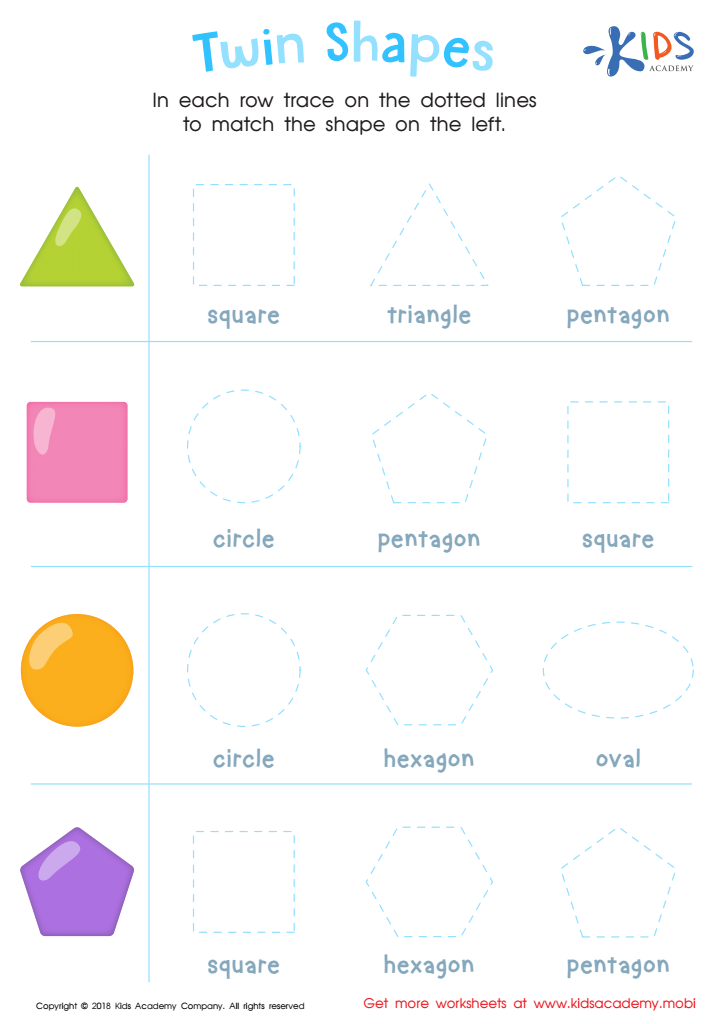
Twin Shapes Dot-to-Dot Worksheet
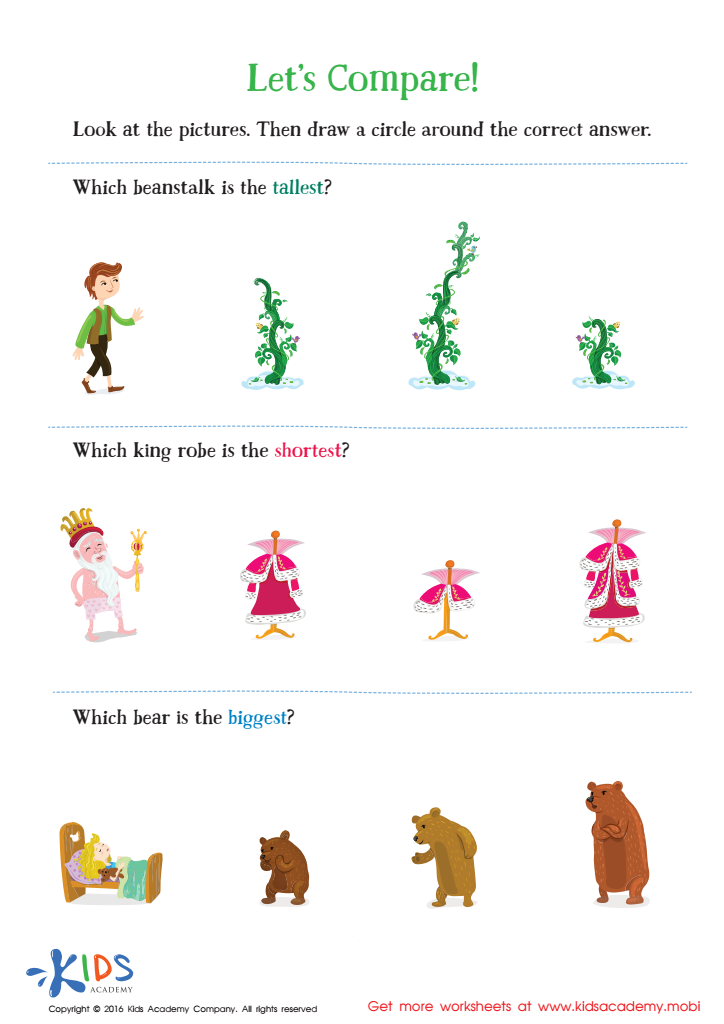
Fairy Tale Worksheet: Let's Compare







Parents and teachers should care about Shape Recognition Extra Challenge Math for 4-year-olds because it plays a crucial role in early childhood development and lays a strong foundation for future learning. At this age, children are in a critical period of cognitive development, where their brains are highly receptive to new experiences and information. Engaging 4-year-olds in shape recognition activities enhances their ability to observe, categorize, and understand the world around them.
Shape recognition is more than just identifying circles, squares, or triangles; it helps children develop spatial awareness, which is fundamental for problem-solving and logical thinking. These skills are essential for later success in subjects like mathematics, science, engineering, and technology. Additionally, shape recognition challenges promote fine motor skills as children draw or manipulate shapes, foster hand-eye coordination, and improve memory and concentration.
Moreover, these activities encourage interactive learning and can be a fun way to bond with adults, providing children with the emotional support they need. When parents and teachers invest time in engaging young learners with shape recognition challenges, they demonstrate an interest in their education, boosting children's confidence and enthusiasm for learning.
Overall, prioritizing shape recognition early on sets the stage for academic success and helps children develop critical cognitive and motor skills that have broad implications for their future education and everyday life.