Basic geometry understanding Extra Challenge Worksheets for Ages 5-6
4 filtered results
-
From - To
Unlock the world of shapes and spatial awareness with our "Basic Geometry Understanding Extra Challenge Worksheets" for children aged 5-6! These engaging and fun worksheets introduce foundational geometry concepts through colorful visuals and interactive activities. Designed to challenge young learners, they strengthen skills in identifying shapes, understanding symmetry, and recognizing patterns. Perfect for home or classroom use, these extra challenge tasks promote critical thinking and problem-solving abilities while keeping learning enjoyable. Foster a love for math and geometry in your child with our thoughtfully crafted worksheets that support developmental growth and prepare them for future academic success!
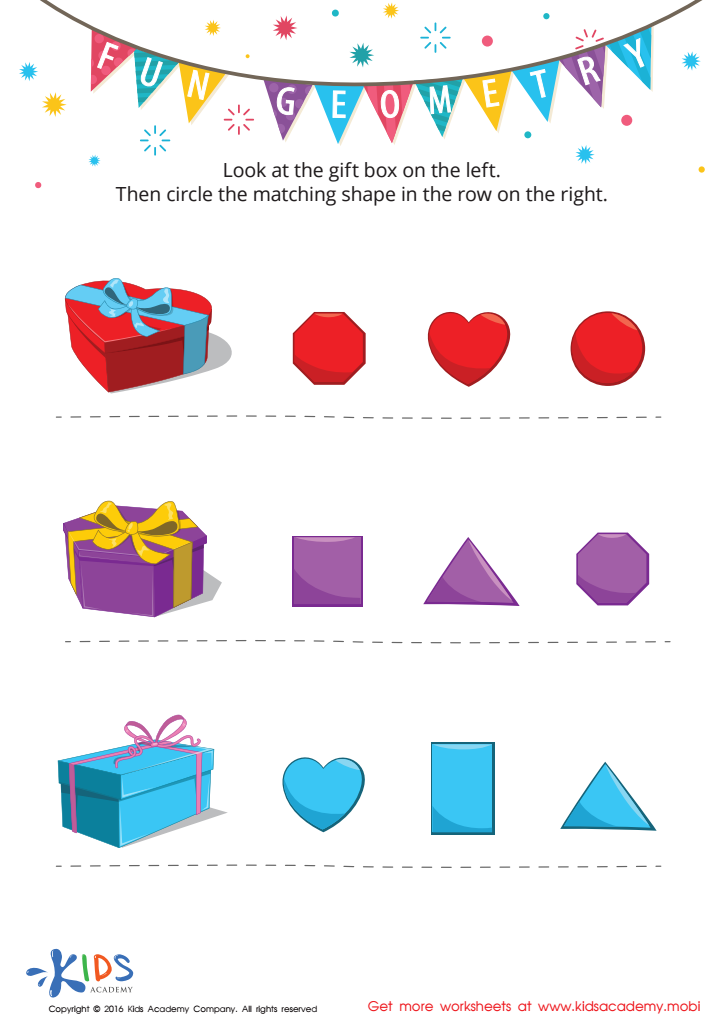
Fun Geometry Worksheet
 Assign to My Students
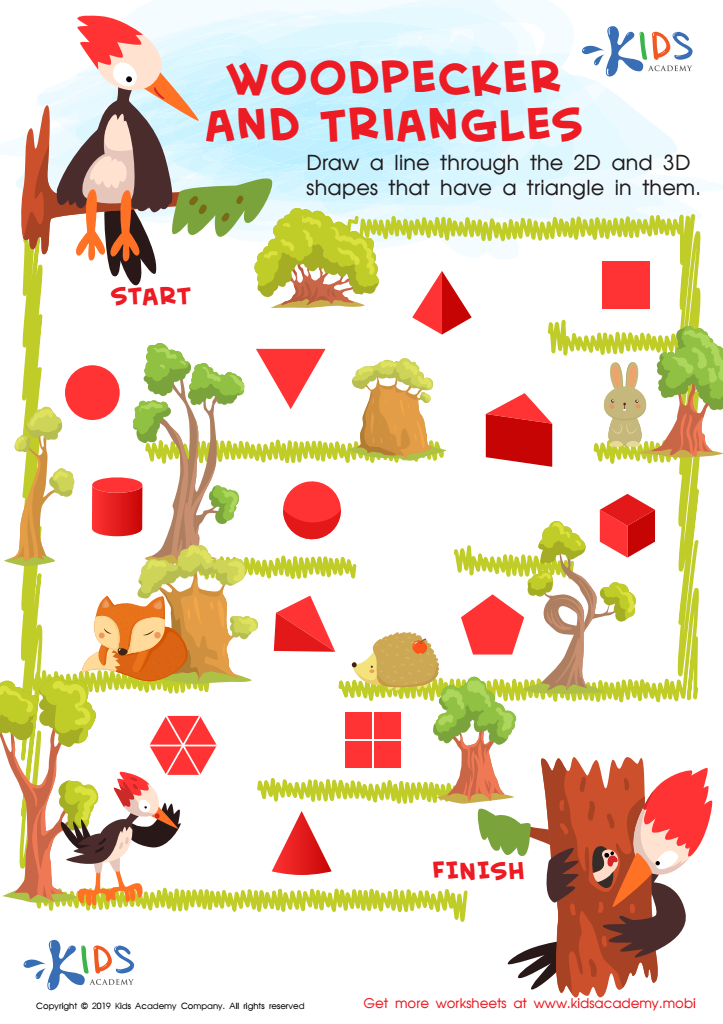
Woodpecker and Triangles Worksheet
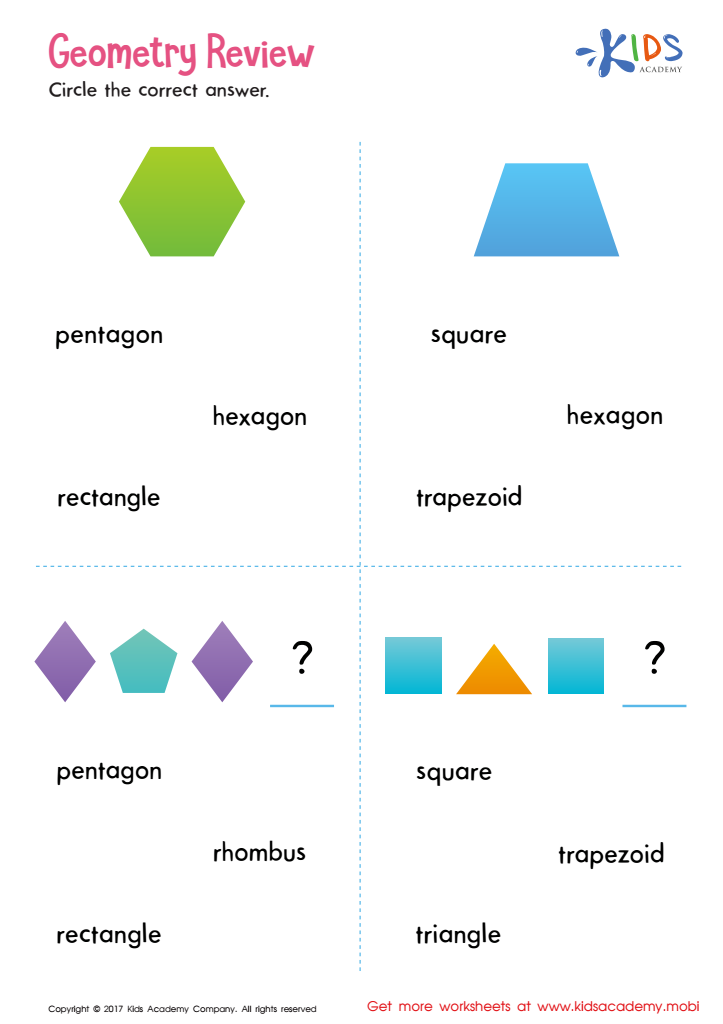
Geometry Review Printable
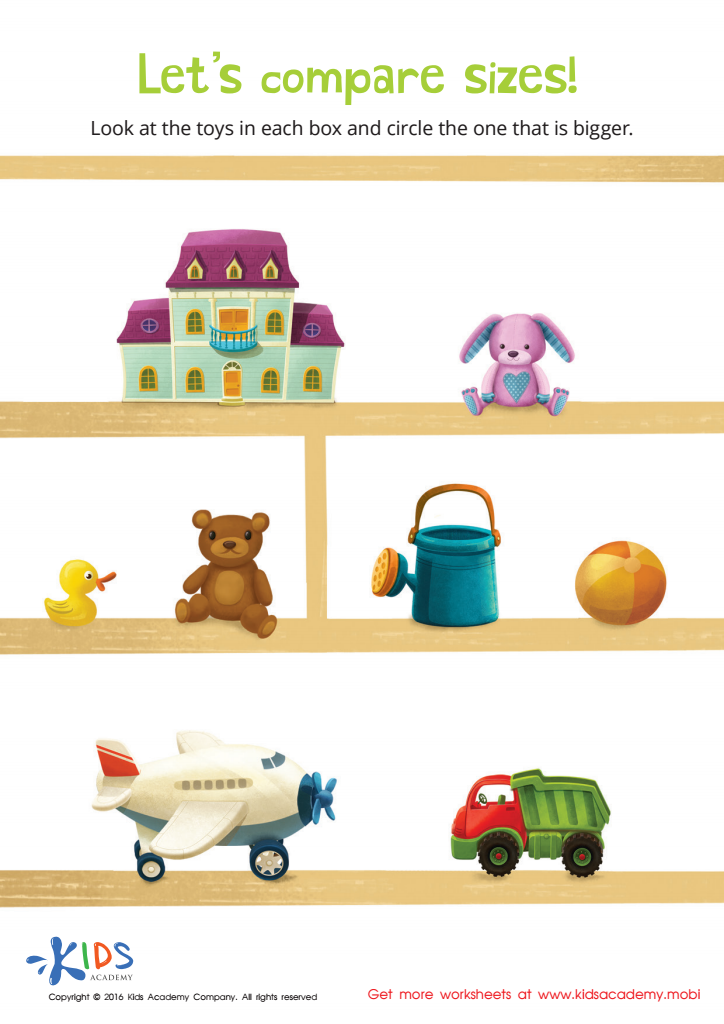
Classifying by Size Sorting Worksheet








Understanding basic geometry is a crucial building block in early childhood education, particularly for children aged 5-6. During this stage, kids develop essential cognitive skills and spatial awareness that form the foundation for future learning in math and science. By engaging with basic geometry, children learn to recognize and describe shapes, understand spatial relationships, and begin to grasp concepts such as area and symmetry.
For parents and teachers, fostering a solid geometric understanding in this age group enhances critical thinking and problem-solving abilities. Geometry not only aids in math proficiency but also contributes to literacy skills as children learn to articulate their thoughts about shapes and patterns. Additionally, it nurtures creativity when kids visualize and manipulate shapes, encouraging artistic expression.
Incorporating geometry into everyday activities makes learning engaging and practical. From identifying shapes in their environment to building with blocks, children apply geometric concepts in real-life contexts. As a result, early engagement with basic geometry supports overall cognitive development and prepares students for advanced math concepts in later grades. By prioritizing this understanding, parents and teachers can inspire a lifelong interest in learning, making math a natural and enjoyable part of their children’s lives.








