Comparing Fractions Extra Challenge Worksheets for Ages 5-6
4 filtered results
-
From - To
Title: Comparing Fractions Extra Challenge Worksheets for Ages 5-6
Description: Elevate young learners' math skills with our "Comparing Fractions Extra Challenge Worksheets" specially designed for ages 5-6. These engaging and educational worksheets make grasping the concept of fractions fun and exciting. Focused on helping children compare different fractions, each activity enhances their understanding and nurtures critical thinking. Developed to complement early education curriculums, our worksheets cater to varied skill levels, offering incremental challenges that keep kids motivated and confident. Perfect for classroom use or at-home practice, these printables serve as a great resource to build a solid mathematical foundation in a fun, supportive environment.
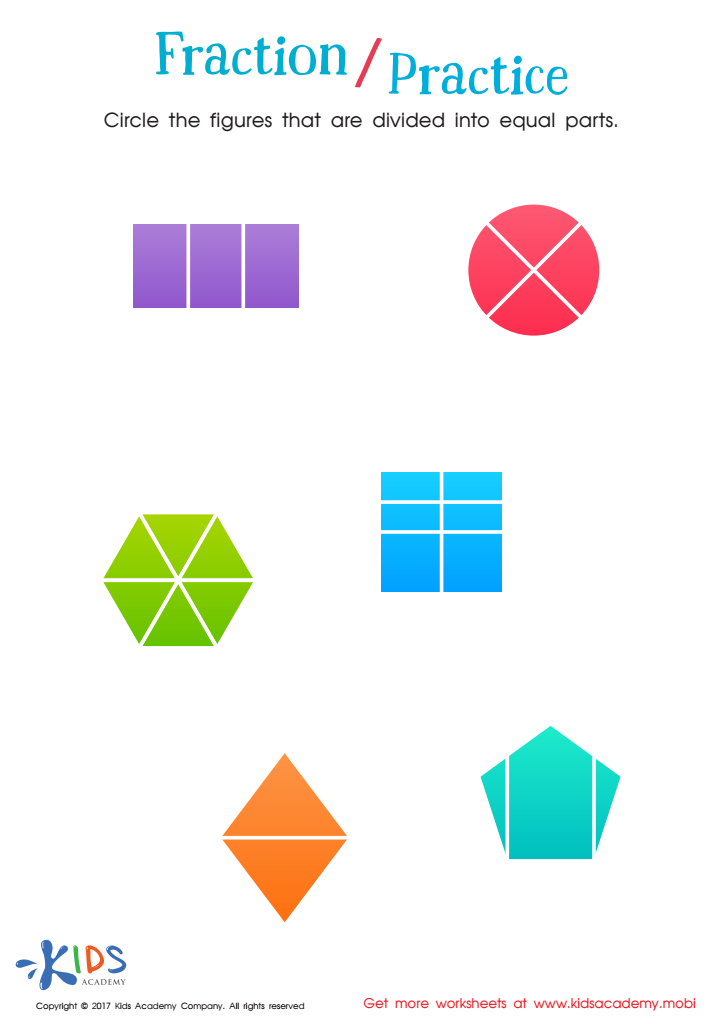
Fractions: Shapes Worksheet
 Assign to My Students
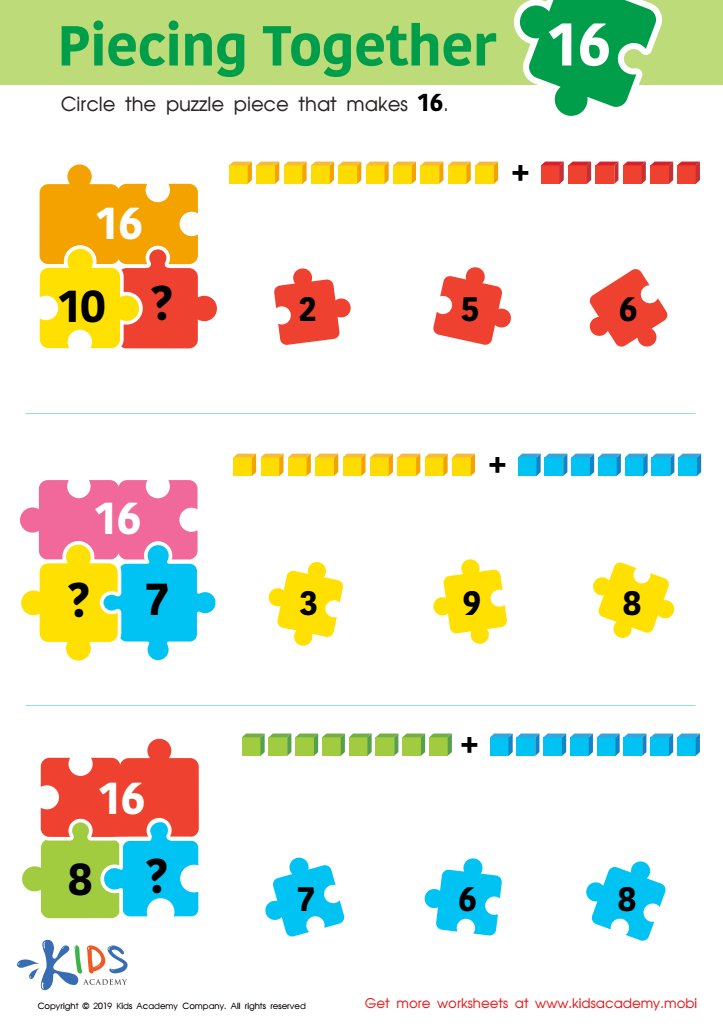
Piecing Together 16 Worksheet
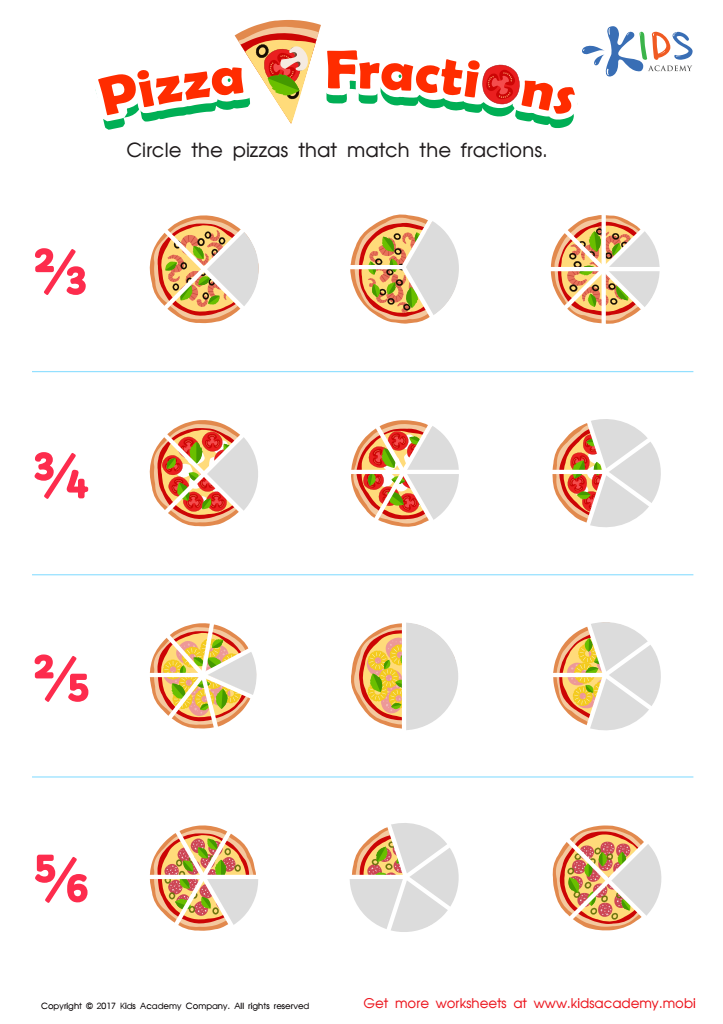
Fractions: Pizza Printable
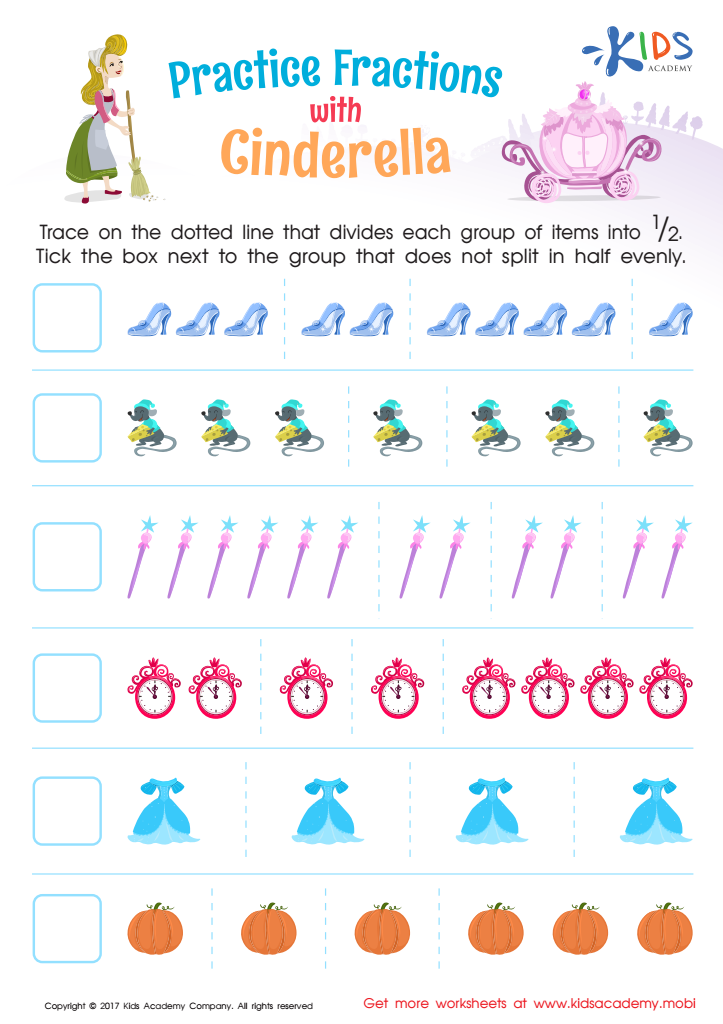
Fractions: Cinderella Printable



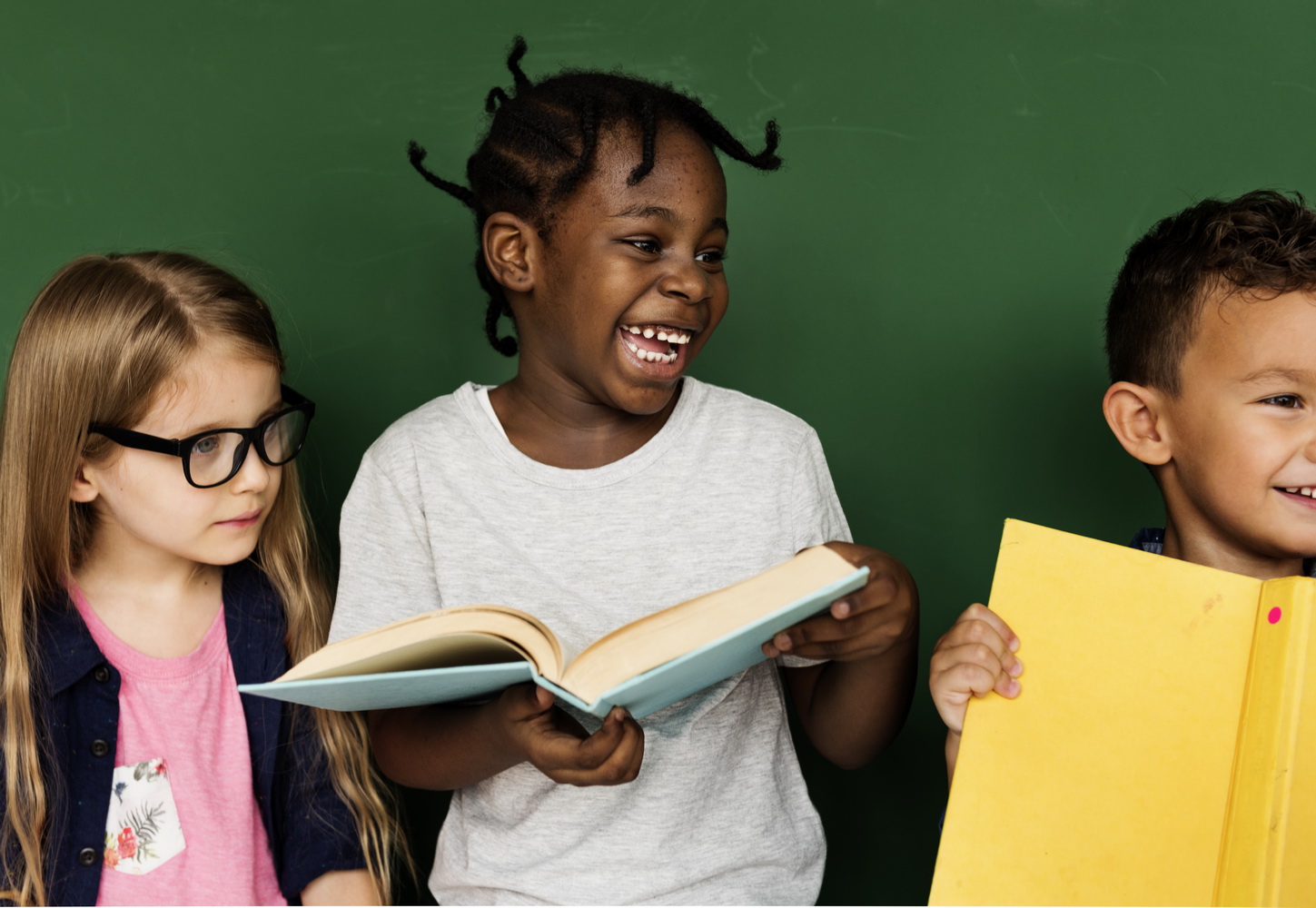



Introducing young children to Comparing Fractions Extra Challenges is crucial for several reasons. At ages 5-6, children's cognitive development is at a stage where they are beginning to understand basic mathematical concepts. Engaging activities that compare fractions build a strong foundation for future mathematical learning.
First, these challenges enhance number sense by helping children recognize and understand fractions as parts of a whole. This foundational understanding is critical as fractions are a fundamental aspect of many higher-level math concepts, including ratios, percentages, and probability. Fostering this skill early can ease the potential challenges that arise later when these topics become more complex.
Second, comparing fractions encourages logical thinking and problem-solving skills. These activities require children to evaluate relationships and make judgments about size and value, fostering their ability to analyze information critically.
Furthermore, interactive and engaging fraction challenges can make learning enjoyable, instilling a positive attitude towards mathematics. For both parents and teachers, prioritizing these challenges promotes a collaborative learning environment where children feel supported and motivated to explore new concepts.
Lastly, success with early math skills strongly correlates with overall academic achievement. By ensuring children are adept at comparing fractions, parents and teachers set the stage for future confidence and proficiency in more advanced mathematical areas, ultimately contributing to long-term academic success.








