Basic geometry understanding Extra Challenge Worksheets for Ages 5-7
4 filtered results
-
From - To
Introduce your young learners to the exciting world of shapes and spatial thinking with our "Basic Geometry Understanding Extra Challenge Worksheets for Ages 5-7". These fun and educational resources are designed to reinforce key geometry concepts such as identifying shapes, understanding symmetry, and recognizing patterns. Tailored to challenge young minds, these worksheets not only enhance geometric skills but also promote critical thinking and problem-solving abilities. Perfect for both classroom and at-home learning, our printable activities ensure kids enjoy every step of their mathematical journey while building a strong foundation for future success in the subject.
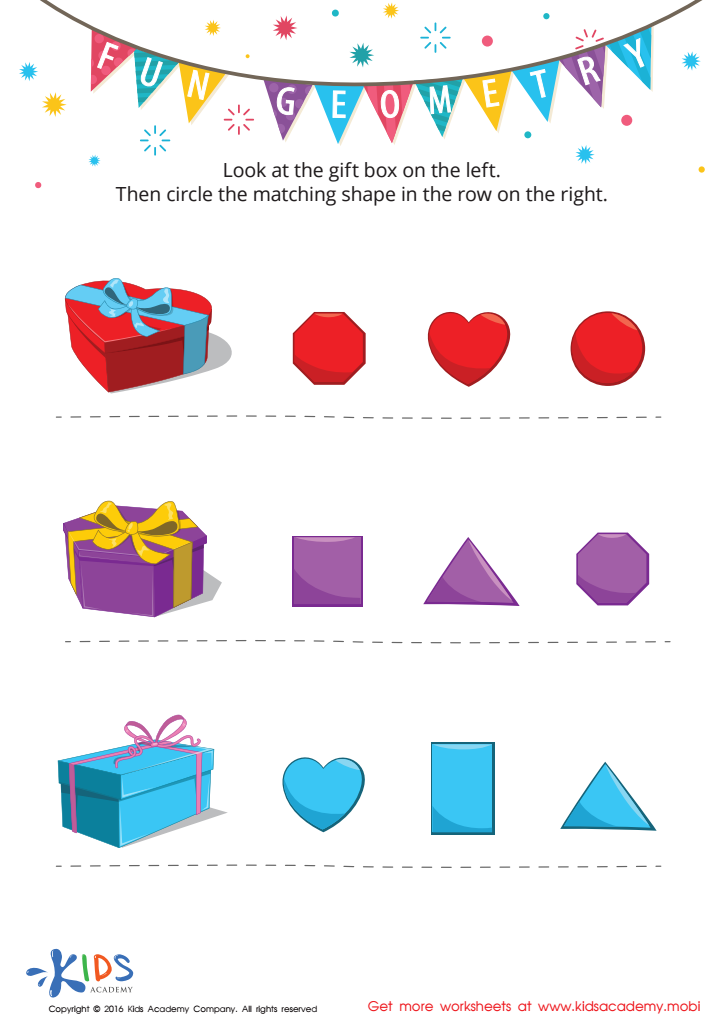
Fun Geometry Worksheet
 Assign to My Students
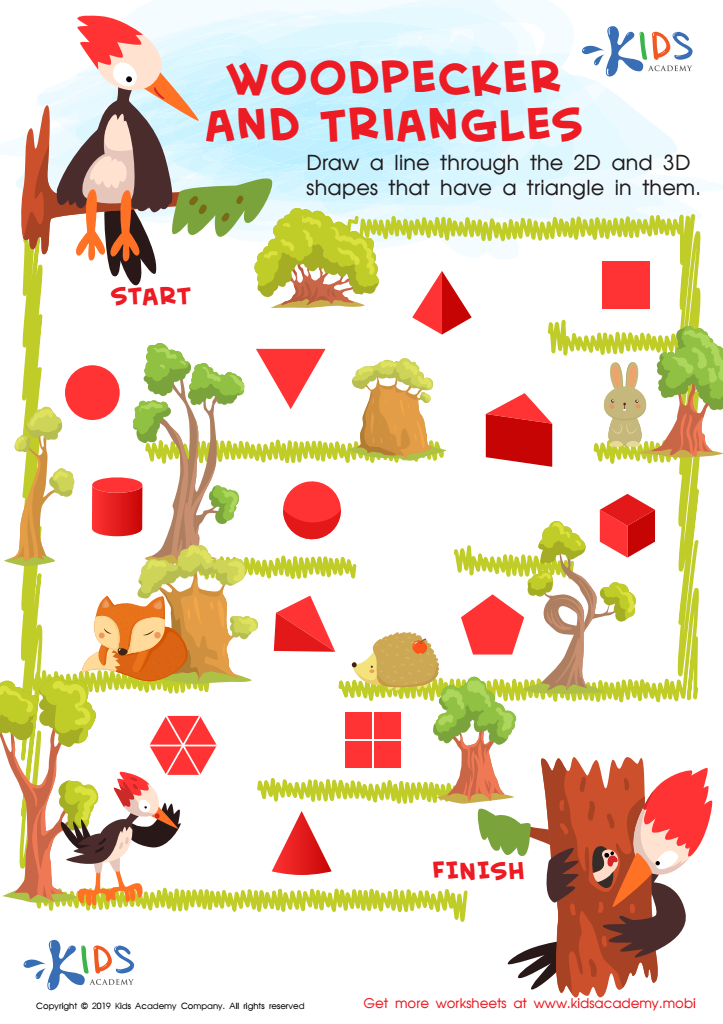
Woodpecker and Triangles Worksheet
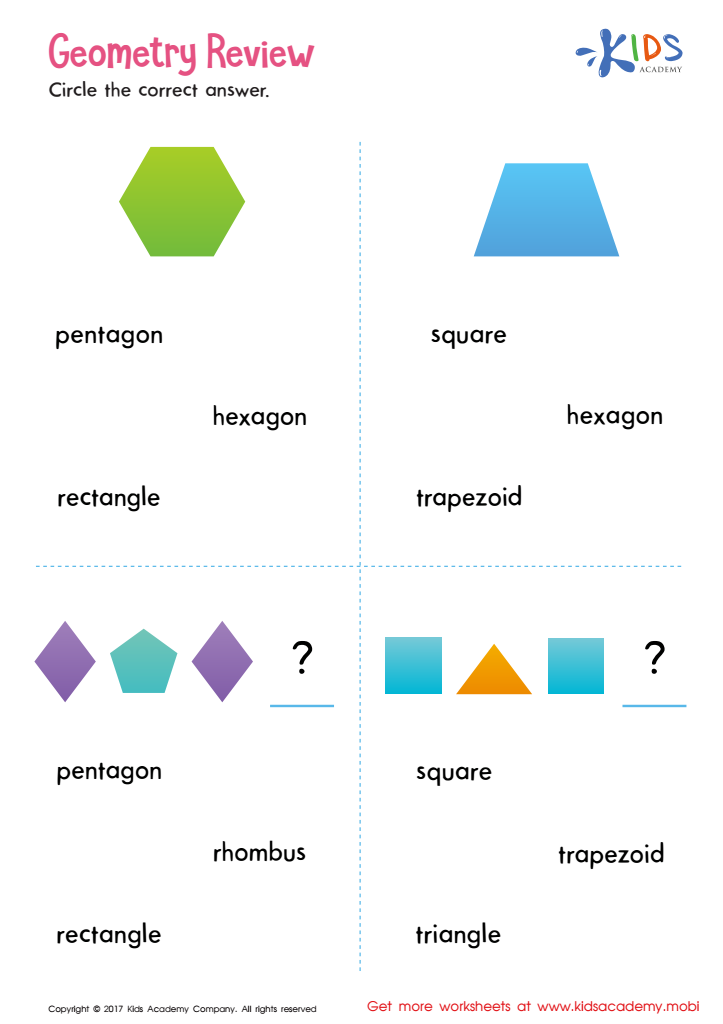
Geometry Review Printable
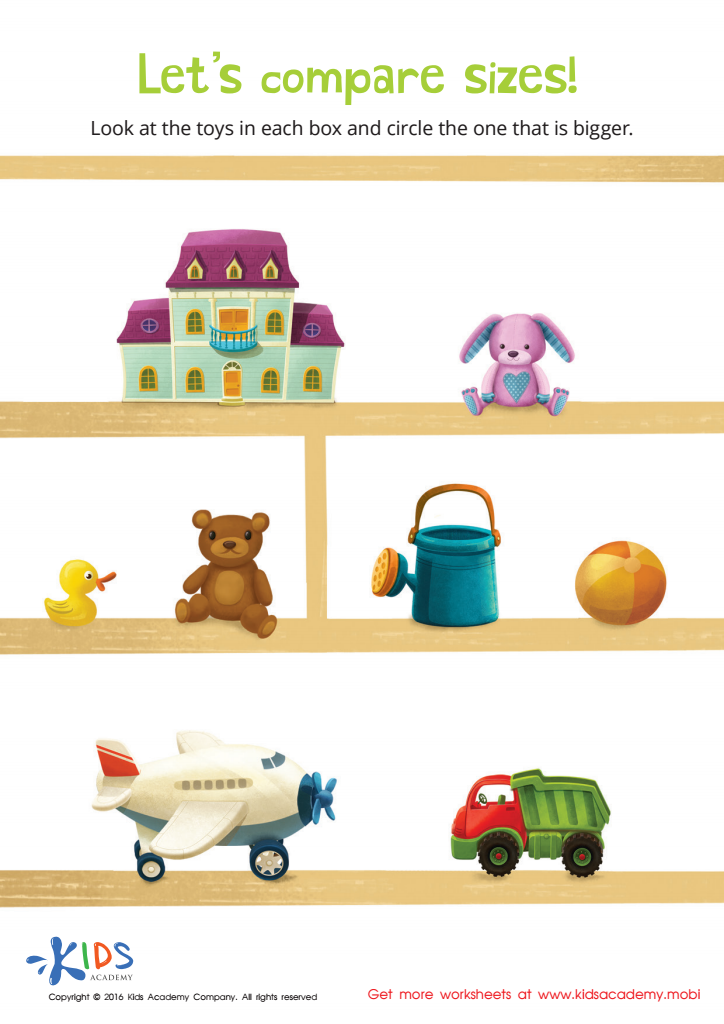
Classifying by Size Sorting Worksheet




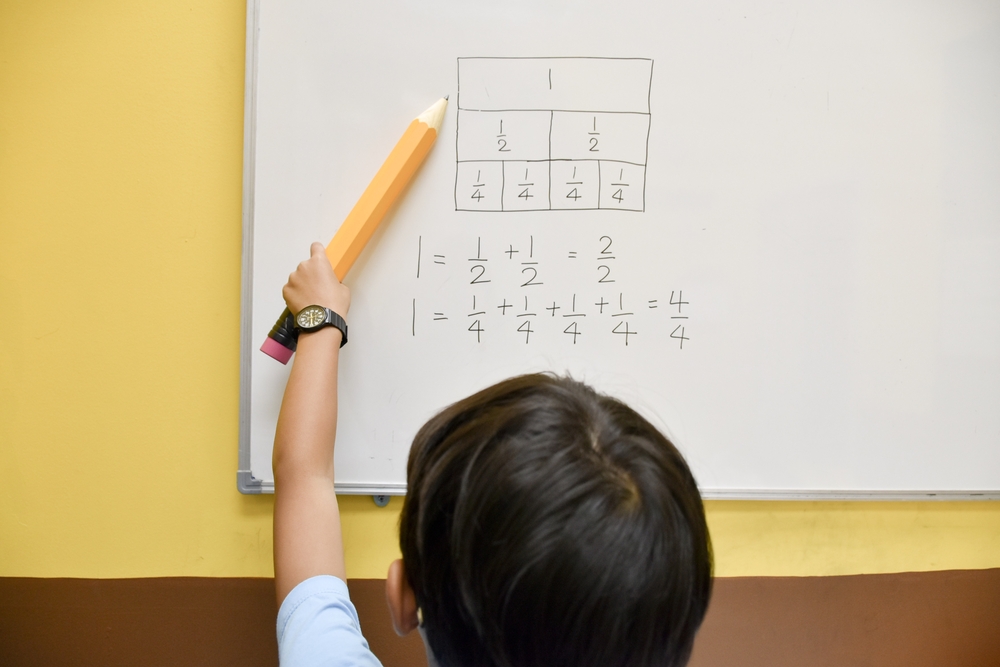



Parents and teachers should prioritize Basic Geometry Understanding Extra Challenge for children aged 5-7 because early exposure to geometry forms a critical foundation for future learning in mathematics. Understanding shapes, spatial relationships, and patterns enhances cognitive development and problem-solving skills. At this young age, children’s minds are highly receptive to learning, and introducing geometric concepts in an engaging and challenging way nurtures curiosity and intellectual growth.
Geometry is not just about shapes; it’s integral in developing visual and spatial reasoning. These skills are crucial when children engage in activities that require them to interpret visual information accurately or navigate through space effectively. For example, through these exercises, kids learn how to recognize patterns, comprehend the properties of different shapes, and understand positional vocabulary such as 'above,' 'below,' 'next to,' and 'under.' These concepts are also essential in everyday life and various future academic subjects, including art, design, and technology.
Furthermore, incorporating extra challenges nurtures a growth mindset by encouraging persistence and perseverance. When children tackle difficult problems, they learn that effort leads to improvement. This can increase their confidence and willingness to confront challenging tasks in all areas of learning. Therefore, laying a strong geometrical foundation helps foster well-rounded, resilient learners prepared for the complexities of the world.








