Comparing Fractions Extra Challenge Addition & Subtraction Worksheets for Ages 5-7
4 filtered results
-
From - To
Discover our "Comparing Fractions Extra Challenge Addition & Subtraction Worksheets" designed specifically for children aged 5-7! These engaging worksheets help young learners enhance their understanding of fractions through exciting addition and subtraction problems. With a focus on comparing different fractions, children will strengthen their math skills while enjoying fun and interactive exercises. Our thoughtfully crafted activities encourage critical thinking, foster problem-solving abilities, and build confidence in young mathematicians. Ideal for home or classroom use, these worksheets offer a perfect blend of challenge and enjoyment, making math fun. Dive into a world of fractions today and watch your child flourish in their mathematical journey!
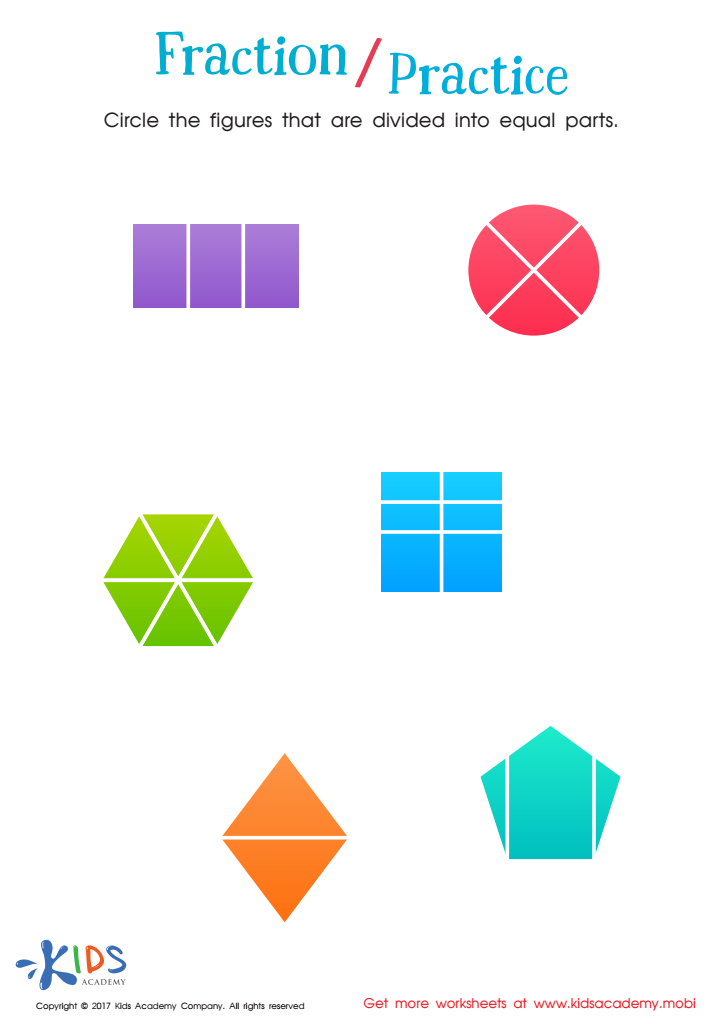
Fractions: Shapes Worksheet
 Assign to My Students
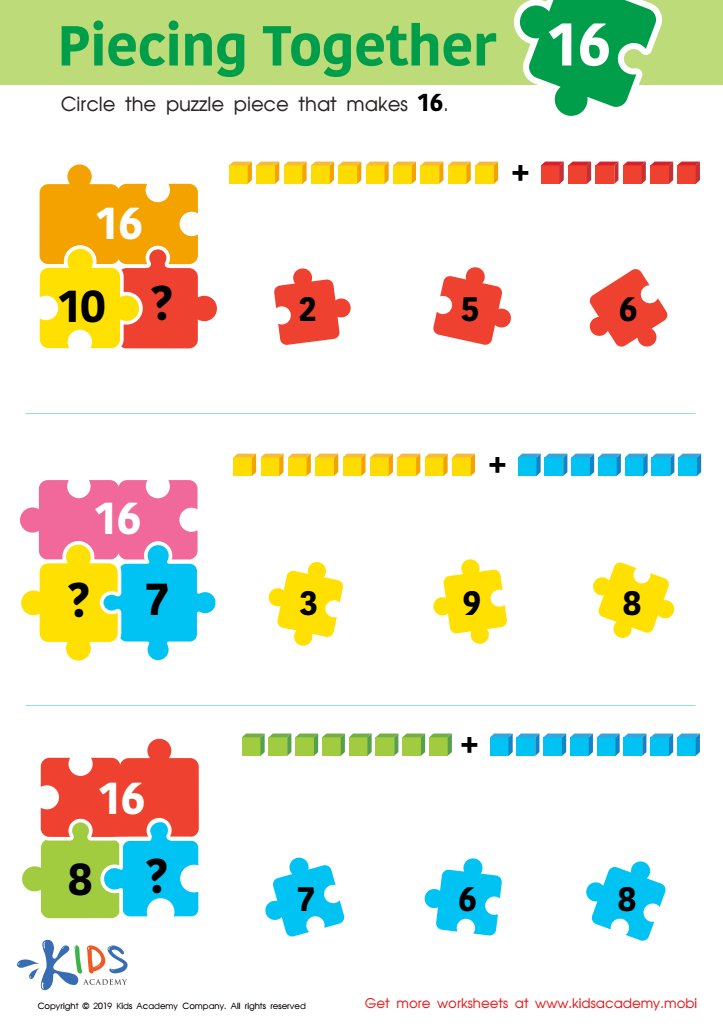
Piecing Together 16 Worksheet
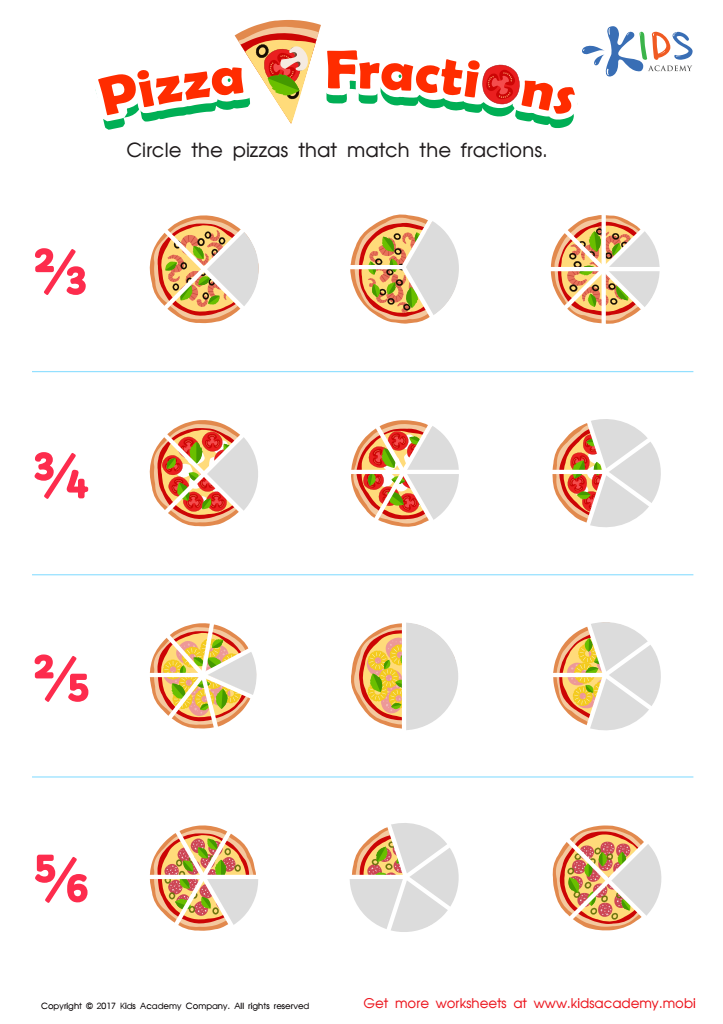
Fractions: Pizza Printable
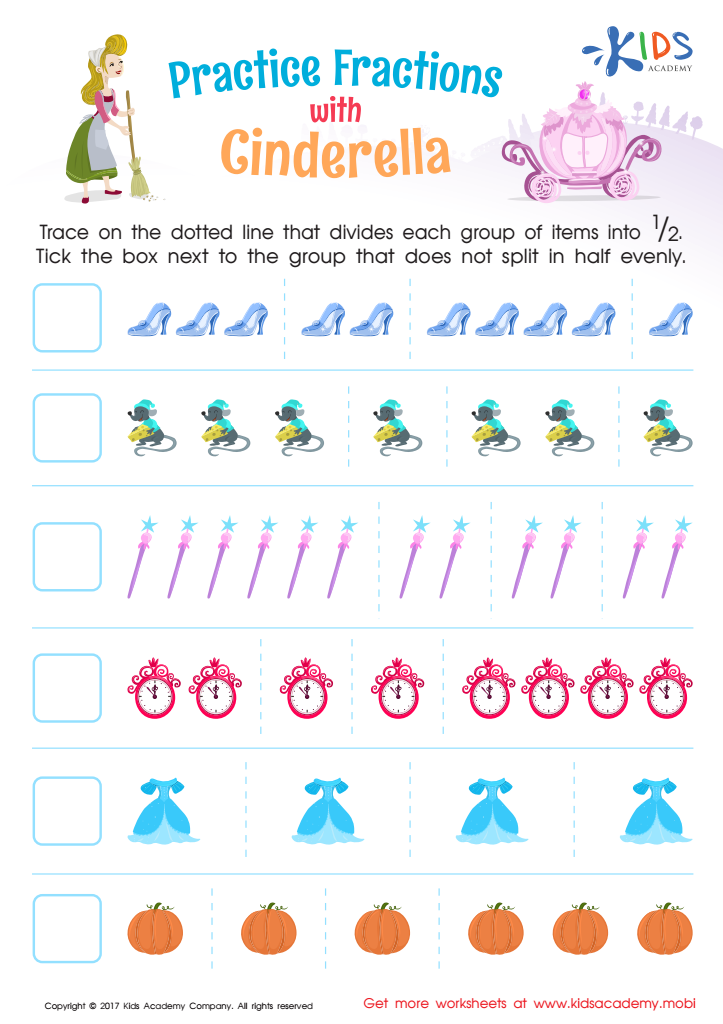
Fractions: Cinderella Printable








Parents and teachers should care about comparing fractions, particularly through the lens of Addition & Subtraction challenges for ages 5-7, for several key reasons. First, understanding fractions is an essential foundational skill in mathematics. By engaging young learners with comparing fractions, they develop critical thinking and problem-solving abilities as they learn to assess the value of different fractional parts.
Additionally, this mathematical concept is intricately linked to everyday life experiences, such as cooking or sharing, providing practical applications that enhance a child's understanding and interest. When students learn to compare fractions, they can grasp concepts such as equivalence, greater than and less than, fostering mathematical reasoning.
Moreover, incorporating extra challenge activities helps nurture a growth mindset. It encourages students to explore complex problems without fear of mistakes, promoting resilience and perseverance. For teachers, providing differentiated and engaging instruction means catering to various learning styles and capabilities within the classroom. By focusing on comparing fractions through addition and subtraction, educators can contribute to a rich mathematical learning environment that prepares students for more advanced concepts in the future, making it essential for parents and teachers to prioritize these skills in early education.