Shape identification Extra Challenge Geometry Worksheets for Ages 5-8
5 filtered results
-
From - To
Welcome to our "Shape Identification Extra Challenge Geometry Worksheets" designed specifically for children aged 5-8! Our engaging and interactive worksheets promote a deeper understanding of geometric shapes through fun exercises that go beyond standard identification. These challenges encourage young learners to recognize, compare, and classify shapes in various contexts. Each worksheet incorporates vibrant illustrations and relatable scenarios to keep kids excited and motivated. Ideal for both classroom use and at-home learning, these extra challenges will bolster your child's geometry skills while making learning enjoyable. Explore the world of shapes with us and watch your child's confidence and enthusiasm flourish!
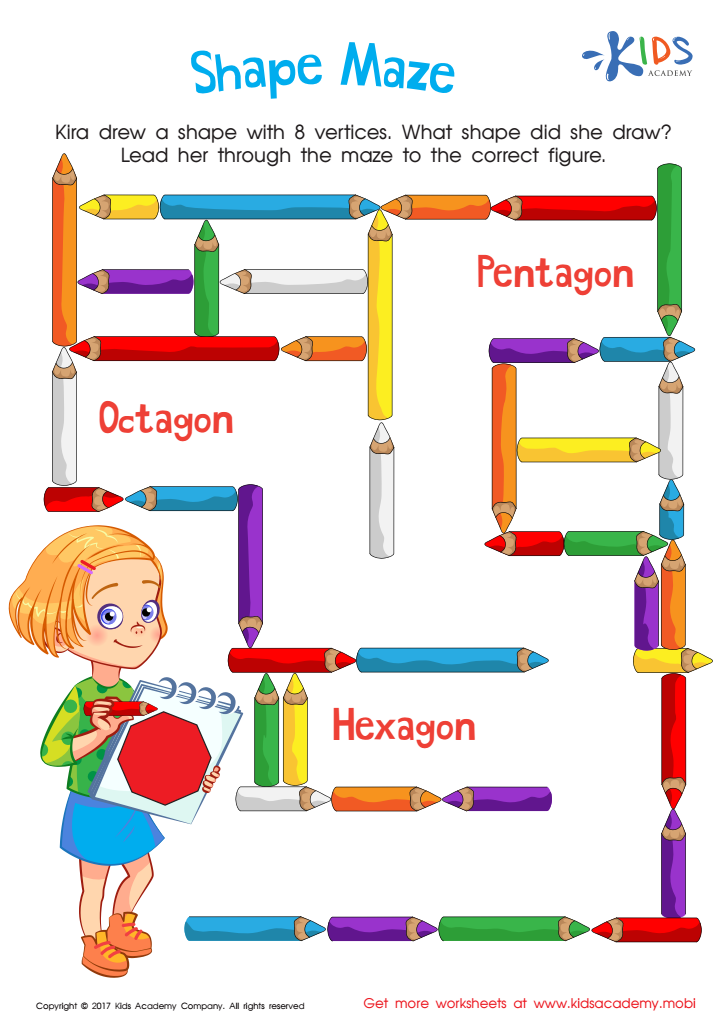
Shape Maze Worksheet
 Assign to My Students











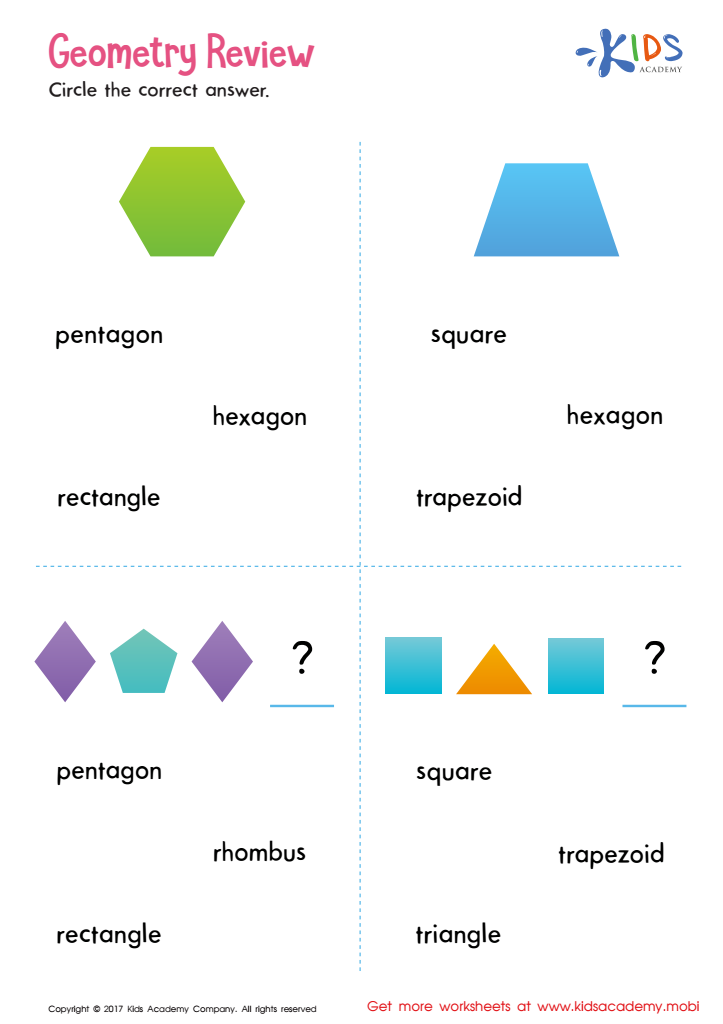
Geometry Review Printable
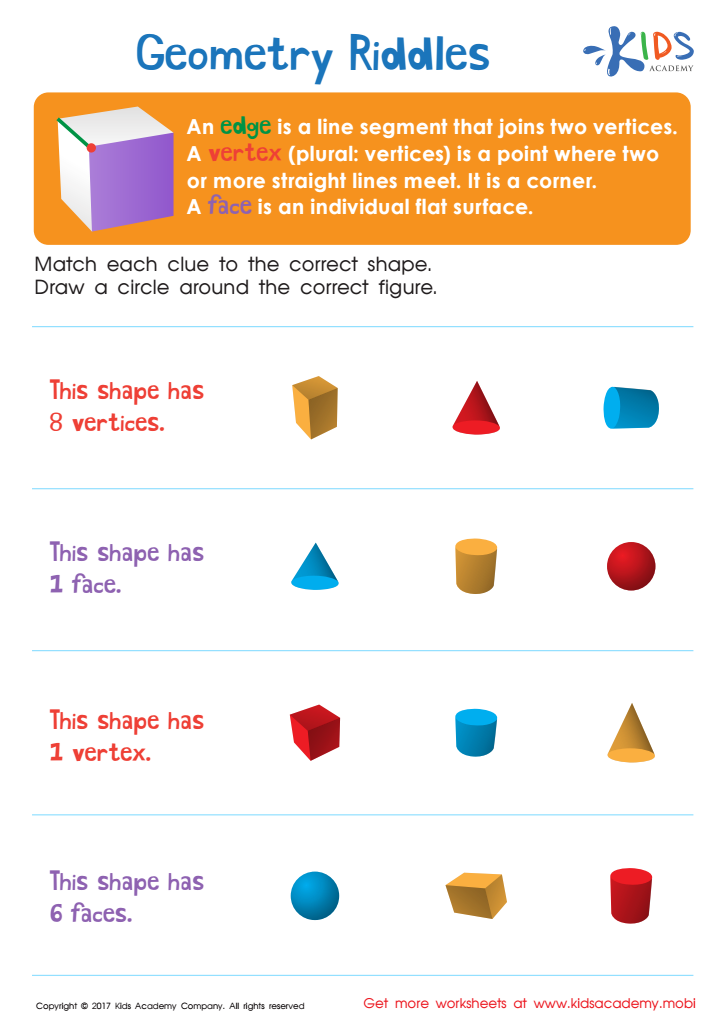
Geometry Riddles Printable
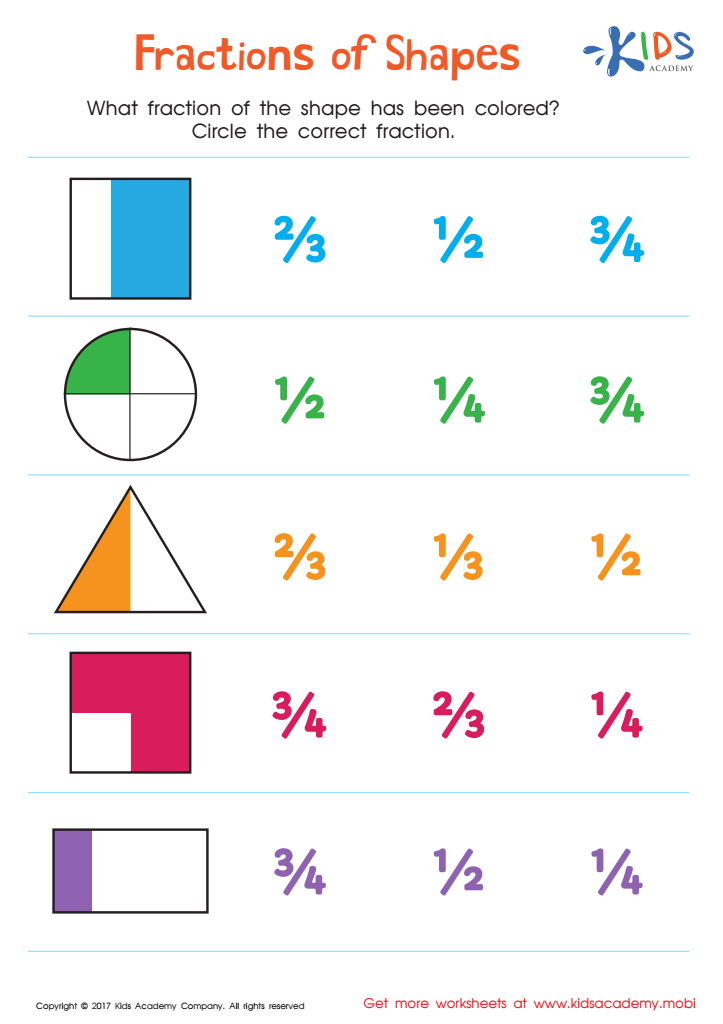
Fractions of Shapes: Math Concept Worksheet
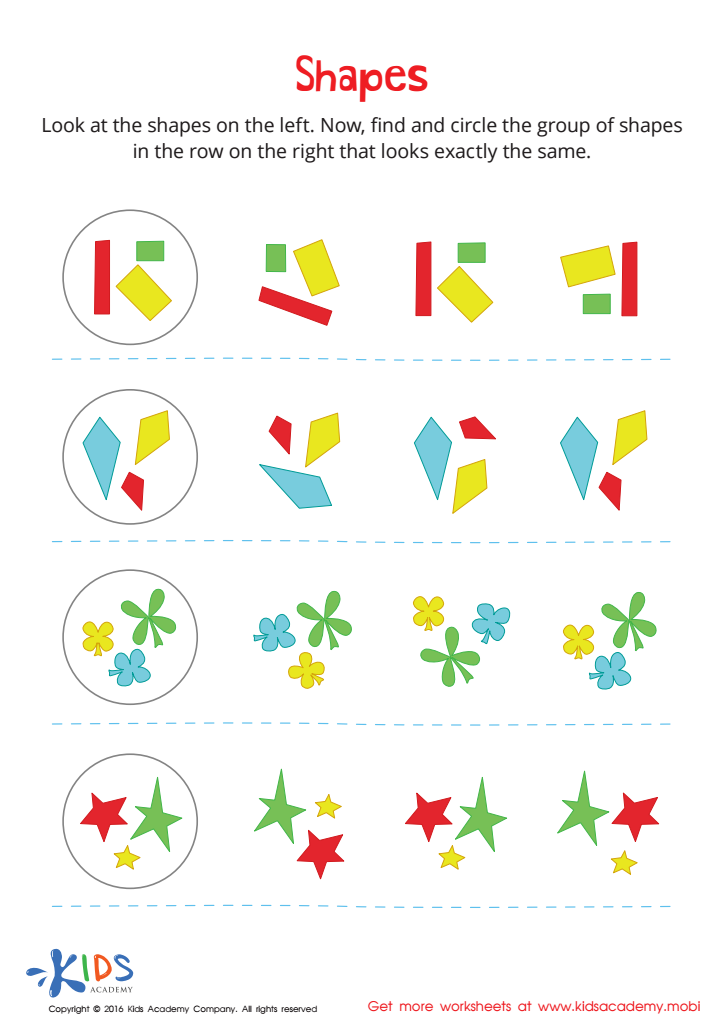
Shapes Worksheet








Shape identification is a fundamental skill in early childhood education, particularly for children aged 5-8. Incorporating extra challenges in geometry can significantly enrich a child's learning experience. Here are a few key reasons why parents and teachers should care about this concept.
Firstly, recognizing shapes helps develop critical thinking and problem-solving skills. Children learn to differentiate and classify various shapes, which lays the groundwork for more complex mathematical concepts in the future. Training young minds to identify shapes enables them to observe their surroundings better and understand spatial relationships.
Secondly, engaging challenges foster motivation and engagement in learning. When children are presented with extra challenges, they become excited about discovering solutions and developing persistence, the key to lifelong learning.
Moreover, introducing diverse geometric activities supports various learning styles. Whether through hands-on manipulatives or visual puzzles, children enhance their understanding and can apply these skills in real-world contexts.
Lastly, early geometry lays the foundation for skills such as measurement, symmetry, and area, crucial for later success in math and science. In summary, prioritizing shape identification and its extended challenges not only drives cognitive development but also nurtures a child's confidence and love for learning.