Logical Reasoning Extra Challenge Matching Worksheets for Ages 5-8
3 filtered results
Difficulty Level
Grade
Age
-
From - To
Subject
Activity
Standards
Enhance your child's logical reasoning skills with our Extra Challenge Matching Worksheets, specifically designed for ages 5-8! These engaging and colorful worksheets encourage young learners to think critically and make connections as they match items based on various criteria. Ideal for home or classroom settings, the activities promote cognitive development, improve problem-solving abilities, and reinforce key math concepts. Tailored to keep children motivated and entertained, our worksheets provide an excellent way to blend fun and learning. Give your child the tools they need to excel while enjoying hours of educational play! Explore our collection and watch their confidence soar.
Favorites
With answer key
Interactive
 Assign to My Students
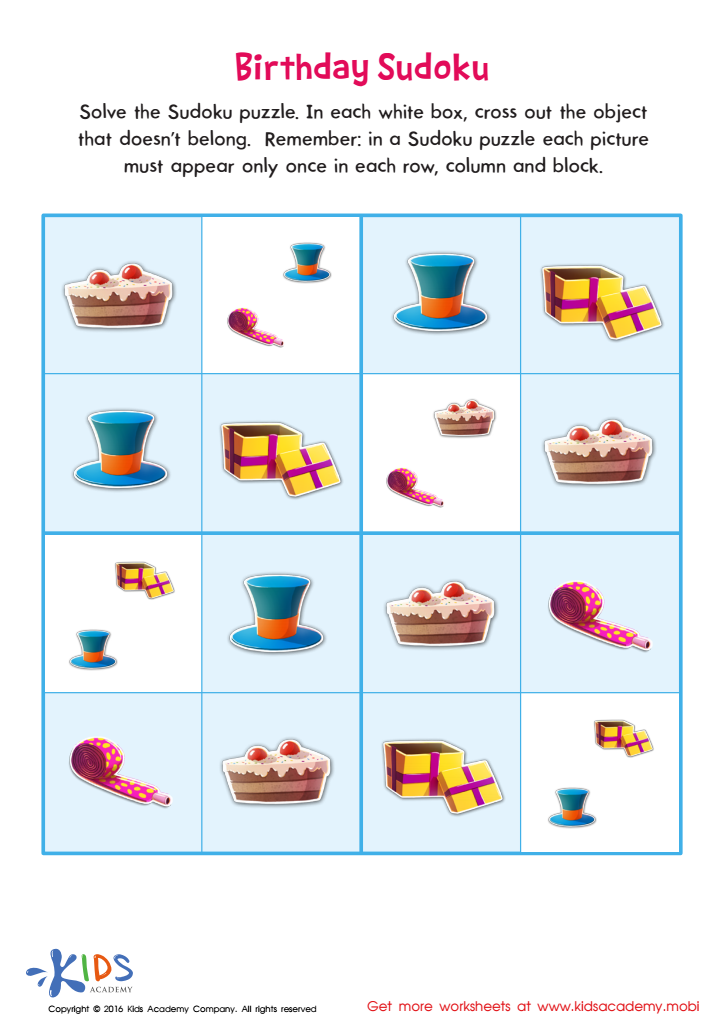
Birthday Sudoku Sorting Worksheet
With this Sudoku printable, your child will have fun and strengthen their problem-solving skills.
Birthday Sudoku Sorting Worksheet
Worksheet
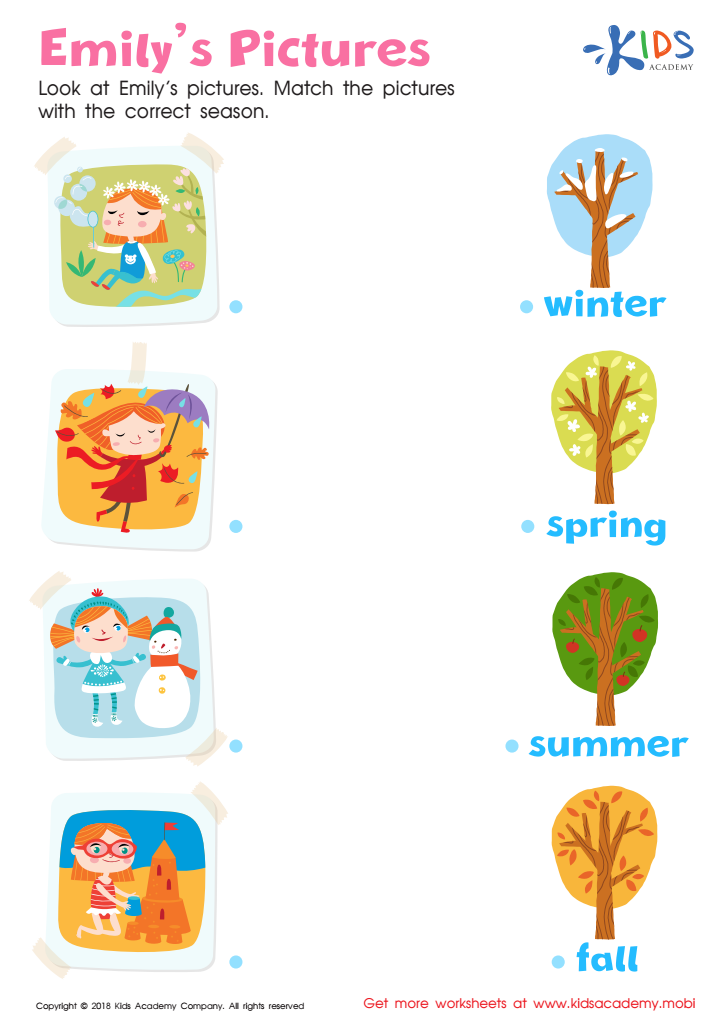
Emily's Pictures Worksheet
Look at the pictures of Emily on the left. Ask your child what she's doing in each one. Then, match the activities to the seasons on the right. Help your kids identify the correct season for each activity. Shorten to 80 words: Look at the pictures of Emily on the left. Ask your child what she's doing in each one, then match the activities to the seasons on the right. Help your kids find the correct season for each activity.
Emily's Pictures Worksheet
Worksheet
Join Kids Academy for Free
Who is primarily going to use this learning content?








Logical Reasoning Extra Challenge Matching for Ages 5-8 is a valuable tool for both parents and teachers, as it cultivates critical thinking skills essential for a child's cognitive development. This age group is at a key developmental stage where foundational skills can significantly influence their future learning capabilities. Engaging children in logical reasoning activities helps them enhance problem-solving skills, recognize patterns, and develop analytical thinking, which are crucial for success across various subjects.
Moreover, these challenges encourage persistence and resilience, teaching youngsters how to approach complex tasks and overcome setbacks, which fosters a growth mindset. As children enjoy matching games and puzzles, this educational approach becomes seamlessly integrated into play, making learning enjoyable.
For teachers, incorporating such challenges into the classroom can diversify instructional strategies, providing tailored learning experiences that cater to varied abilities. For parents, participating in these activities can lead to enriching interactions with their children, strengthening bonds while promoting an active involvement in their education.
Ultimately, nurturing logical reasoning in young children lays a strong foundation for academic achievements and prepares them for the challenges of more advanced education, making it essential for caregivers and educators alike to invest in these developmental opportunities.