
Letter recognition Extra Challenge Worksheets for Ages 5-9
11 filtered results
Difficulty Level
Grade
Age
-
From - To
Subject
Activity
Standards
Enhance your child's letter recognition skills with our engaging "Letter Recognition Extra Challenge Worksheets" designed for kids ages 5-9. These thoughtfully crafted worksheets provide a fun and interactive way to improve literacy fundamentals while challenging young learners. Each worksheet features a variety of activities, including letter-matching, tracing, and visual identification, all aimed at reinforcing letter sounds and shapes. Perfect for both classroom settings and at-home practice, these worksheets are ideal for budding readers looking to bolster their confidence. Watch as your child's recognition skills flourish and enjoy learning through play! Explore our collection and support your child's literacy journey today!
Favorites
With answer key
Interactive
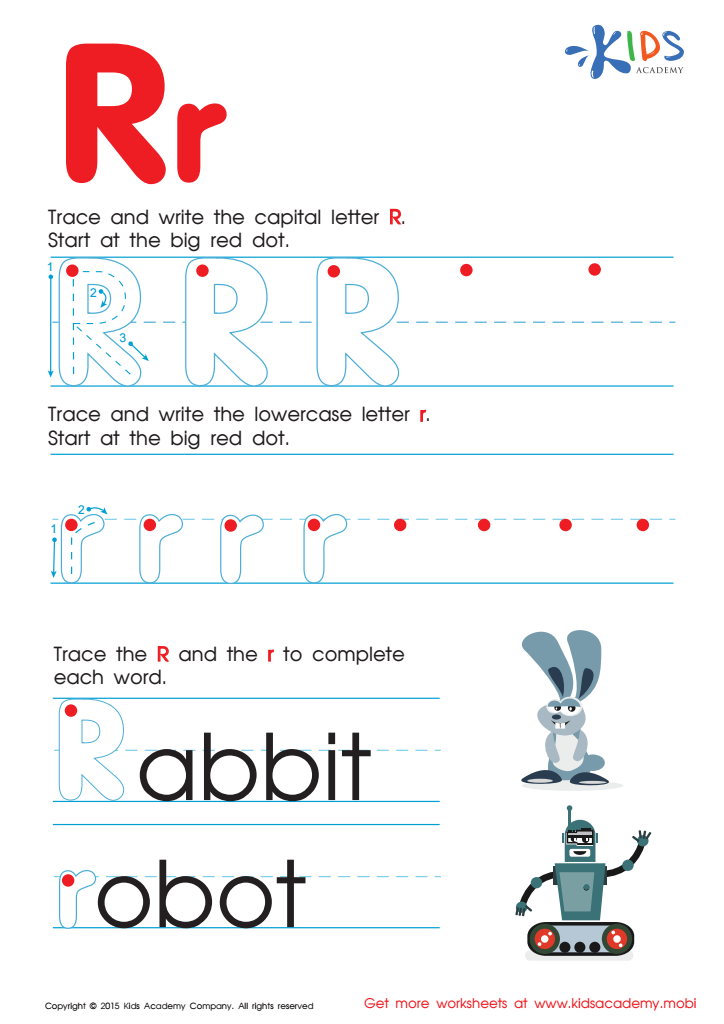
Letter R Tracing Page
Trace and write the letter "R" with this worksheet for kindergarten. Start with the uppercase, then move on to the lowercase. Write the letters several times for practice. Then help complete the words for the rabbit and robot, spelling carefully. More ABC worksheets can be found at Kids Academy.
 Assign to My Students
Letter R Tracing Page
Worksheet
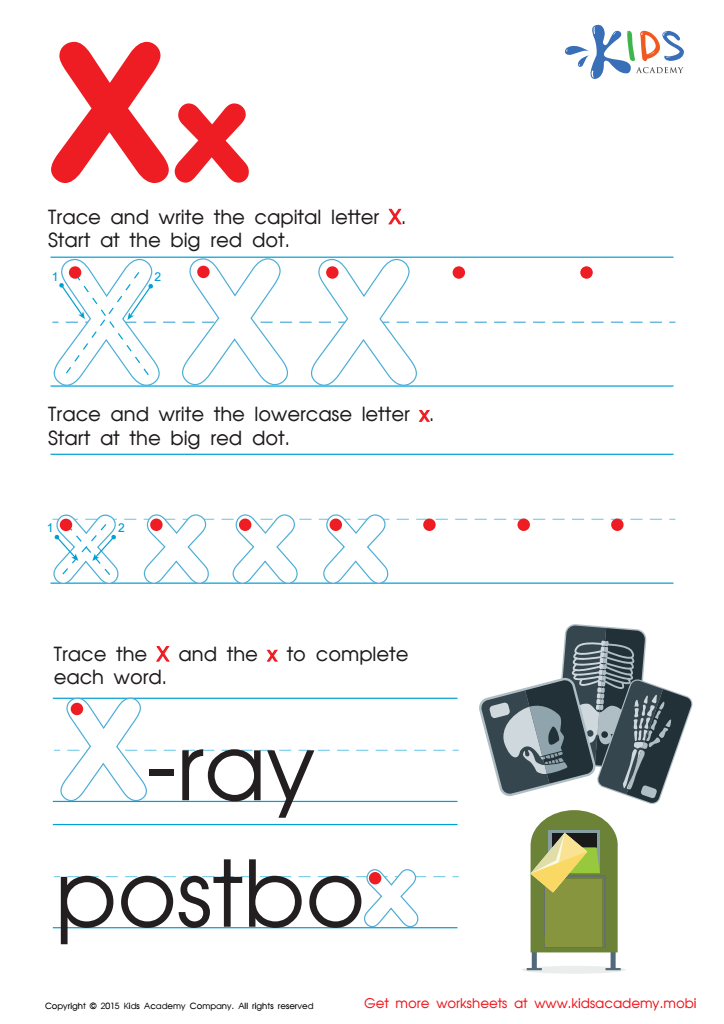
Letter X Tracing Page
Trace the uppercase letter "X" to learn, then write it yourself and practice. Then do the same with the lowercase "x" before completing the words "X-ray" and "postbox". Enjoy our alphabet printables!
Letter X Tracing Page
Worksheet
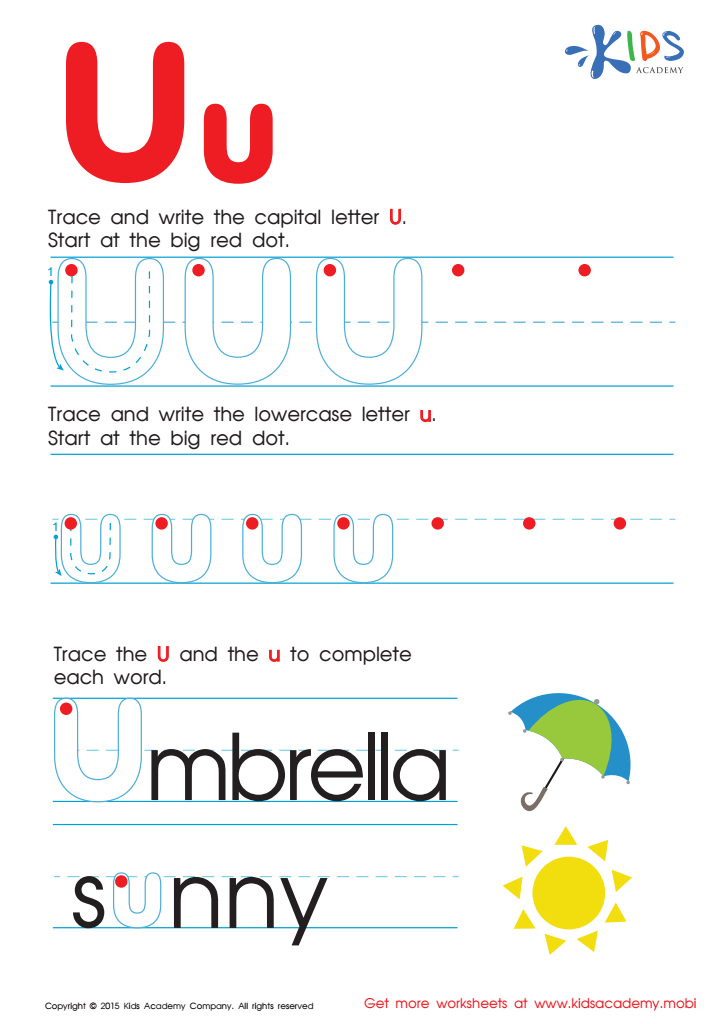
Letter U Tracing Page
Ready to trace and write the letter "U"? Use our worksheet and practice tracing both uppercase and lowercase letters. Complete the words "umbrella" and "sunny" with a capital "U". Check our full collection of alphabet printables for more activities.
Letter U Tracing Page
Worksheet
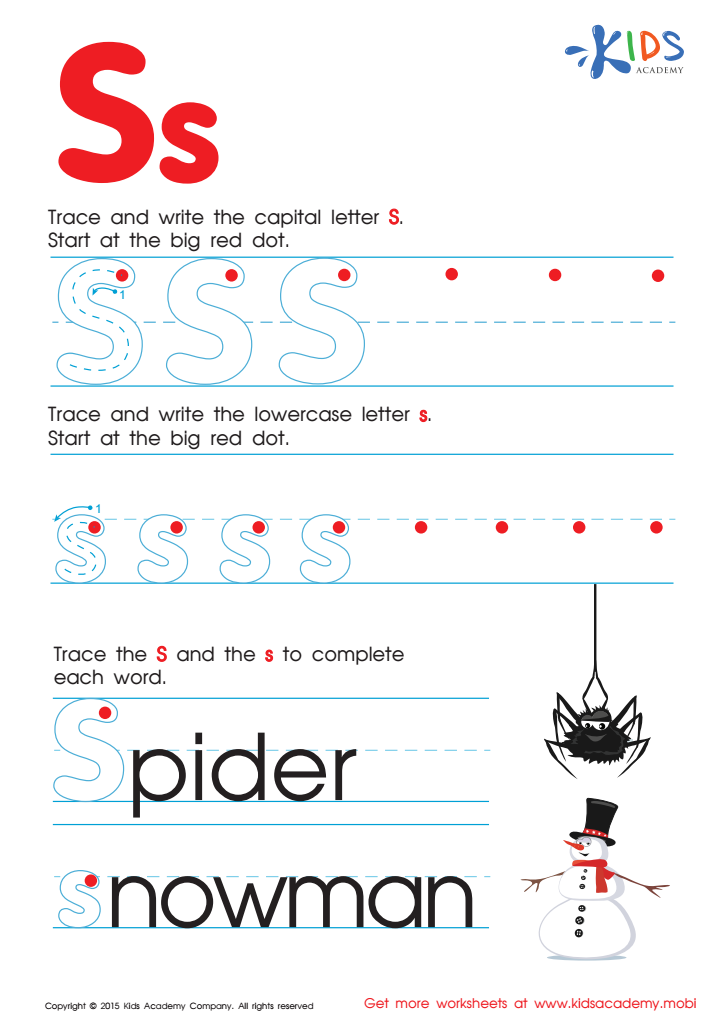
Letter S Tracing Page
Trace and write the capital and lowercase "S" on this ABC worksheet for kindergarten. Start with the big red dot and be careful. When you finish, help the spider and snowman in the pictures restore their words with the capital and lowercase letters. Continue learning the alphabet with Kids Academy.
Letter S Tracing Page
Worksheet
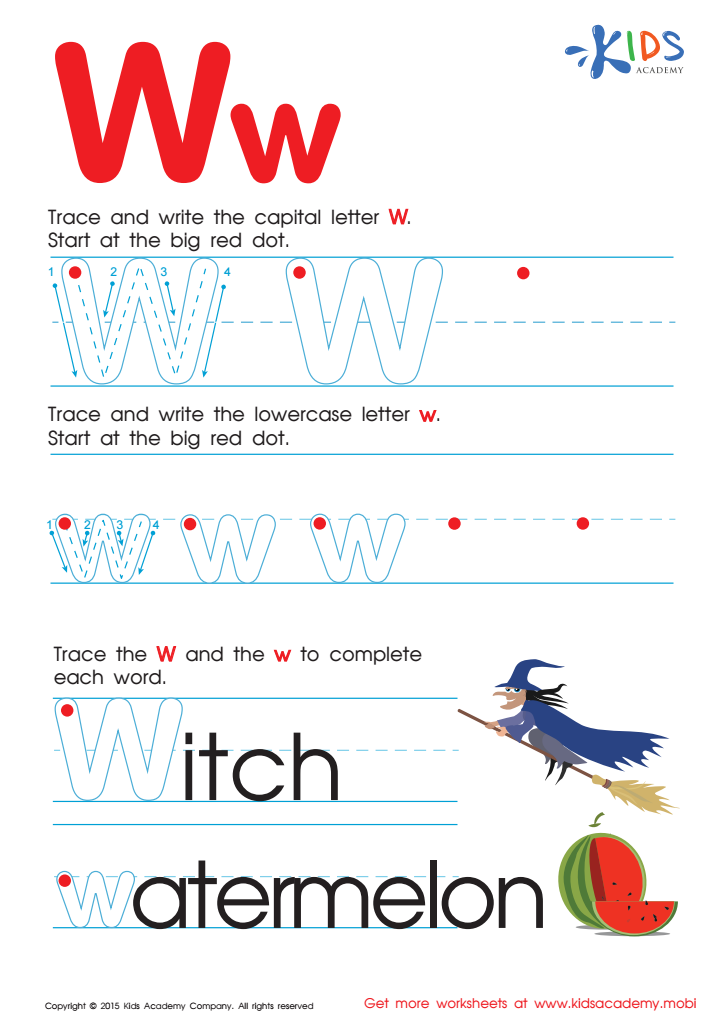
Letter W Tracing Page
Trace and write the capital and lowercase letter W with this free letter tracing worksheet by Kids Academy. Complete the words "Witch" (capital) and "watermelon" (lowercase). Check out our other kindergarten alphabet worksheets!
Letter W Tracing Page
Worksheet
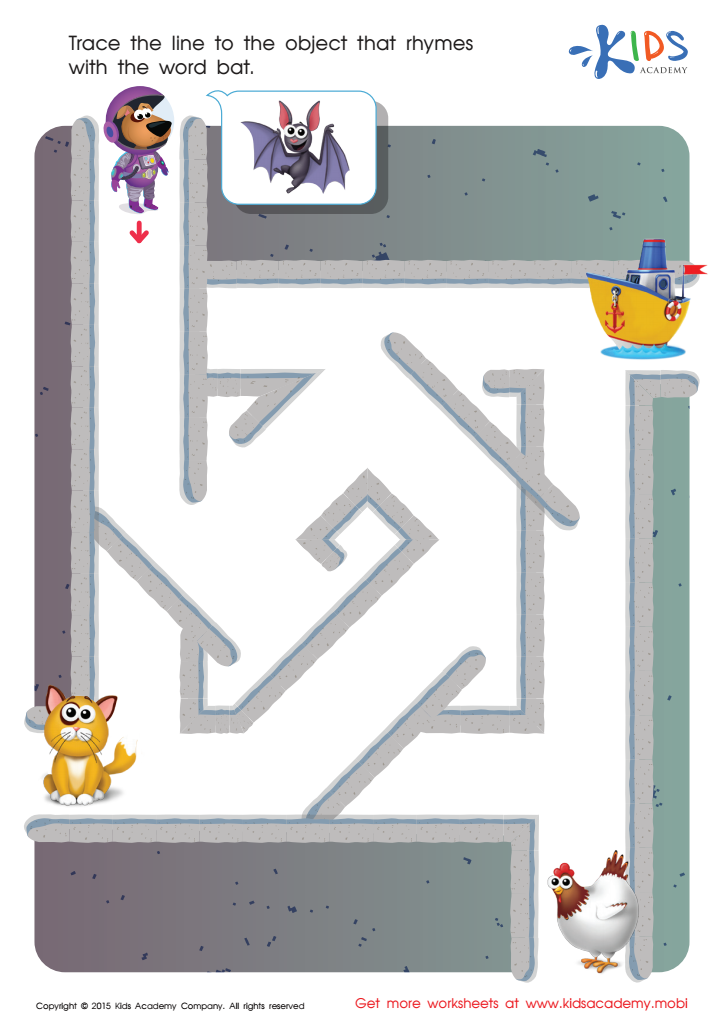
Bat Rhyming Words Worksheet
Get new reading and vocabulary worksheets to help make learning enjoyable for you and your kids. Join the dog and match the objects that rhyme. Have a blast!
Bat Rhyming Words Worksheet
Worksheet
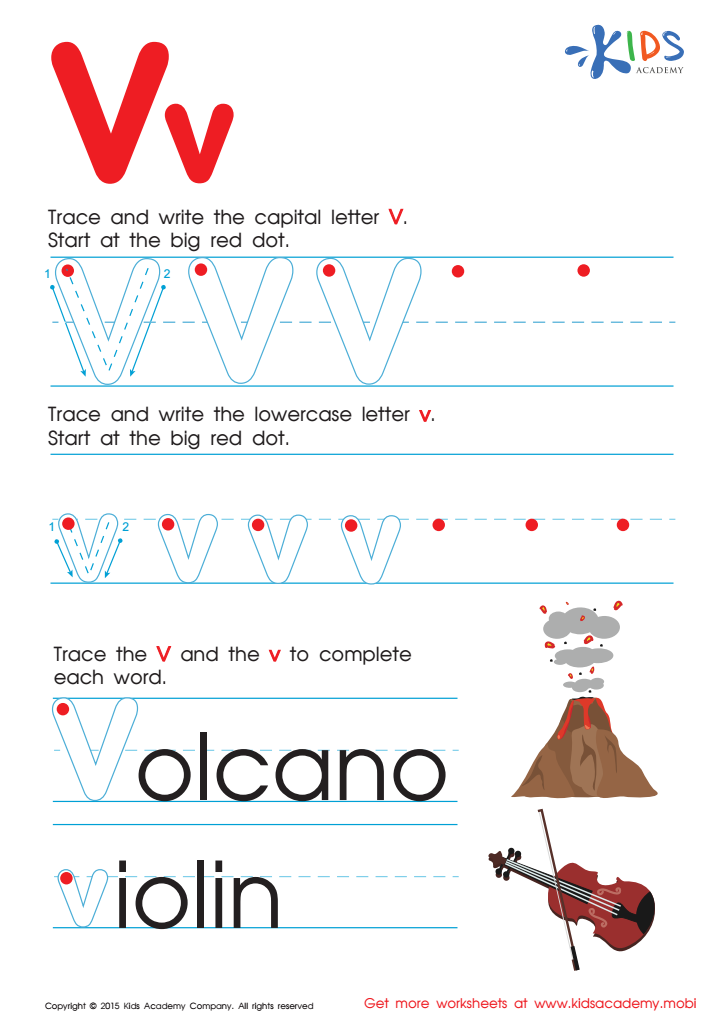
Letter V Tracing Page
Trace the uppercase and lowercase letter "V" with our kindergarten tracing worksheet. Begin at the red dot and follow the lines. Write it several times. Complete the words "Volcano" and "violin". Get more alphabet activities at Kids Academy.
Letter V Tracing Page
Worksheet
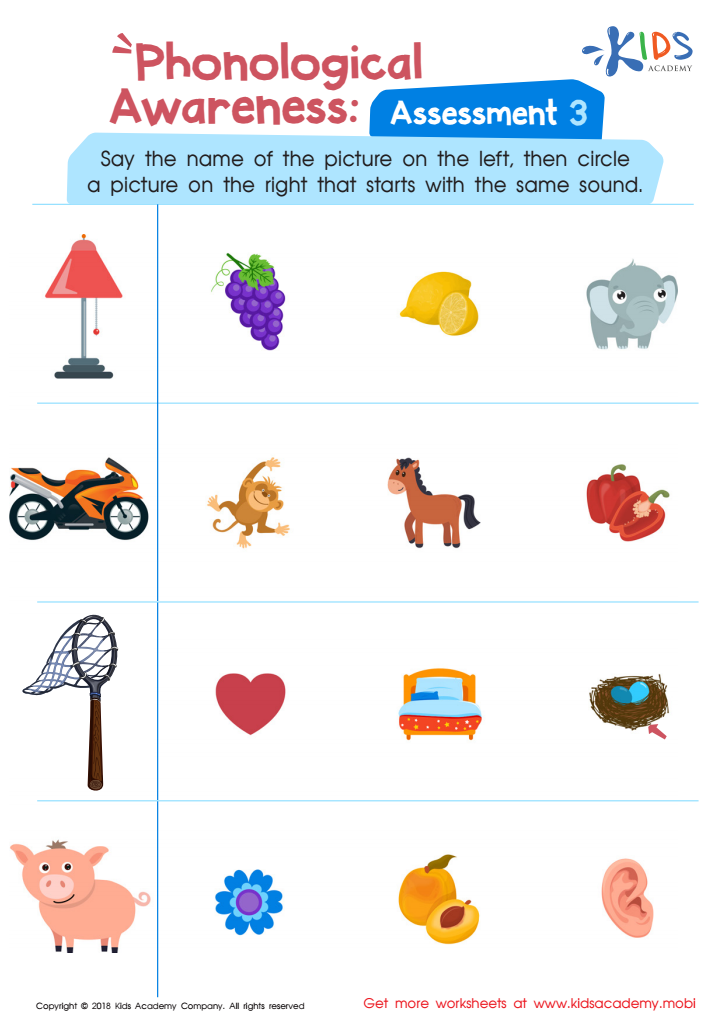
Phonological Awareness: Assessment 3 Worksheet
Test kids' reading readiness with a phonological awareness worksheet! With this PDF exercise, encourage children to name each picture aloud and match left to right. Help them learn to recognize word sounds at the start, middle and end of words. They'll be sure to remember that lamp doesn't sound like elephant!
Phonological Awareness: Assessment 3 Worksheet
Worksheet
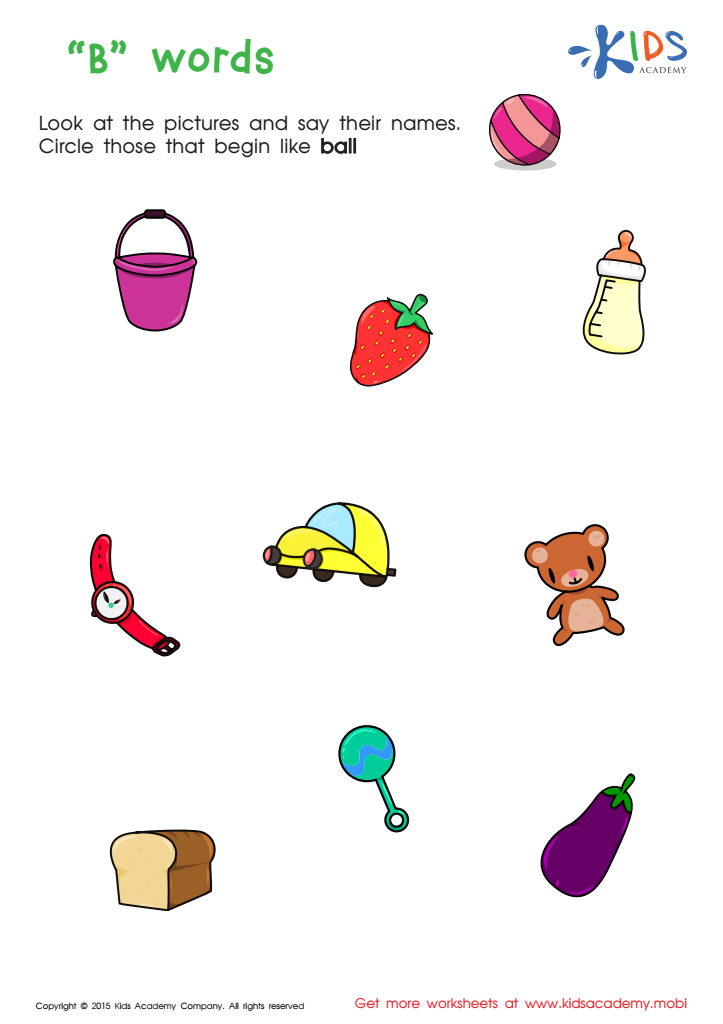
First Words Worksheet
Want to help your preschooler learn to read and write? Start with this 'B' words printable worksheet. It will help your child match pictures to the letters they know, sound out words, and build literacy. Once they understand the concept, they can start sounding out words and building reading skills.
First Words Worksheet
Worksheet
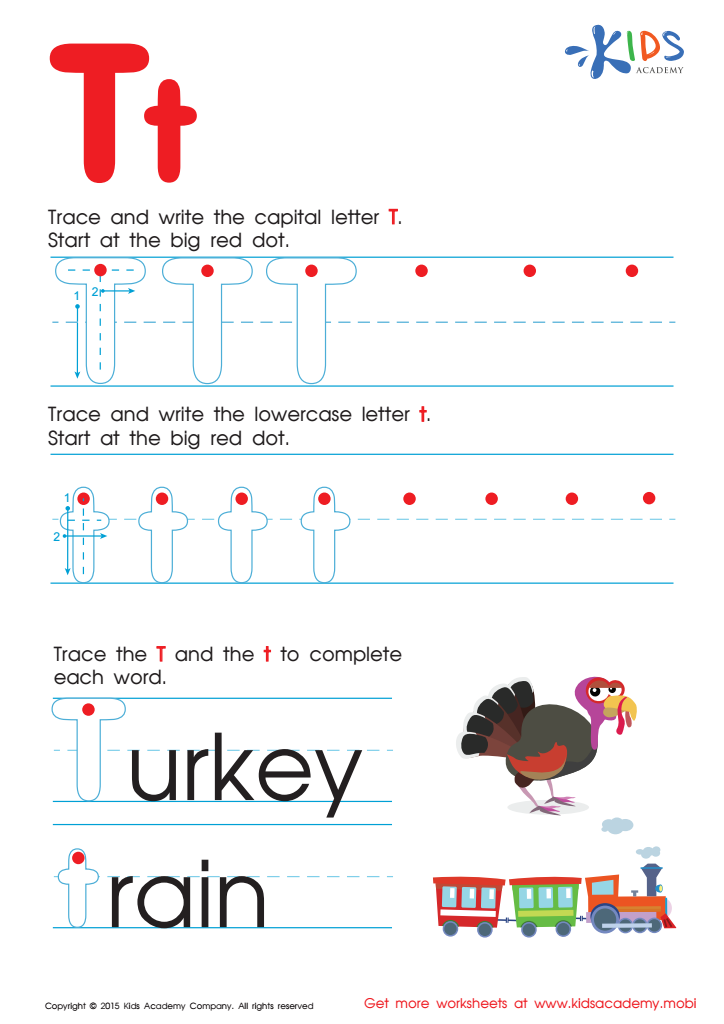
Letter T Tracing Page
Trace letters, complete words, draw pictures and see your kids having fun!
Kids Academy offers alphabet tracing worksheets to learn to write letters. Start with the big red dot, trace the letter, then write it. Practice uppercase and lowercase. Have fun completing words with a Turkey or a rain-train and draw pictures. Get more printable worksheets to make learning enjoyable.
Letter T Tracing Page
Worksheet
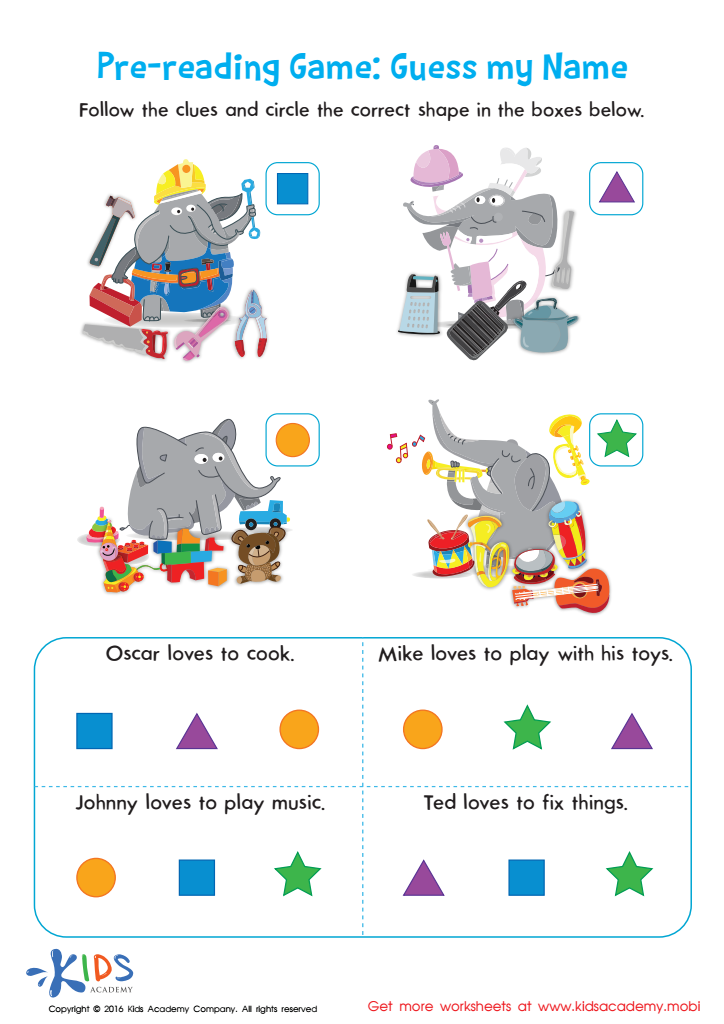
Pre Reading Worksheet Guess My Name
Guess My Name is a fun way to practice inference skills.
Guess My Name is a fun pre-reading game to help your child practice drawing inferences from clues. With colorful illustrations, they'll use clues to match each elephant with its sentence and sharpen their inference skills.
Pre Reading Worksheet Guess My Name
Worksheet
Join Kids Academy for Free
Who is primarily going to use this learning content?







Letter recognition is a foundational skill for literacy development, making it crucial for parents and teachers to prioritize this in young learners aged 5-9. Mastery of letter recognition empowers children to decode words, which is vital for reading fluency. As children learn to recognize letters, they begin to understand that letters represent sounds, aiding them in phonics and spelling.
Engaging children in extra challenges tailored to letter recognition often enhances their cognitive, linguistic, and social abilities. Fun activities, such as letter scavenger hunts or interactive games, make learning enjoyable and keep children motivated. These challenges also create opportunities for parents and teachers to collaborate in a supportive environment, strengthening the bond between adult and child.
Moreover, focusing on letter recognition is an inclusive strategy: it addresses diverse learning needs and paces, accommodating advanced learners and those who may require a bit more time. By facilitating this important skill, adults contribute to a child's confidence in reading and writing, laying the groundwork for future academic success. Investing time and resources in letter recognition activities ultimately fosters a love for learning, helping children transition seamlessly into more complex literacy tasks as they progress through their educational journey.








