Comparing objects Extra Challenge Math Worksheets for Ages 5-9
3 filtered results
-
From - To
Discover our "Comparing Objects Extra Challenge Math Worksheets," tailored specifically for children aged 5-9. These engaging worksheets are designed to enhance critical thinking and observation skills as kids explore various objects through comparison activities. Students will learn to identify similarities and differences in size, shape, and quantity while enjoying hands-on practice that makes learning fun! Each worksheet promotes independence and problem-solving abilities, ensuring that children grasp essential math concepts. Perfect for classroom use or home learning, these extra challenge worksheets provide an opportunity for children to stretch their skills while building confidence. Empower your young learners today!
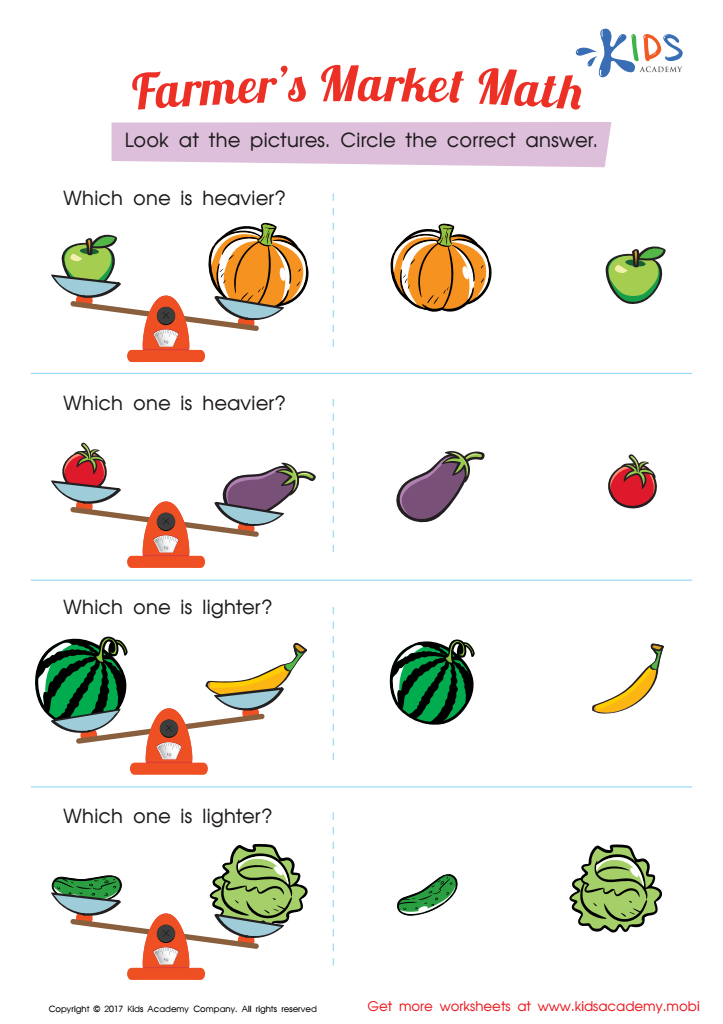
Which One Is Heavier Worksheet
 Assign to My Students
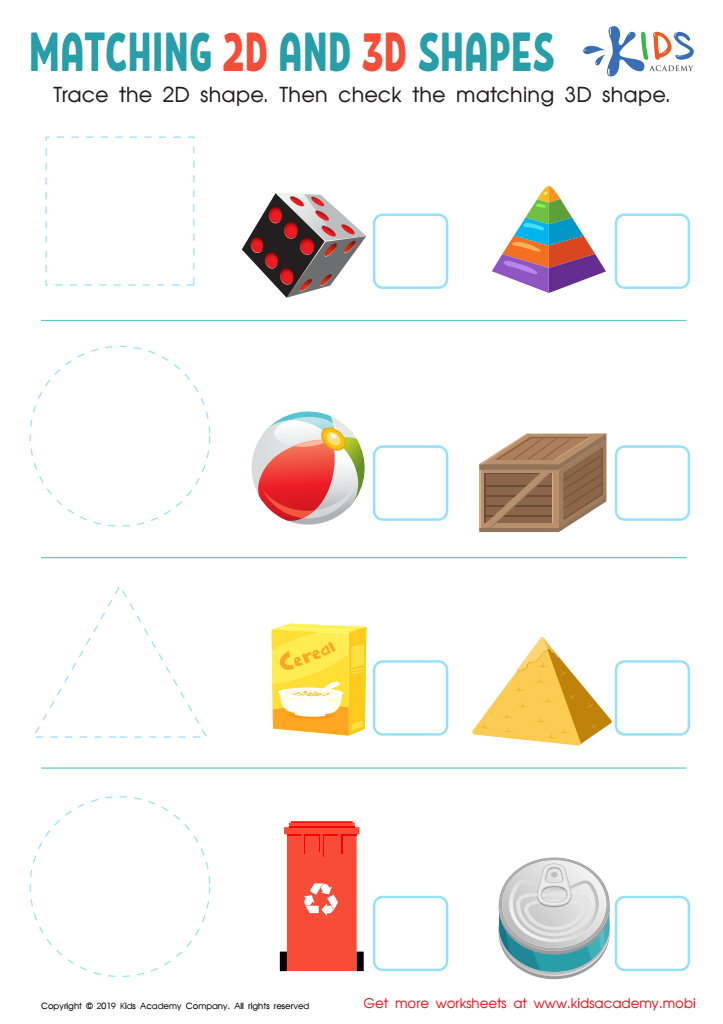
Matching 2D and 3D Shapes Worksheet
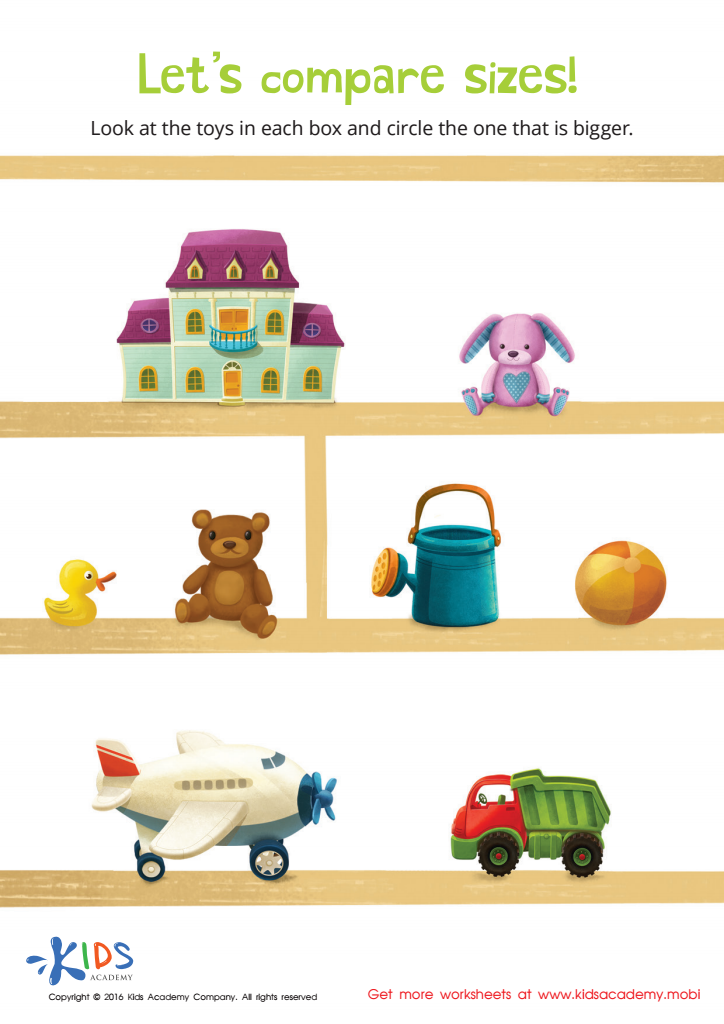
Classifying by Size Sorting Worksheet







Comparing objects is a crucial mathematical concept for young learners, as it lays the foundation for many essential skills. For children aged 5-9, understanding how to compare objects enhances their ability to analyze qualities such as size, shape, weight, and quantity, fostering critical thinking.
This concept prepares students for future math topics, including measurement, data analysis, and basic arithmetic. Encouraging children to compare items also promotes observation and logical reasoning, skills that are valuable not just in math but across subjects. When children engage in comparing objects, they're applying math in real-world contexts, such as distinguishing which toy is bigger, or which container holds more, linking abstract concepts to tangible experiences.
Moreover, through comparing, children learn to articulate their observations and reasoning, enhancing their language skills and confidence. These discussions often promote social skills by encouraging teamwork and communication when they compare objects in collaborative settings.
By prioritizing comparing objects in early education, parents and teachers can provide a well-rounded foundation for mathematical competence, help cultivate a love for learning, and support overall cognitive development. Ultimately, these skills will empower children as they approach more complex mathematical challenges in later grades.








