Shape Recognition Extra Challenge Geometry Worksheets for 5-Year-Olds
6 filtered results
-
From - To
Boost your child's geometry skills with our exciting "Shape Recognition Extra Challenge" worksheets designed for 5-year-olds! These engaging activities from Kids Academy enhance early math learning by pushing young minds to recognize and differentiate between various shapes. Perfect for little learners ready to progress beyond basic shapes, these worksheets offer fun and educational puzzles that will strengthen their spatial reasoning and geometric understanding. Watch them proudly master triangles, squares, circles, and more, all while developing critical thinking and problem-solving abilities. Get started today and add an enjoyable twist to their math practice!
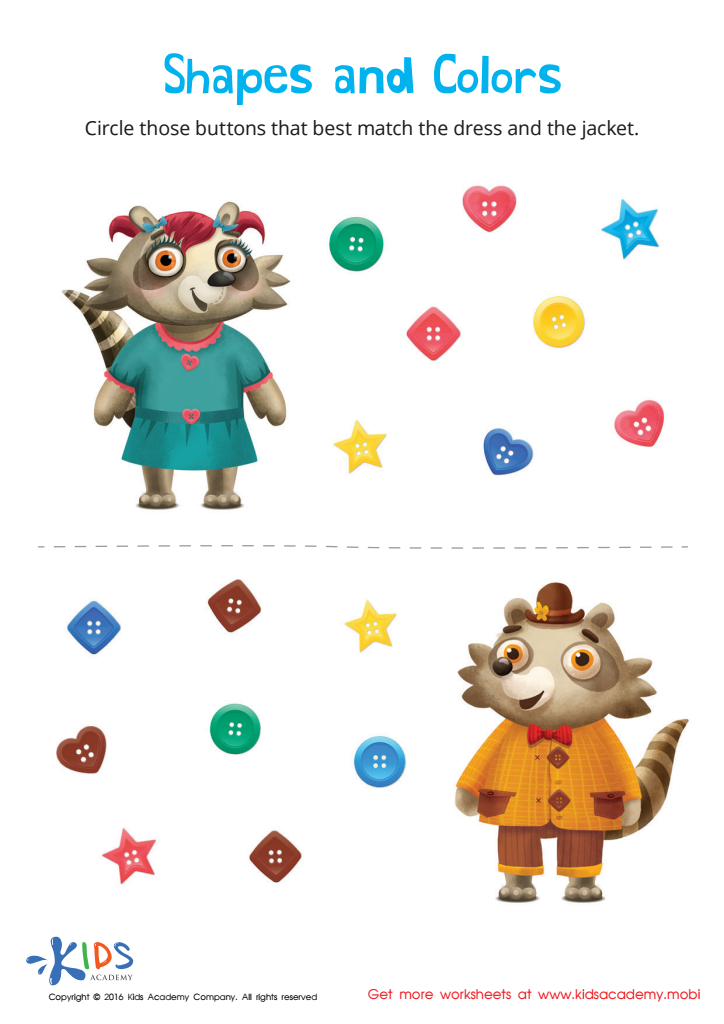
Matching: Shapes and Colors Worksheet
 Assign to My Students











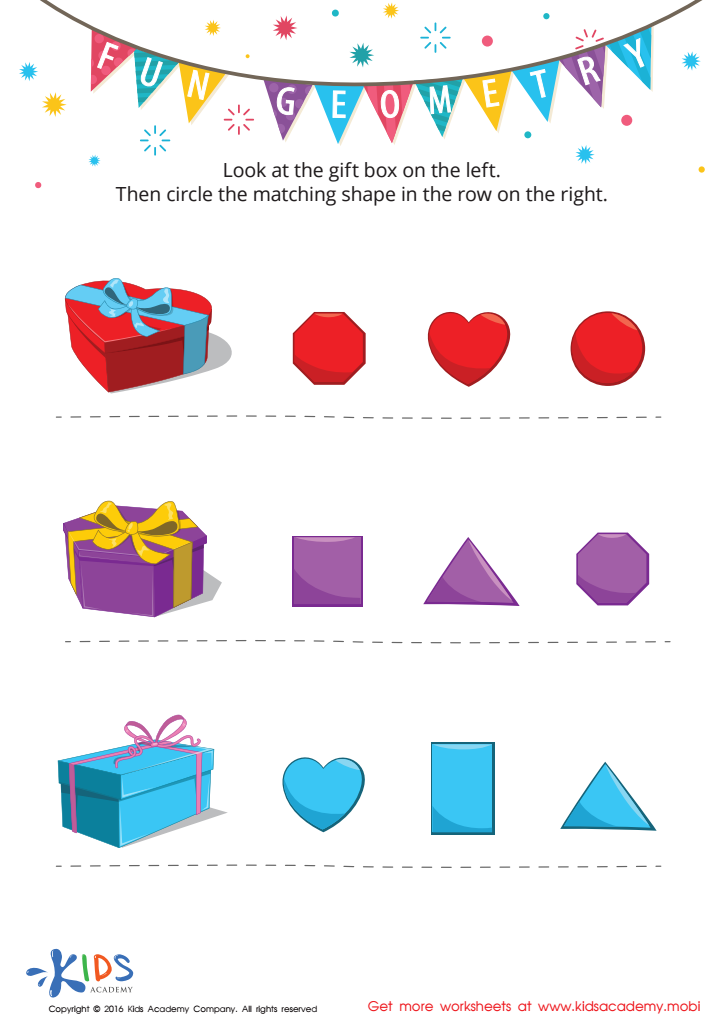
Fun Geometry Worksheet
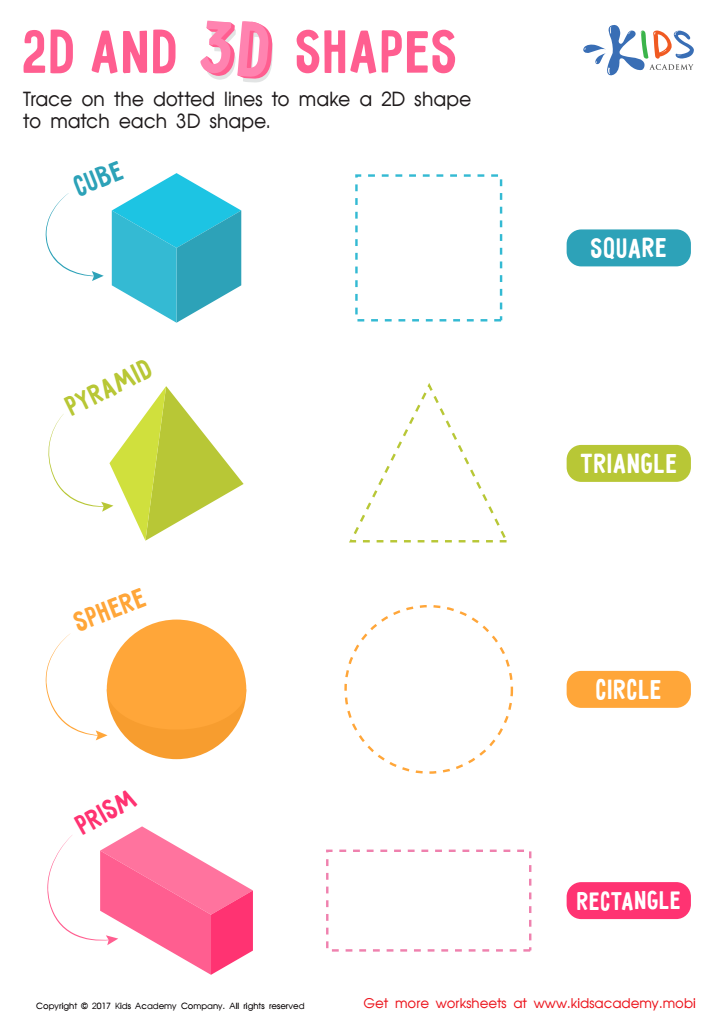
2D and 3D Shapes Worksheet
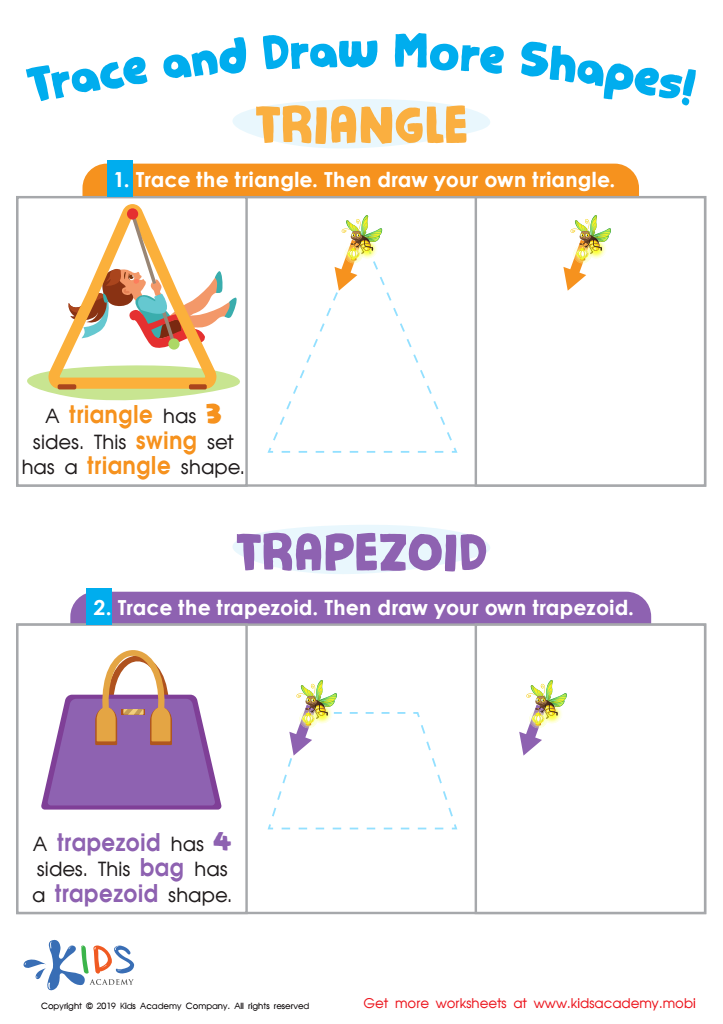
Trace and Draw More Shapes Worksheet
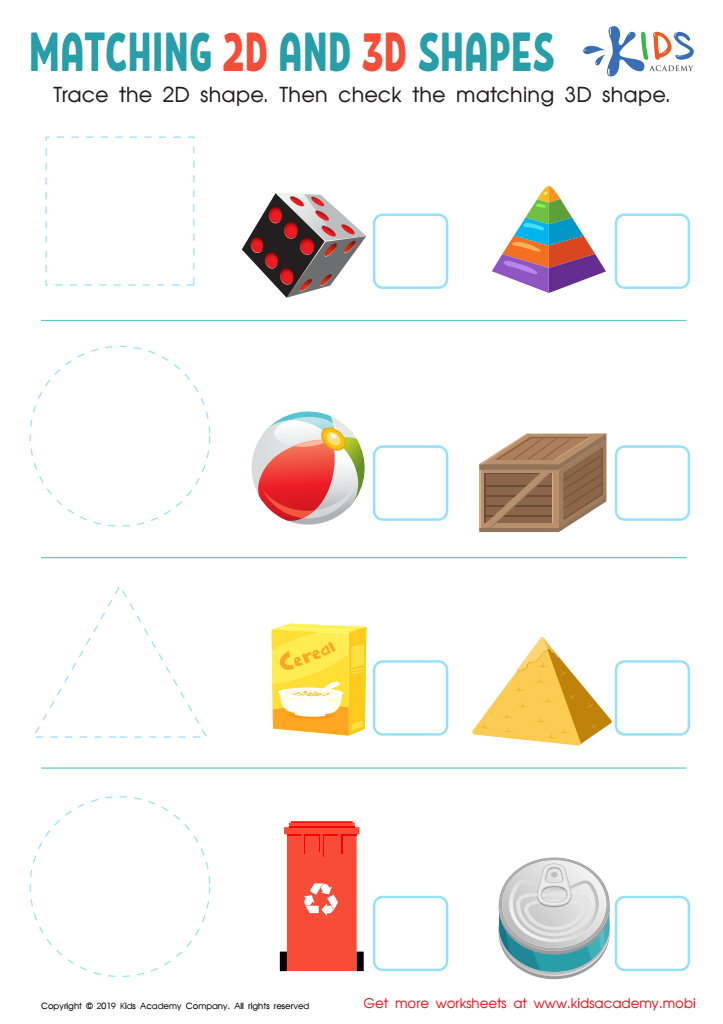
Matching 2D and 3D Shapes Worksheet
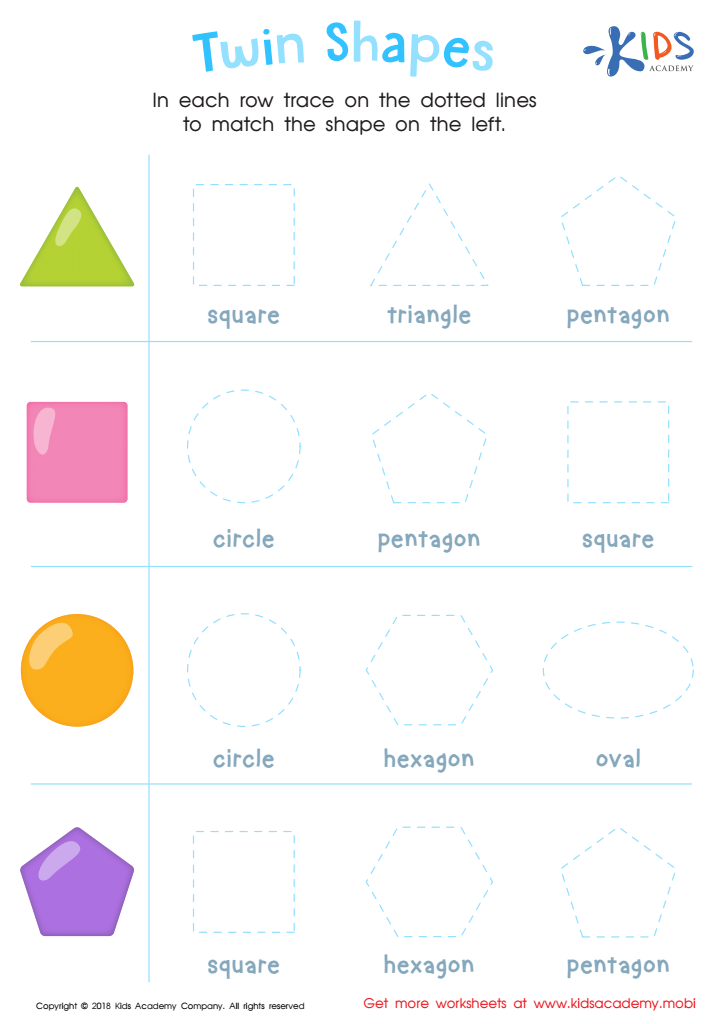
Twin Shapes Dot-to-Dot Worksheet








Shape recognition serves as a foundational stepping-stone for young learners, equipping them with spatial awareness, critical thinking abilities, and advanced mathematical skills. Engaging 5-year-olds in an extra challenge geometry program enriches their overall cognitive development. It encourages them to notice patterns and relationships, which are pivotal for problem-solving and analytical reasoning.
For parents, this developmental stage presents an opportunity to nurture their child's innate curiosity about the world. Activities that include identifying, sorting, and comparing shapes can easily be incorporated into everyday play, making learning both effective and enjoyable. Furthermore, this early exposure to geometric concepts helps lay the groundwork for more complex mathematical learning in the future, boosting a child’s confidence as they advance academically.
Teachers benefit from integrating shape recognition challenges as they cater to a child's diverse learning modes, from visual and tactile to logical intuits. It ensures that by incorporating geometry into the preschool curriculum, every child gets a balanced educational experience. More importantly, shape recognition also assists in strengthening motor skills as children draw and construct shapes, fostering better overall coordination. Both parents and early-grade teachers should view these activities not merely as educational tasks but as engaging, playful ways to open gateways to lifelong learning and intrinsic curiosity.








