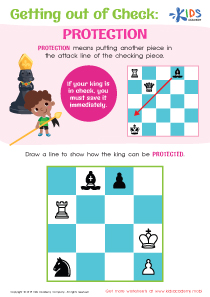
Strategic thinking development Extra Challenge Chess Worksheets for Ages 6-7
3 filtered results
-
From - To
Unlock your child's potential with our "Strategic Thinking Development Extra Challenge Chess Worksheets" designed for ages 6-7! These engaging worksheets encourage young learners to explore chess concepts while enhancing critical thinking and problem-solving skills. Each worksheet features fun scenarios that push kids to strategize and foresee possible outcomes, making chess more than just a game—it's an opportunity for cognitive growth. Perfect for both classroom settings and at-home practice, our worksheets stimulate young minds, promoting patience, foresight, and analytical skills. Give your child the advantage in strategic thinking through the captivating world of chess! Download now for a fun learning experience!
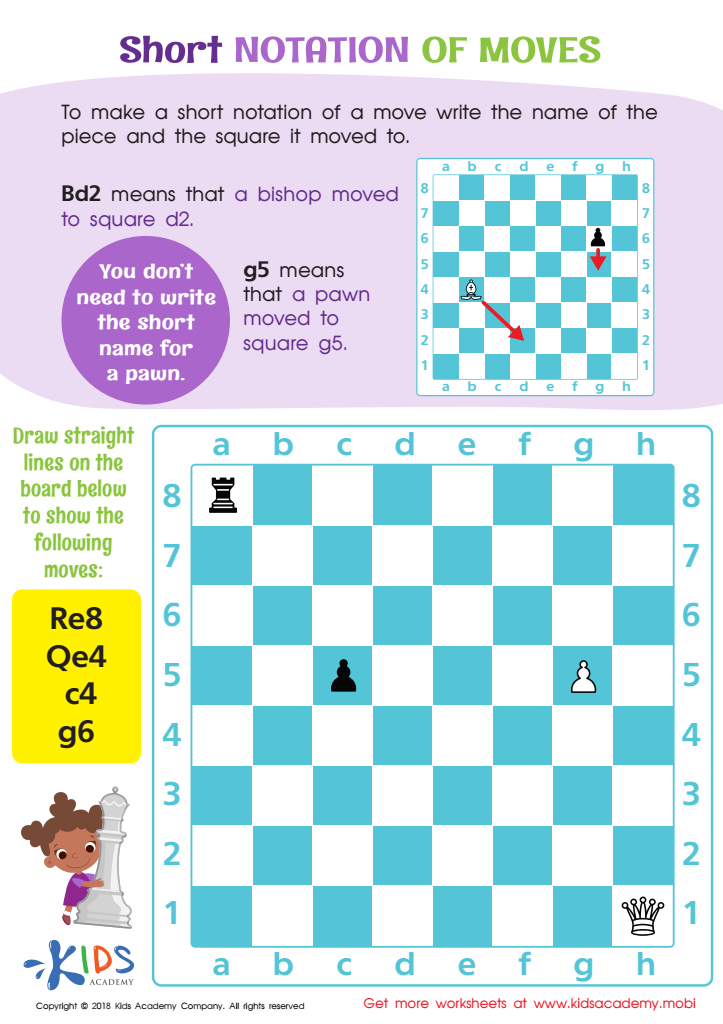
Short Notation of Moves Worksheet
 Assign to My Students
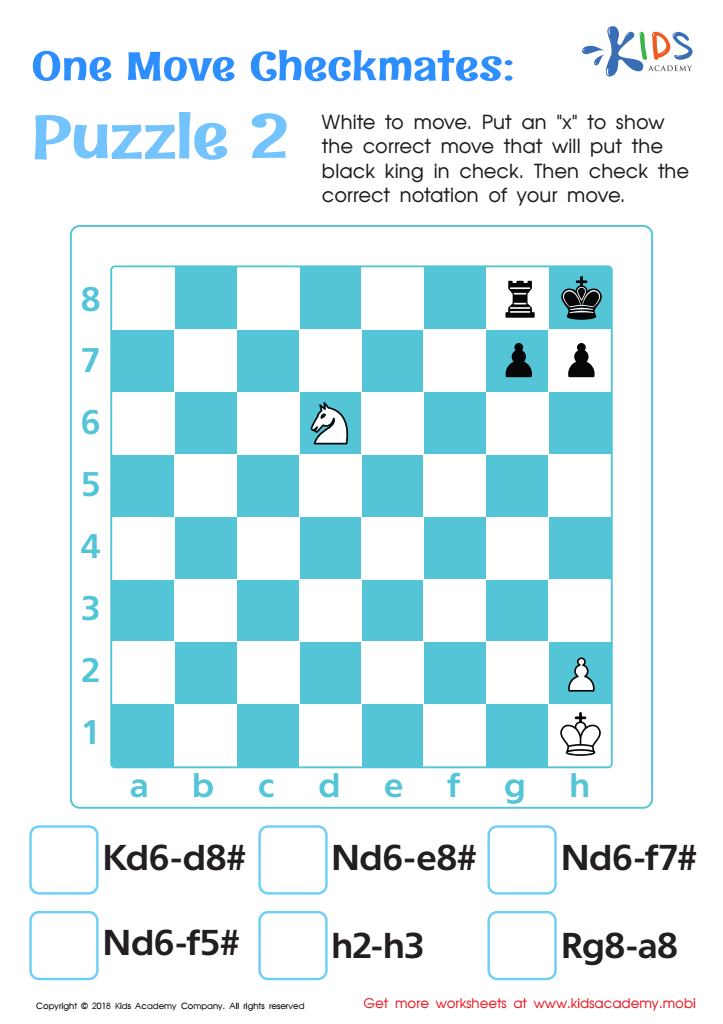
One Move Checkmates: Puzzle 2 Worksheet
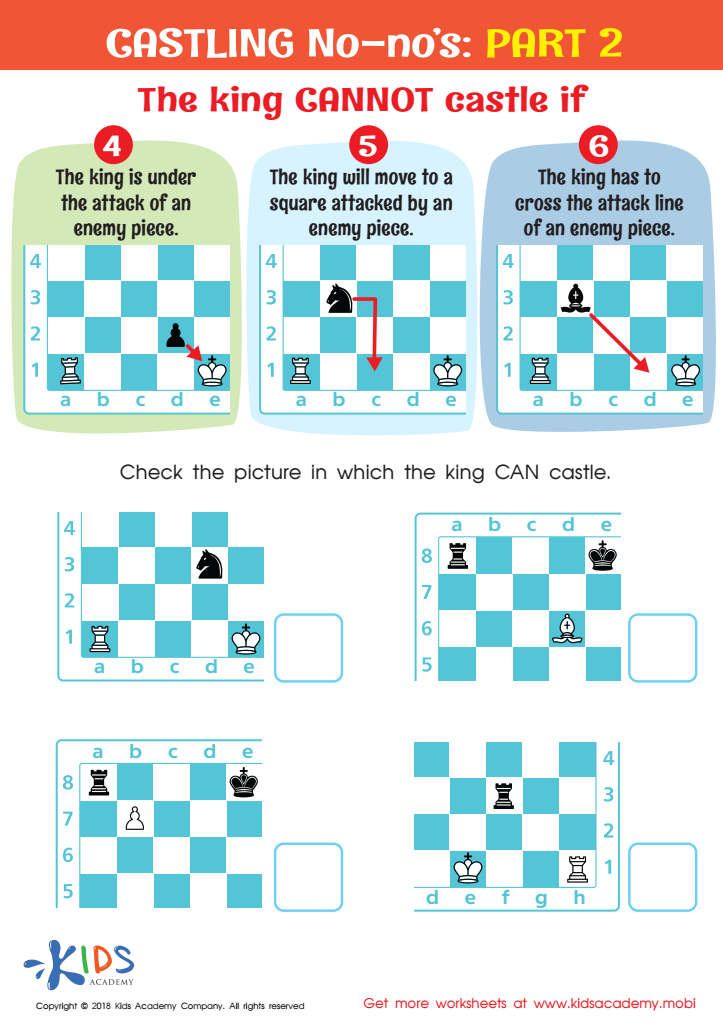
Castling No - no's: Part 2 Worksheet







Parents and teachers should care about Strategic Thinking Development through programs like Extra Challenge Chess for Ages 6-7 because it fosters critical cognitive skills essential for young learners. At this age, children are developing their problem-solving abilities and learning how to think ahead. Chess encourages them to anticipate their opponent’s moves and formulate their own strategies, honing skills like planning, foresight, and decision-making.
Additionally, chess promotes patience and discipline, teaching children the value of thoughtful consideration before acting. This mental exercise strengthens their attention span and concentration, which are vital for academic success. Engaging in chess can also foster emotional intelligence, as children learn to handle wins and losses gracefully, understanding that both outcomes are part of a learning process.
Moreover, chess provides an inclusive platform wherein children learn to collaborate and communicate, as they often discuss strategies or play together. This nurtures social skills and reinforces teamwork. With many schools integrating chess in their curriculum, participating in programs like Extra Challenge Chess can give young learners a competitive edge and enhance their overall educational experience. Ultimately, by investing in strategic thinking development relevant to their age, parents and teachers prepare children not just academically but also socially and emotionally for future challenges.