Story sequencing Extra Challenge Worksheets for Ages 6-7
5 filtered results
-
From - To
Boost your child's storytelling skills with our Story Sequencing Extra Challenge Worksheets designed for ages 6-7! These engaging worksheets offer an exciting way for young learners to develop critical thinking and comprehension skills. By arranging events in the correct order, children enhance their understanding of narrative structure and improve their ability to describe stories accurately. The challenges are creatively designed to keep kids motivated while making learning fun. Perfect for classroom use or home practice, these worksheets encourage independent thinking and nurture a love for reading. Jumpstart your child's journey into the world of storytelling today!
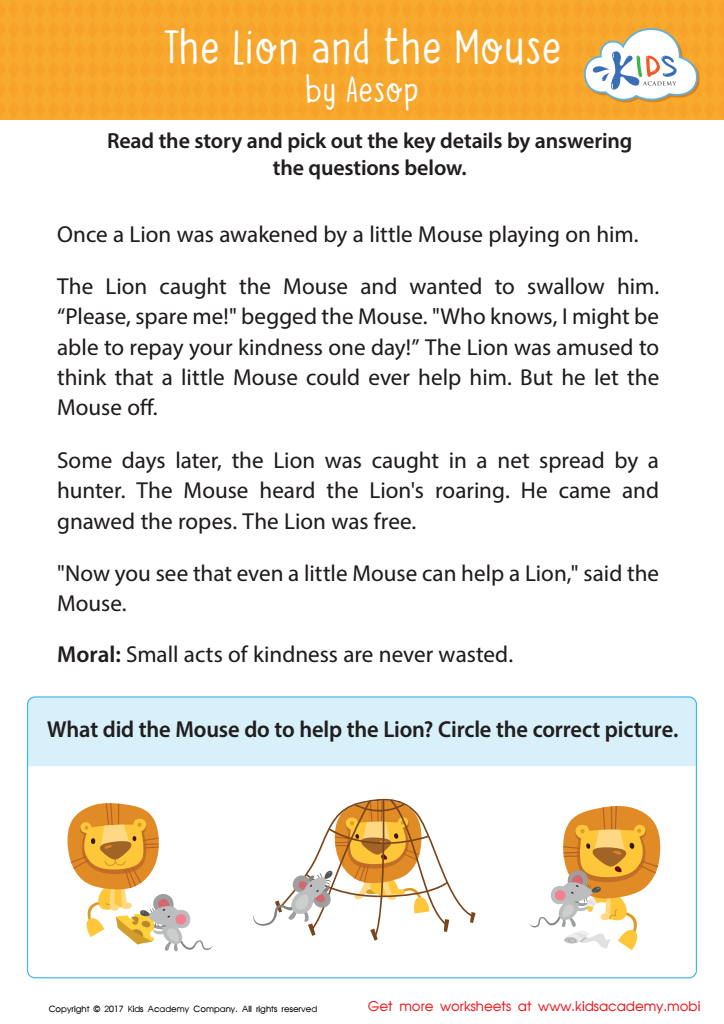
The Lion and The Mouse Sequencing Worksheet
 Assign to My Students
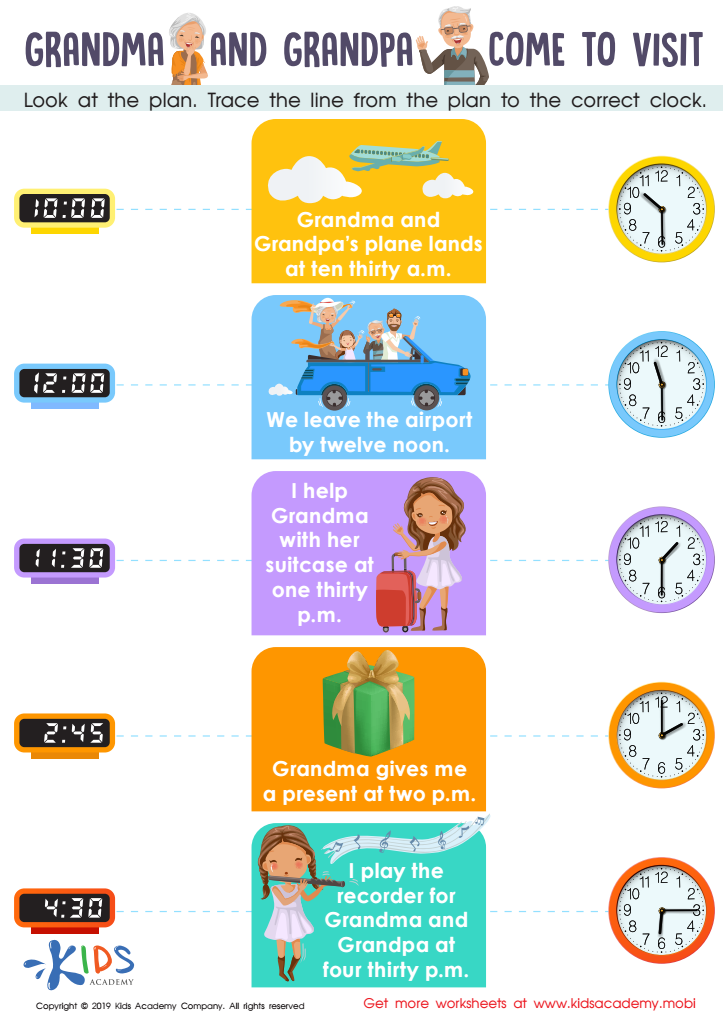
Grandpa and Grandma Come to Visit Worksheet
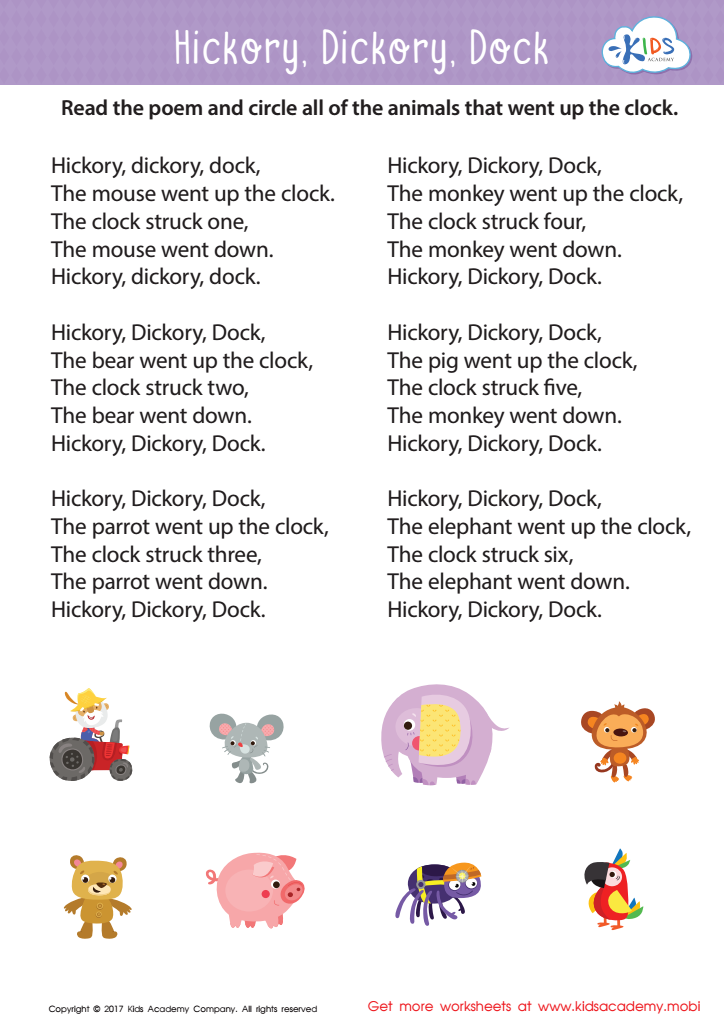
Hickory Dickory Dock Sequencing Worksheet
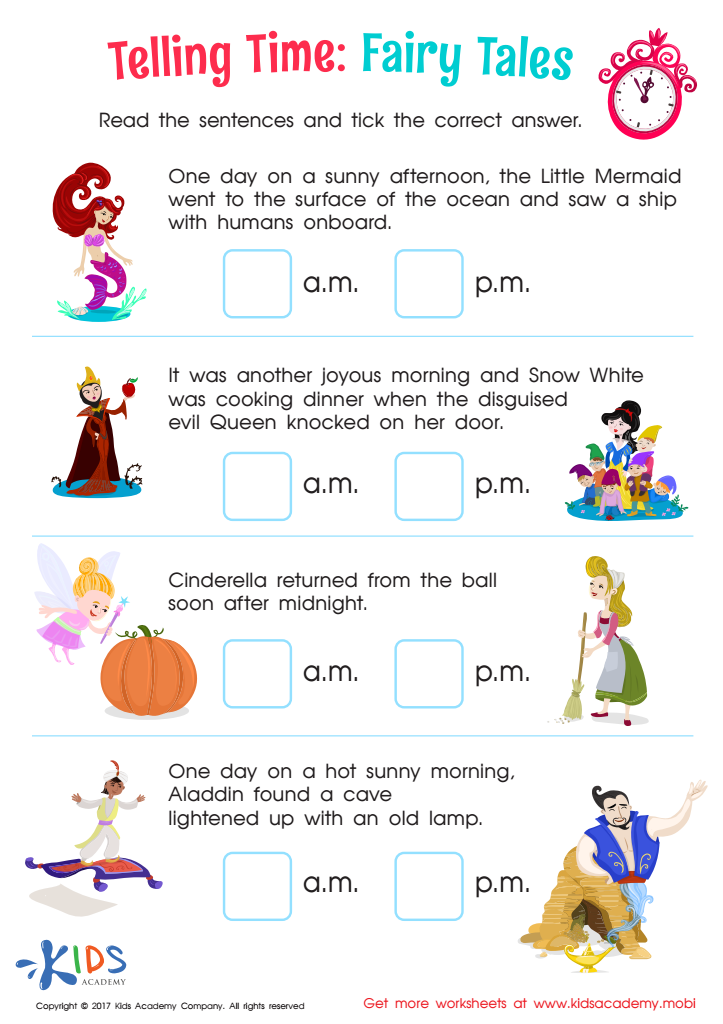
Telling Time: Fairy Tales Worksheet
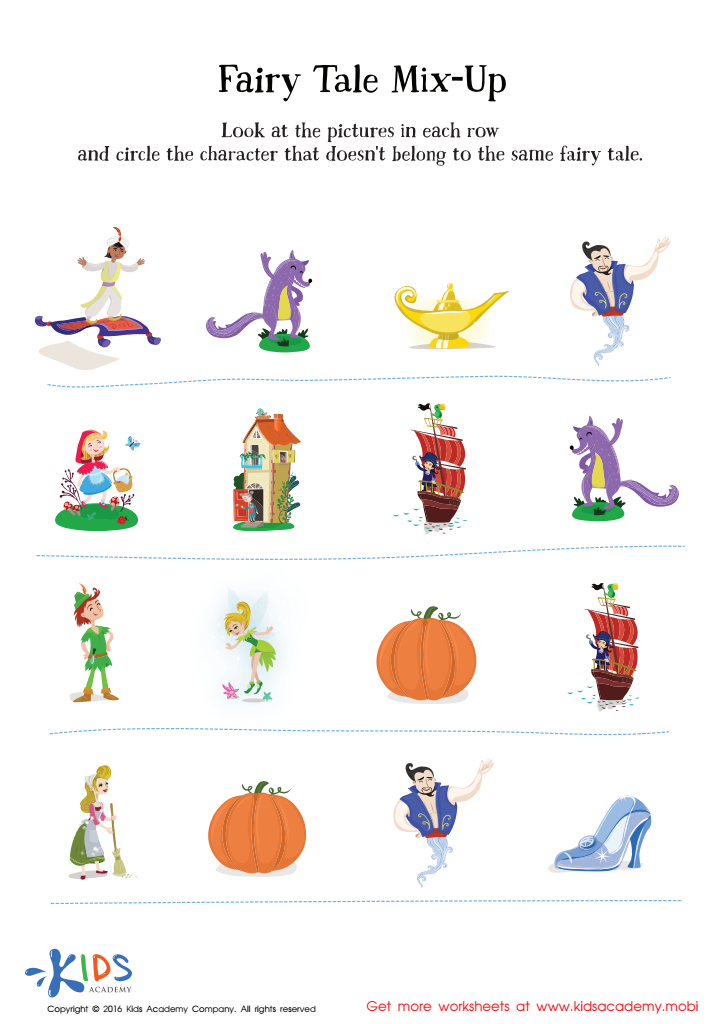
Fairy Tale Worksheet: Story Mix Up







Story sequencing is an essential skill for children aged 6-7 that involves arranging the events of a story in the correct order. Both parents and teachers should care about this skill for several reasons.
Firstly, mastering story sequencing promotes comprehension. When children can identify and articulate the sequence of events, they develop a deeper understanding of the narrative, improving their overall reading skills. This foundational capability supports further literacy development, as it helps in absorbing the structure of different types of texts.
Secondly, story sequencing enhances critical thinking. As children analyze events, they learn to make connections between facts, recognize cause and effect, and draw conclusions, fostering cognitive abilities crucial for academic success.
Moreover, story sequencing nurtures communication skills. When kids retell a story in order, they build their vocabulary and improve their ability to express thoughts clearly and coherently.
Lastly, engaging children in sequencing activities increases their creativity and imagination, as they explore how stories can unfold in various ways. By emphasizing this skill in home and school settings, adults can play a pivotal role in enriching children's learning experiences, setting a foundation for confident, capable readers and thinkers.








