Understanding plurals Extra Challenge Worksheets for Ages 6-7
5 filtered results
-
From - To
Discover our "Understanding Plurals Extra Challenge Worksheets" designed specifically for ages 6-7! These engaging and interactive worksheets provide young learners with a deeper understanding of plural forms. Through fun exercises and challenging scenarios, children will master the concept of pluralization by recognizing patterns and applying their knowledge in context. Ideal for reinforcement at home or in the classroom, these worksheets encourage critical thinking and help build language skills essential for early literacy. Tailored to match the learning level of 6 to 7-year-olds, our resources make learning about plurals enjoyable and effective. Enhance your child’s language proficiency today!
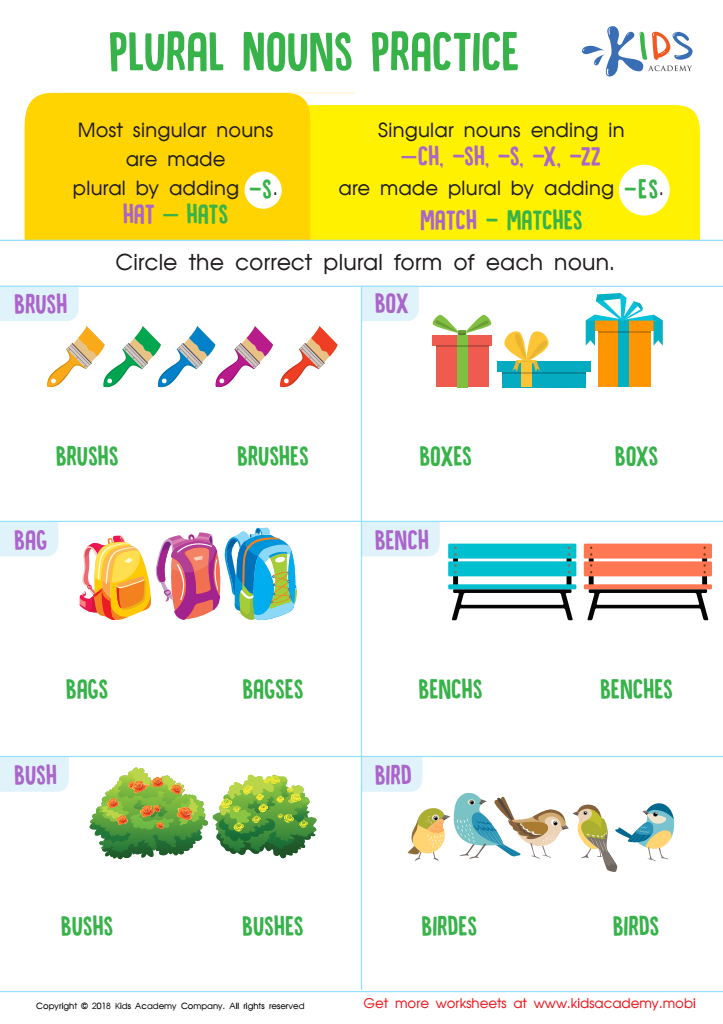
Plural Nouns Practice Worksheet
 Assign to My Students
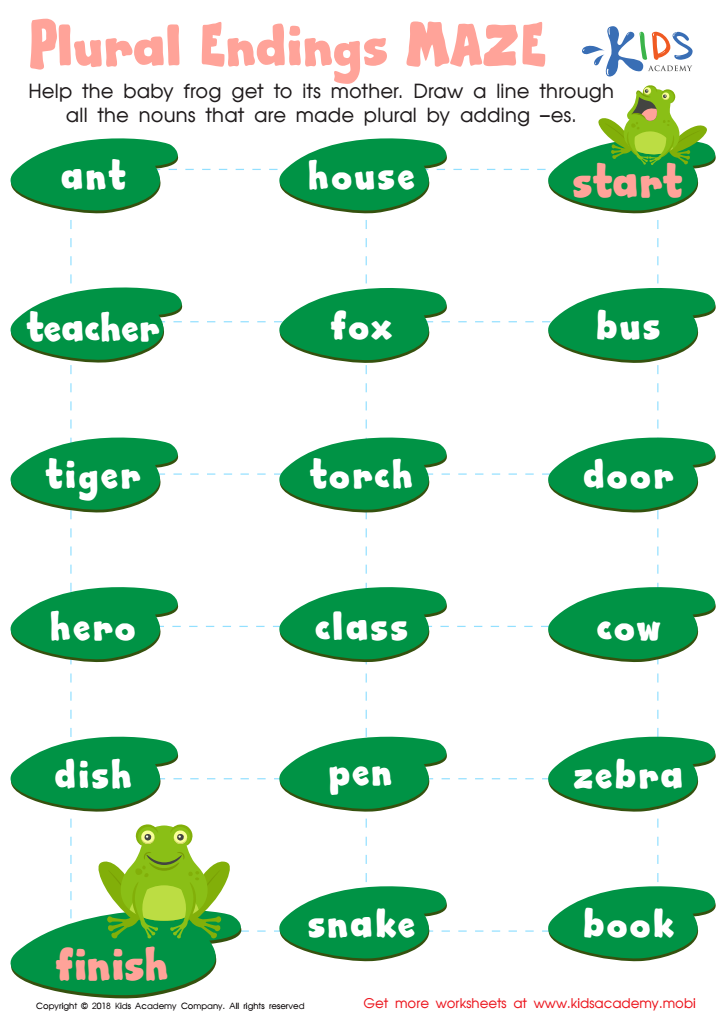
Plural Endings Maze Worksheet
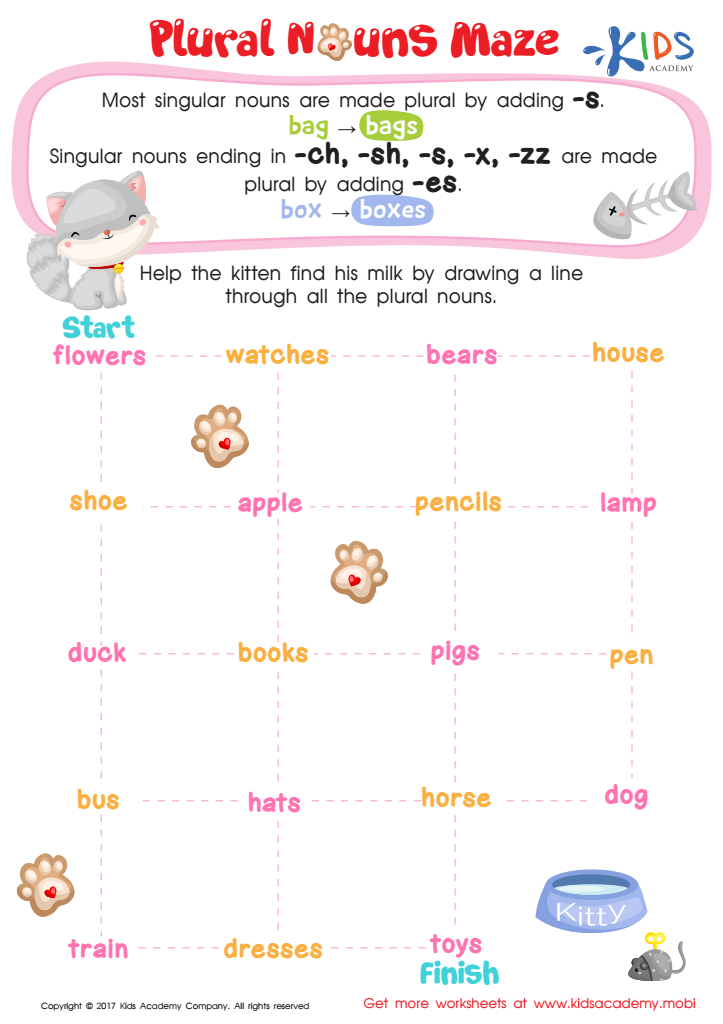
Plural Nouns Maze Worksheet
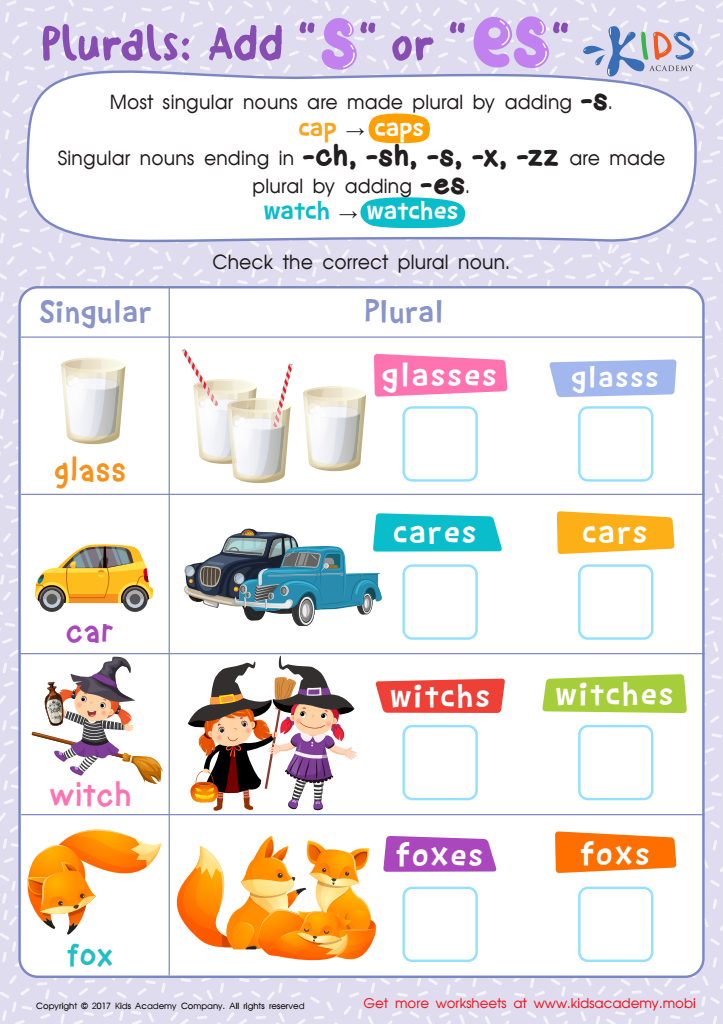
Plurals: "–es" or "–es"? Worksheet
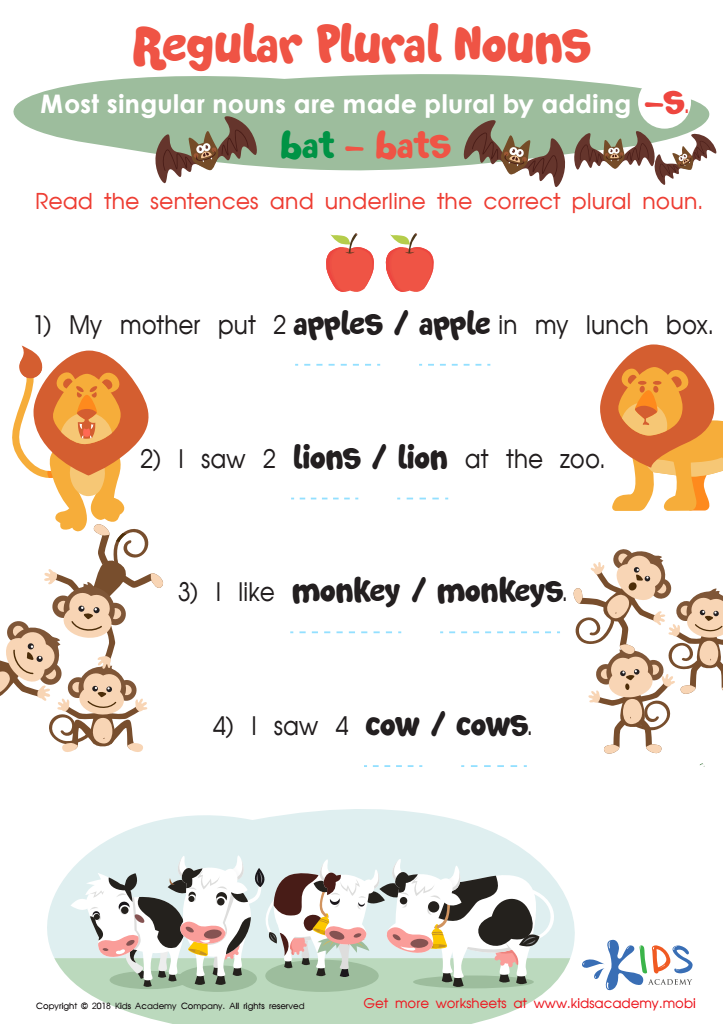
Regular Plural Nouns Worksheet








Understanding plurals is crucial for young learners, especially those aged 6-7, who are in a pivotal stage of language development. This skill not only builds a child’s vocabulary but also enhances their comprehension and communication abilities, allowing them to articulate thoughts clearly and interact effectively with others.
When children grasp the concept of plurals, they develop a foundational understanding of how nouns work, which is essential for mastering grammar. This is important for reading and writing, as it promotes accuracy in their expressions. For teachers and parents, guiding children through this process encourages them to recognize patterns in language, making it easier to learn more complex grammar rules later on.
Moreover, understanding plurals encourages collaboration and social skills, as children learn to discuss groups of items or friends. Engaging children with fun activities like games, story-telling, and hands-on learning can make the concept of plurals enjoyable, fostering a love for language. Ultimately, prioritizing the understanding of plurals equips children for academic success and enriches their interactions, laying the groundwork for effective communication in their future.








