
Basic geometry understanding Extra Challenge Geometry Worksheets for Ages 6-7
3 filtered results
Difficulty Level
Grade
Age
-
From - To
Subject
Activity
Standards
Dive into the world of shapes and spaces with our "Basic Geometry Understanding Extra Challenge Worksheets" designed for ages 6-7! These engaging worksheets are perfect for young learners looking to deepen their grasp of geometric concepts. With fun activities and challenging problems, children will explore shapes like circles, squares, and triangles while developing critical thinking skills. Each worksheet encourages creativity and reinforces math comprehension, making geometry a delightful experience. Ideal for classrooms or at-home enrichment, these extras help advance your child’s geometric abilities, ensuring they enjoy learning through play. Equip your budding mathematician with the tools to conquer geometry with confidence!
Favorites
With answer key
Interactive
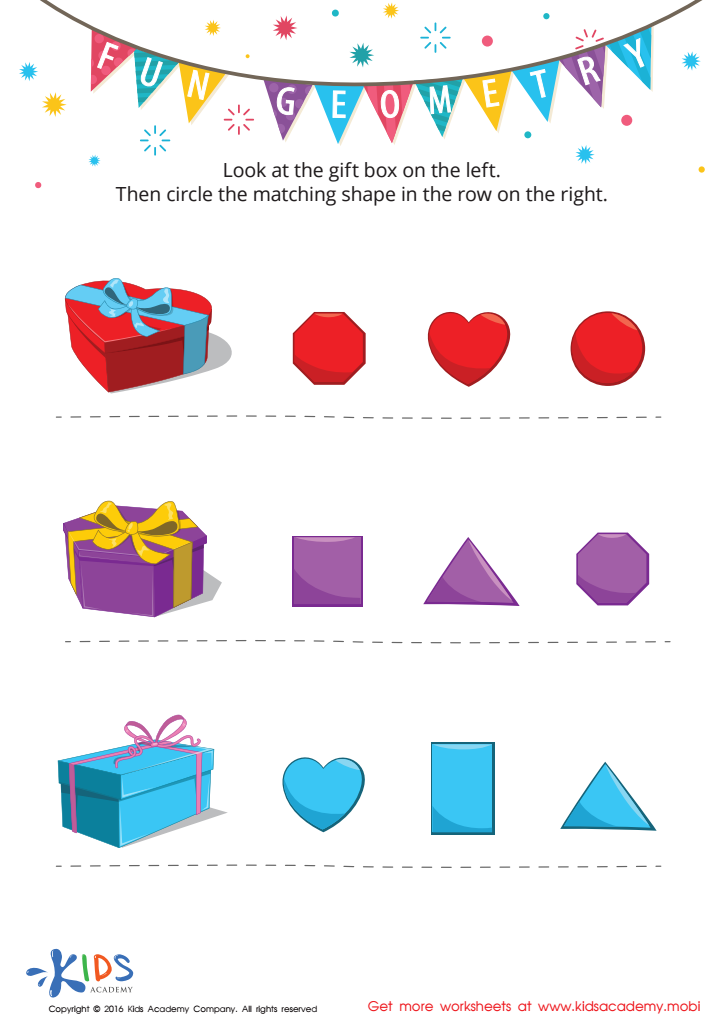
Fun Geometry Worksheet
Give your child the gift of learning with this fun and educational geometry matching worksheet! It'll help them develop essential matching and problem-solving skills while having fun. Vibrant pictures will excite them to complete it and get a better grasp of the world around them.
 Assign to My Students
Fun Geometry Worksheet
Worksheet











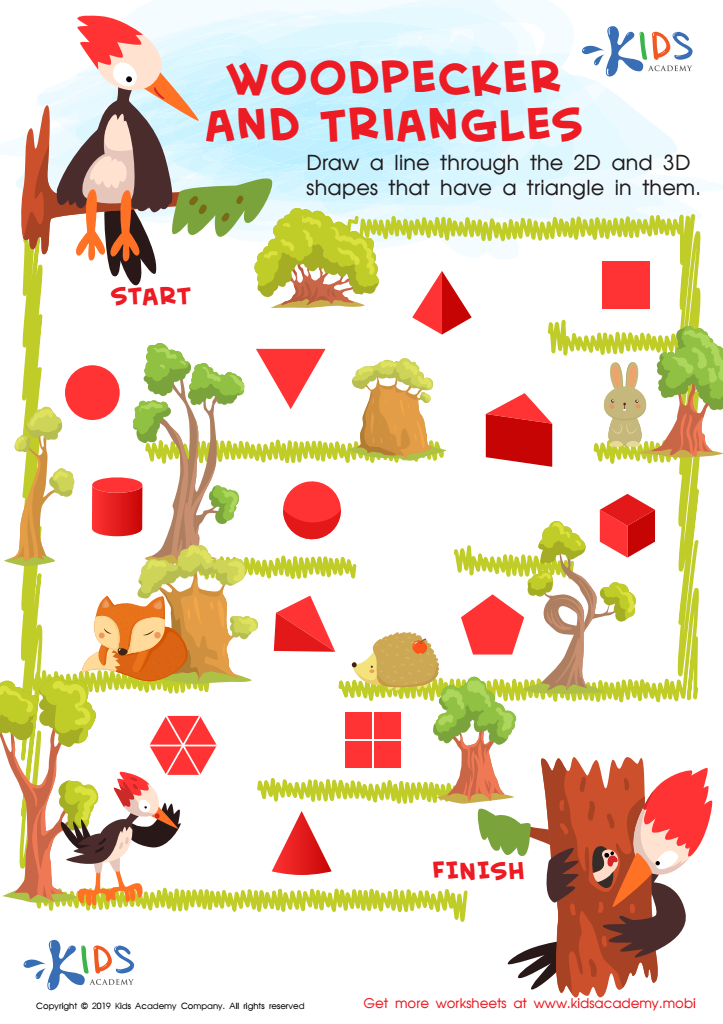
Woodpecker and Triangles Worksheet
Woodpeckers peck wood, and this printout helps kids learn about triangles. Ask your kindergartners to draw a triangle, then draw a line through the shapes that have a triangle in them to help the woodpecker get out of the maze.
Woodpecker and Triangles Worksheet
Worksheet
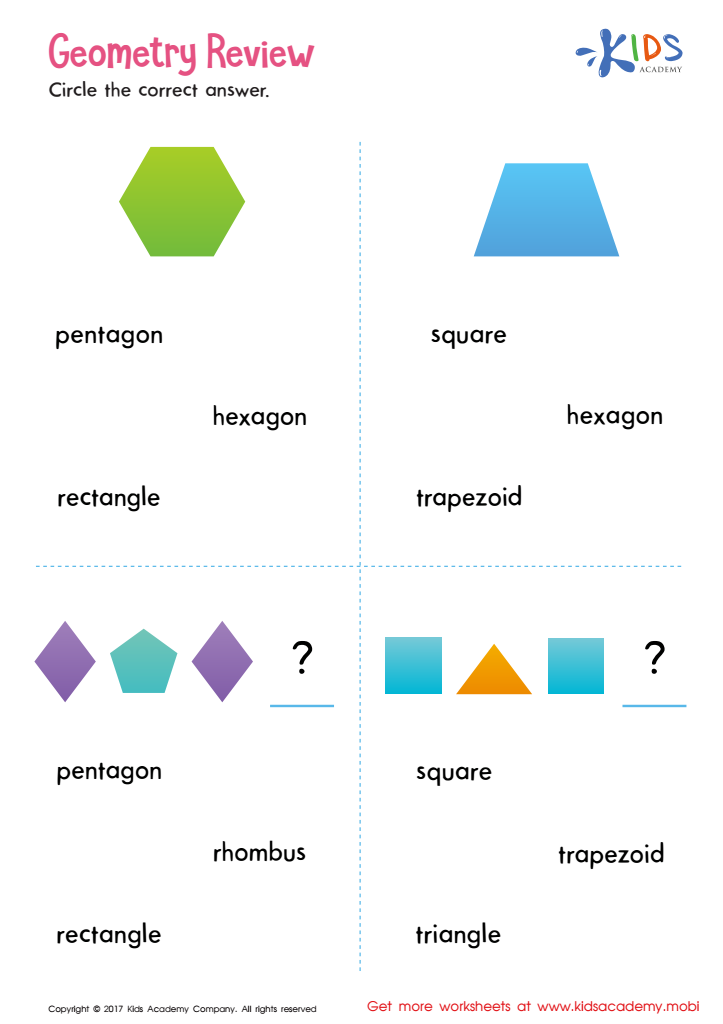
Geometry Review Printable
Repetition is key to success; give your child the practice they need with this geometry worksheet.
Geometry Review Printable
Worksheet
Join Kids Academy for Free
Who is primarily going to use this learning content?








Parents and teachers should prioritize basic geometry understanding for children aged 6-7, as this foundation is crucial for their overall cognitive development and problem-solving skills. Geometry fosters spatial awareness, enabling children to visualize shapes, sizes, and relationships in their environment. By engaging with concepts such as shapes, symmetry, and measurement, young learners enhance their critical thinking abilities and lay the groundwork for more complex mathematical concepts they will encounter later.
Moreover, mastering basic geometry can spark an interest in math, making it fun and interactive. Activities like building with blocks, drawing shapes, and completing puzzles can enhance learning while providing opportunities for hands-on exploration. Early exposure to geometry also helps in enhancing language skills, as children learn to describe and articulate their understanding of shapes and spatial relationships.
Recognizing patterns and understanding geometric principles are not just fundamental math skills; they are also applicable in various subjects, including science and art. As children build relational and analytical skills through geometry, they become more adept thinkers and learners, well-equipped for future educational challenges. Engaging with Extra Challenge Geometry at this age supports their academic journey, ultimately instilling confidence and a love for learning that lasts a lifetime.








