Basic geometry understanding Extra Challenge Math Worksheets for Ages 6-7
4 filtered results
-
From - To
Enhance your child's math skills with our "Basic Geometry Understanding Extra Challenge Math Worksheets" designed for ages 6-7. These engaging worksheets provide an exciting opportunity for young learners to deepen their understanding of essential geometric concepts, including shapes, patterns, and spatial relations. Perfect for both classroom use and at-home practice, our extra challenge worksheets encourage critical thinking and problem-solving abilities while making learning fun! With a variety of activities tailored to sharpen geometry skills, children will build confidence and mastery in math. Explore our resources today and watch your child's geometrical knowledge grow! Perfect for aspiring young mathematicians!
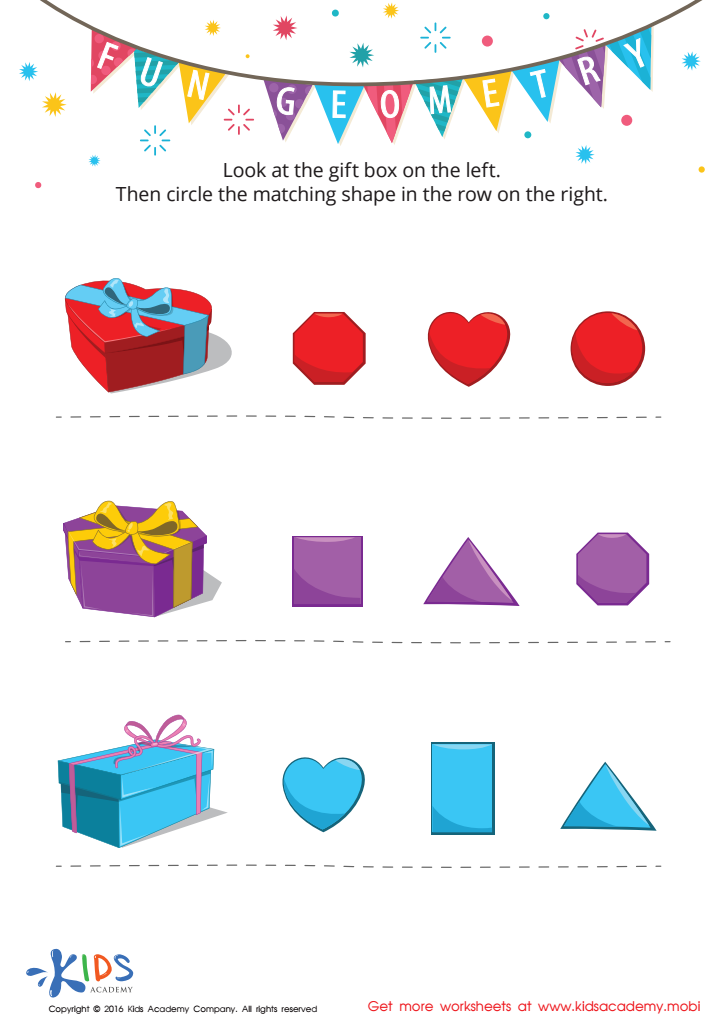
Fun Geometry Worksheet
 Assign to My Students
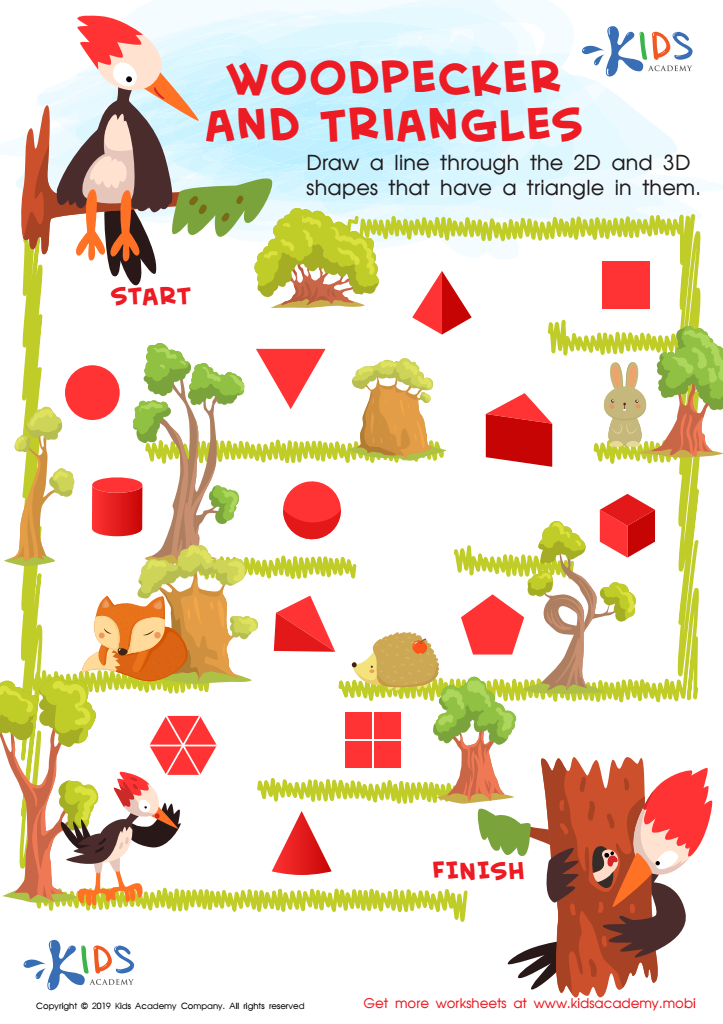
Woodpecker and Triangles Worksheet
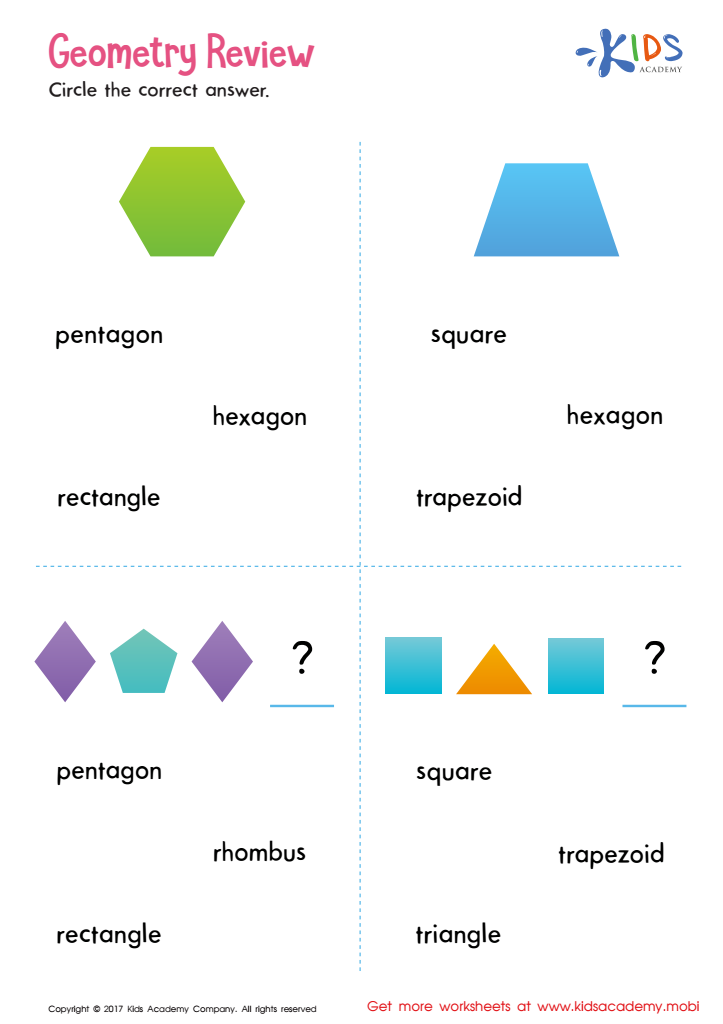
Geometry Review Printable
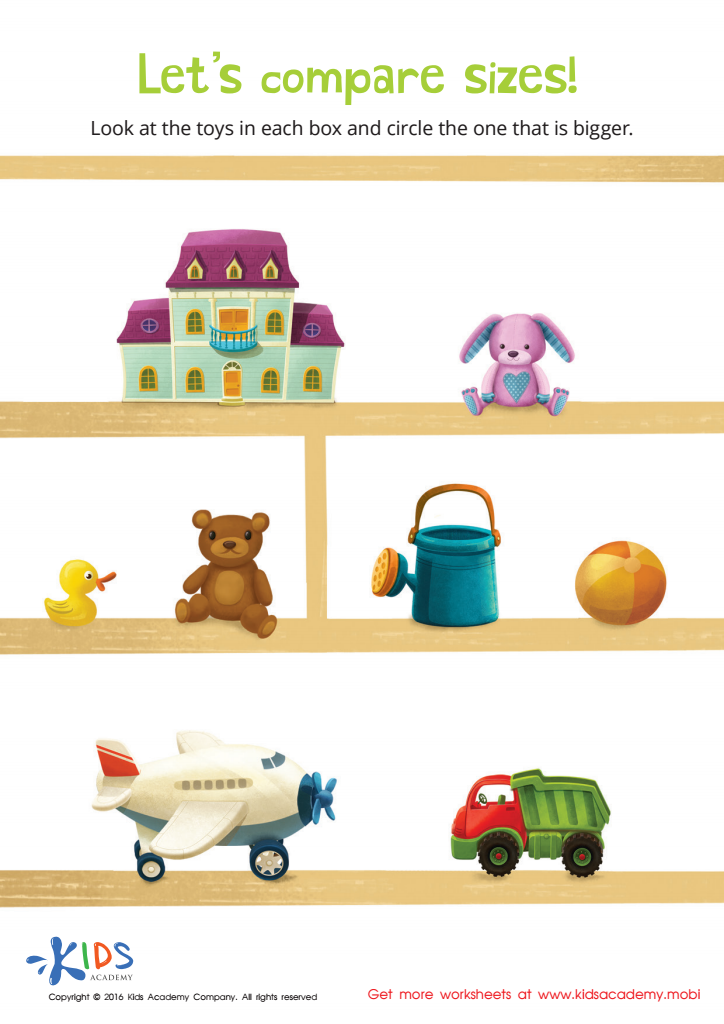
Classifying by Size Sorting Worksheet






Understanding basic geometry is crucial for young learners aged 6-7 as it lays a foundational math literacy that they will build upon for years to come. Engaging with geometric concepts enhances critical thinking skills and spatial awareness, helping students make sense of the world around them. For parents and teachers, providing opportunities to explore geometry through the Extra Challenge Math curriculum creates an enriching environment that fosters a love for learning.
Moreover, this curriculum encourages not only cognitive development but also promotes the ability to solve problems creatively. Activities that involve identifying shapes, understanding symmetry, and recognizing patterns can inspire curiosity and boost confidence. Through hands-on experiences, children can visualize and manipulate shapes, solidifying their understanding of both 2D and 3D forms.
Additionally, developing geometry skills at an early age prepares children for more complex mathematics. It also introduces concepts critical in everyday life, such as measurements and spatial reasoning. In a world increasingly driven by technology, a solid grounding in geometry offers students essential skills for future academic and career pursuits. By investing time and effort in their children's mathematical journey at this stage, parents and teachers help cultivate a bright, mathematically confident generation.








