Chess strategy learning Extra Challenge Worksheets for Ages 6-9
7 filtered results
-
From - To
Unlock the brilliance of young minds with our Chess Strategy Learning Extra Challenge Worksheets, tailored for ages 6-9! These engaging worksheets are designed to enhance critical thinking and strategic planning skills in a fun and interactive way. Each exercise presents young learners with innovative chess problems, fostering their ability to anticipate moves and develop tactical prowess. Ideal for beginners and budding chess enthusiasts alike, these worksheets combine the excitement of gameplay with effective learning techniques. Challenge your child today and watch their problem-solving abilities blossom while they discover the joy of chess!
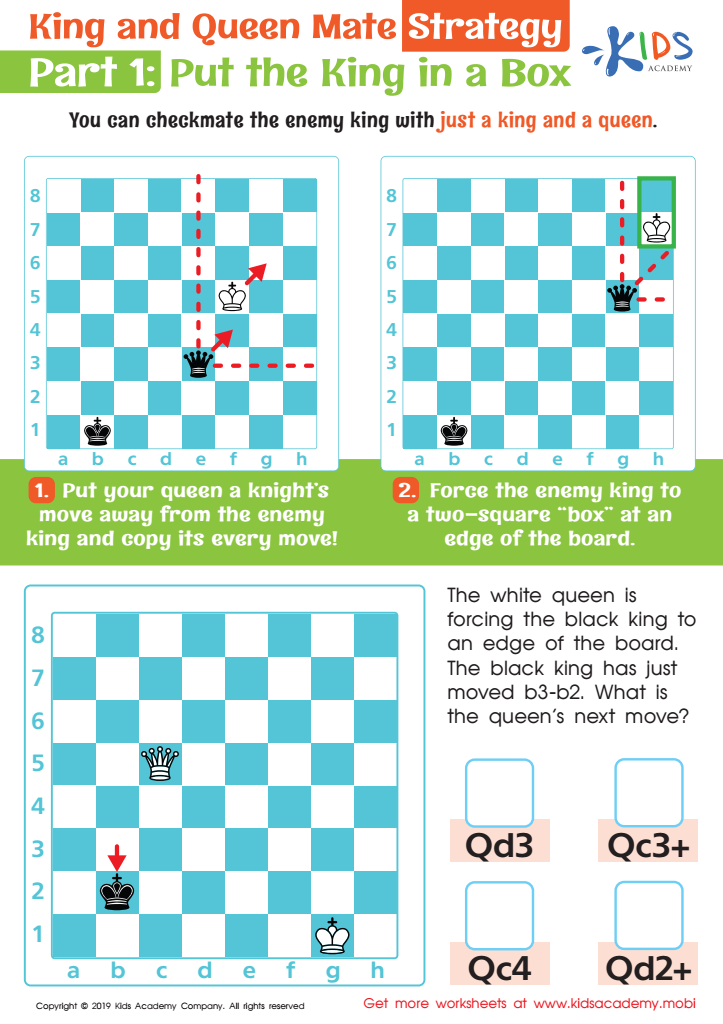
King and Queen Mate Strategy: Part 1 Worksheet
 Assign to My Students
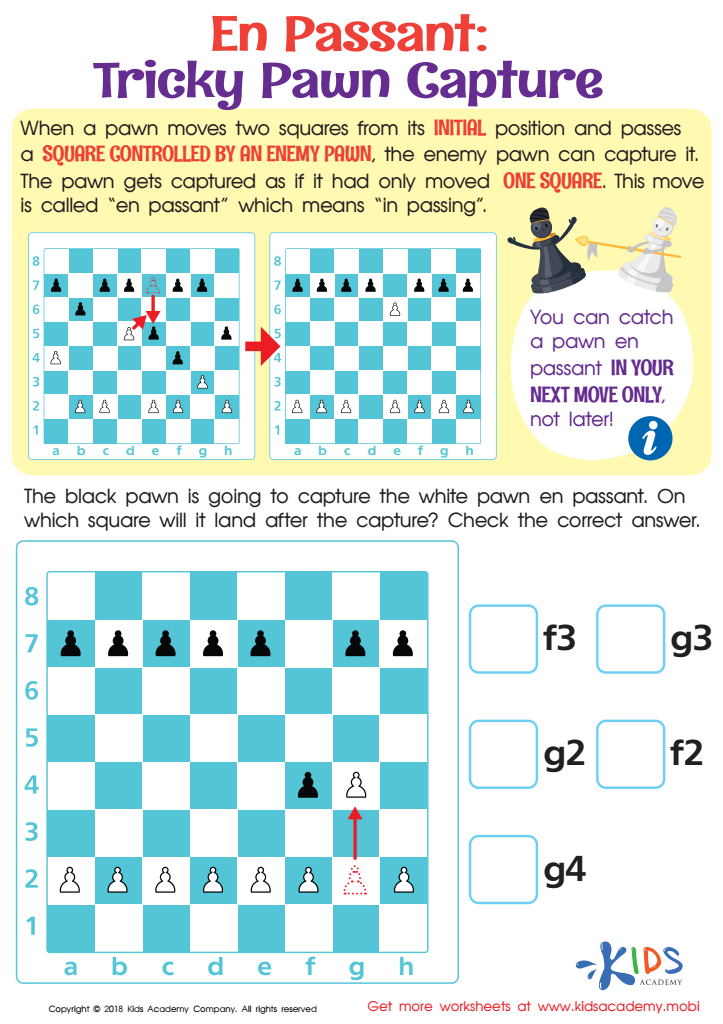
En Passant: Tricky Pawn Capture Worksheet
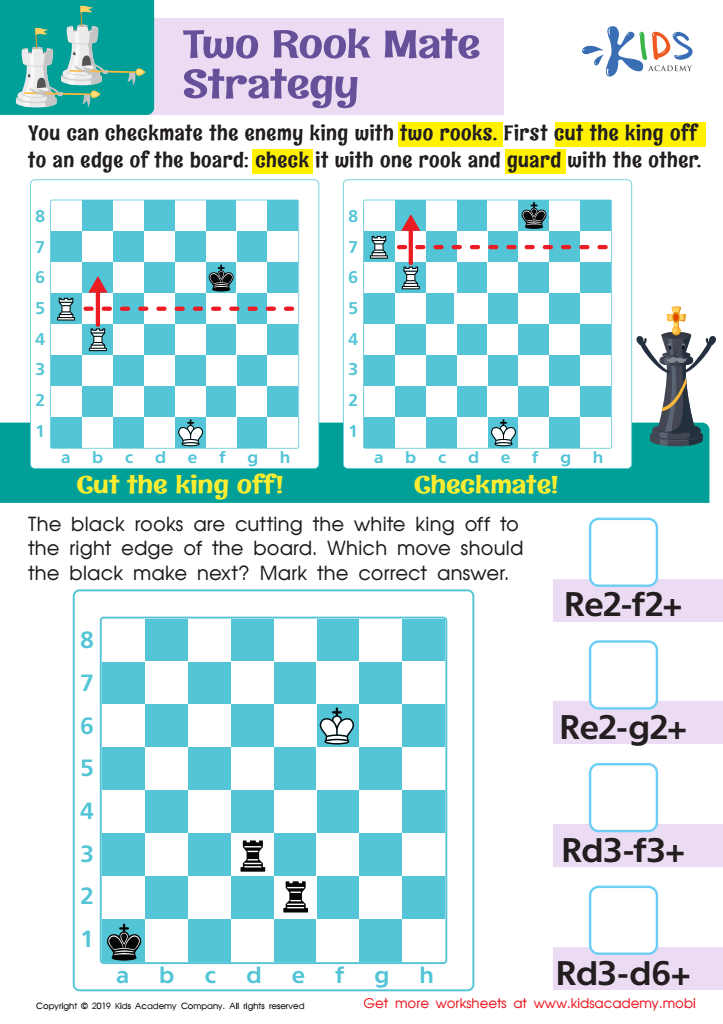
Two Rook Mate Strategy Worksheet
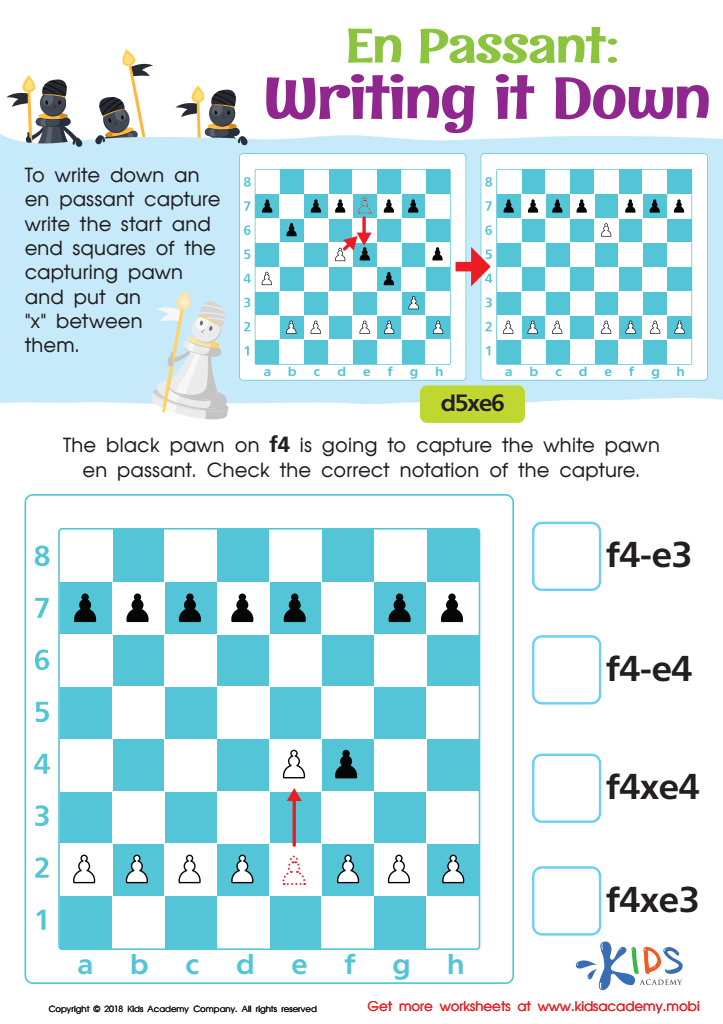
En Passant: Writing it Down Worksheet
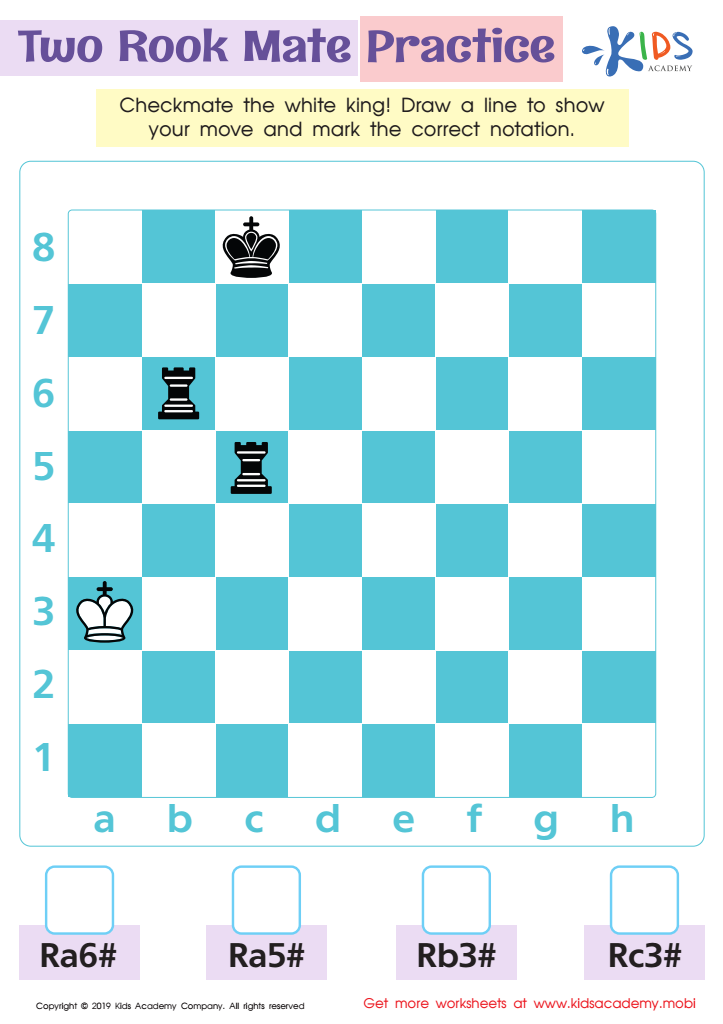
Two Rook Mate Practice Worksheet
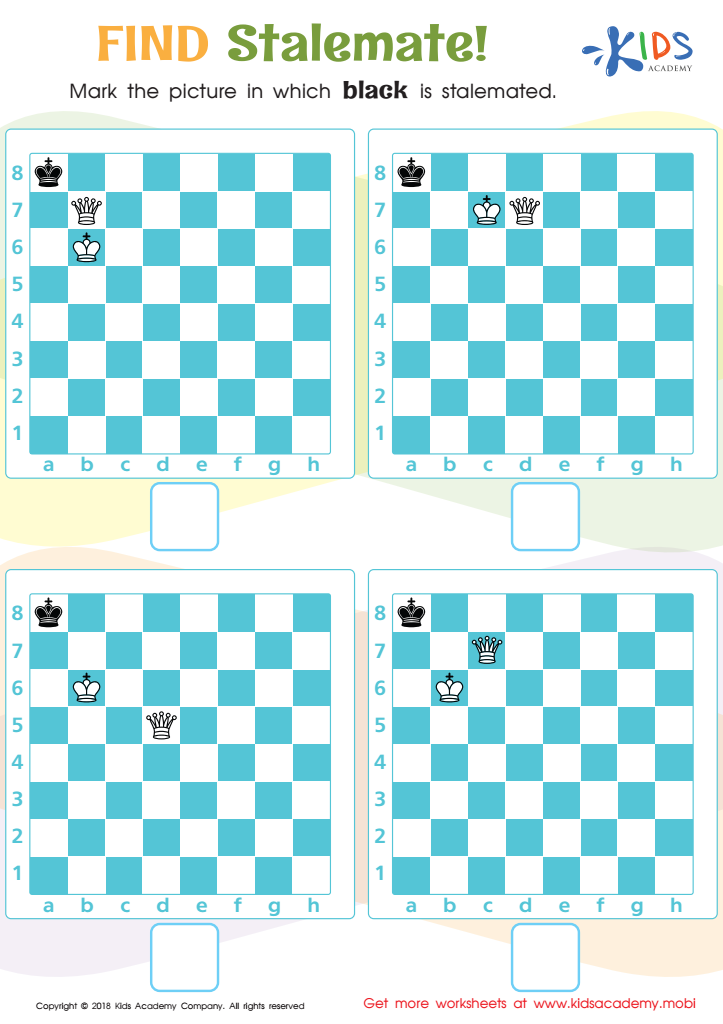
Find Stalemate! Worksheet
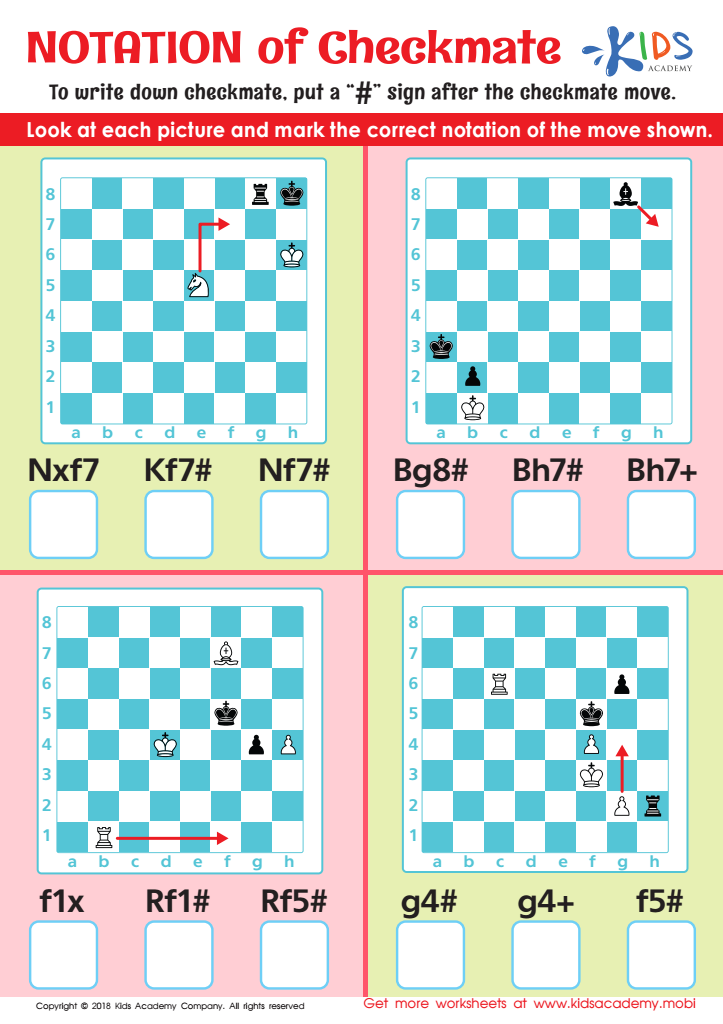
Notation of Checkmate Worksheet








Parents and teachers should prioritize chess strategy learning as an extra challenge for children ages 6-9 due to its myriad cognitive, social, and emotional benefits. At this formative stage, young minds are incredibly receptive, and engaging in chess can significantly enhance critical thinking, problem-solving skills, and intellectual growth. Chess demands forward-thinking and planning, encouraging children to think multiple steps ahead and anticipate possible outcomes. This process strengthens their executive functioning skills, enhances their ability to concentrate, and improves memory.
Additionally, chess promotes patience and discipline, teaching children to approach problems methodically and remain composed under pressure. While children learn to win graciously and lose gracefully, they develop valuable social skills and resilience, crucial for their overall emotional development. These interactions can boost self-esteem, as successfully navigating complex challenges provides a strong sense of achievement.
Early exposure to chess also stimulates creativity and adaptability, as children regularly confront unique game scenarios requiring innovative solutions. Importantly, these advantages extend beyond the chessboard, with improved math, reading, and general academic performance frequently observed in young chess enthusiasts.
In conclusion, introducing chess as an extra challenge promotes holistic development, equipping children with essential life skills that will serve them well in academic pursuits and personal relationships.








