Extra Challenge Area and Perimeter Worksheets for Ages 6-9
5 filtered results
-
From - To
Welcome to our Extra Challenge Area and Perimeter Worksheets designed for ages 6-9! These engaging and thoughtfully crafted worksheets provide young learners with the opportunity to deepen their understanding of area and perimeter concepts. Tailored for diverse skill levels, our exercises promote critical thinking and problem-solving. Kids will enjoy practicing calculations through fun and colorful designs while developing essential math skills. Perfect for classroom use or at-home practice, these resources aim to make learning exciting and challenging. Explore our collection today to enhance your child's math journey and boost their confidence in handling area and perimeter challenges!
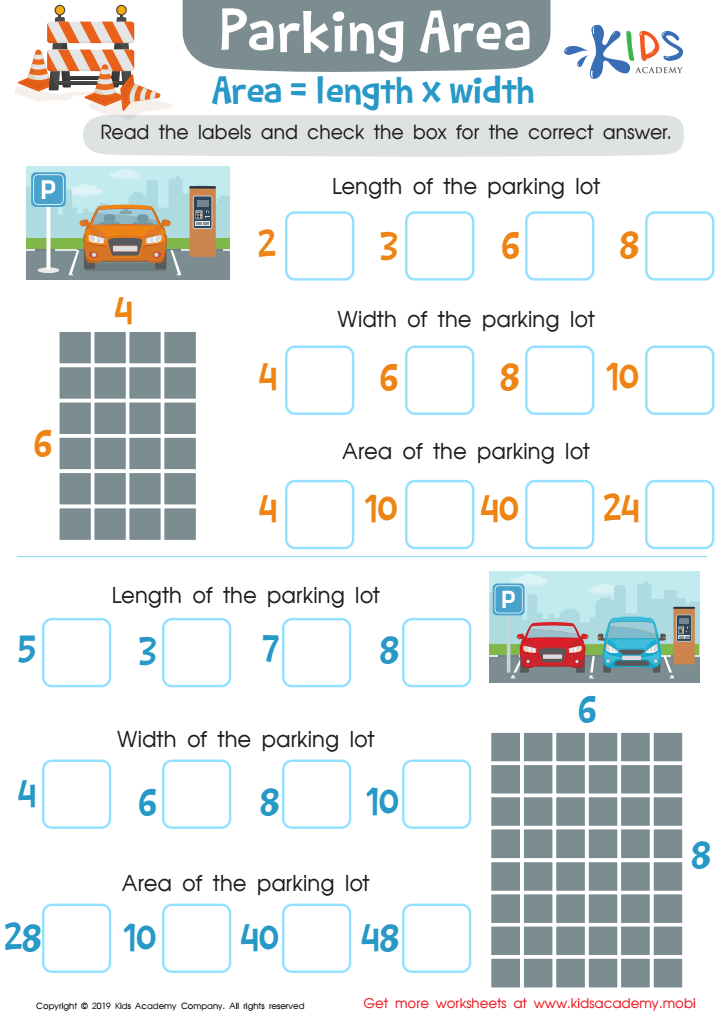
Parking Area Worksheet
 Assign to My Students
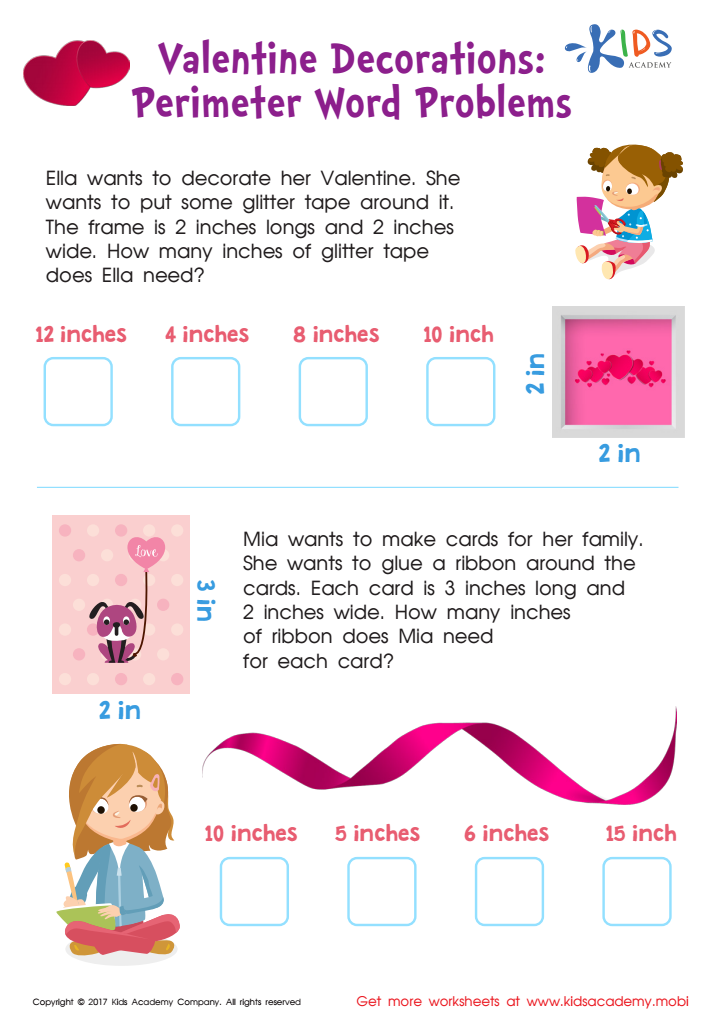
Perimeter Word Problems Worksheet
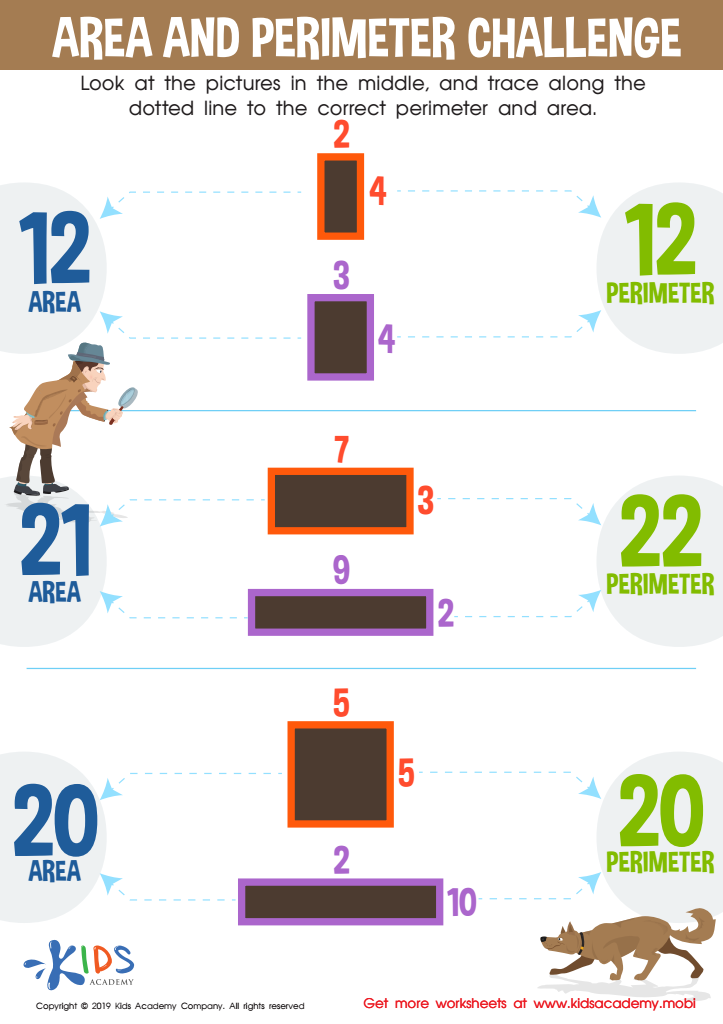
Area and Perimeter Challenge Worksheet
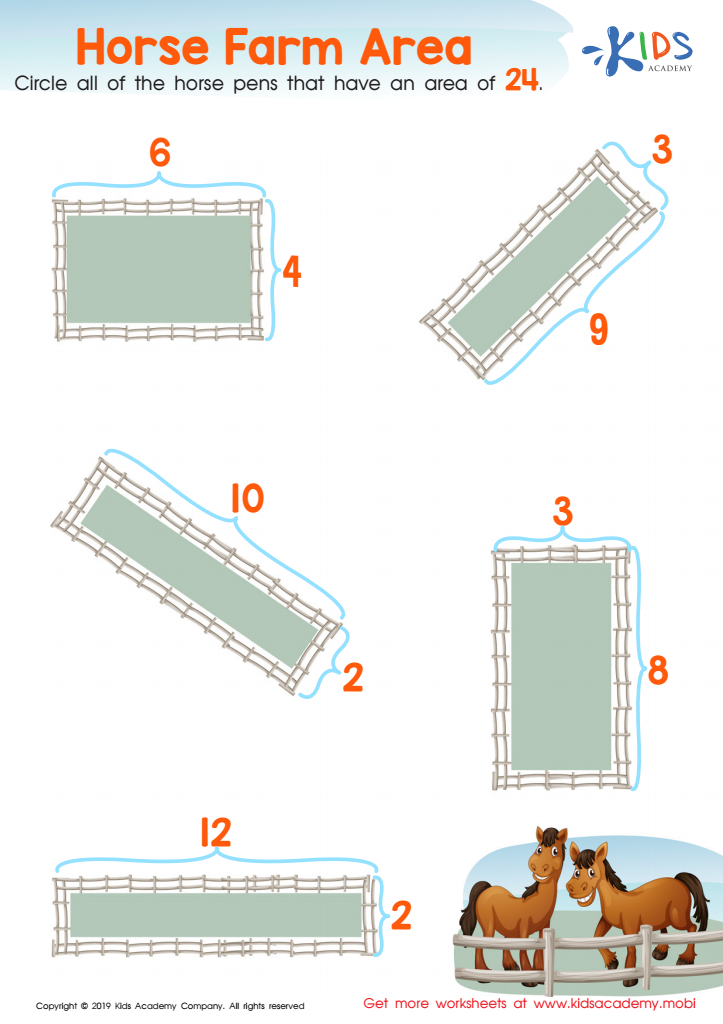
Horse Farm Area Worksheet
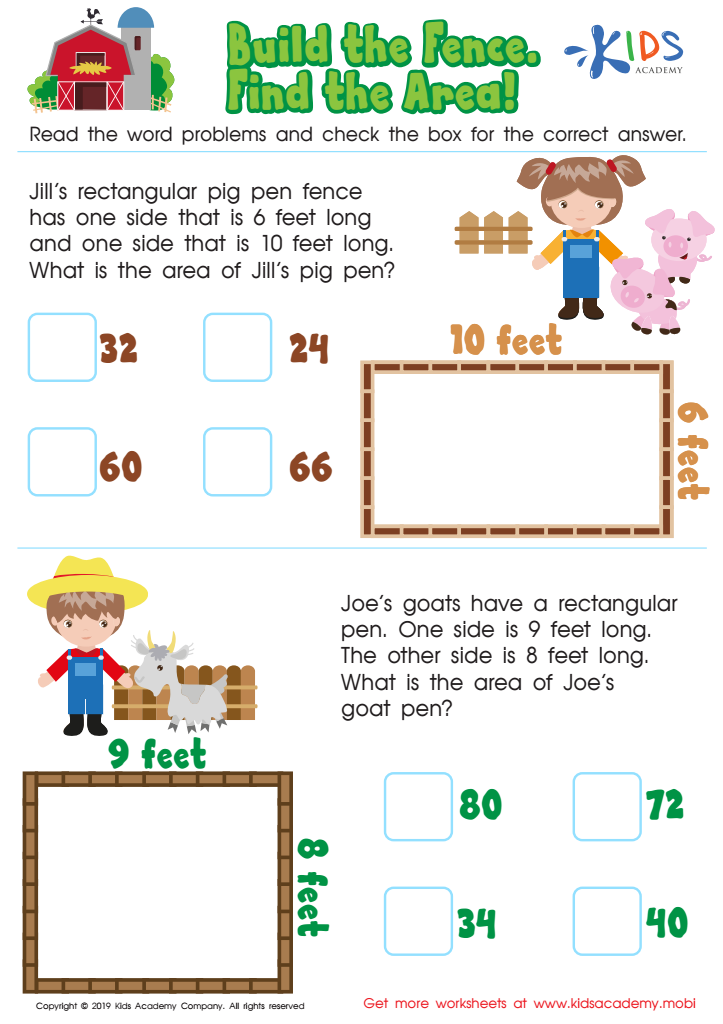
Build the Fence, Find the Area Worksheet








Parents and teachers should care about including Extra Challenge areas focused on perimeter and area for students aged 6-9 for several reasons. Firstly, these concepts foster critical mathematical thinking and problem-solving skills. At this developmental stage, children are beginning to understand and manipulate numerical and spatial relationships, and challenges related to area and perimeter enhance their reasoning abilities.
Secondly, a strong foundation in geometry is vital for future math success. By introducing various challenges, children can explore different strategies for calculation, helping solidify their understanding and application of formulas in context. Engaging children in challenging tasks also promotes resilience, as they learn to embrace difficulties and develop a growth mindset.
Additionally, providing extra challenges allows for differentiation in the classroom, catering to diverse learning paces. It encourages advanced learners to delve deeper while providing a scaffold for struggling students. These extra challenges can also make learning enjoyable and interactive, sparking a love for math through hands-on activities.
Lastly, incorporating area and perimeter challenges can connect math to real-world applications, such as gardening, crafting, or designing spaces, making learning relevant and practical. Overall, this holistic approach benefits students' cognitive growth and contributes to a well-rounded mathematical education.