Extra Challenge Area and Perimeter Worksheets for Ages 7-9
5 filtered results
-
From - To
Explore our Extra Challenge Area and Perimeter Worksheets, specifically designed for children aged 7-9. These worksheets provide engaging exercises to enhance your child's understanding of measuring space within shapes and distances around them. Through fun activities and challenging problems, kids will master the concepts of area and perimeter, sharpen their math skills, and boost their confidence. Perfect for classroom use or additional practice at home, these printable resources are excellent for young learners who are ready to tackle more complex mathematical concepts in an enjoyable and educational way. Visit us to jump-start your child's mathematical journey today!
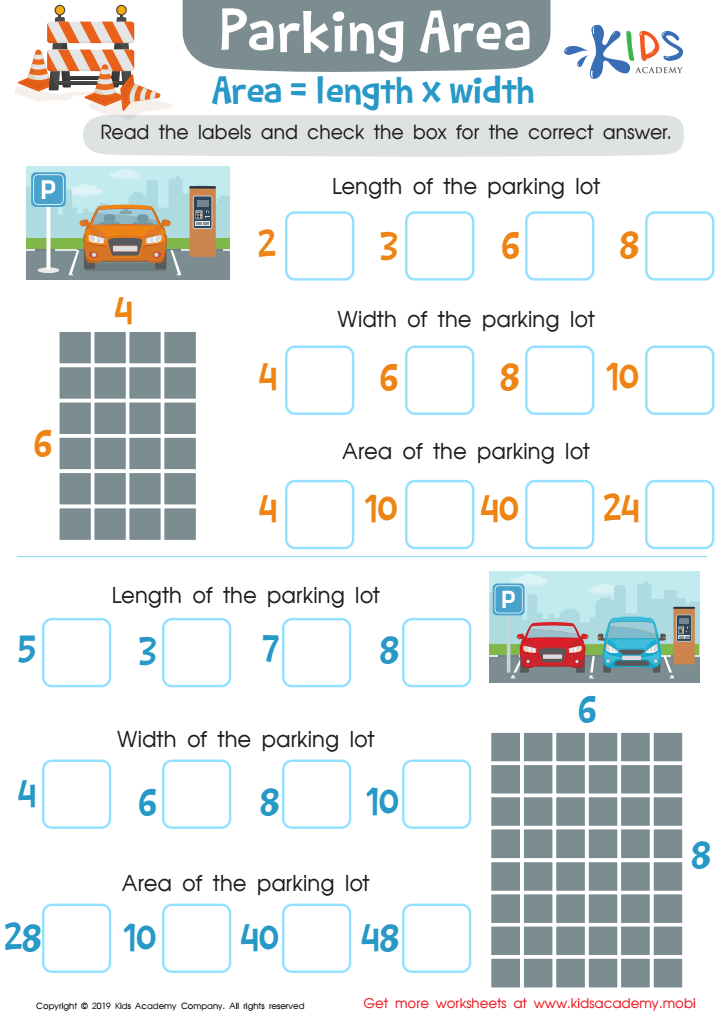
Parking Area Worksheet
 Assign to My Students
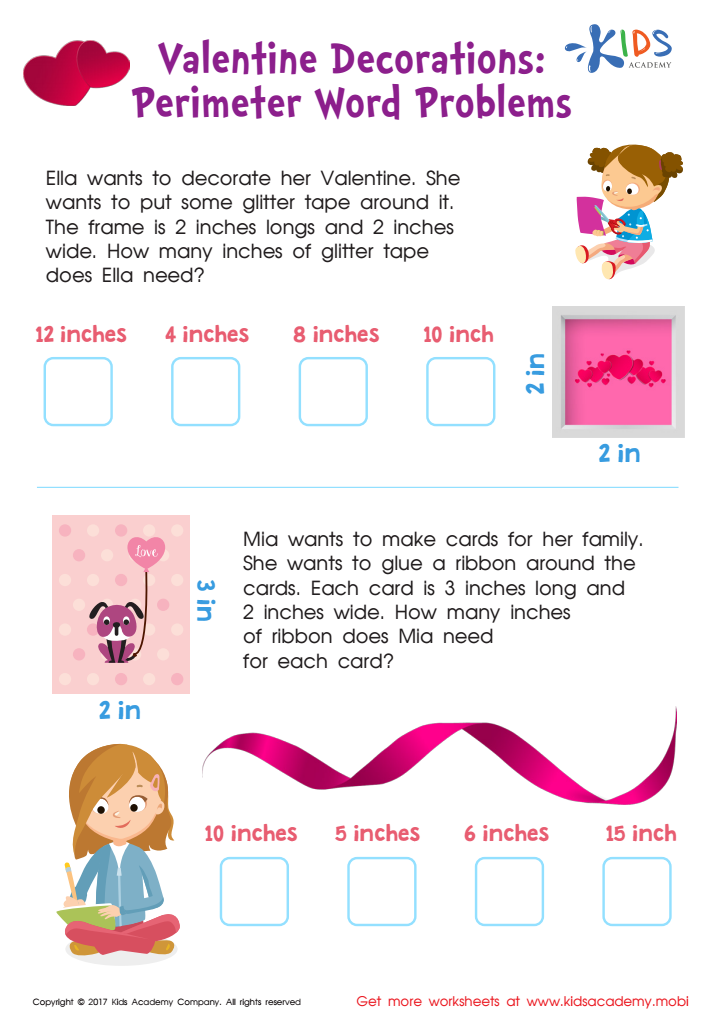
Perimeter Word Problems Worksheet
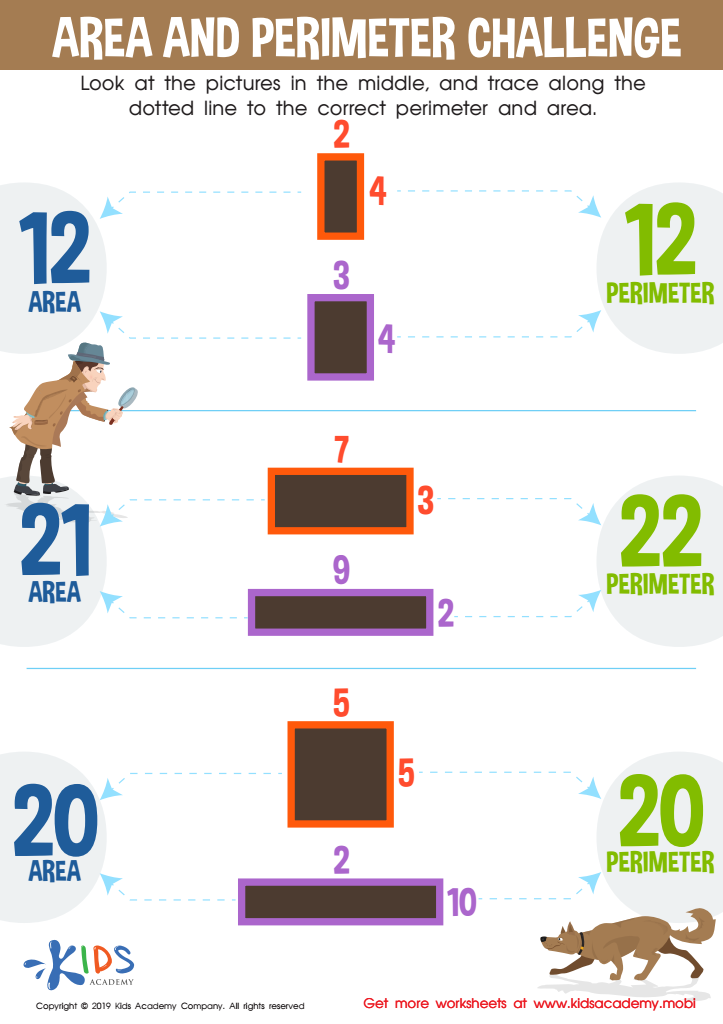
Area and Perimeter Challenge Worksheet
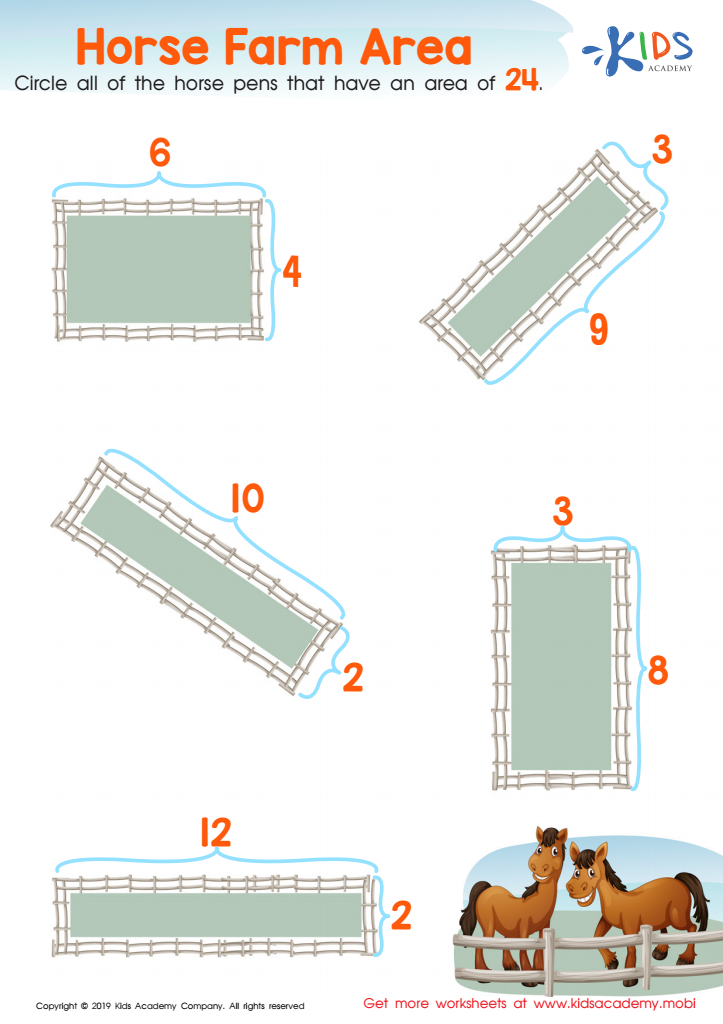
Horse Farm Area Worksheet
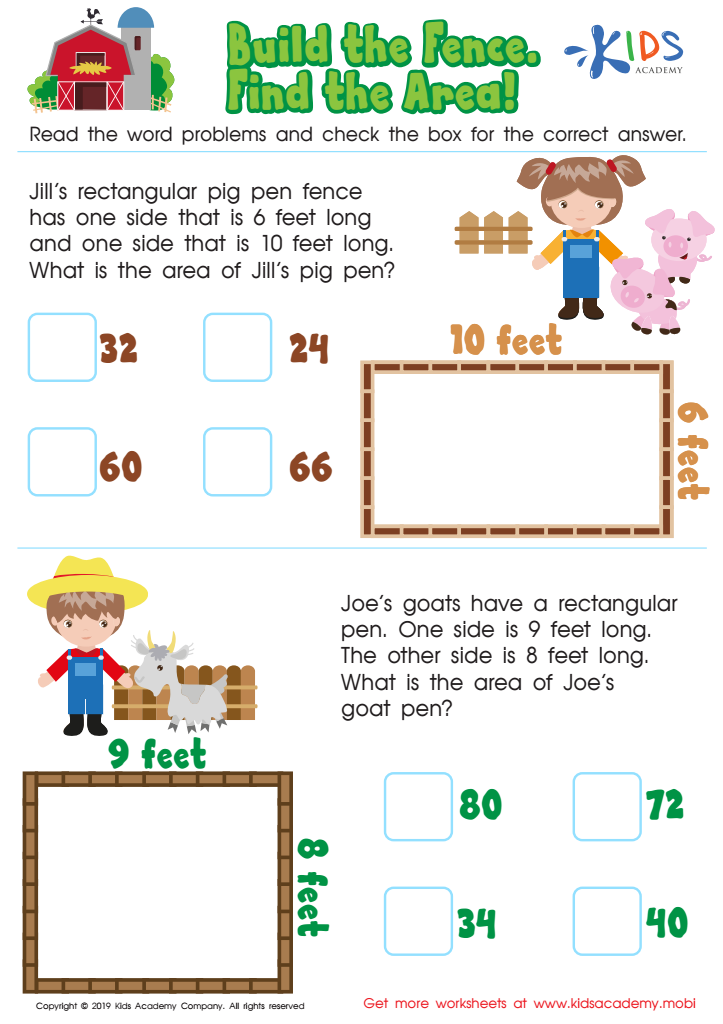
Build the Fence, Find the Area Worksheet








Introducing extra challenges in area and perimeter for kids aged 7-9 can be profoundly beneficial for their academic and personal development. This educational engagement enhances indispensible mathematical skills through problem-solving and spatial reasoning exercises that go beyond basic calculations. Understanding how to measure spaces and boundaries lays a substantial foundation for more complex math concepts encountered later in their education.
These challenges transform learning into a fun-oriented and exploratory activity, motivating children to think creatively and approach problems from different angles. By fostering curiosity and resilience, these tasks establish invaluable critical thinking and analytical capabilities.
In addition to aiding mathematical proficiency, engaging with area and perimeter exercises can increase attention span and bolster concentration. Children find themselves persevering through challenging problems, which instills patience and incrementally builds a growth-oriented attitude toward learning.
Furthermore, achieving these advanced tasks fulfills a child's educational curiosity, empowering them and nurturing a positive attitude toward themselves and their abilities. All of these subtle benefits accumulate, preparing children not only for future academic successes but also for real-world skills such as practical application in everyday scenarios, teamwork, and independent thinking. Enabling children to meet these capabilities elevates their intellectual self-esteem and forms a balanced, well-rounded learner.