Shape identification Extra Challenge Math Worksheets for Ages 6-9
5 filtered results
-
From - To
Enhance your child's learning journey with our "Shape Identification Extra Challenge Math Worksheets" designed for ages 6-9. These engaging worksheets provide a fun and stimulating way to master shape recognition, helping young learners differentiate between various geometric figures. With thoughtful activities and exciting challenges, children will boost their analytical skills while enjoying ample entertainment. Our worksheets promote independent learning, encourage critical thinking, and strengthen foundational math skills essential for future success. Ideal for home or classroom use, these resources give educators and parents the tools needed to inspire a love of learning in young students. Explore now and watch your child thrive!
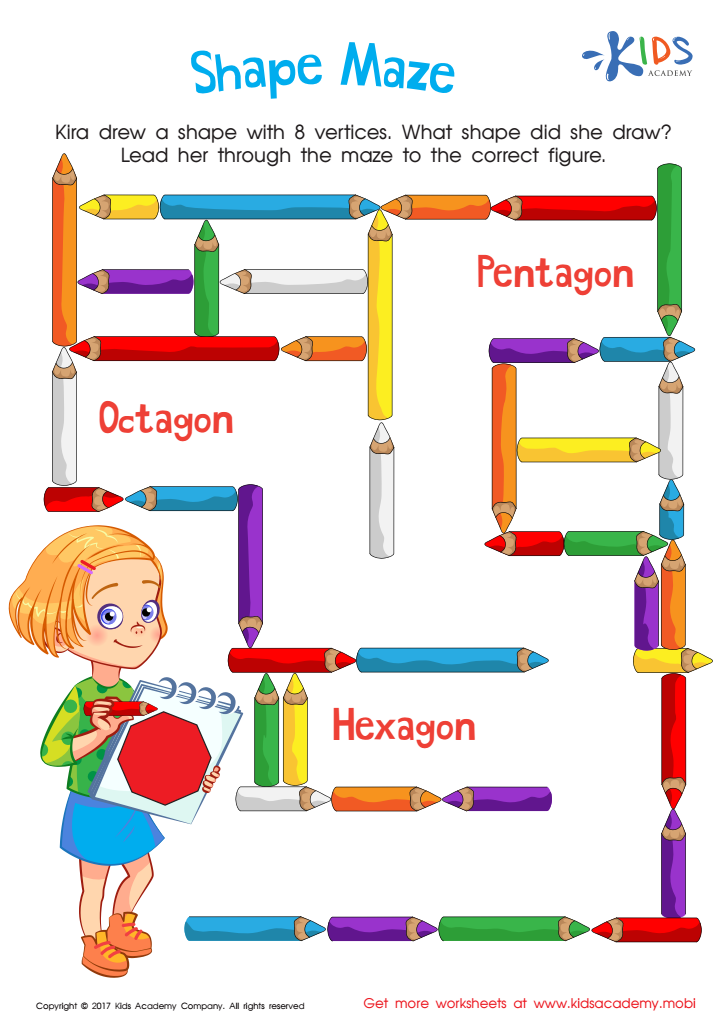
Shape Maze Worksheet
 Assign to My Students
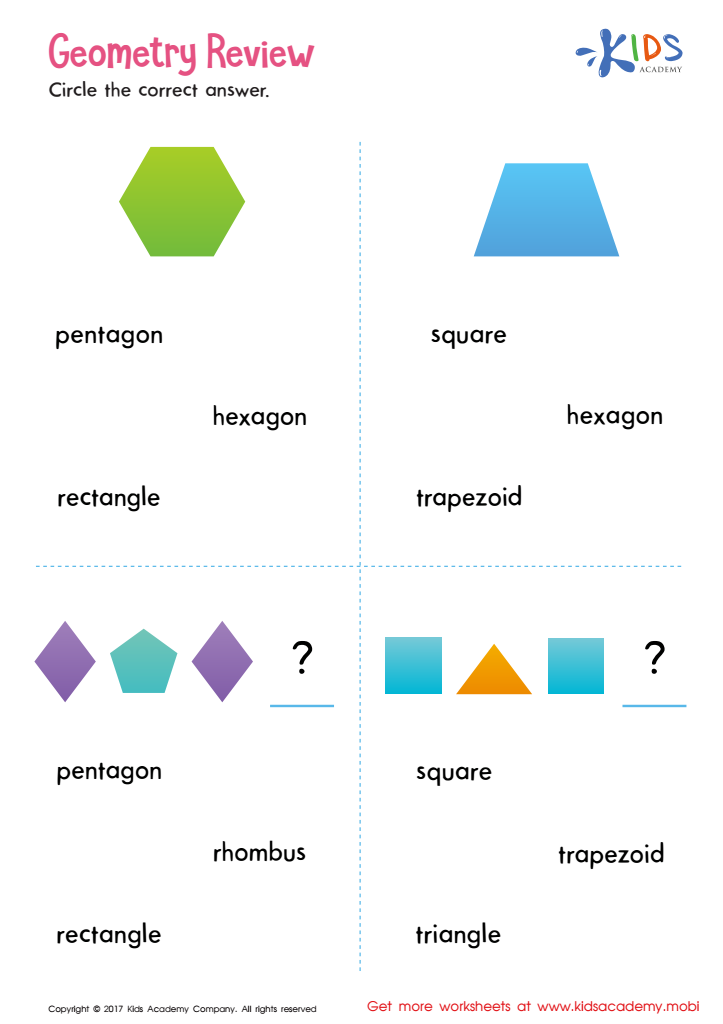
Geometry Review Printable
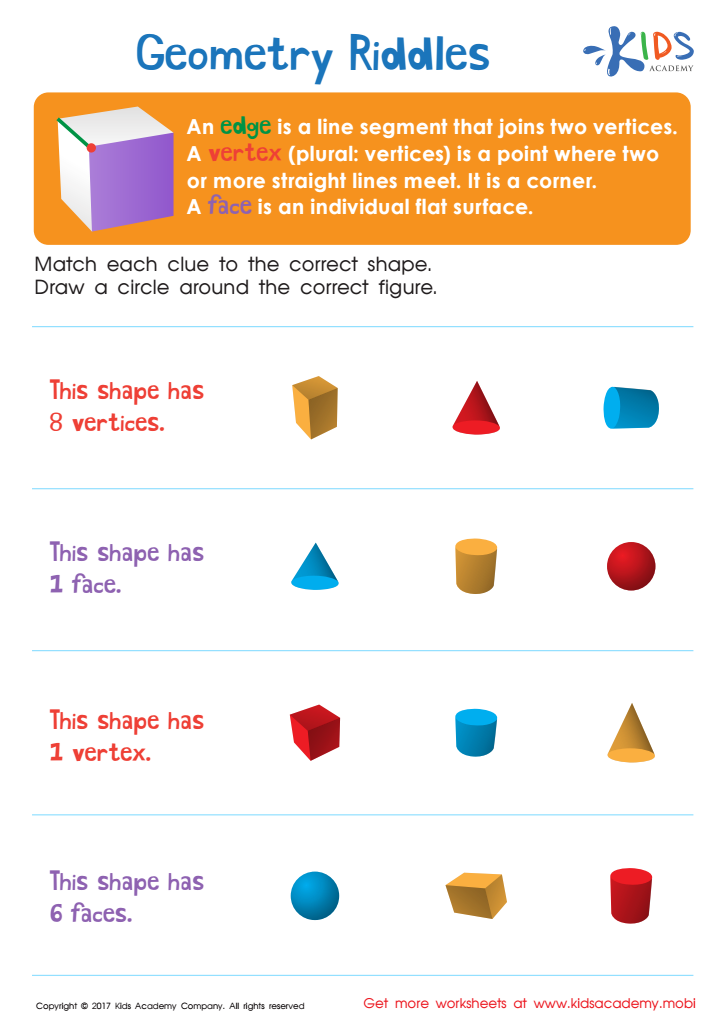
Geometry Riddles Printable
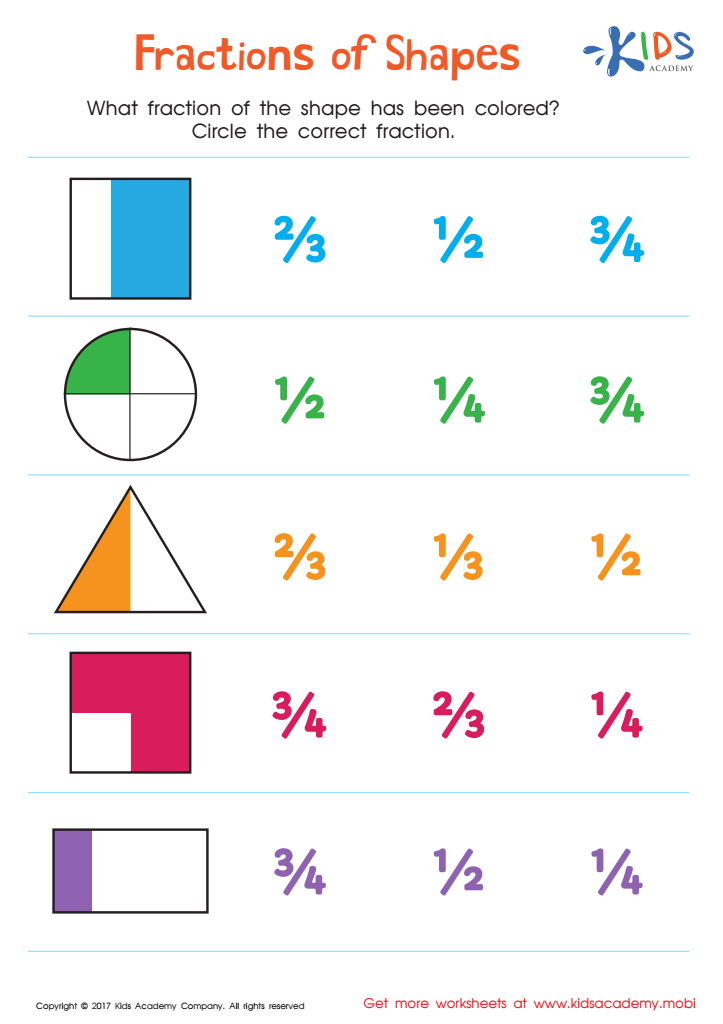
Fractions of Shapes: Math Concept Worksheet
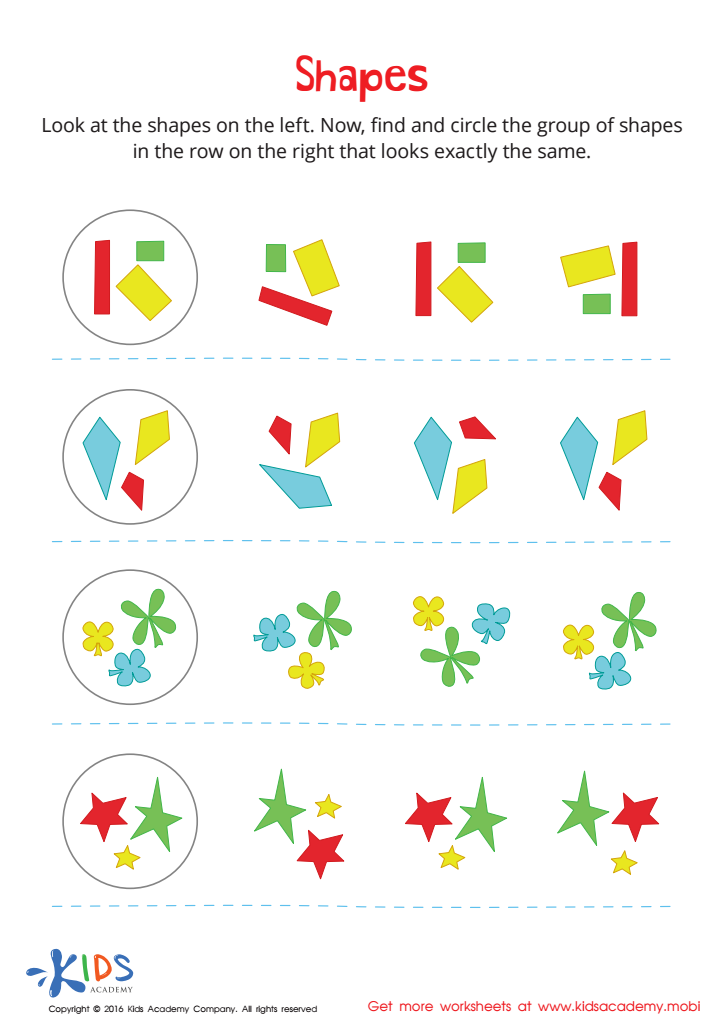
Shapes Worksheet







Shape identification is a crucial foundational skill for children aged 6-9, as it lays the groundwork for various mathematical concepts and cognitive development. For parents and teachers, incorporating shape identification exercises, such as Extra Challenge Math activities, is vital for several reasons.
Firstly, recognizing and understanding shapes helps children develop spatial awareness, which is essential not only in mathematics but also in everyday life experiences, like navigating environments or various activities in sports. Secondly, strong shape identification skills enhance problem-solving abilities. Children learn to categorize and differentiate objects, fostering logical thinking and reasoning skills.
Additionally, engaging in shape-related challenges encourages critical thinking and perseverance, as students tackle more complex puzzles and problem sets. This resilience is an important life skill that extends beyond academics.
Furthermore, learning shapes provides a fun and interactive way to integrate artistic and creative experiences, deepening children's interest in STEM-related subjects. Lastly, early proficiency in shape identification corresponds to future success in geometry and advanced math courses, directly influencing their academic trajectories.
In summary, parents and teachers should prioritize shape identification exercises, as they significantly contribute to children's overall cognitive development and academic success, equipping them with essential skills for future learning.








