Practical math application Extra Challenge Worksheets for 6-Year-Olds
3 filtered results
-
From - To
Discover an engaging way to enhance your child's math skills with our "Practical Math Application Extra Challenge Worksheets for 6-Year-Olds." These thoughtfully designed worksheets blend fun and educational activities to make learning math an exciting adventure. Perfect for young minds ready for more challenging concepts, each worksheet emphasizes real-world applications, helping children understand how math is used in everyday life. Encourage problem-solving, logical reasoning, and critical thinking, all while keeping your child motivated and enthusiastic about learning. Perfect for at-home practice or classroom enrichment, these worksheets are a great way to boost your child’s confidence and academic success.
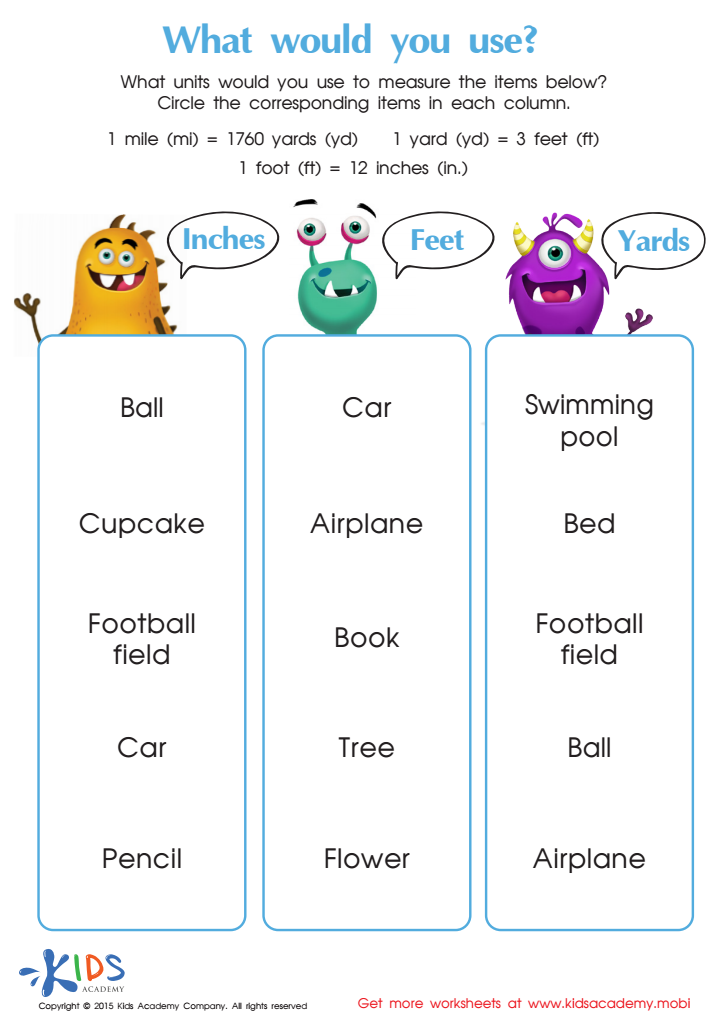
Learning about measuring objects in inches, feet and yards Worksheet
 Assign to My Students
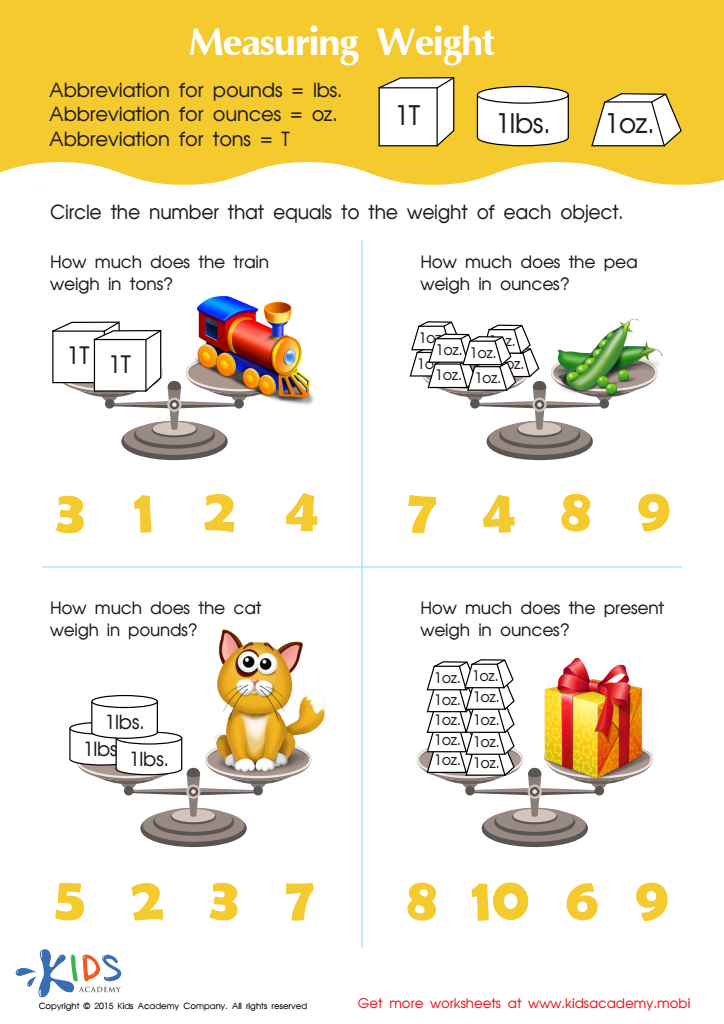
Measuring Weight in Ounces, Pounds and Tons Worksheet
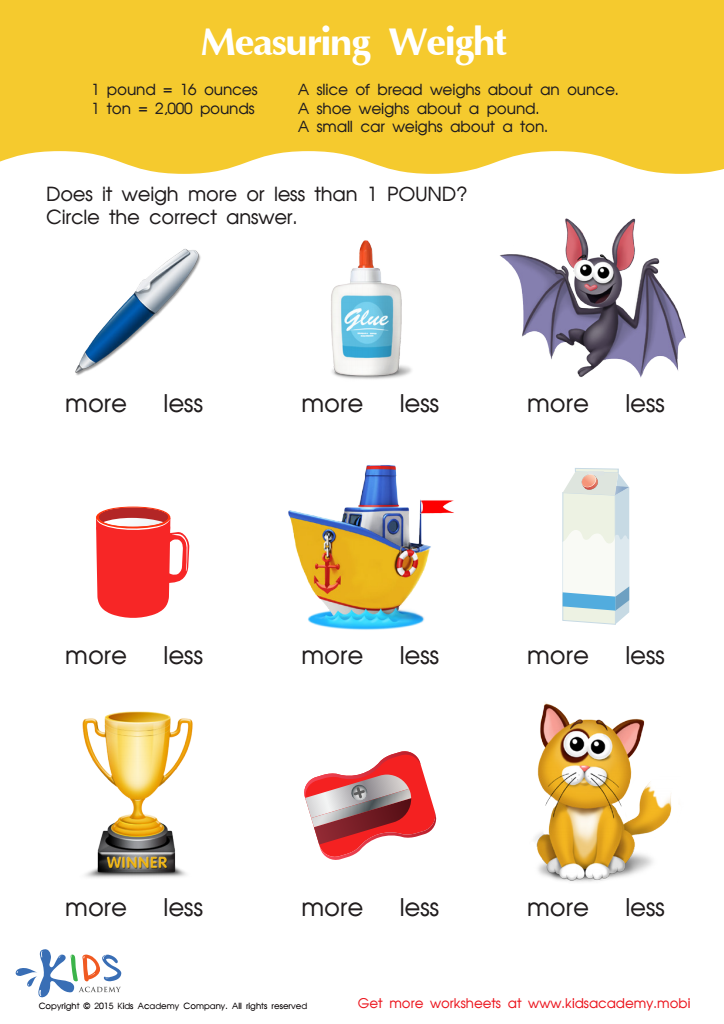
Measuring weight in pounds Worksheet






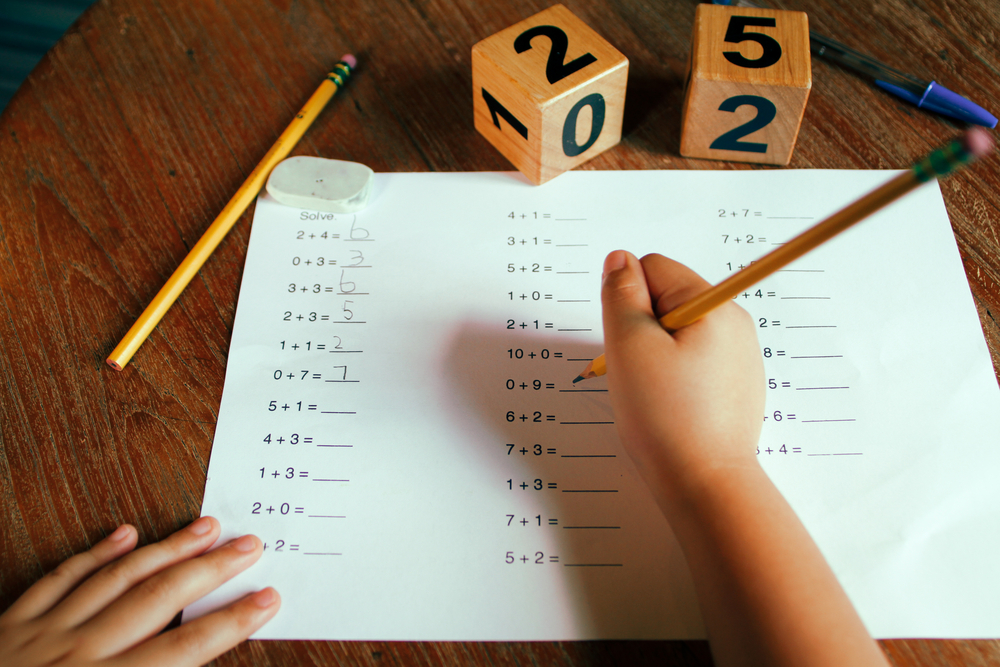

Practical math application extra challenges for 6-year-olds are crucial as they help build a strong foundational understanding of mathematical concepts that are essential for everyday problem-solving and critical thinking. At this formative age, young learners are highly receptive and can easily develop a positive relationship with math through engaging, hands-on activities.
Firstly, introducing math in practical contexts helps children see the relevance of what they're learning. For example, measuring ingredients while cooking or counting change during a purchase can make abstract concepts tangible. These activities demonstrate how math is an integral part of daily life, sparking curiosity and enthusiasm.
Secondly, practical challenges push children to think creatively and develop problem-solving skills. Unlike rote memorization, which can be tedious and limiting, real-world applications encourage kids to explore different methods and solutions, fostering adaptability and innovation.
Moreover, early math proficiency can boost confidence and academic performance across other subjects. Children who grasp math concepts early often find it easier to learn new topics as they progress in their education.
For parents and teachers, including practical math challenges offers an opportunity to observe a child's understanding and interest levels, thus tailoring subsequent instruction to better meet their needs. In essence, these challenges don't just improve math skills but also contribute to a child's overall development and lifelong learning attitude.








