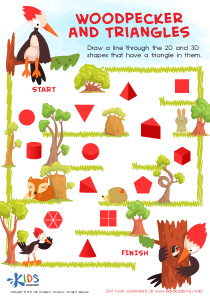
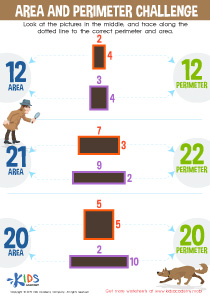
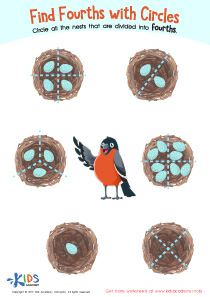
Shape Recognition Extra Challenge Tracing Shapes Worksheets for 6-Year-Olds
4 filtered results
-
From - To
Explore our engaging "Shape Recognition Extra Challenge Tracing Shapes Worksheets" designed specifically for 6-year-olds! These fun and interactive worksheets support early math skills by enhancing shape recognition through tracing activities. Children will learn to identify and differentiate various shapes, reinforcing their understanding of geometry in an enjoyable way. Each worksheet balances challenge and skill development, making learning both effective and fun! Ideal for home or classroom use, these tracing worksheets promote fine motor skills and are perfect for developing confidence in young learners. Download now and watch your child thrive as they master shapes with excitement and ease!
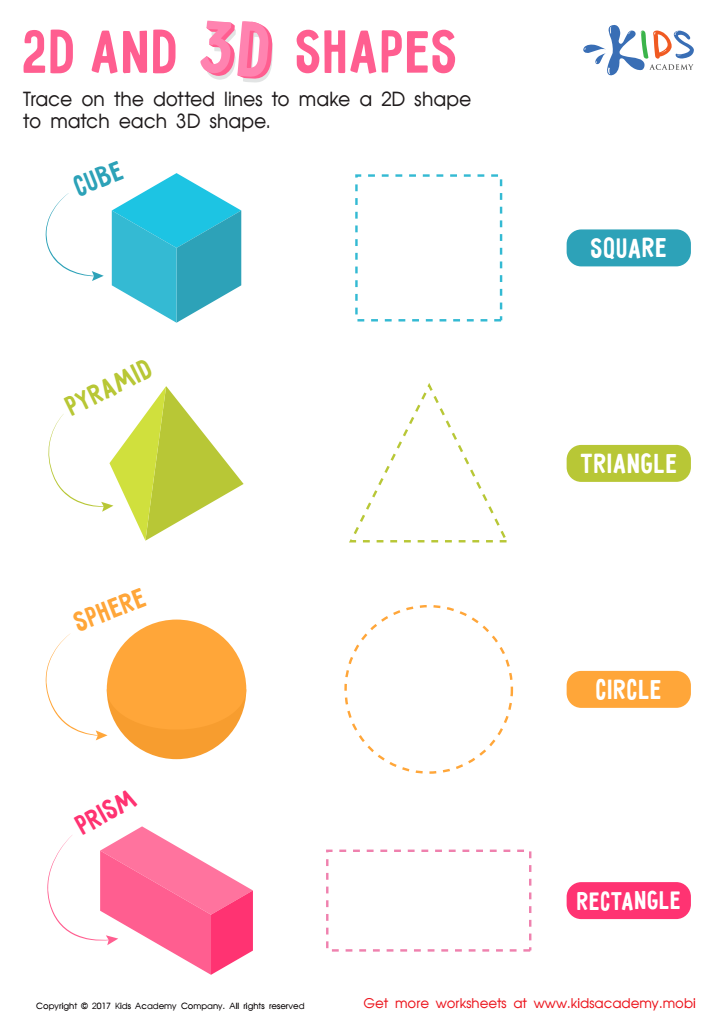
2D and 3D Shapes Worksheet
 Assign to My Students
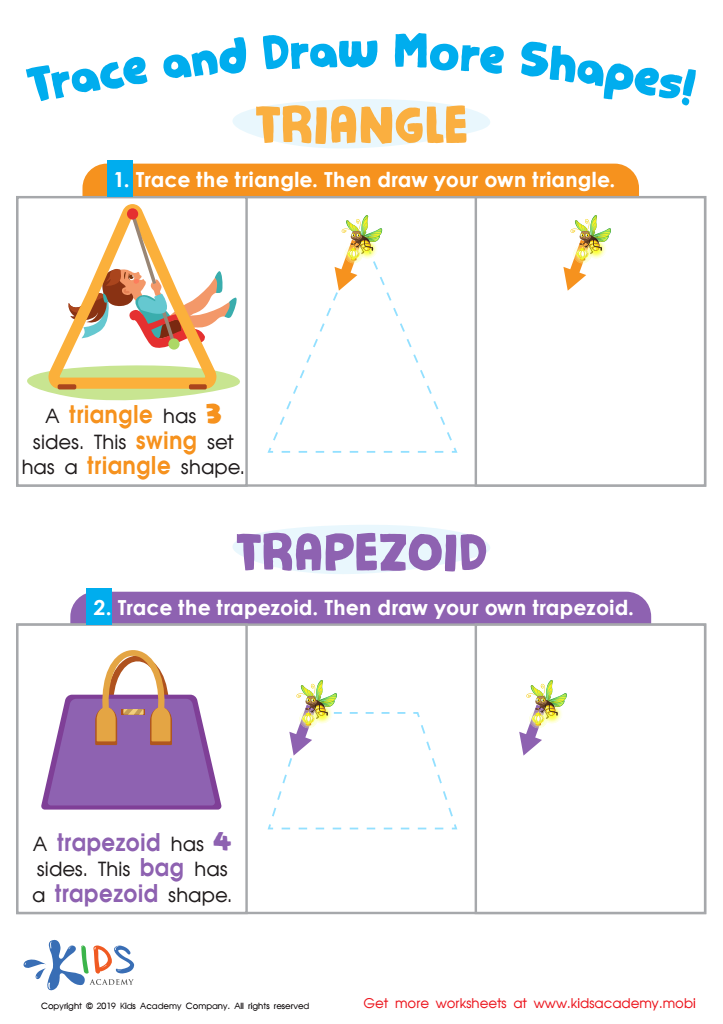
Trace and Draw More Shapes Worksheet
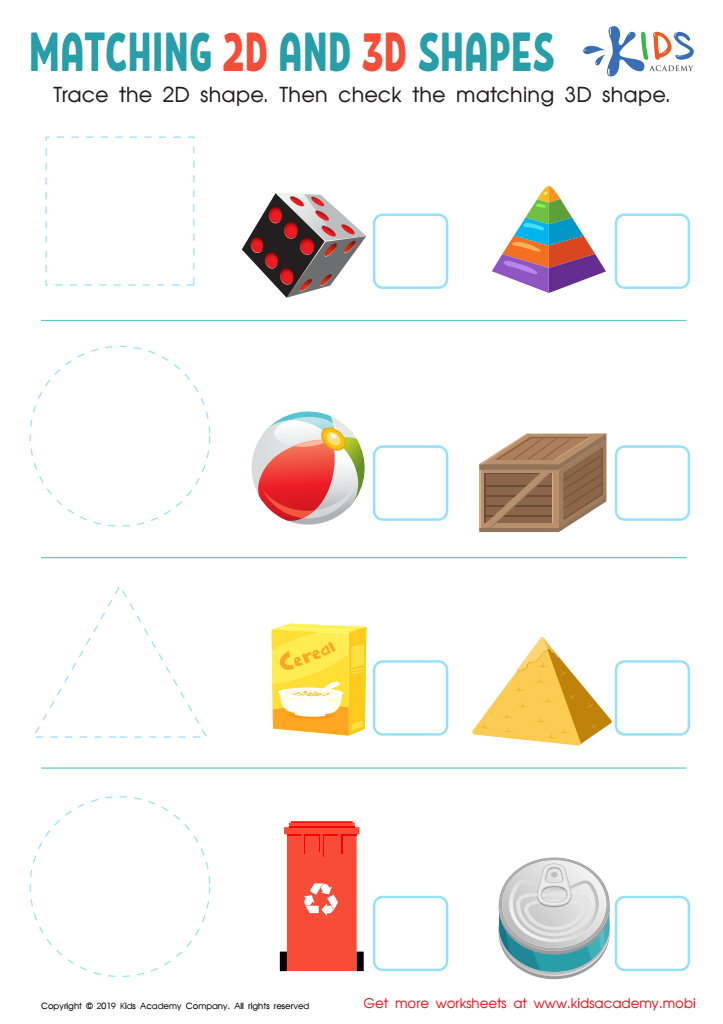
Matching 2D and 3D Shapes Worksheet
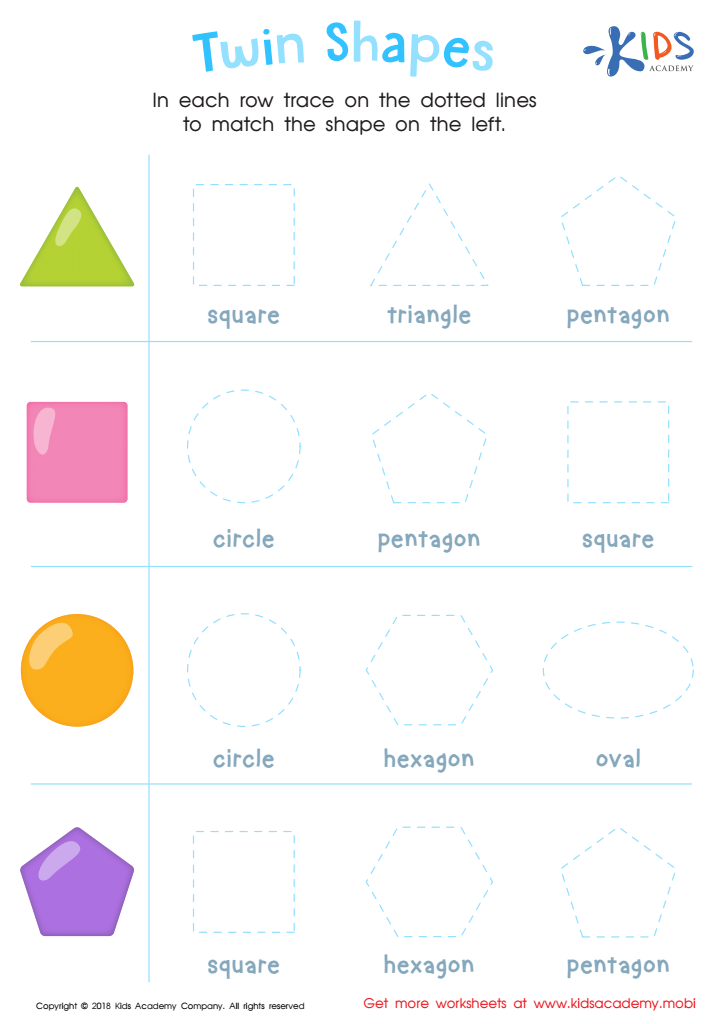
Twin Shapes Dot-to-Dot Worksheet








Shape recognition is a vital cognitive skill that serves as a foundation for various aspects of learning. For 6-year-olds, tracing shapes offers an engaging way to enhance this important ability. Parents and teachers should care about shape recognition extra challenges, such as tracing shapes, because it promotes fine motor skills, hand-eye coordination, and spatial awareness. As children trace shapes, they gain familiarity with geometric concepts that will be pivotal in their math education, such as geometry and spatial reasoning.
Moreover, these activities foster critical thinking and creativity. By encouraging children to visualize and reproduce shapes, we make abstract concepts more tangible. Tracing shapes can also support language development, as parents and teachers can introduce shape-related vocabulary, enriching the child’s linguistic skills.
Participation in structure-based activities strengthens focus and patience—key traits for academic success. Furthermore, these exercises can be a fun parent-child or teacher-student bonding activity, enhancing communication and encouraging collaborative learning. Ultimately, making tracing shapes a regular practice can lead to a deeper understanding of logic and reasoning, the groundwork for more complex problem-solving skills in the future. Thus, advocating for such extra challenges builds foundational skills necessary for lifelong learning and development.