Cognitive Development Extra Challenge Geometry Worksheets for Ages 7-8
6 filtered results
-
From - To
Unlock your child's potential with our "Cognitive Development Extra Challenge Geometry Worksheets for Ages 7-8." Designed to stimulate young minds, these worksheets offer engaging and challenging activities that go beyond basic shapes. Perfect for kids ready to tackle more advanced concepts, our tasks improve spatial awareness, critical thinking, and problem-solving skills. Each worksheet encourages exploration of geometric principles through interactive and fun exercises, ensuring an enriched learning experience. Ideal for both classroom use and at-home practice, elevate your child's cognitive abilities and captivate their curiosity with our premium geometry worksheets.
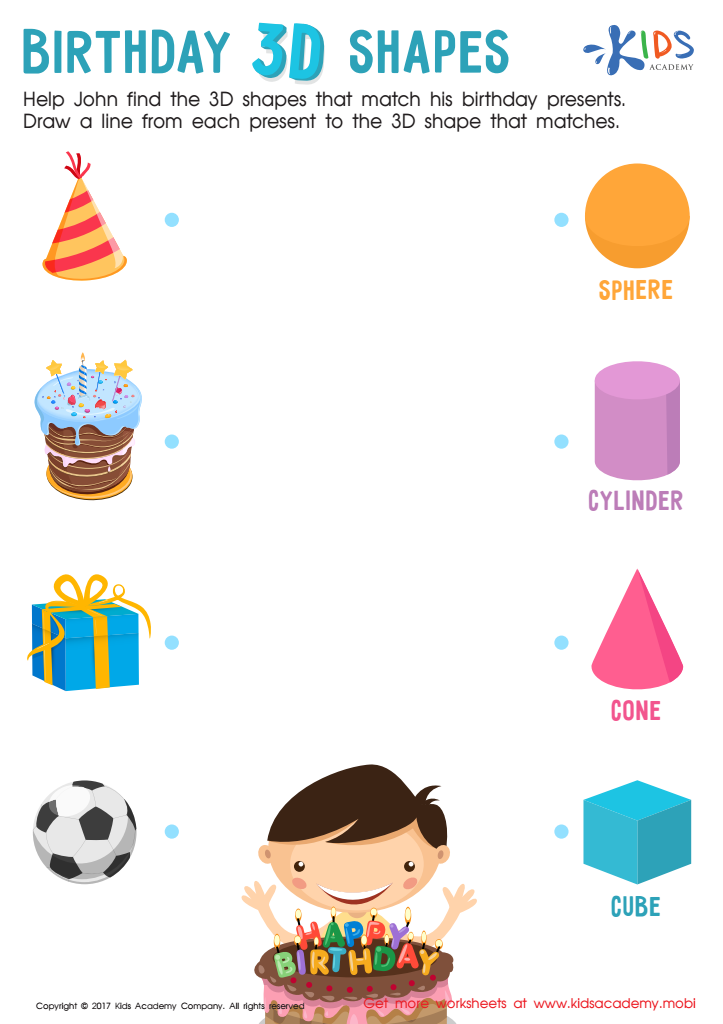
Birthday 3D Shapes Worksheet
 Assign to My Students











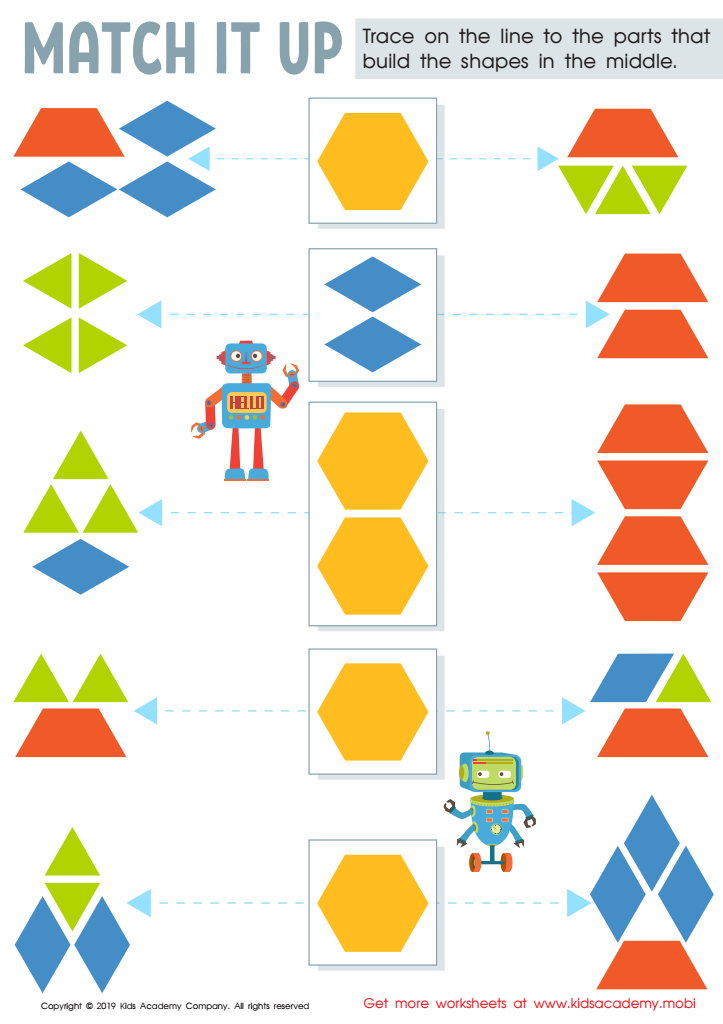
Match It up Worksheet
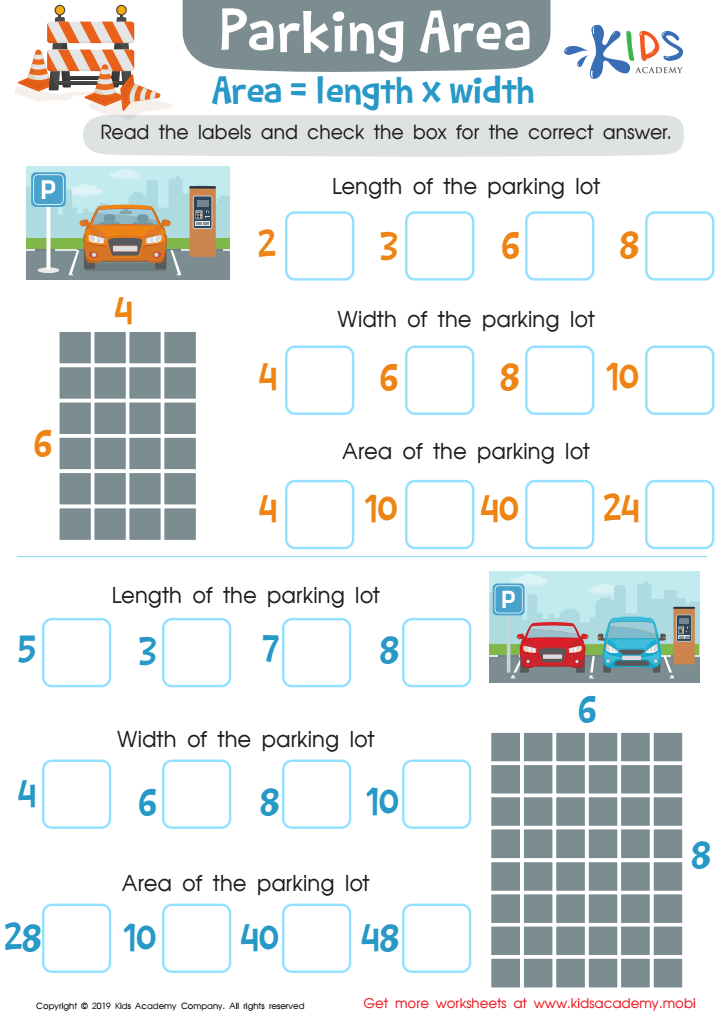
Parking Area Worksheet
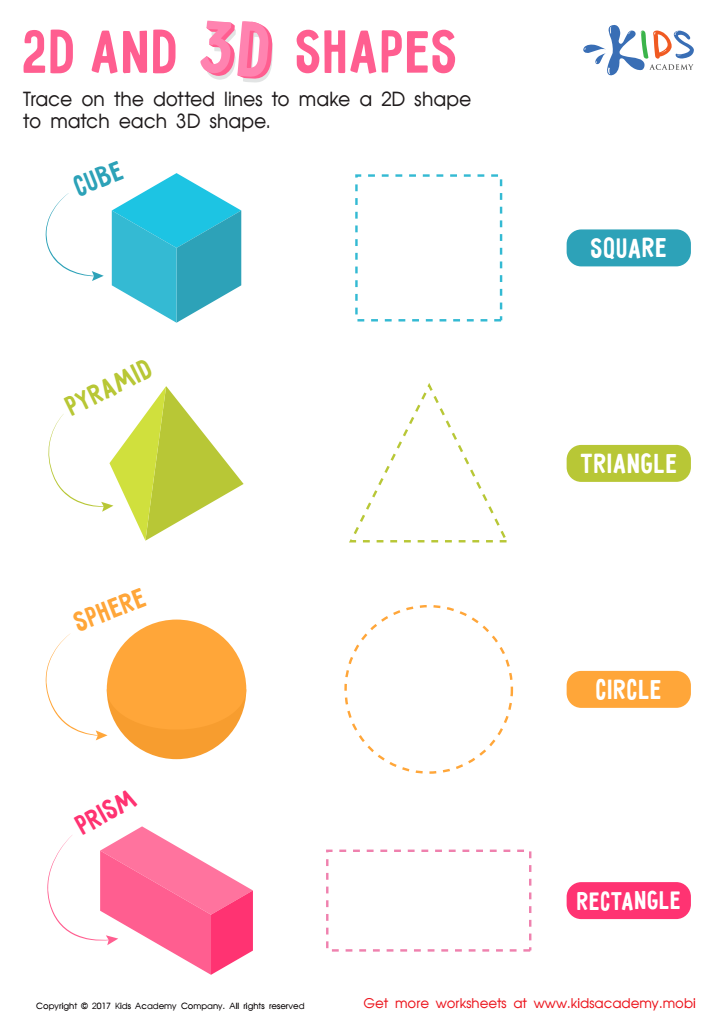
2D and 3D Shapes Worksheet
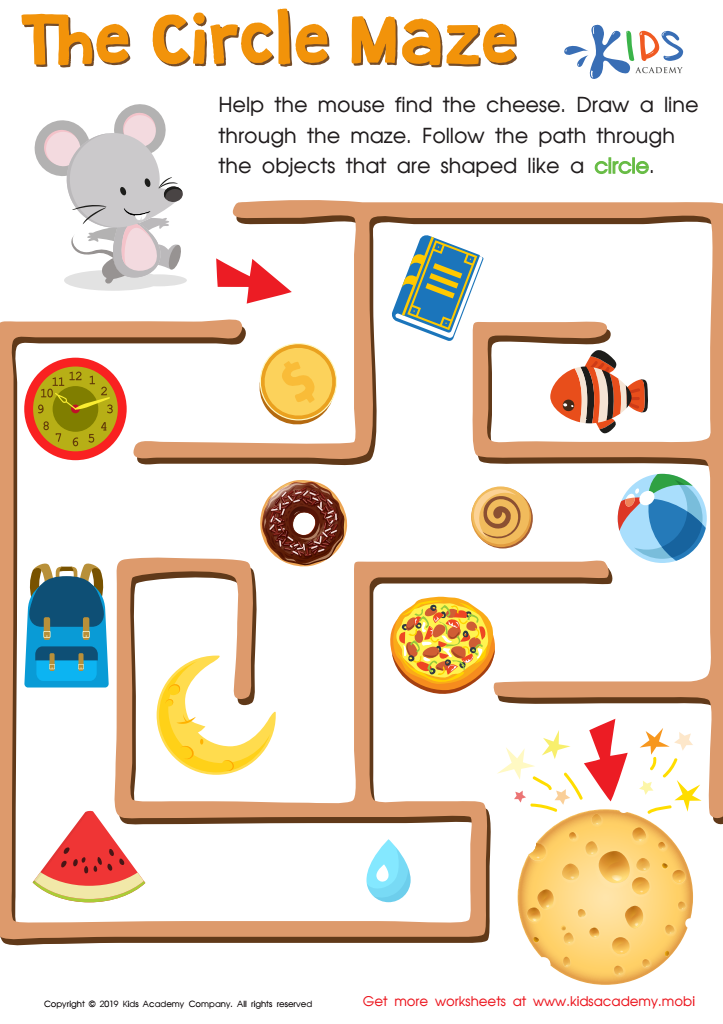
The Circle Maze Worksheet
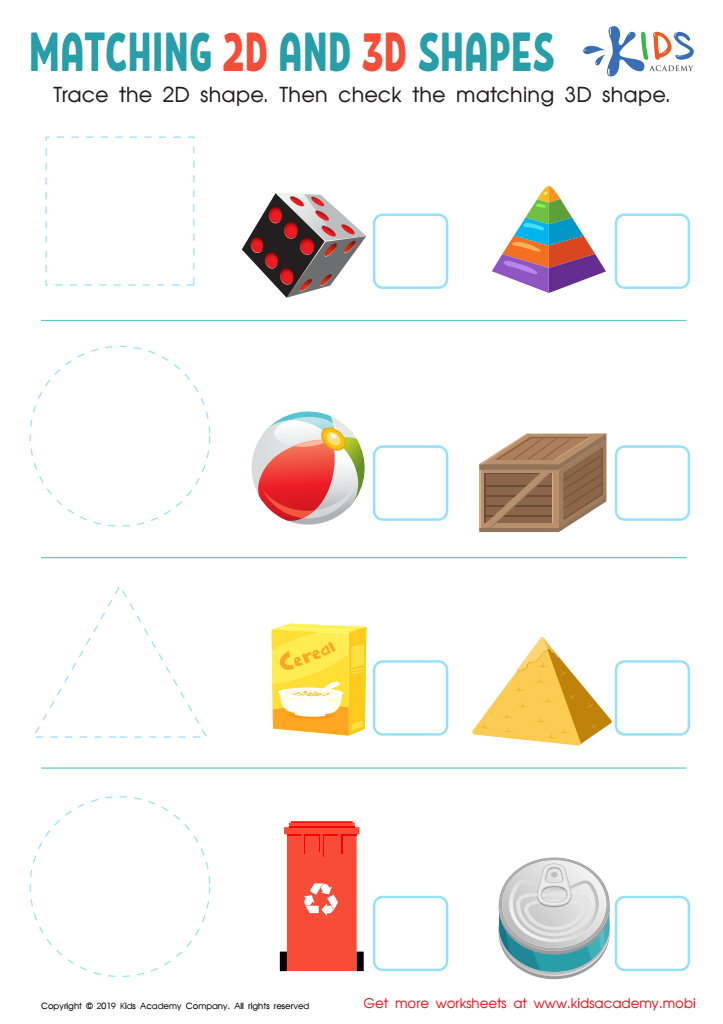
Matching 2D and 3D Shapes Worksheet








Cognitive Development Extra Challenge Geometry for ages 7-8 is a crucial aspect of a child's education, and both parents and teachers should take a keen interest in it. First and foremost, geometry at this age helps to lay the foundation for essential problem-solving skills. By working on understanding shapes, patterns, sizes, and spatial understanding, children enhance their ability to think critically and logically. This, in turn, has broad applications across other realms of learning, such as mathematics, science, and even art.
Furthermore, engaging children in geometry challenges promotes their hands-on and visual learning capabilities. Activities involving blocks, puzzles, drawing shapes, and recognizing patterns reinforce their visual-spatial intelligence. This kind of cognitive development is not only fundamental for excelling in academic pursuits but also in everyday problem-solving and decision-making situations.
Moreover, these educational challenges support skills like concentration, attention to detail, and persistence. Overcoming challenges in geometry can boost children’s self-confidence, proving to them that through effort and practice, they can solve complex problems. Additionally, making these activities fun and interactive fosters a love for learning, which is critical for lifelong educational engagement.
In essence, Cognitive Development Extra Challenge Geometry aids in developing well-rounded thinkers, equipped with the skills necessary for future success. Therefore, it justifies a dedicated focus from parents and teachers alike.