
Shape identification Extra Challenge Math Worksheets for Ages 7-8
4 filtered results
Difficulty Level
Grade
Age
-
From - To
Subject
Activity
Standards
Enhance your child's math skills with our "Shape Identification Extra Challenge Math Worksheets" designed specifically for ages 7-8! These engaging and interactive worksheets are crafted to reinforce shape recognition and critical thinking abilities. Kids will tackle challenging problems that include identifying, categorizing, and manipulating various shapes, making math both fun and educational. Perfect for home practice or classroom activities, these worksheets will stimulate your child’s love for geometry while boosting their confidence. Give your young learners a head start in math with these extra challenge worksheets that seamlessly blend learning and play! Download now to begin the adventure in shape exploration!
Favorites
With answer key
Interactive
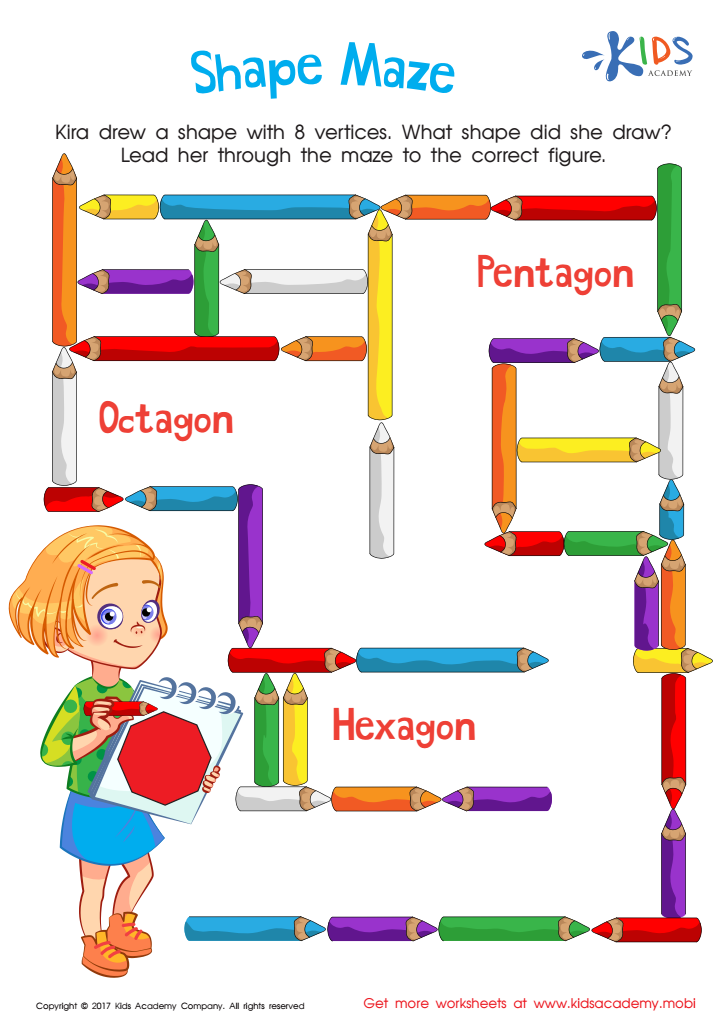
Shape Maze Worksheet
Test your child's geometry knowledge with this fun printable maze! They'll need to identify shapes with 8 vertices to find their way through the maze and get the correct answer.
 Assign to My Students
Shape Maze Worksheet
Worksheet
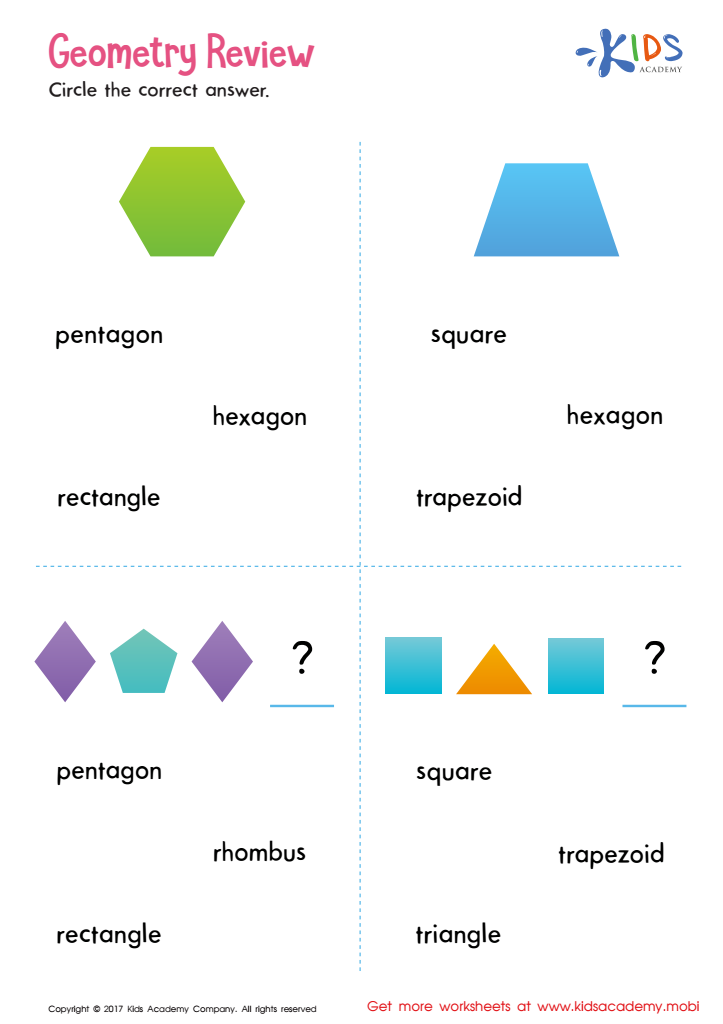
Geometry Review Printable
Repetition is key to success; give your child the practice they need with this geometry worksheet.
Geometry Review Printable
Worksheet
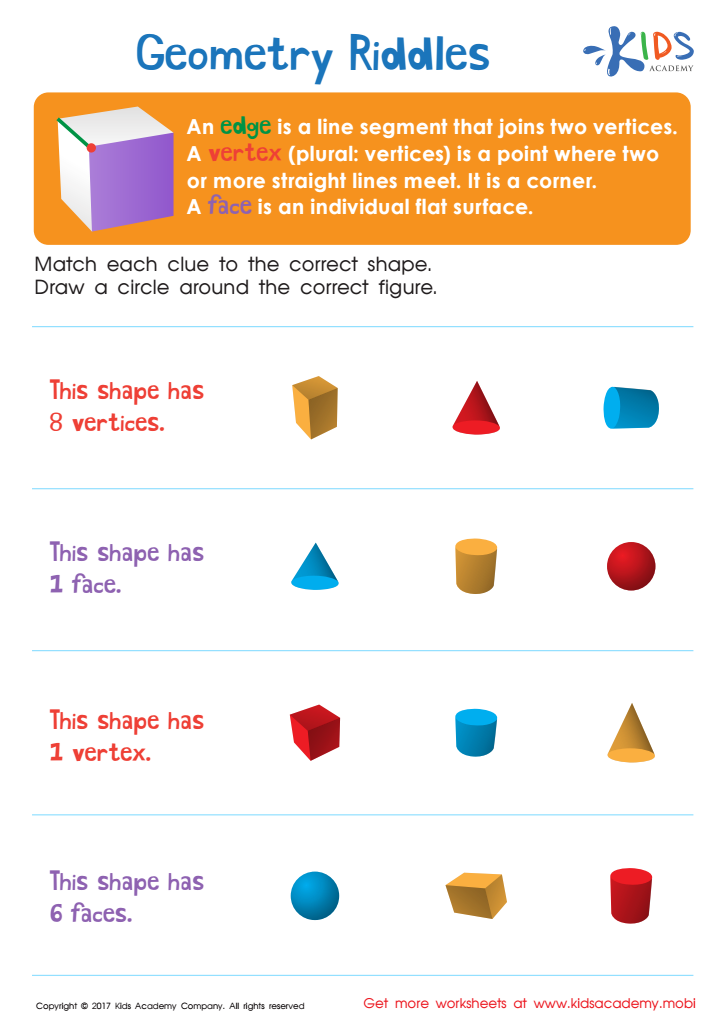
Geometry Riddles Printable
Review geometry terms with your child using this challenging worksheet of tricky riddles. Identifying and counting vertices, edges, and faces of shapes becomes fun as they solve the riddles!
Geometry Riddles Printable
Worksheet
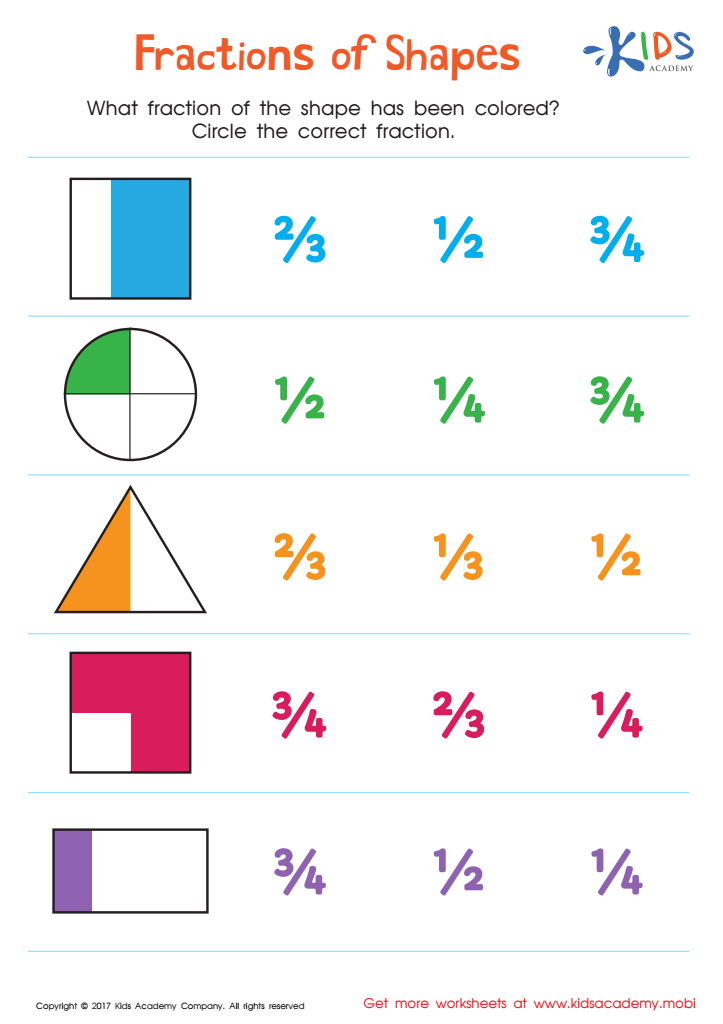
Fractions of Shapes: Math Concept Worksheet
Fractions can be tricky, but with pictures to illustrate them, they become much easier to understand. Our fractions of shapes worksheet is a great way to help children visualize fractions and gain a better understanding of them.
Fractions of Shapes: Math Concept Worksheet
Worksheet
Join Kids Academy for Free
Who is primarily going to use this learning content?



.jpg)


.jpg)
Shape identification is a fundamental aspect of early mathematics education, particularly for children ages 7-8. This developmental stage is critical for building essential spatial reasoning skills, which are foundational for more advanced math concepts later on. Engaging in extra challenges in shape identification helps children refine their ability to recognize, describe, and categorize various shapes, fostering a deeper understanding of geometry.
Parents and teachers should prioritize these extra challenge activities because they promote critical thinking and problem-solving skills. When children tackle shape identification challenges, they're encouraged to think creatively and identify relationships between shapes, enhancing cognitive development. Additionally, these activities can boost confidence, as children experience success in tackling complex tasks.
Moreover, the integration of shape identification into daily activities can encourage collaboration and communication among peers, aiding social development. It also provides opportunities for interdisciplinary learning—linking math with art and nature through shape exploration in various contexts.
Overall, shape identification challenges not only pave the way for academic achievement in mathematics but also contribute to holistic development, making them an important focus for parents and educators alike. Engaging young learners in these activities prepares them for future success both in and out of the classroom.








