Number Sequencing Extra Challenge Worksheets for Ages 7-9
3 filtered results
-
From - To
Discover our "Number Sequencing Extra Challenge Worksheets for Ages 7-9," designed to enhance critical thinking, logic, and math skills! Tailored specifically for young learners, these engaging and challenging worksheets help children master number order, identify patterns, and improve problem-solving abilities. Each activity is crafted to provide a fun and educational experience, making it perfect for classroom use or additional practice at home. Inspire success in numerical proficiency and build a solid foundation for future math achievements with our expertly designed sequencing worksheets. Unlock their potential and turn learning into a captivating adventure today!
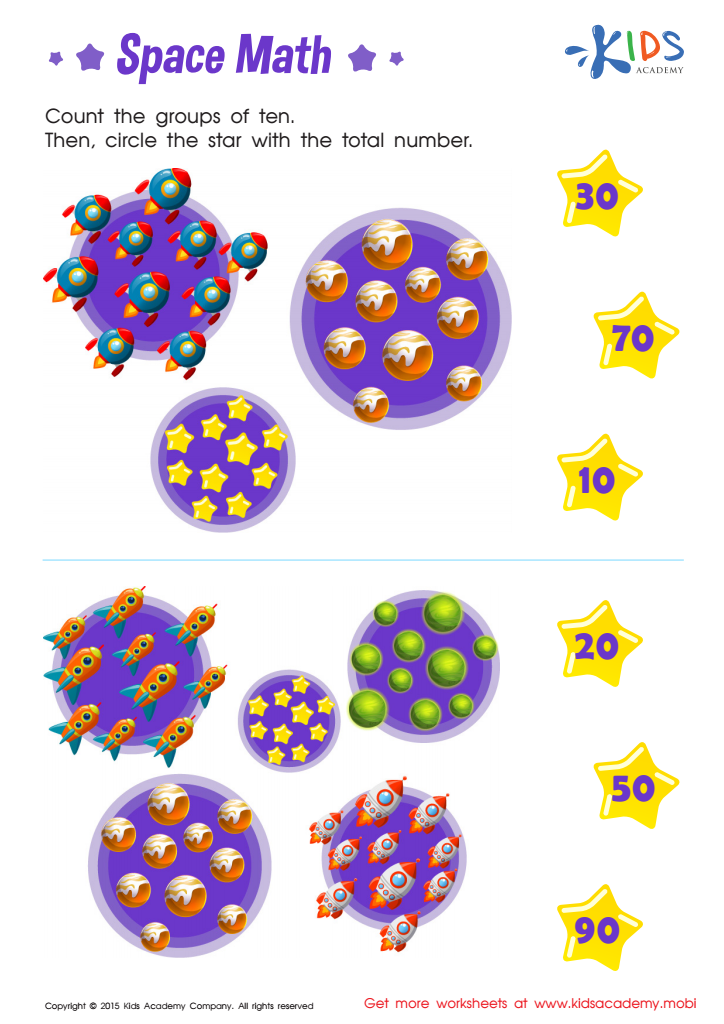
Learn dozens: Space math Worksheet
 Assign to My Students
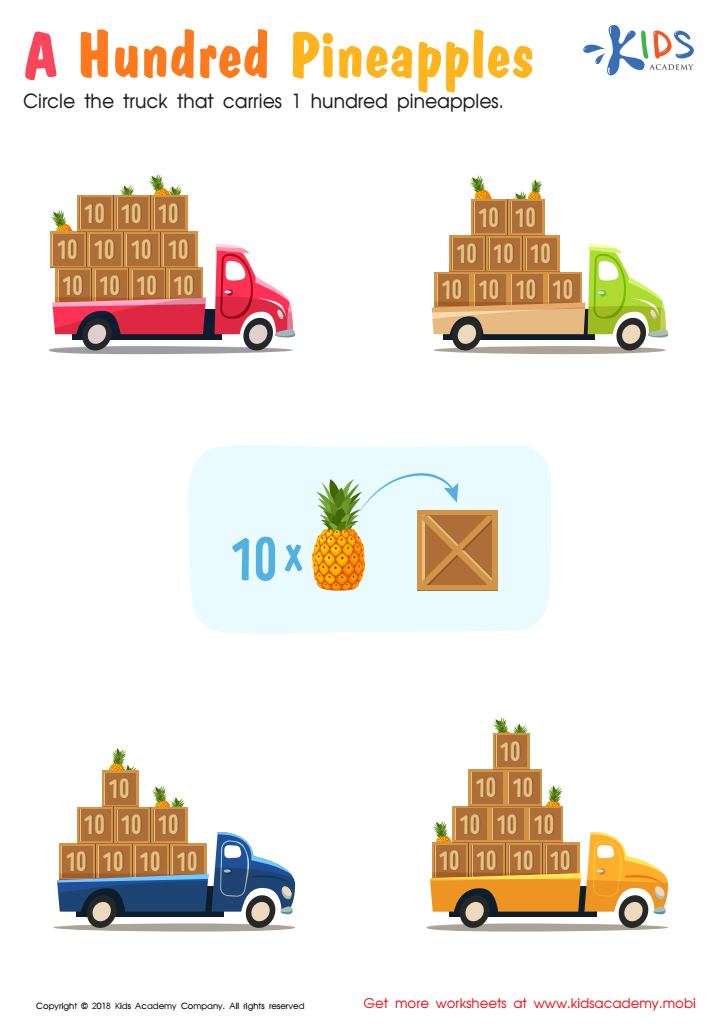
A Hundred Pineapples Worksheet
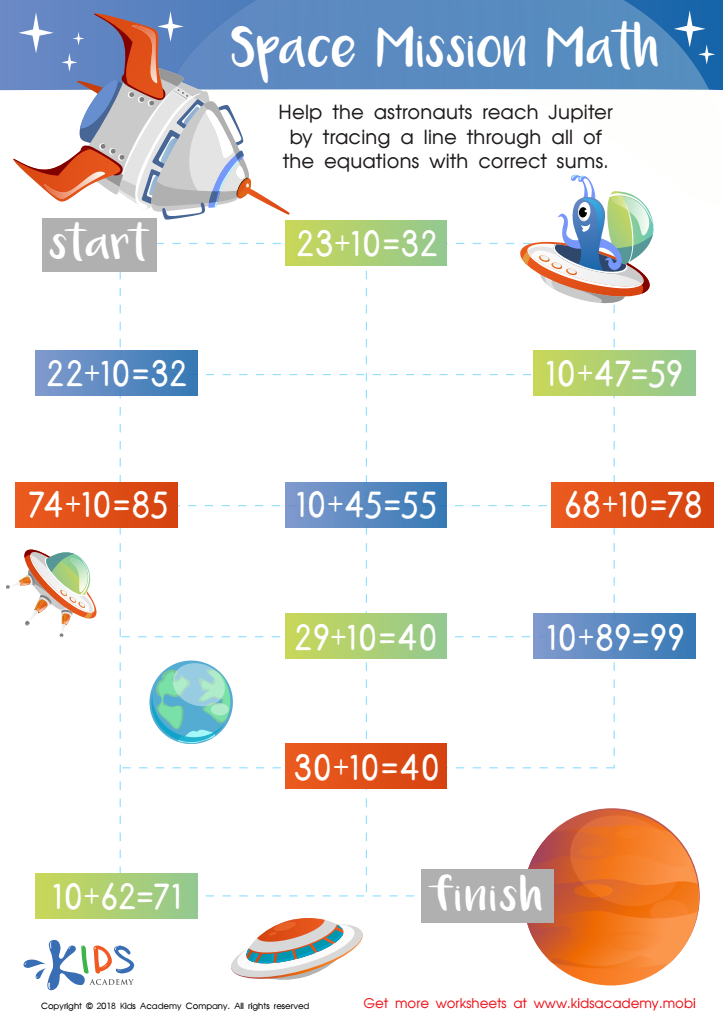
Space Mission Math Worksheet






Number Sequencing Extra Challenge for ages 7-9 is crucial for several developmental reasons. First, understanding number sequences lays the foundation for basic arithmetic skills. It helps children grasp the concepts of addition, subtraction, multiplication, and division, all of which require recognizing and predicting number patterns.
Second, working on number sequences fosters logical thinking and problem-solving abilities. Children learn to identify rules and apply them predictively, which is a core component of mathematics and everyday decision-making. This exercise nurtures their ability to think critically and strategically.
Moreover, adeptness at number sequencing enhances memory and concentration. The process of figuring out sequences often requires children to hold numbers in their working memory while they determine the pattern, thereby improving their cognitive functions.
Lastly, success in number sequencing boosts a child’s confidence in their math skills. Positive reinforcement through correctly completing sequences can instill a love for mathematics and reduce math anxiety.
In essence, number sequencing doesn't just promote mathematical proficiency; it nurtures crucial brain developments that aid cognitive growth, confidence, and logical reasoning. Parents and teachers, by prioritizing such exercises, can contribute significantly to a child's holistic academic and personal growth.








