
Story sequencing Extra Challenge Worksheets for Ages 7-9
3 filtered results
Difficulty Level
Grade
Age
-
From - To
Subject
Activity
Standards
Enhance your child's storytelling skills with our engaging Story Sequencing Extra Challenge Worksheets, specifically designed for ages 7-9. These worksheets provide a fun and interactive way for children to practice arranging events in logical order, boosting their critical thinking and comprehension abilities. Each worksheet features captivating stories and illustrations that inspire creativity while reinforcing the importance of sequencing in narrative structure. Ideal for use at home or in the classroom, these challenges not only promote literacy development but also encourage analytical skills. Download our worksheets today to add an exciting twist to your child’s learning journey!
Favorites
With answer key
Interactive
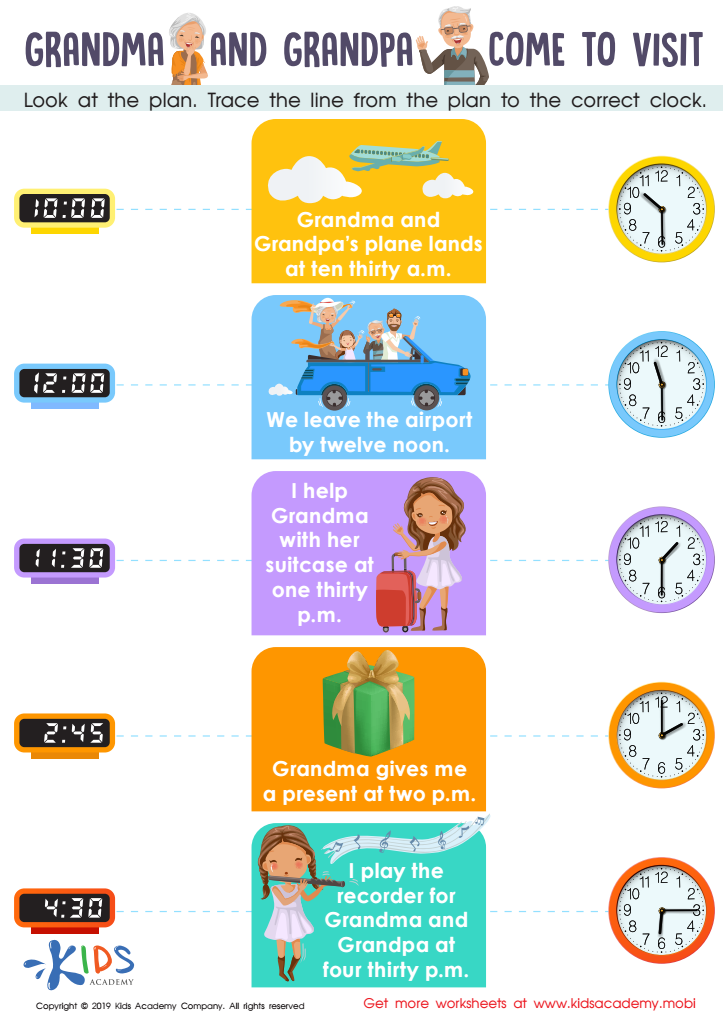
Grandpa and Grandma Come to Visit Worksheet
Have your kids learn about time using this worksheet. It contains pictures, accompanying texts and a clock, which you can use to help them trace the plan. Grandparents' visits and trips to their house are the perfect opportunity to practice this skill. Talk to your kids about the plan and watch them trace it to the correct clock.
 Assign to My Students
Grandpa and Grandma Come to Visit Worksheet
Worksheet
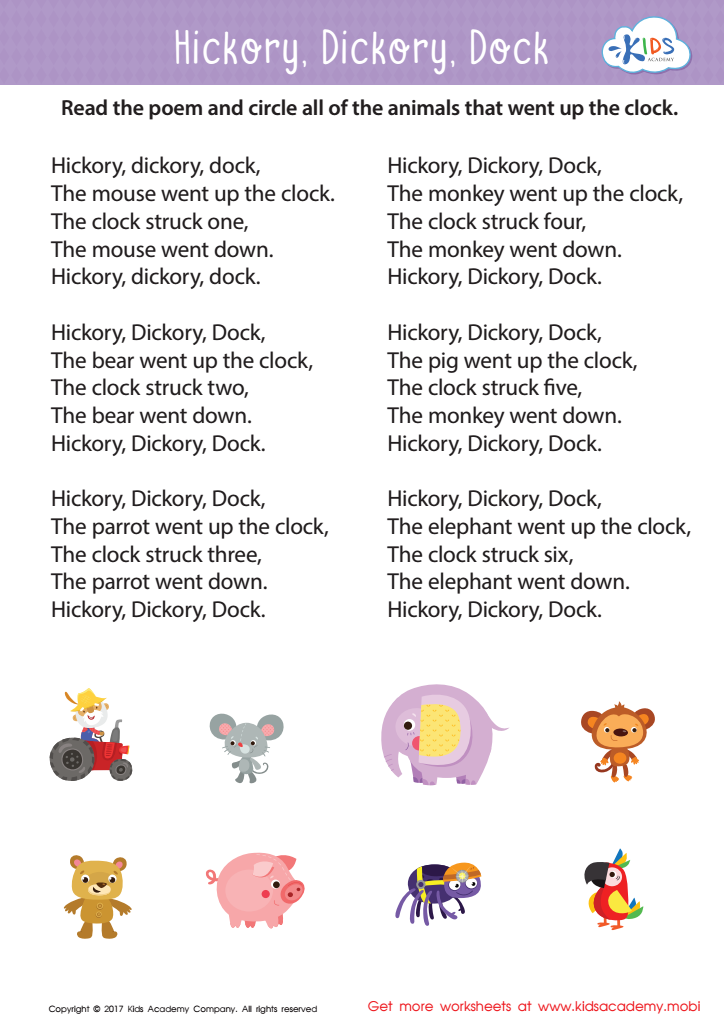
Hickory Dickory Dock Sequencing Worksheet
Help your child boost their reading skills with this fun Hickory Dickory Dock sequencing worksheet! They'll read and identify the animals in the right order, strengthening their story sequencing and comprehension skills.
Hickory Dickory Dock Sequencing Worksheet
Worksheet
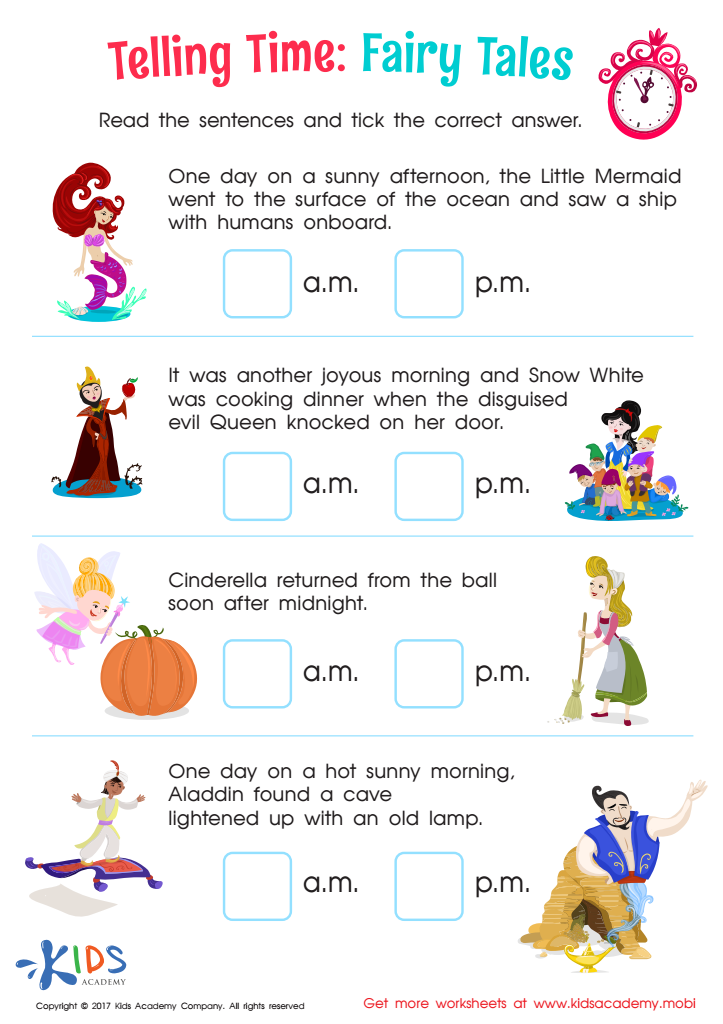
Telling Time: Fairy Tales Worksheet
Bring your child's imagination to life with classic fairy tales! This colorful telling time worksheet has it all: The Little Mermaid, Cinderella, and more! Plus, your child will have fun learning to distinguish a.m. from p.m. with this charming worksheet.
Telling Time: Fairy Tales Worksheet
Worksheet
Join Kids Academy for Free
Who is primarily going to use this learning content?








Story sequencing is a crucial skill for children aged 7-9, as it fosters critical thinking, comprehension, and organizational skills that are foundational for literacy and communication. Parents and teachers should care about this extra challenge because it supports a child's ability to understand narrative structure—a vital aspect of reading and storytelling. When children learn to sequence stories, they can identify the beginning, middle, and end of a narrative, which enhances their comprehension and retention of information.
Moreover, mastering story sequencing encourages creativity, as children can engage in storytelling and illustrate their understanding of the narrative. It also promotes their vocabulary development, as they encounter varied words and phrases while reconstructing stories. Engaging in story sequencing activities helps strengthen a child's analytical skills, allowing them to make connections and predictions based on the flow of events.
Furthermore, story sequencing activities can be easily integrated into fun games or group discussions, fostering collaboration and communication among peers. By prioritizing story sequencing, parents and teachers can effectively cultivate a love for reading, improve literacy skills, and empower children with the ability to express themselves clearly and coherently. This investment in young learners plays a critical role in their overall academic development and lifelong learning.








