
Understanding bar graphs Extra Challenge Worksheets for Ages 8-9
4 filtered results
Difficulty Level
Grade
Age
-
From - To
Subject
Activity
Standards
Unlock the world of data visualization with our "Understanding Bar Graphs Extra Challenge Worksheets" designed specifically for ages 8-9! These engaging worksheets offer a variety of activities that encourage young learners to explore, interpret, and analyze bar graphs. With fun tasks that promote critical thinking, students will enhance their mathematical skills while gaining confidence in data interpretation. These extra challenge worksheets encourage creativity and problem-solving, making learning both enjoyable and impactful. Perfect for classroom use or at-home practice, these resources help children establish a solid foundation in graph comprehension that supports their future academic success. Start your data discovery journey today!
Favorites
With answer key
Interactive
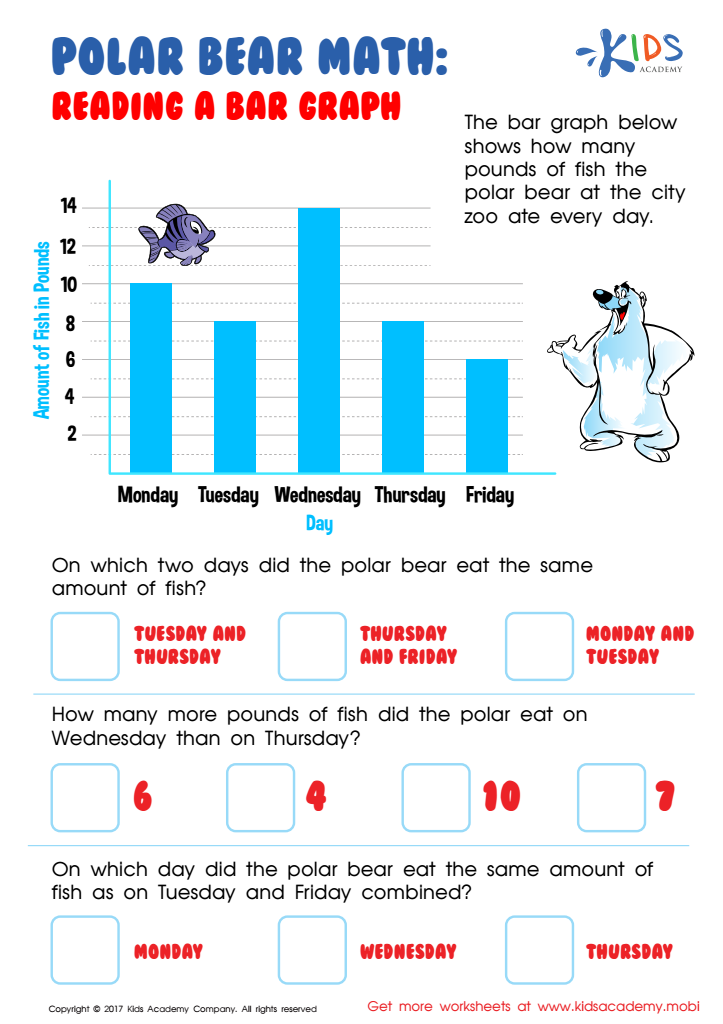
Reading Bar Graph Worksheet
Take your child north to practice data reading with a polar bear friend! This worksheet challenges 3rd graders to interpret data on a graph and solve related math problems.
 Assign to My Students
Reading Bar Graph Worksheet
Worksheet
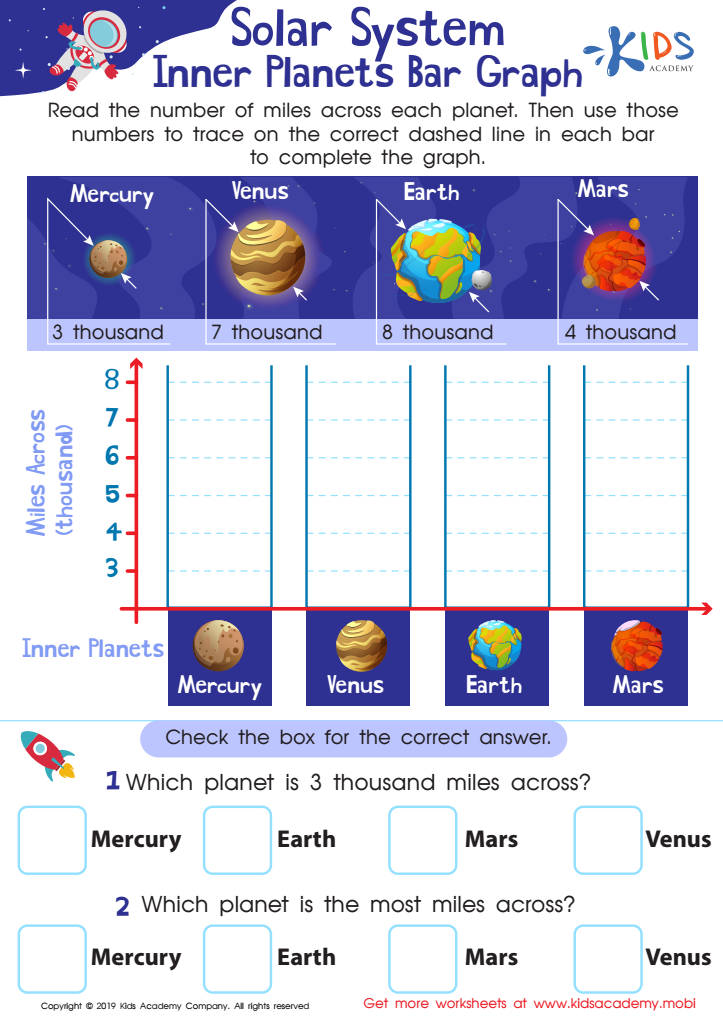
Planets Bar Graph Worksheet
With this fun, educational worksheet, kids can learn about bar graphs and the solar system simultaneously. Introduce them to the concept by reading out the number of miles for each planet, then help them trace the dashed lines in each bar to complete the graph.
Planets Bar Graph Worksheet
Worksheet
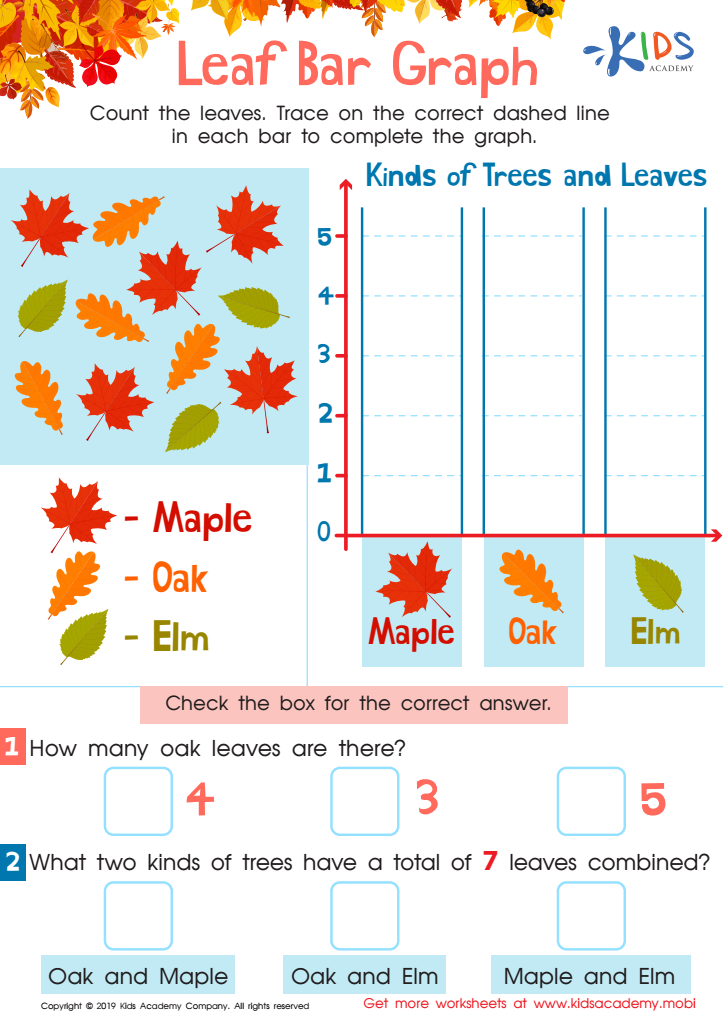
Leaf Bar Graph Worksheet
You can help your kids make learning easier and more enjoyable. While their teachers provide lessons and homework, you can take their education further. This worksheet can assist them in mastering bar charts. Count the leaves, then trace the correct line for each bar to complete the graph.
Leaf Bar Graph Worksheet
Worksheet
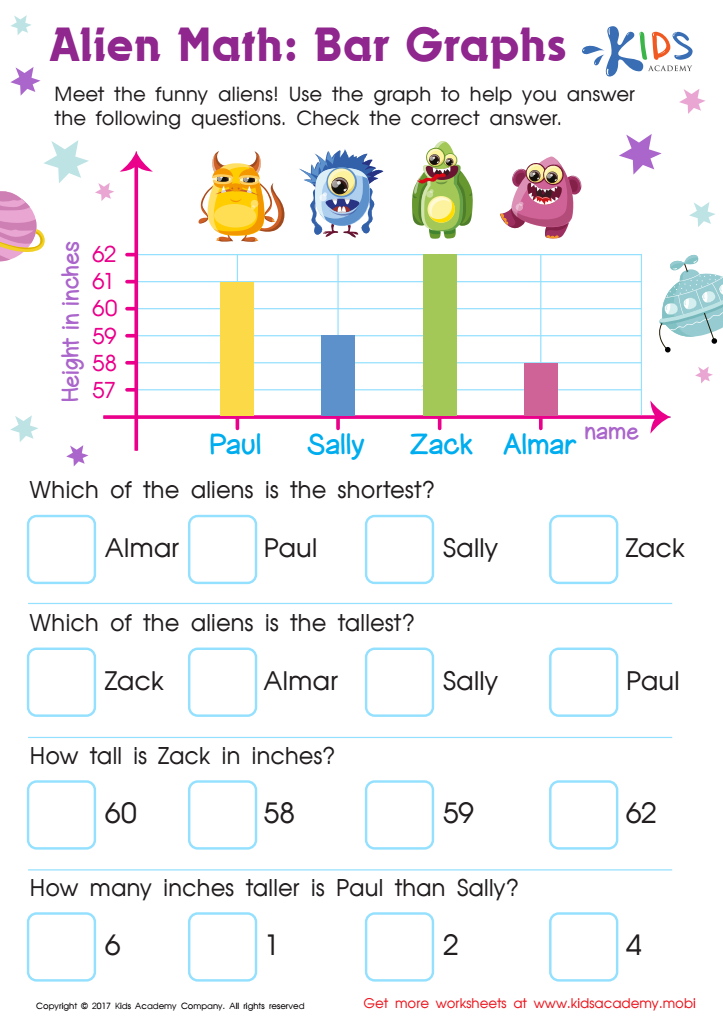
Bar Graphs Worksheet
Let's blast off to outer space and visit our funny alien friends with this bar graphs worksheet PDF! Kids gain valuable measurement and data analysis skills by comparing sizes of the aliens and working with bar graphs.
Bar Graphs Worksheet
Worksheet
Join Kids Academy for Free
Who is primarily going to use this learning content?







Understanding bar graphs is crucial for parents and teachers, especially for children aged 8-9, as it helps develop essential skills that are foundational for both academic success and everyday life. Bar graphs visually present data, making it easier for children to comprehend and analyze information. This skill fosters critical thinking, as students learn to interpret visual representations of complex data.
Parents and teachers should prioritize this understanding as it enhances mathematical literacy. By mastering bar graphs, children can grasp concepts such as categorization, measurement, and comparison. These skills are vital not only in mathematics but also in subjects like science, where data analysis plays a key role.
Furthermore, understanding bar graphs empowers children to make informed decisions based on data. As they engage with real-world scenarios—like interpreting survey results or tracking their favorite sports teams—they learn to evaluate information critically.
Additionally, teaching this skill in a fun way, through engaging activities or challenges, builds confidence and enthusiasm for math. Encouraging curiosity about data helps nurture analytical thinkers who are prepared for future learning challenges. In essence, fostering an understanding of bar graphs supports children’s growth as informed, capable individuals in a data-driven world.








