
Understanding bar graphs Extra Challenge Worksheets for 8-Year-Olds
4 filtered results
Difficulty Level
Grade
Age
-
From - To
Subject
Activity
Standards
Unlock the world of data analysis with our "Understanding Bar Graphs Extra Challenge Worksheets for 8-Year-Olds!" Designed to enhance critical thinking and analytical skills, these engaging worksheets offer advanced challenges that go beyond basic bar graph concepts. Students will practice interpreting data, comparing information, and answering higher-order questions. Each worksheet promotes problem-solving abilities and strengthens mathematical reasoning, making learning enjoyable. With colorful graphics and real-life scenarios, your child will grasp the importance of bar graphs in everyday life. Perfect for schoolwork or at-home learning, these extra challenges are a fun way to master bar graph comprehension and boost confidence in math!
Favorites
With answer key
Interactive
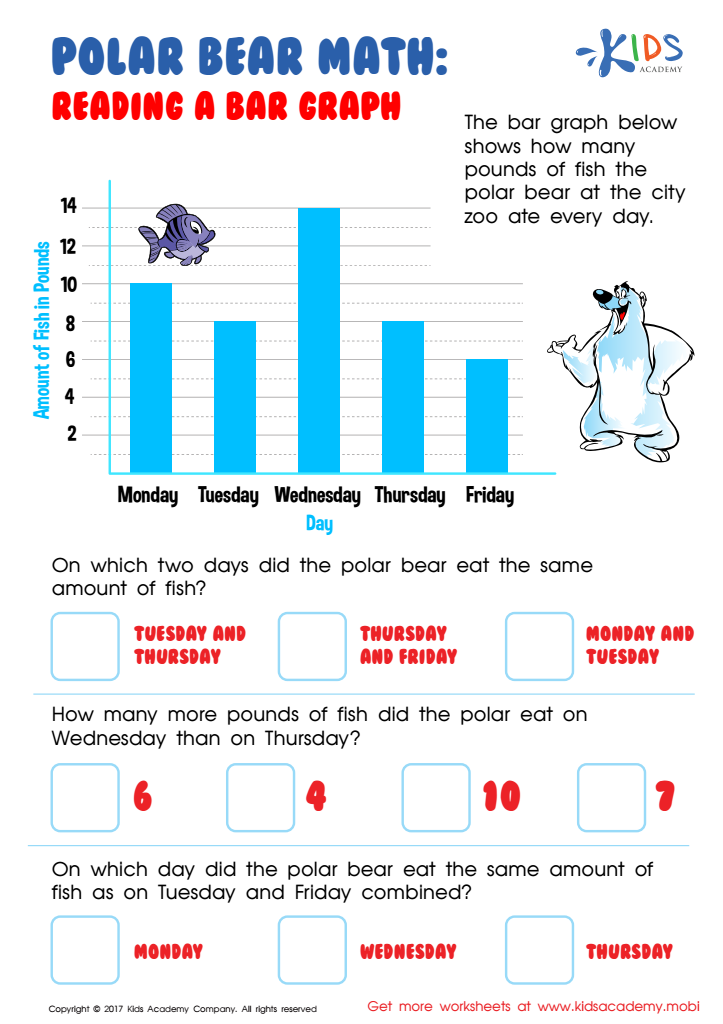
Reading Bar Graph Worksheet
Take your child north to practice data reading with a polar bear friend! This worksheet challenges 3rd graders to interpret data on a graph and solve related math problems.
 Assign to My Students
Reading Bar Graph Worksheet
Worksheet
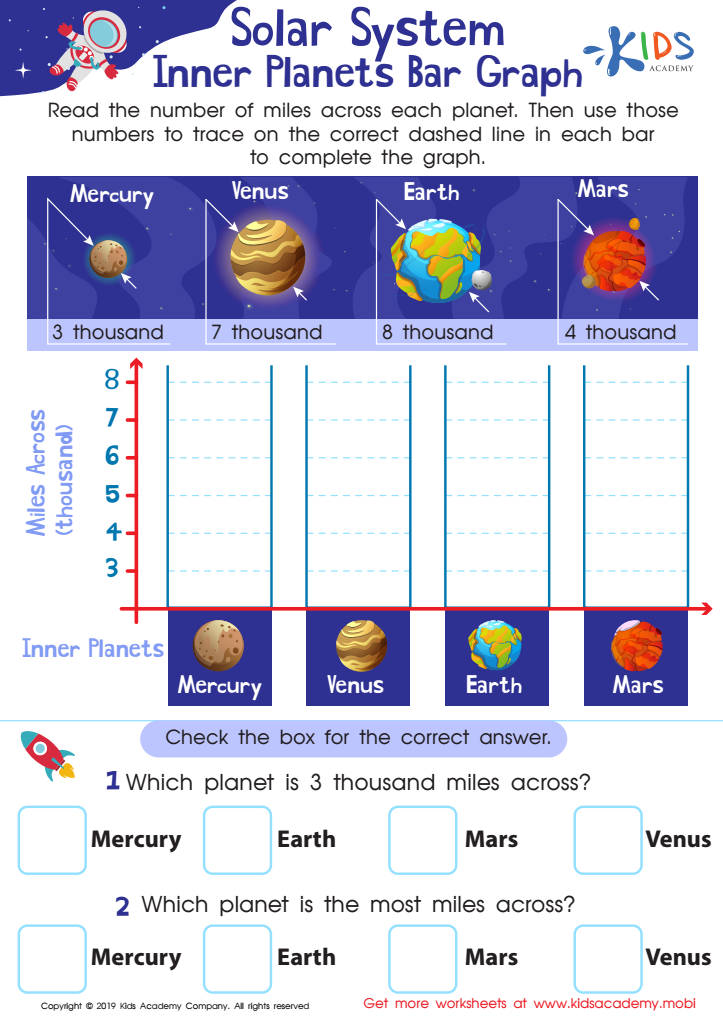
Planets Bar Graph Worksheet
With this fun, educational worksheet, kids can learn about bar graphs and the solar system simultaneously. Introduce them to the concept by reading out the number of miles for each planet, then help them trace the dashed lines in each bar to complete the graph.
Planets Bar Graph Worksheet
Worksheet
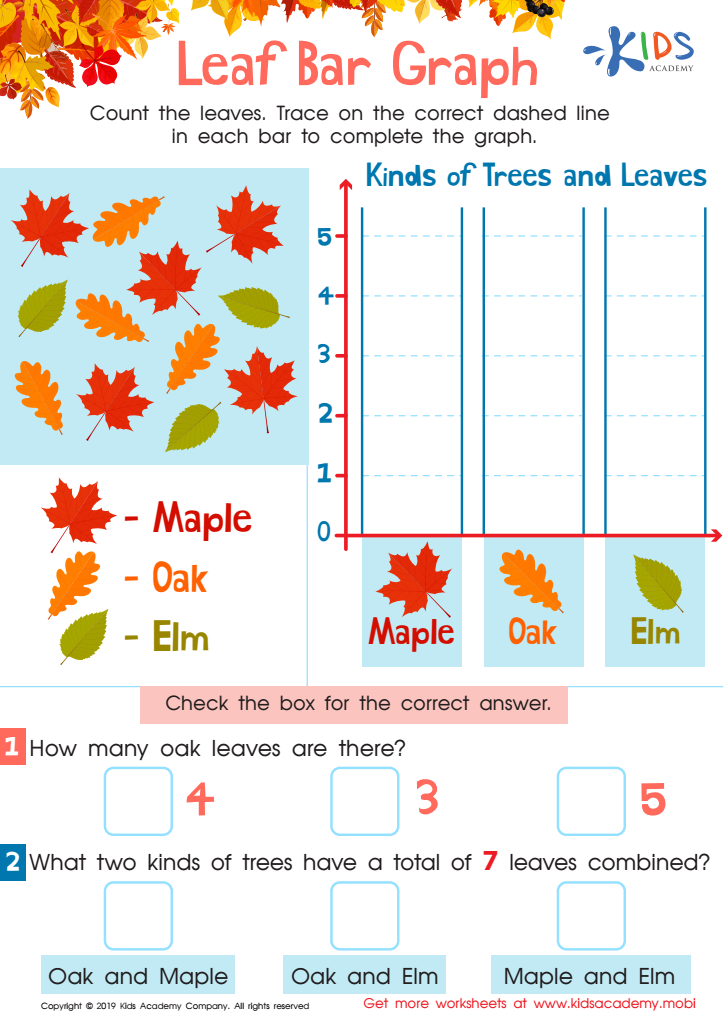
Leaf Bar Graph Worksheet
You can help your kids make learning easier and more enjoyable. While their teachers provide lessons and homework, you can take their education further. This worksheet can assist them in mastering bar charts. Count the leaves, then trace the correct line for each bar to complete the graph.
Leaf Bar Graph Worksheet
Worksheet
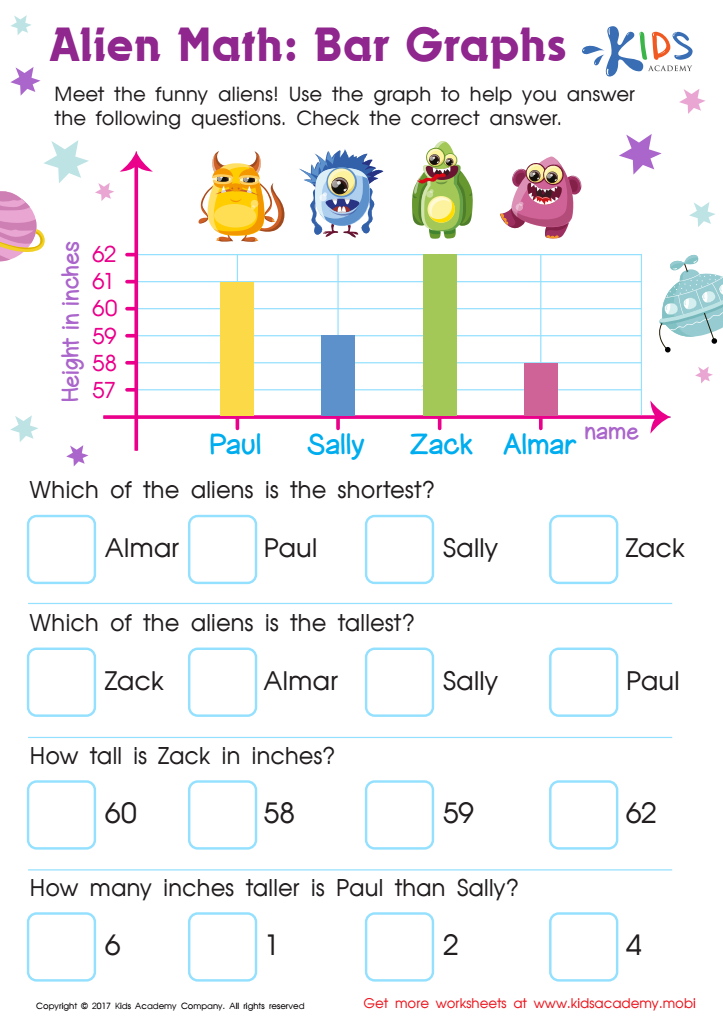
Bar Graphs Worksheet
Let's blast off to outer space and visit our funny alien friends with this bar graphs worksheet PDF! Kids gain valuable measurement and data analysis skills by comparing sizes of the aliens and working with bar graphs.
Bar Graphs Worksheet
Worksheet
Join Kids Academy for Free
Who is primarily going to use this learning content?








Parents and teachers should care about helping 8-year-olds understand bar graphs because these skills are foundational to developing critical thinking and analytical abilities. Bar graphs provide a visual representation of data, making it easier for children to interpret and compare information. When children learn to read and create bar graphs, they gain insights into important concepts such as measurement, scaling, and categorization.
Understanding bar graphs also enhances mathematical skills, which are vital in everyday life. For example, children can use bar graphs to record and analyze their favorite activities or their classroom tasks, helping to develop organizational skills and logical reasoning. Additionally, being comfortable with data illustration empowers children in practical situations, such as tracking their progress in a sport or understanding trends in weather.
Moreover, learning to analyze bar graphs promotes effective communication of ideas, allowing children to express insights gathered from data visually. This not only prepares them for future educational challenges but also fosters a proactive mindset about learning and problem-solving. Ultimately, the ability to understand bar graphs builds a strong foundation for lifelong skills in mathematics, science, and data literacy, all crucially important in our data-driven world.








