Chess strategy understanding Extra Challenge Grade 1 Chess Worksheets
9 filtered results
-
From - To
Introducing our Grade 1 Chess Strategy Worksheets: the perfect resource for young chess enthusiasts eager to enhance their strategic skills! Specifically designed as an extra challenge, these engaging worksheets guide first graders through key concepts, with stimulating exercises to promote critical thinking and problem-solving. As students navigate various challenges, they'll develop a deeper understanding of chess strategies, from basic openings to advanced tactics. Ideal for classroom use or at-home practice, our carefully crafted worksheets make learning chess enjoyable and educational. Equip your young learner with the tools to master the game—checkmate their way to success!
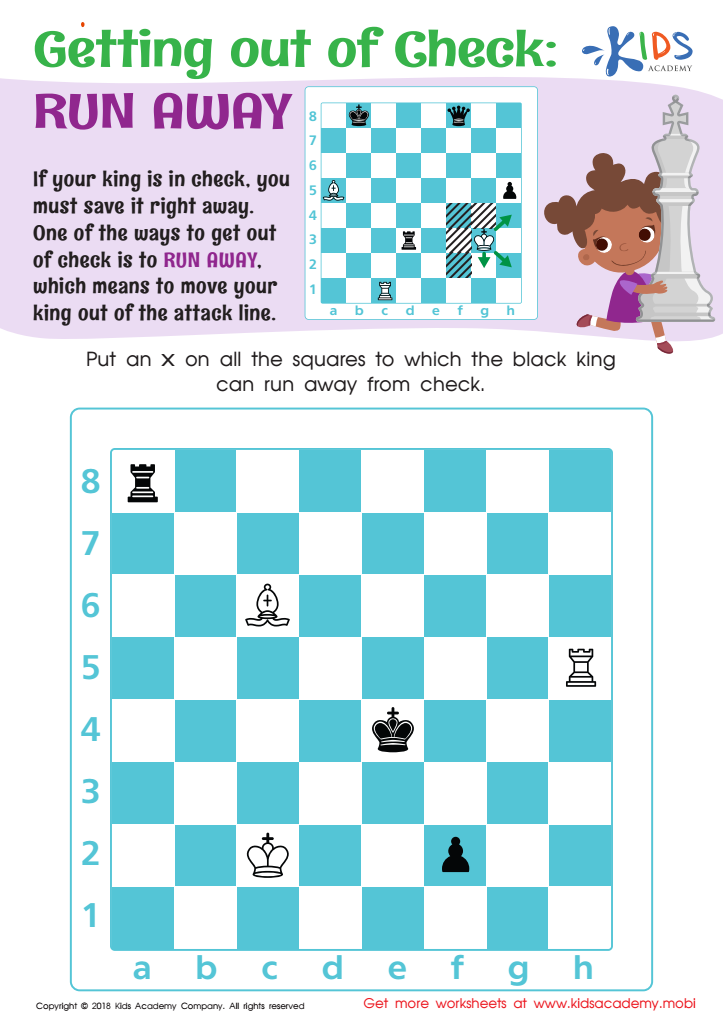
Getting out of Check: Run Away Worksheet
 Assign to My Students
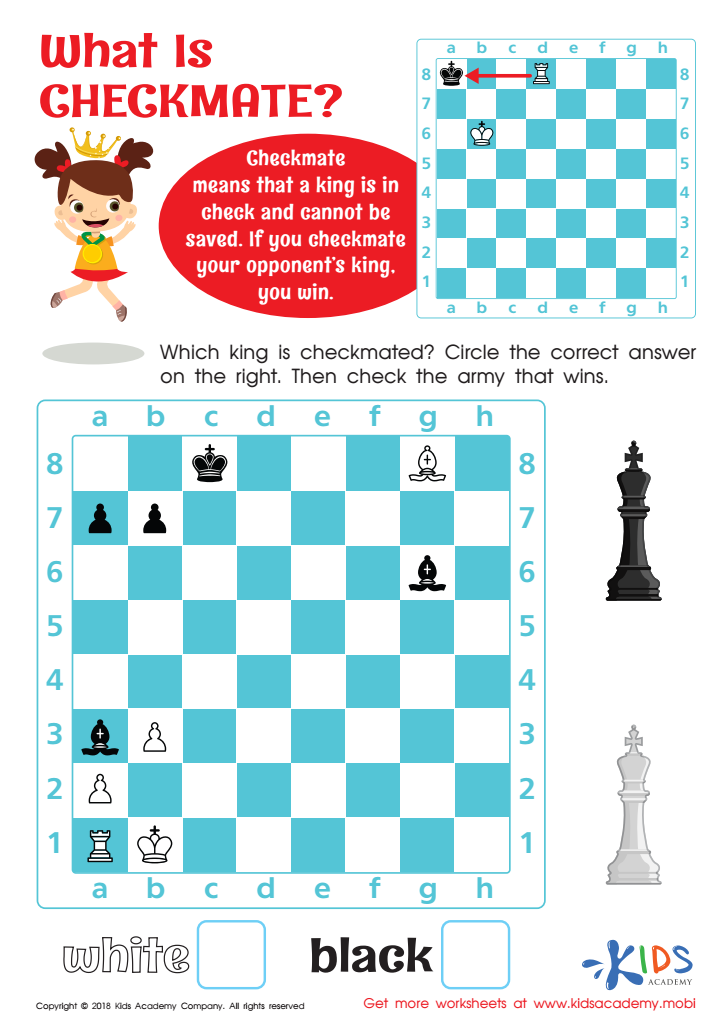
What is Checkmate? Worksheet
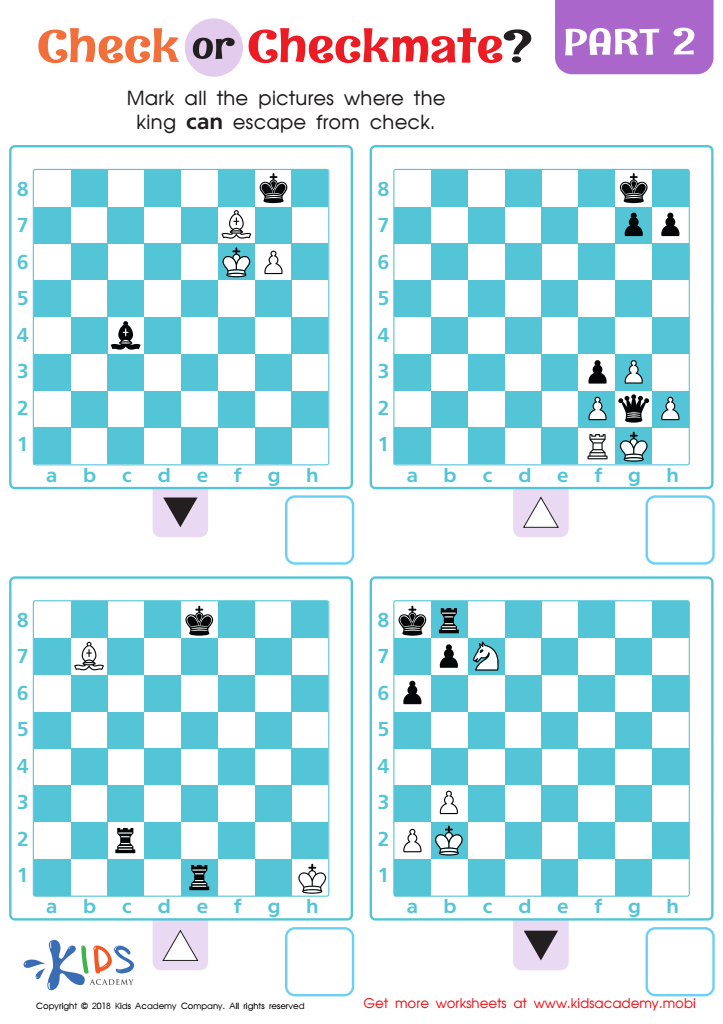
Check or Checkmate: Part 2 Worksheet
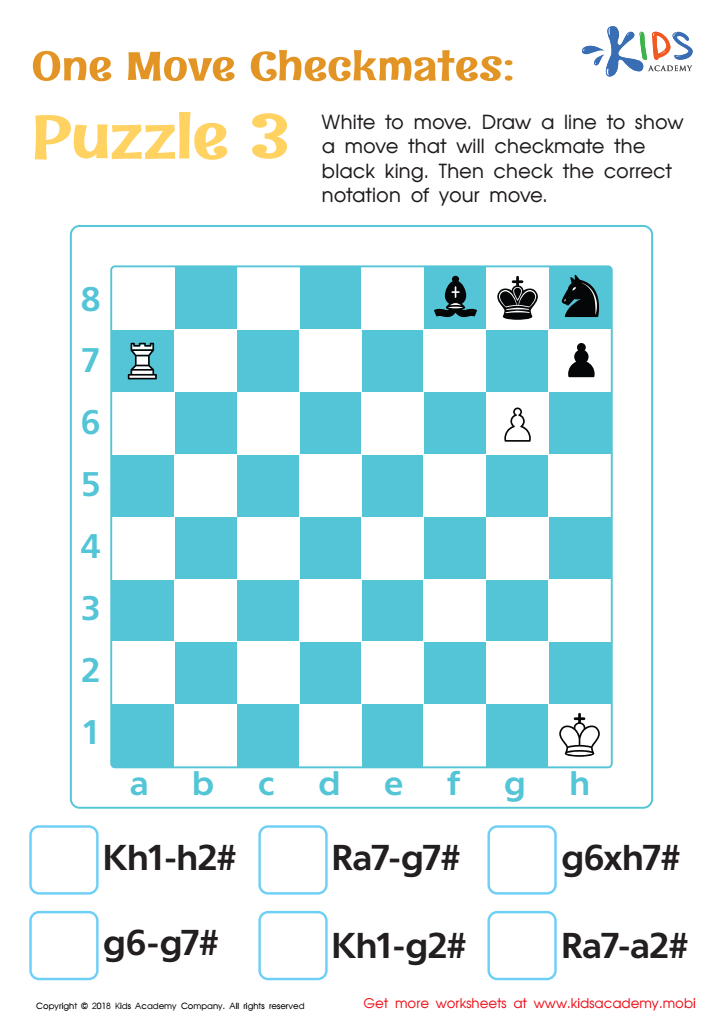
One Move Checkmates: Puzzle 3 Worksheet
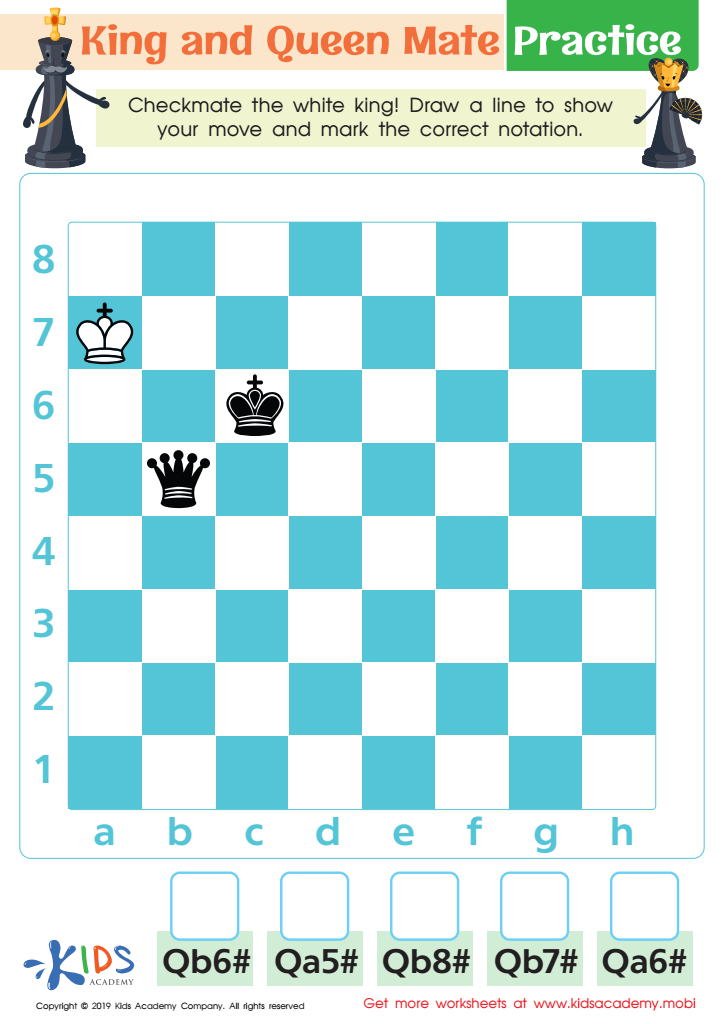
King and Queen Mate Practice Worksheet
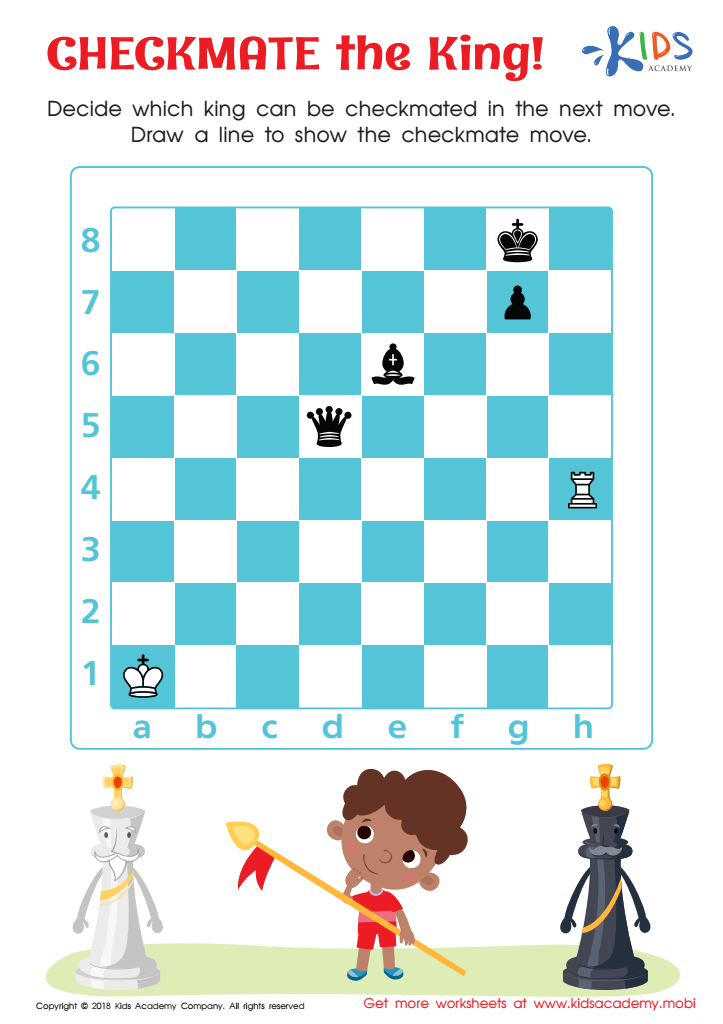
Checkmate the King Worksheet
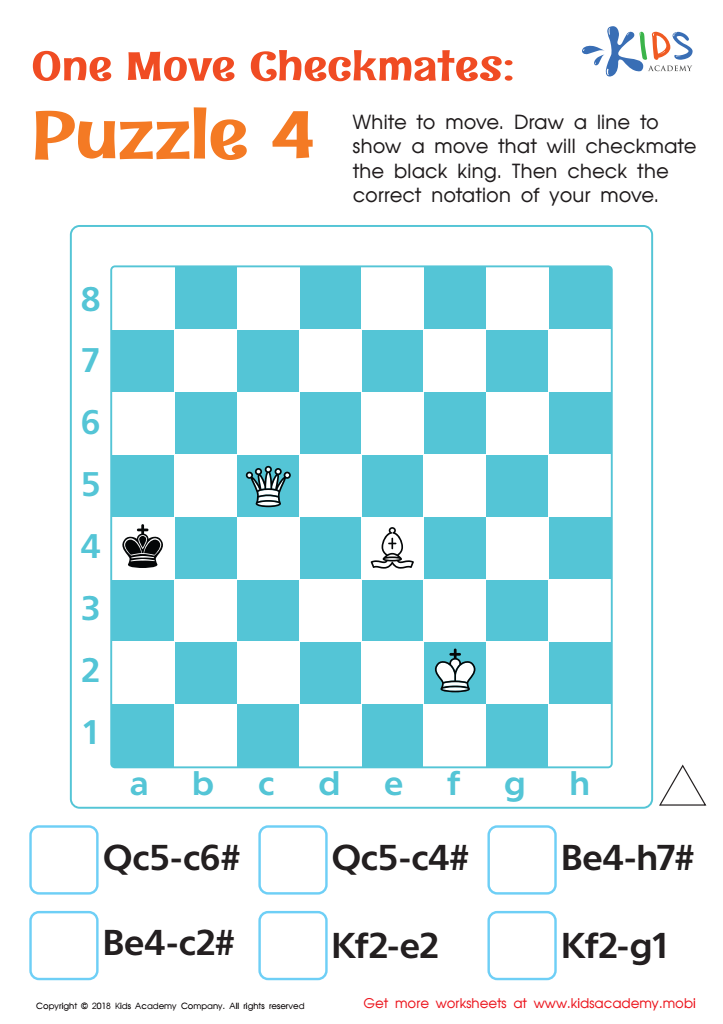
One Move Checkmates: Puzzle 4 Worksheet
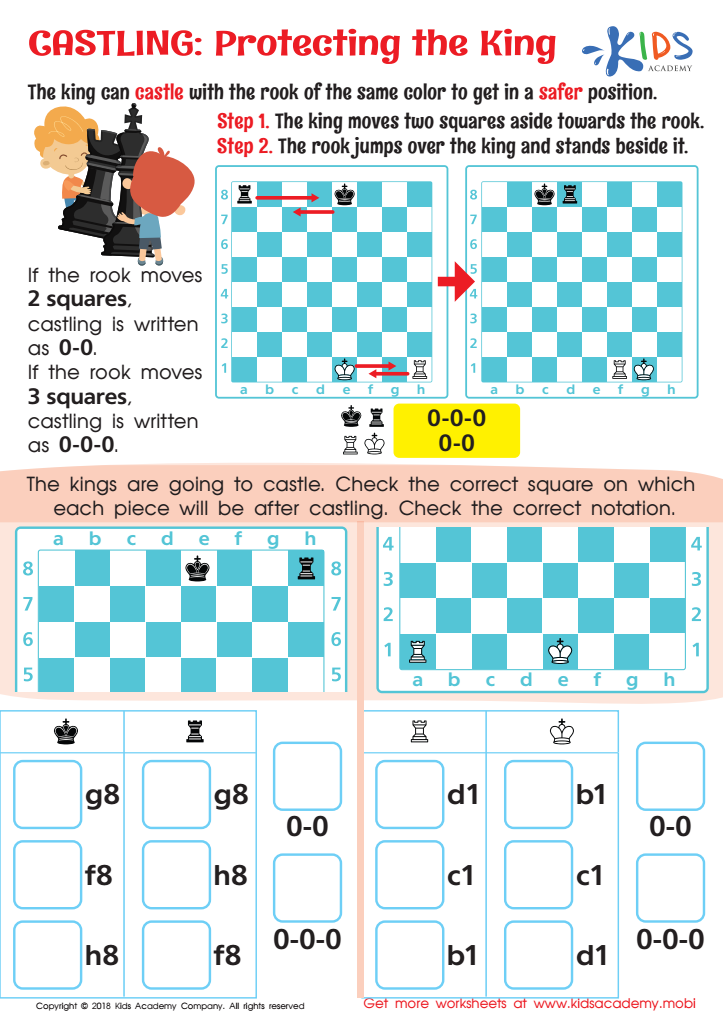
Castling: Protecting the King Worksheet
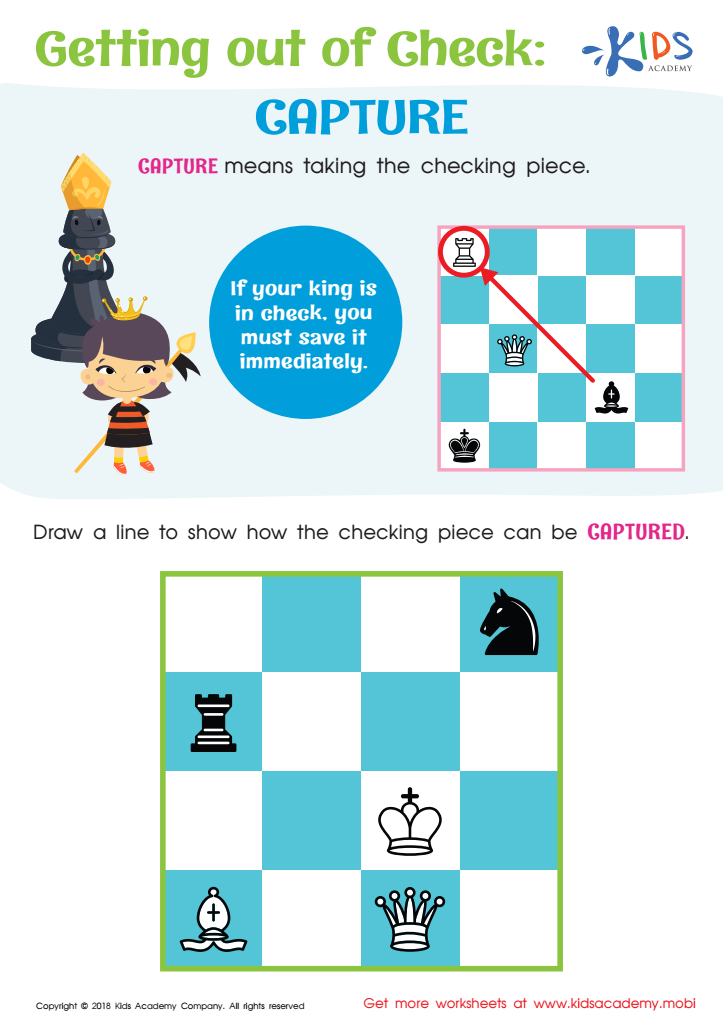
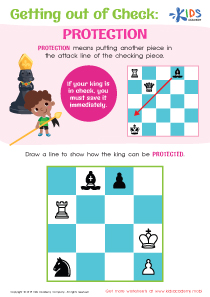
Getting out of Check: Capture




Introducing Grade 1 students to chess strategy through an extra challenge offers a host of developmental benefits parents and teachers should embrace. Firstly, chess fosters critical thinking and problem-solving skills. As children learn to anticipate their opponent's moves and plan their own, they enhance their ability to analyze situations and consider potential consequences.
Furthermore, chess improves concentration and patience. Younger students often struggle with focusing for extended periods, but chess can be a fun and engaging way to build endurance in attention. Moreover, understanding chess strategy helps children develop perseverance. Learning to cope with setbacks in the game and thinking of new strategies can teach resilience and adaptability, valuable life skills often built upon early challenges.
Chess also supports academic abilities. Studies have shown that consistent engagement with chess can improve math and reading skills due to its pattern recognition and abstract reasoning requirements. Socially, chess creates a sense of community and sportsmanship. It encourages respectful behavior whether one wins or loses and builds interpersonal skills during practice sessions.
Given these numerous benefits, parents and teachers should recognize the value of early chess education as a means to foster cognitive and social-emotional growth in young children. Offering an extra challenge like Grade 1 chess can lay a strong foundation for successful learning habits and personal development.