Critical thinking development Extra Challenge Grade 1 Chess Worksheets
4 filtered results
-
From - To
Unlock young minds with our "Critical Thinking Development Extra Challenge Grade 1 Chess Worksheets." Specifically designed for first graders, these engaging chess-themed activities stimulate cognitive growth, enhancing problem-solving and decision-making skills. Each worksheet emphasizes critical thinking, offering exciting puzzles and challenges that encourage strategic reasoning. Perfect for both classroom use and at-home practice, our worksheets turn learning into an enjoyable adventure. Equip your child with the tools to excel in chess and beyond, fostering an early love for analytical thinking and strategic planning. Boost their educational journey with fun, growth-focused exercises tailored for eager young learners.
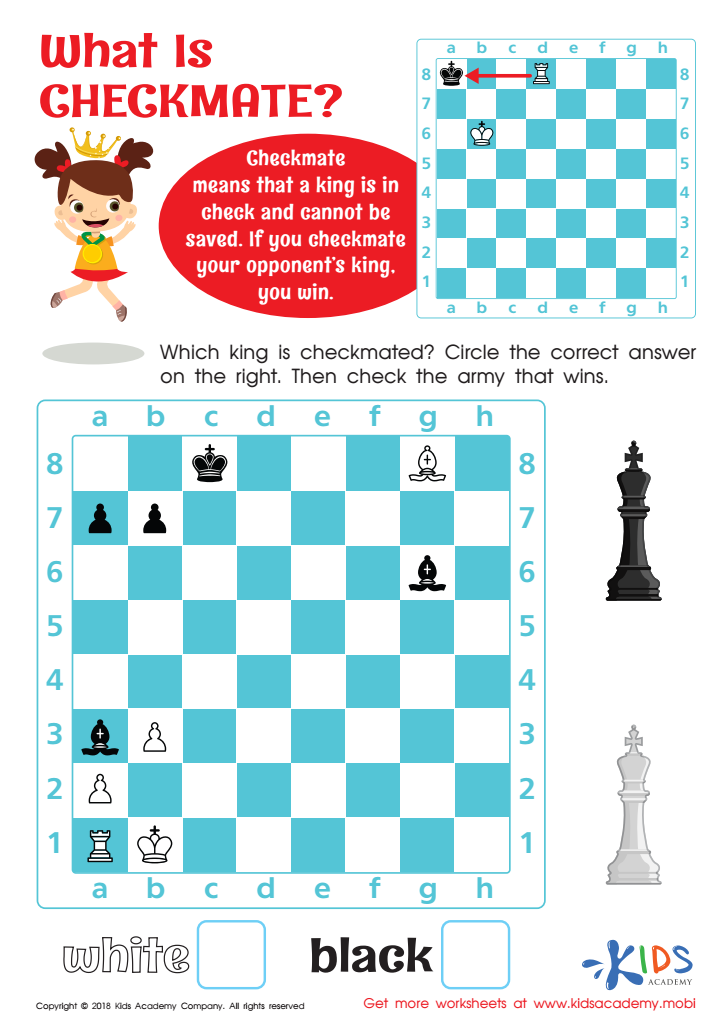
What is Checkmate? Worksheet
 Assign to My Students
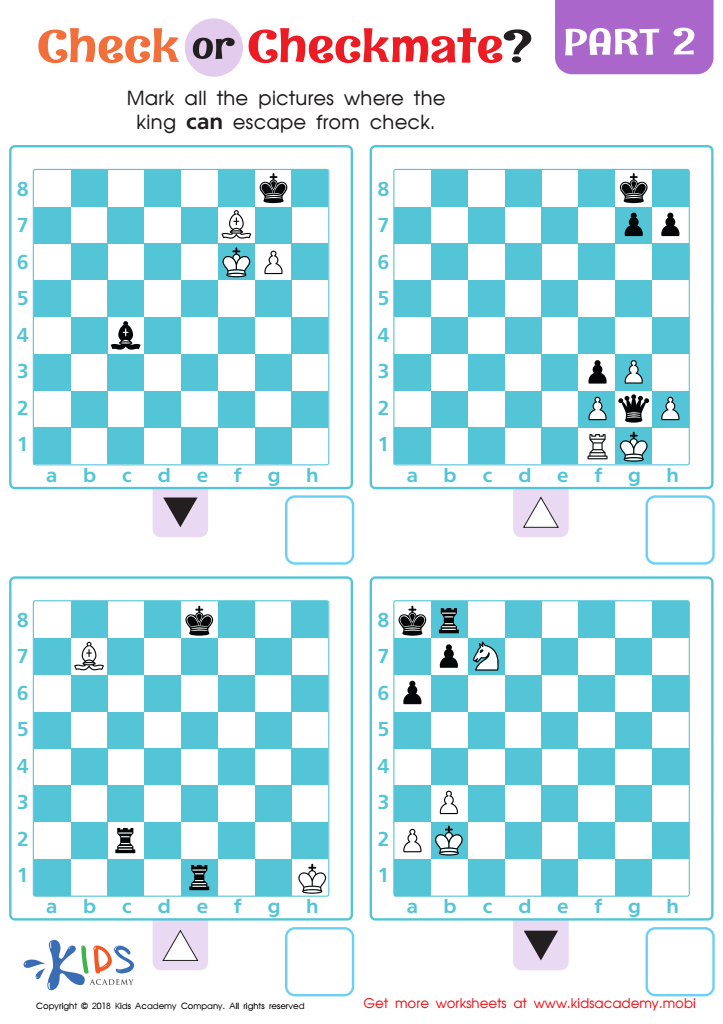
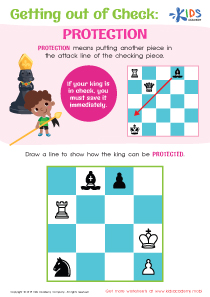
Check or Checkmate: Part 2 Worksheet
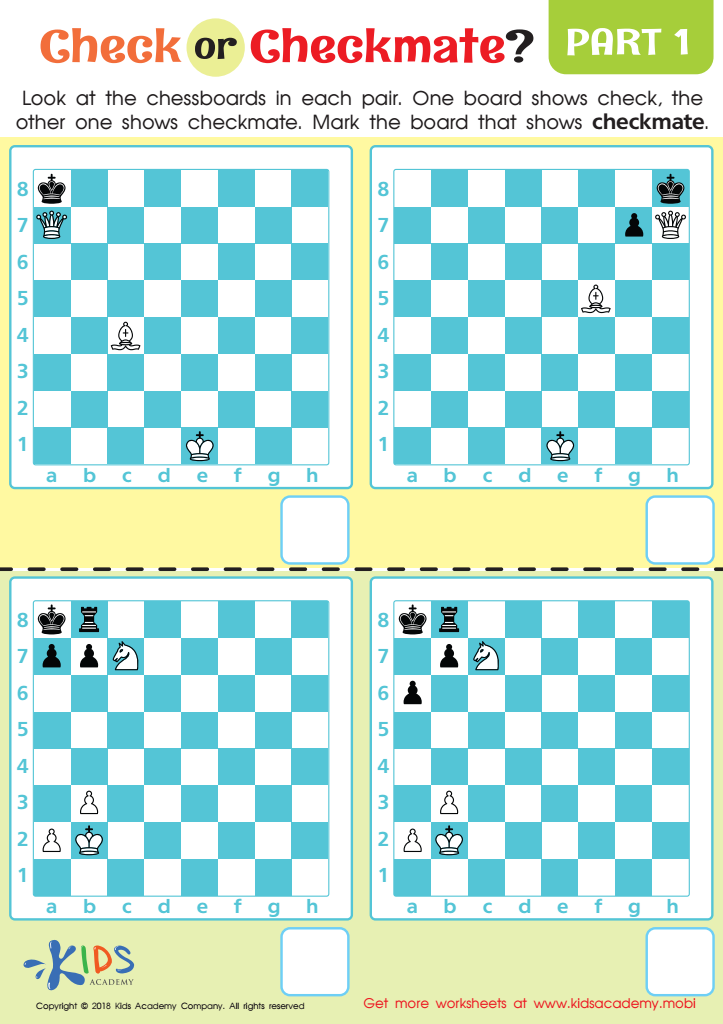
Check or Checkmate: Part 1 Worksheet
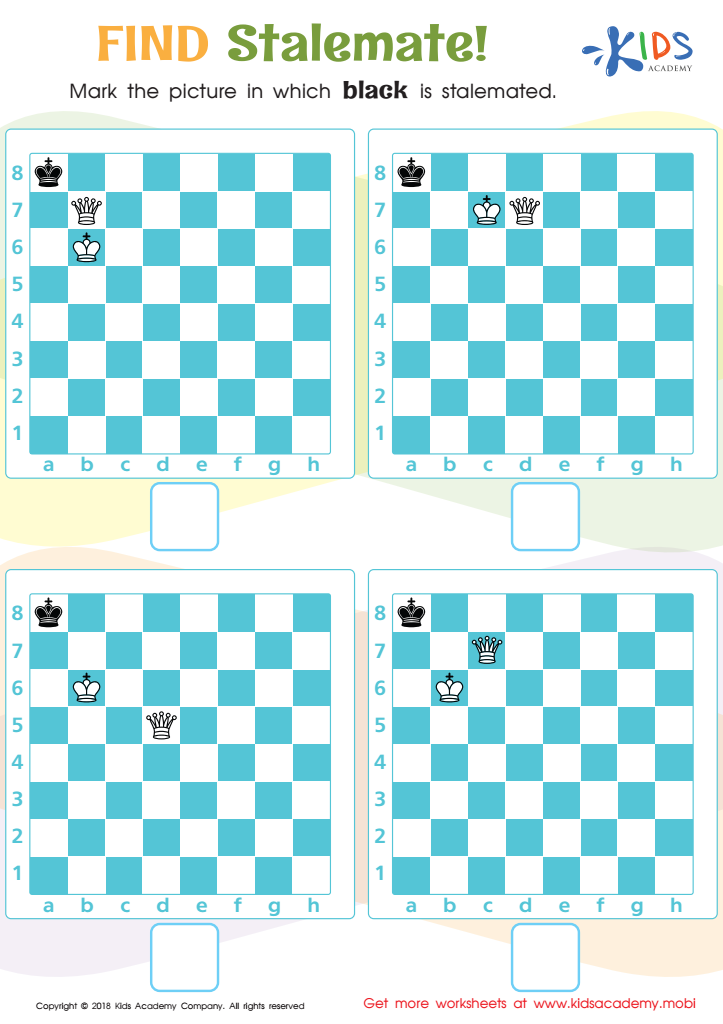
Find Stalemate! Worksheet







Cultivating critical thinking skills at an early age is essential, and incorporating a chess program like Critical Thinking Development Extra Challenge for Grade 1 into a child’s learning can be extremely beneficial. Parents and teachers should value this because critical thinking lays the foundation for lifelong problem-solving abilities, logical reasoning, and decision-making skills.
Chess, often seen as a game of strategy and intellect, naturally promotes these cognitive processes. When young children engage in chess, they consistently analyze patterns, plan multiple moves ahead, and consider the consequences of each action. This exercise in foresight and evaluation fundamentally enhances their ability to think critically.
Moreover, chess helps improve concentration and patience. In a society filled with constant distractions, fostering an environment where young children learn to focus intently, practice patience, and think deeply can be incredibly valuable. Early exposure to these skills through chess thus supports academic success not just in game-related contexts, but across subjects like math, science, and reading.
Parents and teachers, therefore, should care about integrating chess into early education as it holistically supports cognitive and emotional development, cultivating a habit of meticulous thinking and decision-making that will benefit children far beyond their primary school years.