Handwriting Skills Extra Challenge Grade 1 Worksheets
3 filtered results
-
From - To
Enhance your first grader’s handwriting proficiency with our Handwriting Skills Extra Challenge Worksheets! Designed to boost fine motor skills and foster successful writing habits, these engaging worksheets take handwriting practice to the next level. Students will focus on letter formation, spacing, and deliberate writing techniques through fun activities. Each worksheet offers a mix of tracing, freehand writing, and sentence construction exercises. Perfect for reinforcing classroom learning or providing additional practice at home, these resources help young learners gain confidence while refining their handwriting skills. Watch as your child transforms into a confident writer while enjoying this enriching educational experience!
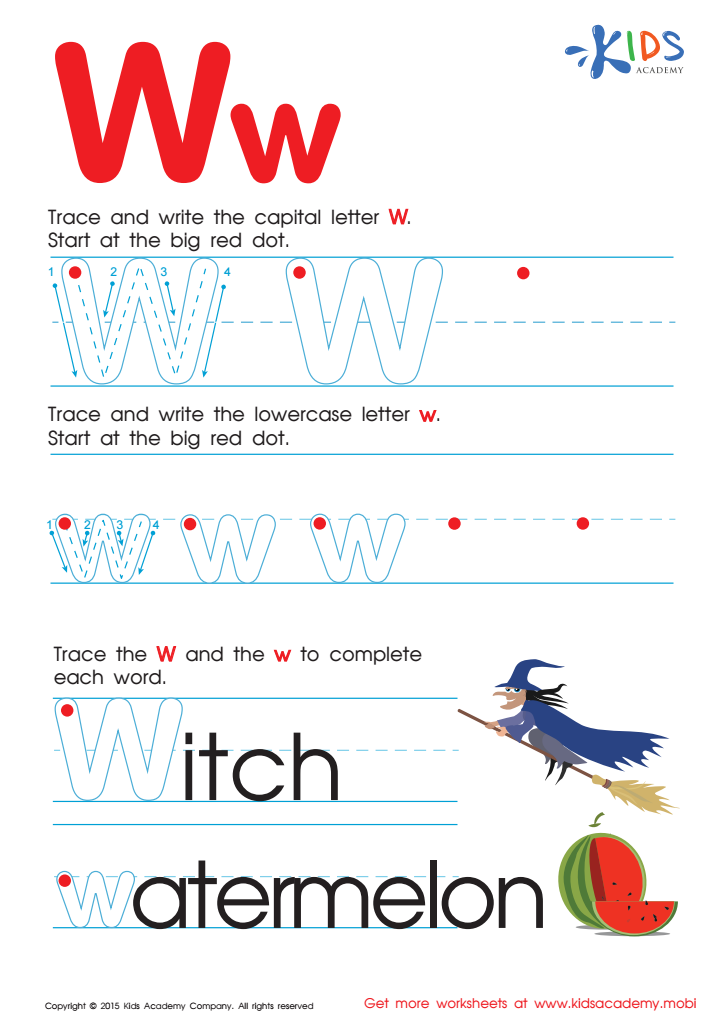
Letter W Tracing Page
 Assign to My Students
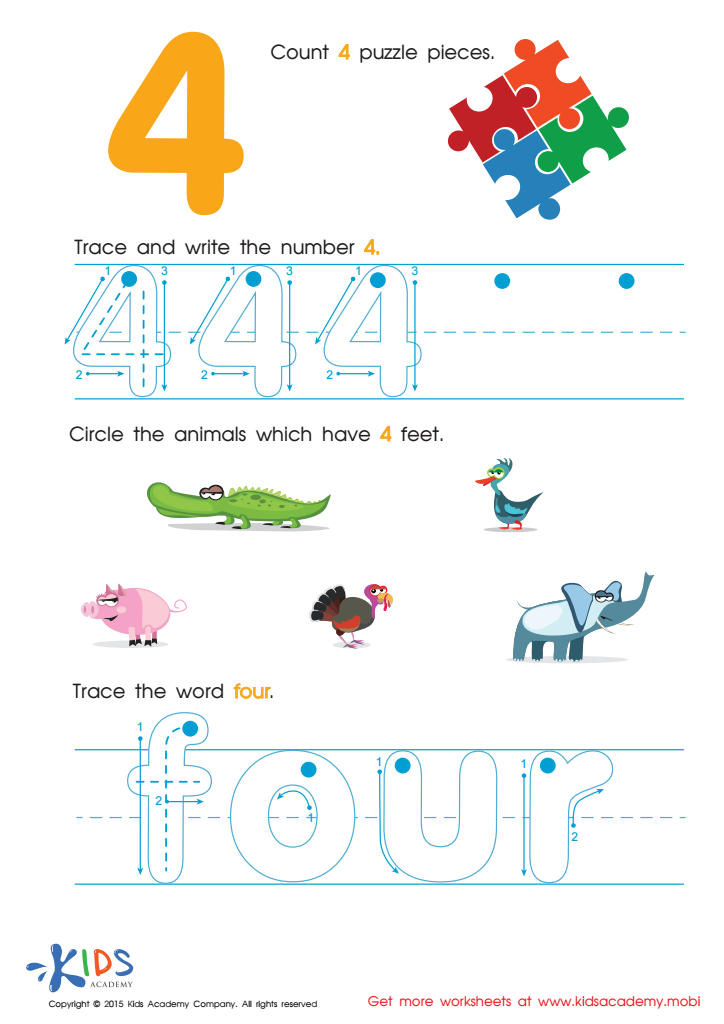
Teaching Children to Write Number 4 Worksheet
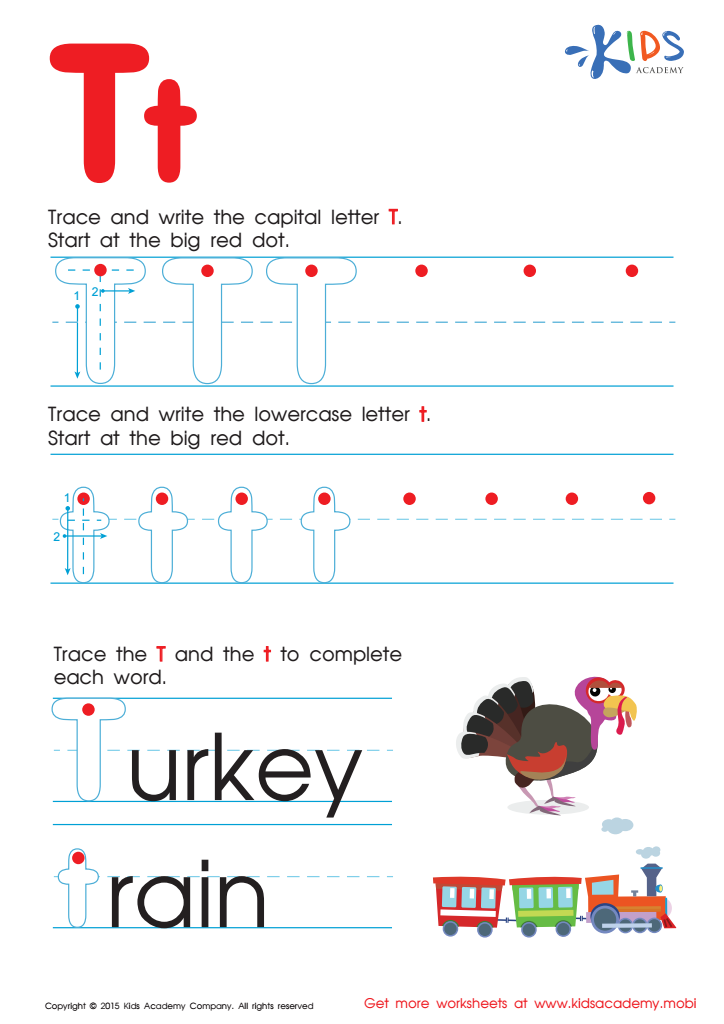
Letter T Tracing Page




.jpg)



Handwriting skills are foundational for young learners, impacting not only their communication but also their overall academic success. In Grade 1, children develop fine motor skills that influence their ability to write legibly and articulate their thoughts clearly. Parents and teachers should care about this extra challenge as it can enhance children’s confidence, foster self-expression, and improve cognitive development.
Good handwriting promotes effective note-taking and aids memory retention. As children learn to craft letters and words, they also engage in pattern recognition, improving their phonetic and literacy skills. Additionally, in a technology-driven world, developing strong handwriting ensures that children can communicate effectively across various mediums.
The Handwriting Skills Extra Challenge not only encourages students to practice but also helps track their progress. Through consistent reinforcement, children can overcome potential difficulties associated with motor skills and spatial awareness. Moreover, this challenge fosters a sense of accomplishment and resilience, vital traits in a child’s developmental journey.
Ultimately, investing time in enhancing handwriting skills in Grade 1 creates long-lasting benefits, equipping children with essential abilities for their future educational endeavors. Therefore, it is crucial for parents and teachers to prioritize this aspect of learning.