Counting skills Extra Challenge Grade 1 Money Worksheets
3 filtered results
-
From - To
Enhance your child's mathematical abilities with our "Counting Skills Extra Challenge Grade 1 Money Worksheets." Designed specifically for first graders, these engaging worksheets provide a rigorous yet fun way to master counting coins and bills. Each activity encourages critical thinking and improves financial literacy through practical, real-life scenarios involving money. Perfect for classroom use or at-home practice, these worksheets help young learners build a strong foundation in counting skills that are essential for future math success. Tailored to meet educational standards, these challenges inspire a love for learning while boosting confidence in handling money.
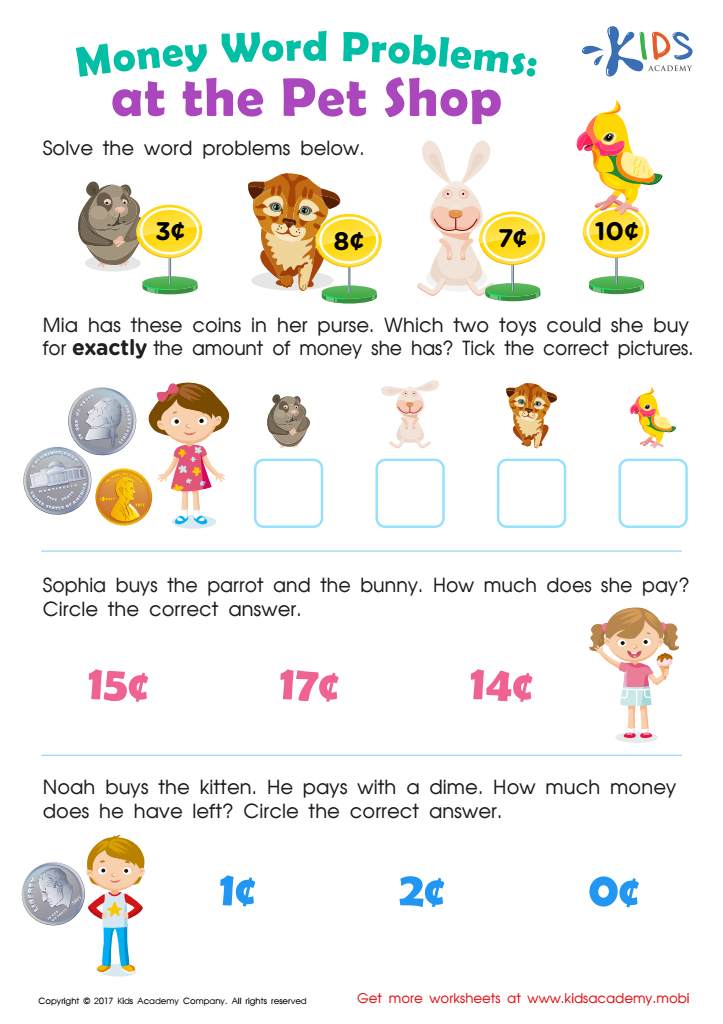
Pet Shop Worksheet
 Assign to My Students
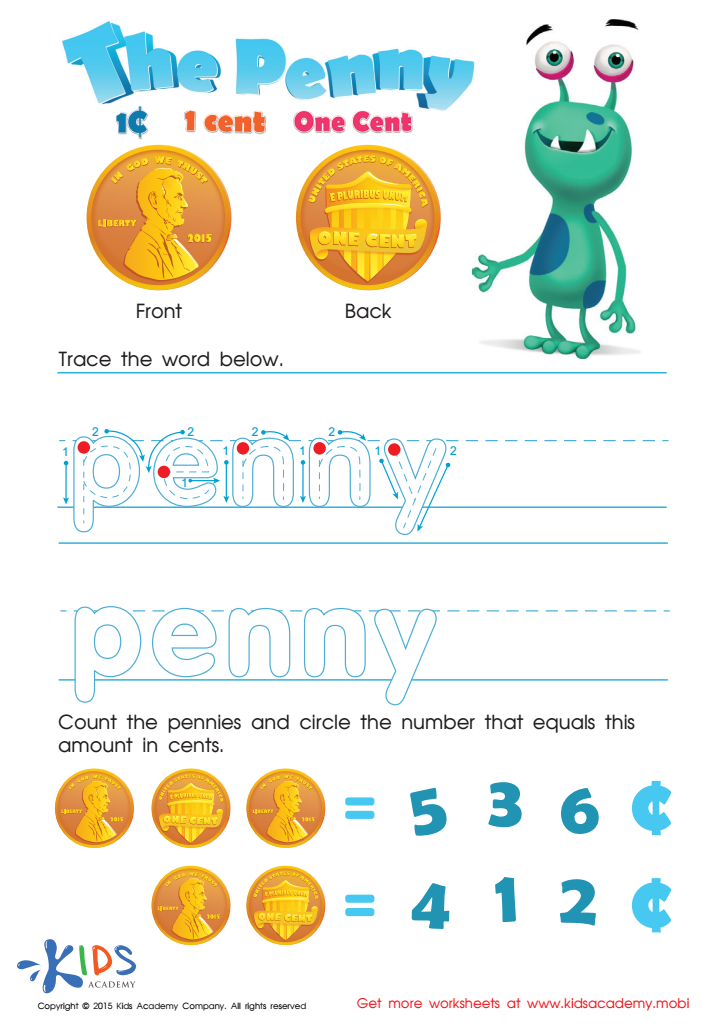
One Cent or the Penny Money Worksheet
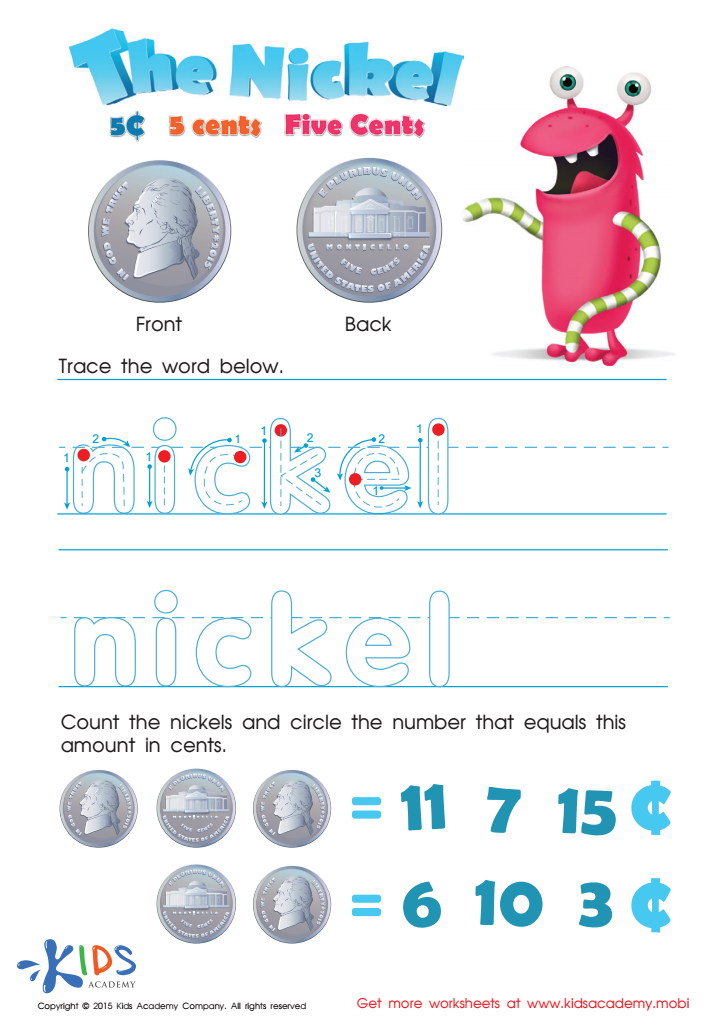
Five Cents or the Nickel Money Worksheet







Counting skills are fundamental for first-grade students and are enriched by integrating money-related exercises. Fostering these skills early on sets the foundation for mathematical understanding and practical life skills. Here are some reasons why parents and teachers should prioritize these activities:
-
Building Blocks for Numeracy: Counting is a primary math skill. Introducing money allows students to apply counting in a meaningful context, making abstract concepts concrete and understandable.
-
Real-World Application: Learning to count money prepares children for real-world situations, such as making purchases and understanding the value of items. It promotes financial literacy from an early age, which is crucial in an increasingly complex economic world.
-
Enhancing Problem-Solving Skills: Counting money involves various mathematical processes like addition, subtraction, and multiplication. It encourages problem-solving and critical thinking as students figure out sums, make change, and manage their 'budgets.'
-
Boosting Confidence and Independence: Mastery of counting money gives children a sense of accomplishment and independence. It can instill confidence as they gain skills that older peers and adults regularly use.
-
Encouraging Responsibility: Handling money teaches students about responsibility and the importance of making careful decisions. It can introduce them to basic concepts of saving and spending wisely.
Overall, incorporating money into counting challenges makes learning more dynamic and relevant, thus fostering a deeper engagement and understanding of essential numerical and life skills.