
Letter recognition Extra Challenge Worksheets
11 filtered results
Difficulty Level
Grade
Age
-
From - To
Subject
Activity
Standards
Enhance your child's literacy skills with our Letter Recognition Extra Challenge Worksheets! Designed for early learners, these engaging worksheets provide an exciting way to reinforce letter recognition while keeping kids motivated and challenged. Featuring a range of activities, including tracing, matching, and identifying letters in various contexts, these worksheets cater to diverse learning styles. Perfect for both classroom settings and at-home practice, they establish a strong foundation for reading success. Empower your child to explore letters creatively and confidently with these supplementary materials, ensuring a fun and interactive learning experience. Download and start the journey to mastering letters today!
Favorites
With answer key
Interactive
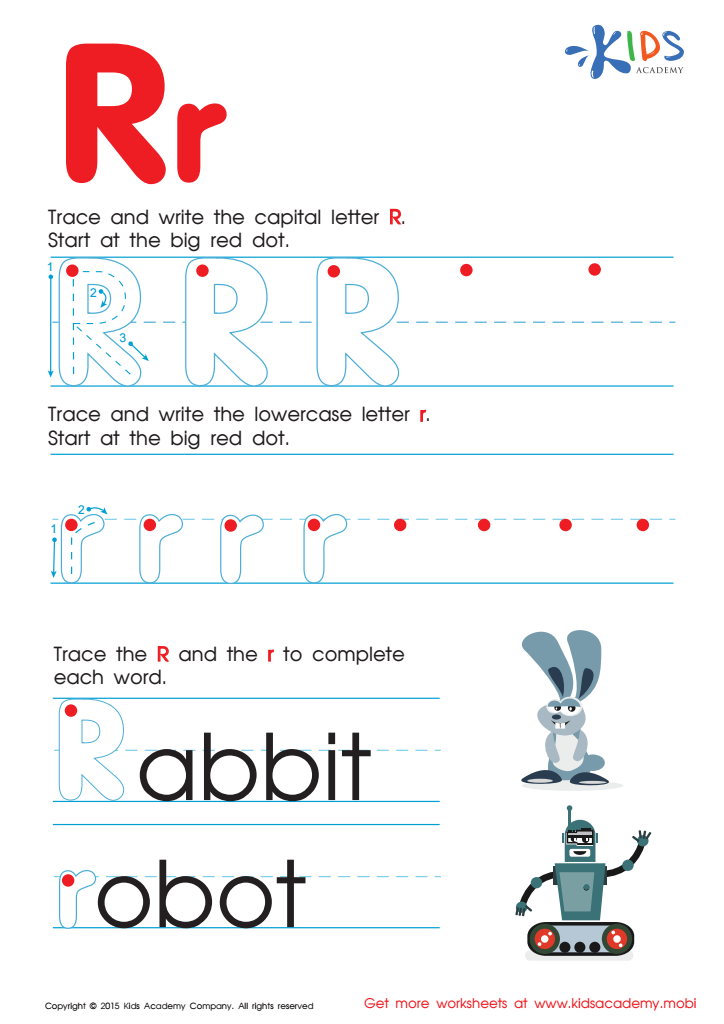
Letter R Tracing Page
Trace and write the letter "R" with this worksheet for kindergarten. Start with the uppercase, then move on to the lowercase. Write the letters several times for practice. Then help complete the words for the rabbit and robot, spelling carefully. More ABC worksheets can be found at Kids Academy.
 Assign to My Students
Letter R Tracing Page
Worksheet
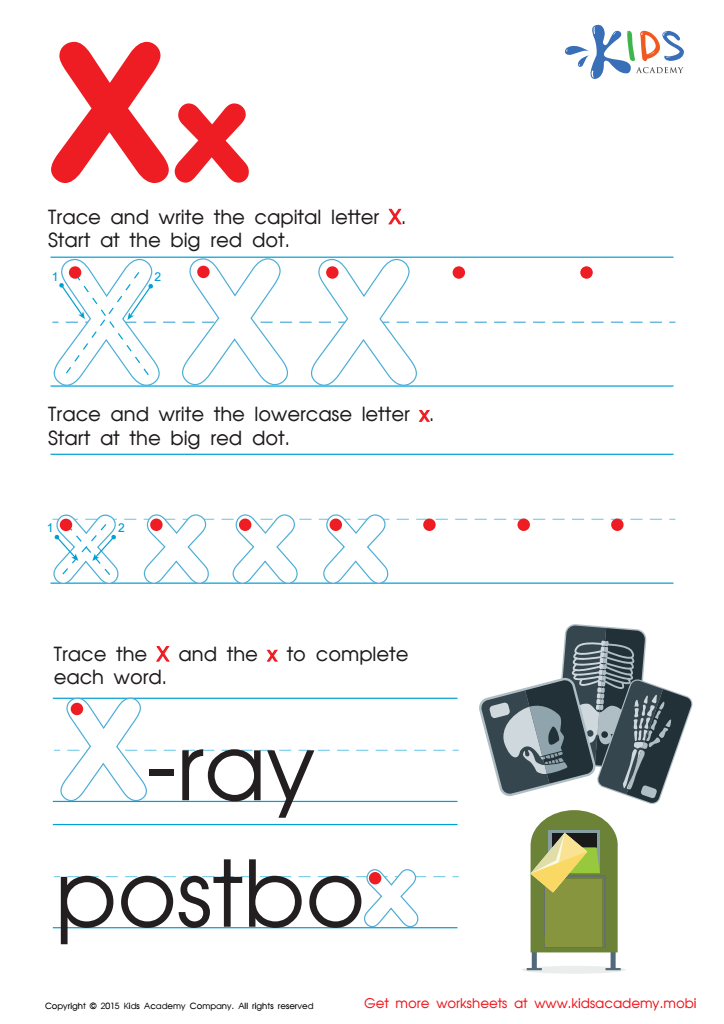
Letter X Tracing Page
Trace the uppercase letter "X" to learn, then write it yourself and practice. Then do the same with the lowercase "x" before completing the words "X-ray" and "postbox". Enjoy our alphabet printables!
Letter X Tracing Page
Worksheet
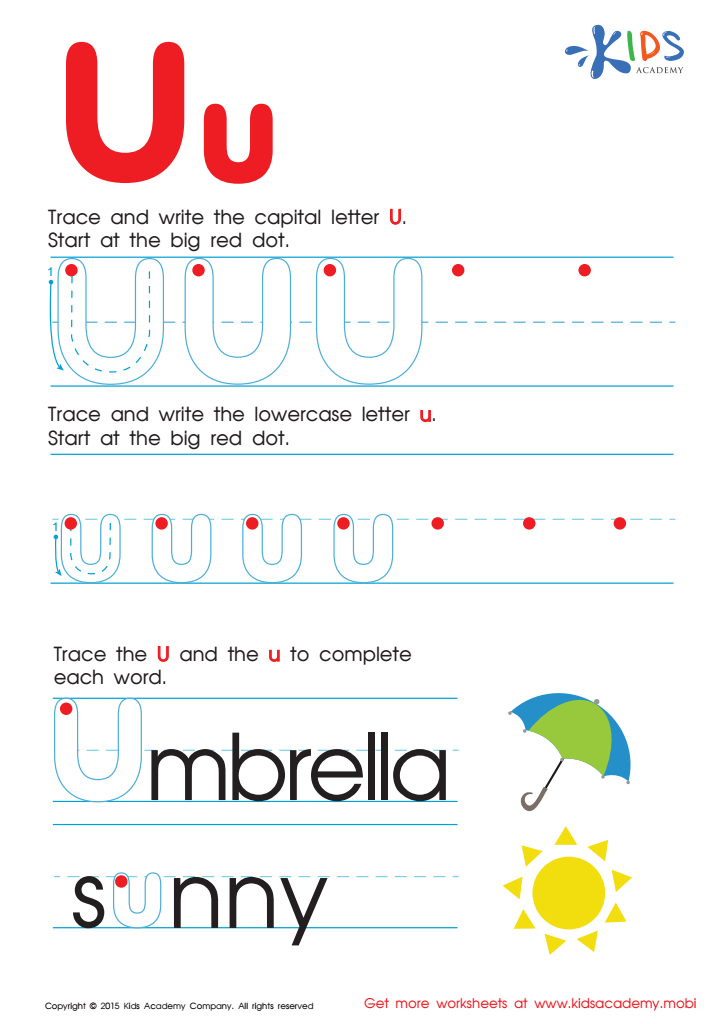
Letter U Tracing Page
Ready to trace and write the letter "U"? Use our worksheet and practice tracing both uppercase and lowercase letters. Complete the words "umbrella" and "sunny" with a capital "U". Check our full collection of alphabet printables for more activities.
Letter U Tracing Page
Worksheet
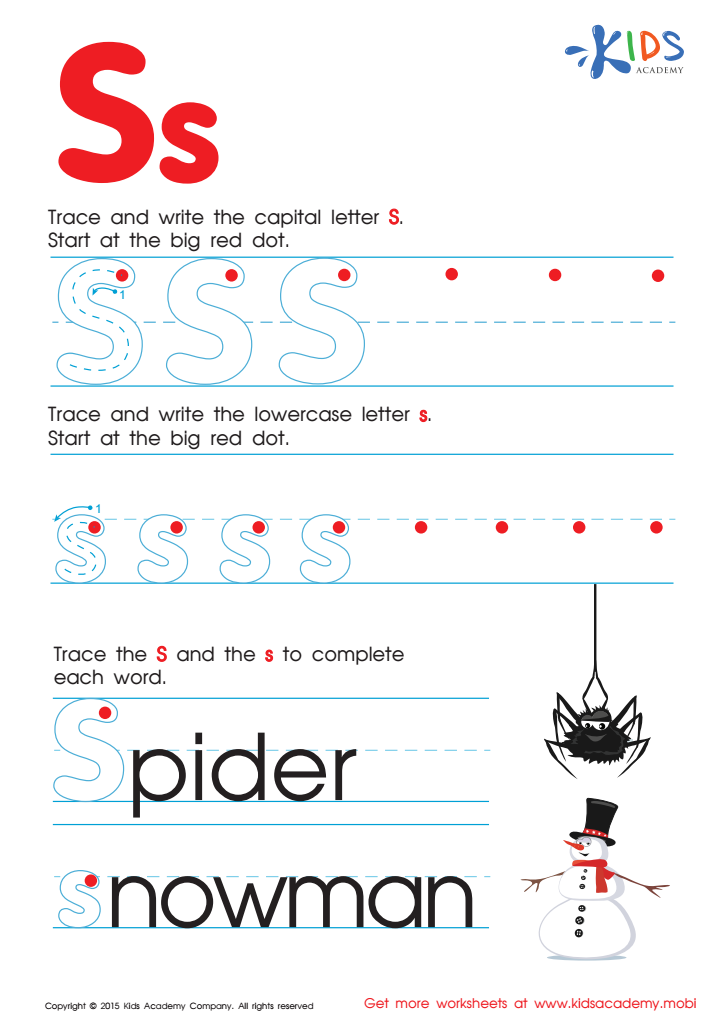
Letter S Tracing Page
Trace and write the capital and lowercase "S" on this ABC worksheet for kindergarten. Start with the big red dot and be careful. When you finish, help the spider and snowman in the pictures restore their words with the capital and lowercase letters. Continue learning the alphabet with Kids Academy.
Letter S Tracing Page
Worksheet
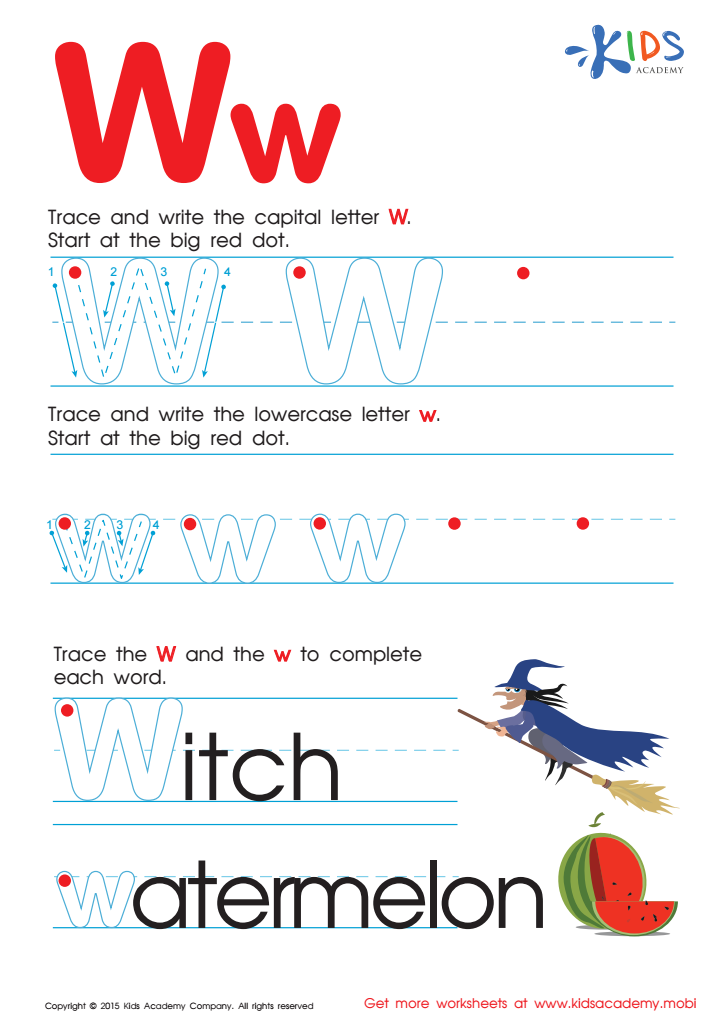
Letter W Tracing Page
Trace and write the capital and lowercase letter W with this free letter tracing worksheet by Kids Academy. Complete the words "Witch" (capital) and "watermelon" (lowercase). Check out our other kindergarten alphabet worksheets!
Letter W Tracing Page
Worksheet
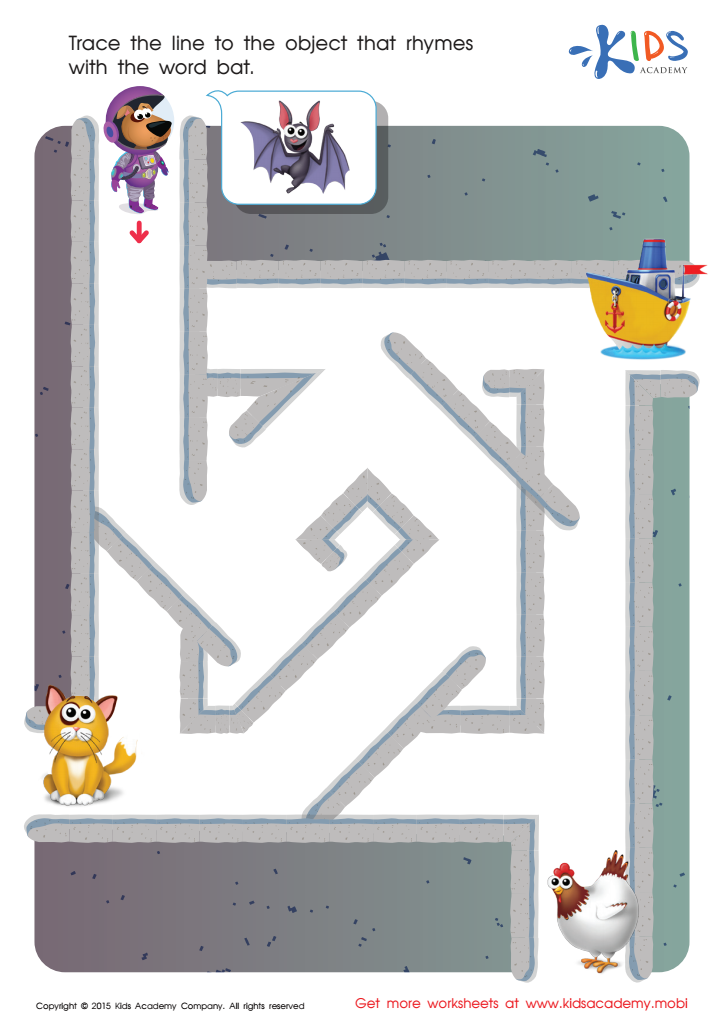
Bat Rhyming Words Worksheet
Get new reading and vocabulary worksheets to help make learning enjoyable for you and your kids. Join the dog and match the objects that rhyme. Have a blast!
Bat Rhyming Words Worksheet
Worksheet
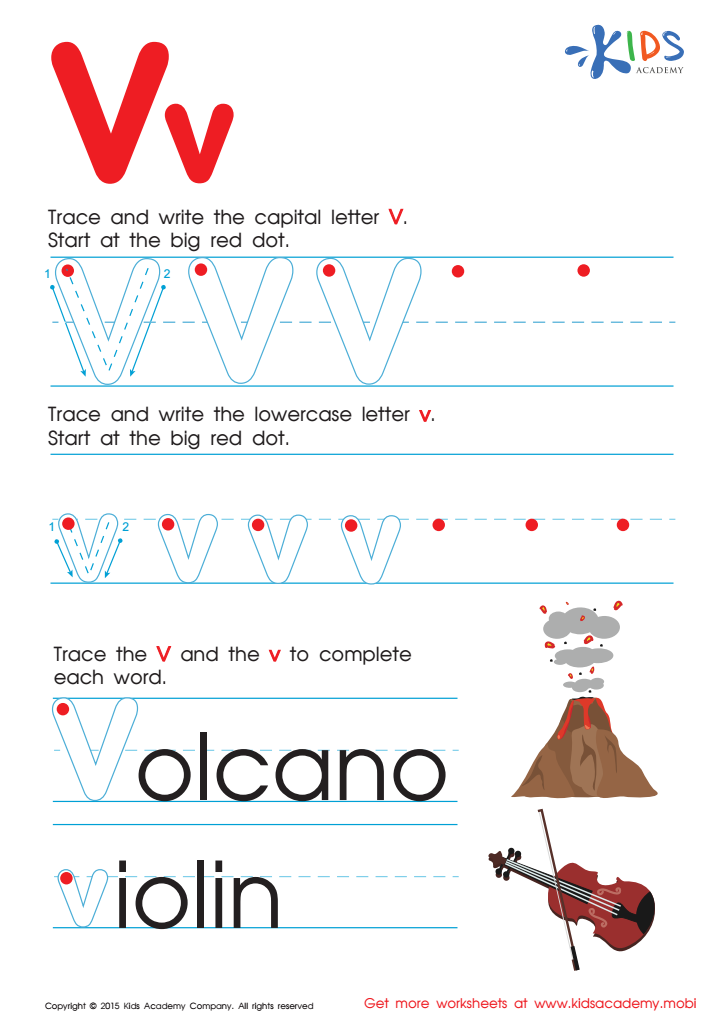
Letter V Tracing Page
Trace the uppercase and lowercase letter "V" with our kindergarten tracing worksheet. Begin at the red dot and follow the lines. Write it several times. Complete the words "Volcano" and "violin". Get more alphabet activities at Kids Academy.
Letter V Tracing Page
Worksheet
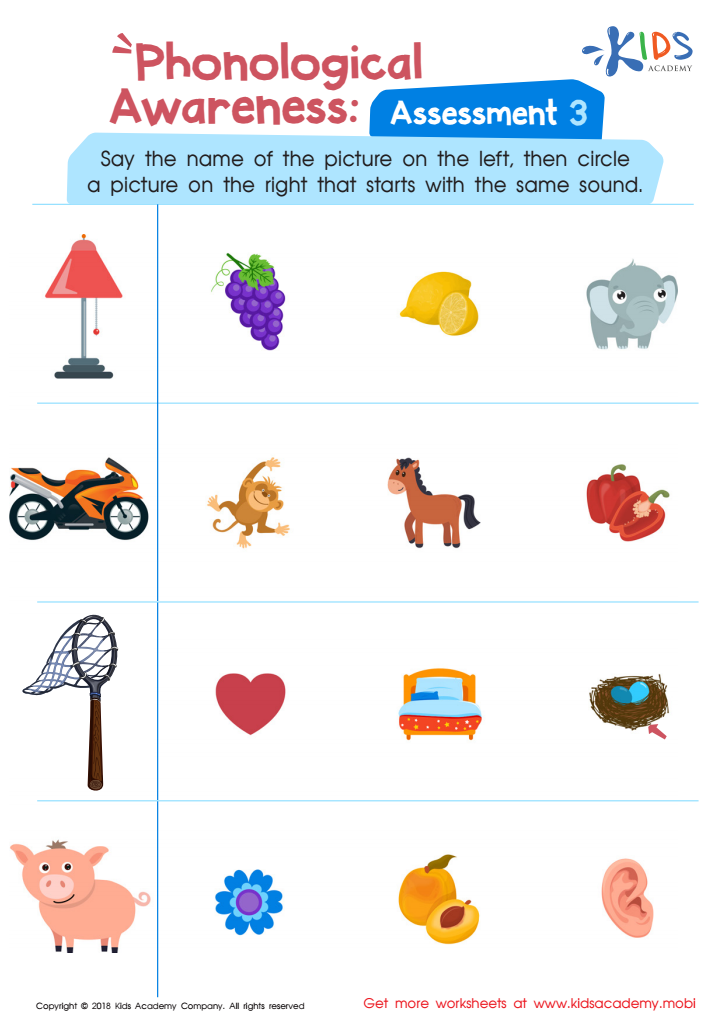
Phonological Awareness: Assessment 3 Worksheet
Test kids' reading readiness with a phonological awareness worksheet! With this PDF exercise, encourage children to name each picture aloud and match left to right. Help them learn to recognize word sounds at the start, middle and end of words. They'll be sure to remember that lamp doesn't sound like elephant!
Phonological Awareness: Assessment 3 Worksheet
Worksheet
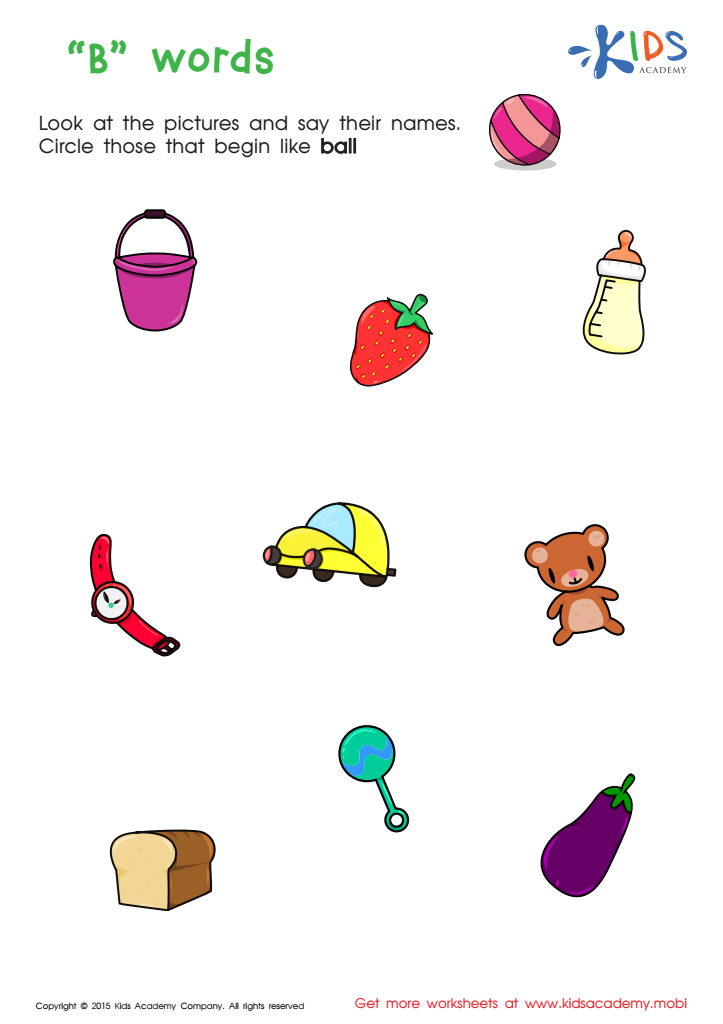
First Words Worksheet
Want to help your preschooler learn to read and write? Start with this 'B' words printable worksheet. It will help your child match pictures to the letters they know, sound out words, and build literacy. Once they understand the concept, they can start sounding out words and building reading skills.
First Words Worksheet
Worksheet
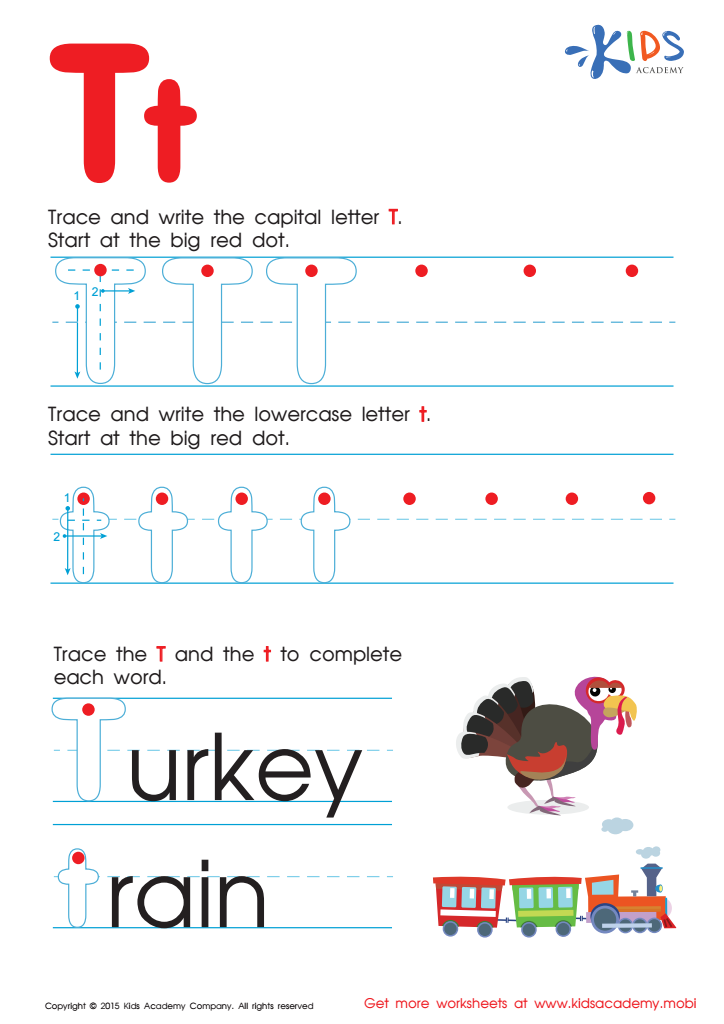
Letter T Tracing Page
Trace letters, complete words, draw pictures and see your kids having fun!
Kids Academy offers alphabet tracing worksheets to learn to write letters. Start with the big red dot, trace the letter, then write it. Practice uppercase and lowercase. Have fun completing words with a Turkey or a rain-train and draw pictures. Get more printable worksheets to make learning enjoyable.
Letter T Tracing Page
Worksheet
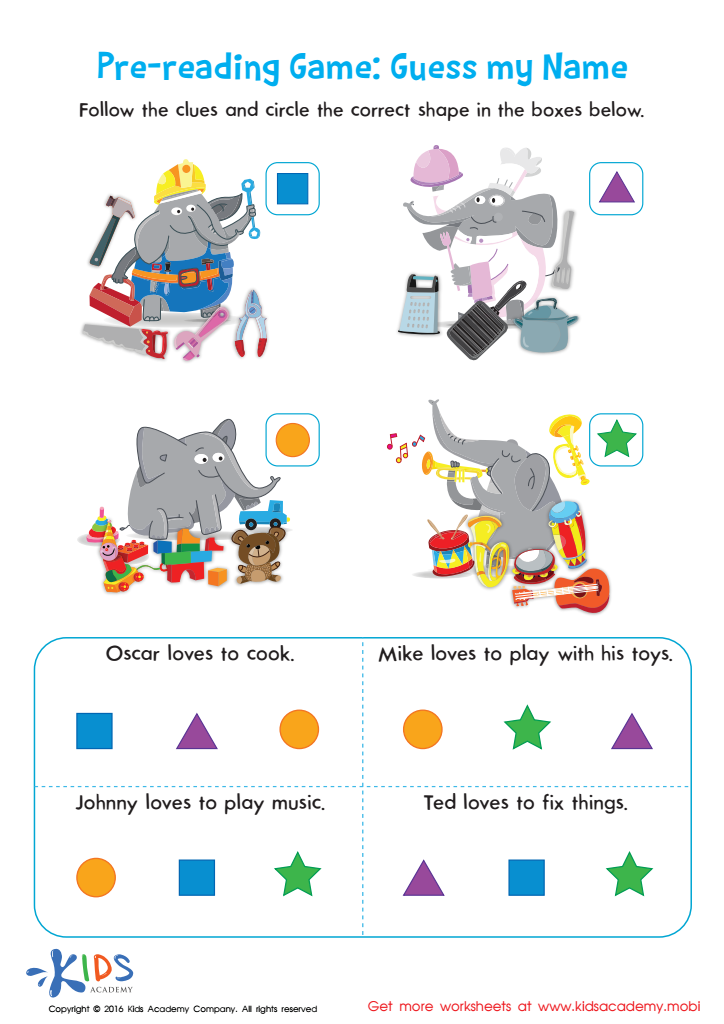
Pre Reading Worksheet Guess My Name
Guess My Name is a fun way to practice inference skills.
Guess My Name is a fun pre-reading game to help your child practice drawing inferences from clues. With colorful illustrations, they'll use clues to match each elephant with its sentence and sharpen their inference skills.
Pre Reading Worksheet Guess My Name
Worksheet
Join Kids Academy for Free
Who is primarily going to use this learning content?







Letter recognition is a foundational skill for children's literacy development. When parents and teachers prioritize this skill, they empower children to successfully decode words, which is essential for reading fluency and comprehension. Mastery of letter recognition enhances children's ability to distinguish sounds and relates letters to their corresponding phonetic values, laying the groundwork for effective writing and communication skills.
Participating in an "Extra Challenge" focused on letter recognition can provide children with engaging, hands-on experiences that reinforce this important skill consistently over time. These challenges can offer variety through interactive games, fun songs, and visual activities, transforming learning into an enjoyable experience. By providing children with opportunities to practice letter recognition in innovative ways, educators and caregivers foster intrinsic motivation, creating lifelong learners.
Moreover, enhancing letter recognition early helps identify any potential learning difficulties, which allows for timely interventions tailored to each child's needs. Visibility and progress in this vital area will enhance children's confidence, self-esteem, and overall academic performance. Therefore, both parents and teachers play a crucial role in creating environments that support letter recognition, ensuring children are well-prepared for future reading and writing efforts, ultimately supporting their overall educational journey.








